
Struggling to choose the right plastic for your 3D printing project? Picking the wrong one can waste time and money. This guide simplifies your material selection process for perfect results.
To choose the right 3D printed plastic, you must balance three key factors: the mechanical properties1 your part needs, the environment it will be used in, and your budget. It's not about finding the "best" material, but the most suitable one for your specific application.
Walking into the world of 3D printing materials can feel like navigating a maze. With hundreds of acronyms and options, it's easy to get lost. But understanding these materials is the key to unlocking the true potential of your printer. I've spent years helping clients move from confusion to clarity, and I want to do the same for you. This guide will break everything down, one material at a time, so you can choose with confidence. Let's dive in and find the perfect plastic for your next project.
Why do plastics dominate additive manufacturing today?
Have you ever wondered why plastic is the king of 3D printing? You might think stronger materials like metal would be more popular. Let's explore why plastics are the go-to choice.
Plastics dominate 3D printing because they offer the best overall balance of low cost, easy processing, and a massive range of properties. This versatility makes them perfect for everything from simple prototypes to high-strength, functional end-use parts, fitting almost any budget and application.
In my 27 years in this industry, I've seen technologies come and go. The reason plastics have stayed on top is simple: they hit the sweet spot. It's not that plastic is inherently "better" than metal or other materials. It’s that it provides the most practical solution for the widest range of problems. You get a fantastic spectrum of properties without the high costs or difficult processing requirements of metals.
Think about it from a manufacturing perspective.
- Cost-Effectiveness: Raw plastic, especially in pellet form, is significantly cheaper than metal powders or specialized resins. This lowers the barrier to entry and makes iteration and mass production more affordable.
- Processability: Plastics have lower melting temperatures. This means printers use less energy, can be built more affordably, and can print faster. The equipment is less complex and safer to operate.
- Versatility: This is the real magic. You can find a plastic for almost any job. Need something cheap and easy for a visual model? Use PLA. Need a strong, heat-resistant part for a car engine? Use a carbon-fiber-reinforced PEEK. This incredible range is unmatched.
| Factor | Plastics | Metals | Ceramics |
|---|---|---|---|
| Cost | Low to High | High to Very High | High |
| Processing Ease | Easy | Difficult | Very Difficult |
| Property Range | Very Wide | Wide | Narrow |
Ultimately, plastics give engineers and designers the most freedom to create, test, and produce, all while keeping projects on budget.
How do different 3D printing technologies use plastic materials?
You've noticed that different 3D printers use different forms of plastic. Using the wrong type can cause failed prints and frustration. Let's clarify which technology uses which plastic form.
Each 3D printing technology is designed for a specific material form. Fused Deposition Modeling (FDM)2 uses solid filaments or pellets. Stereolithography (SLA)3 uses liquid resin. Selective Laser Sintering (SLS) uses fine powder. Matching the material form to the technology is essential for success.
The form of the plastic is not just a preference; it’s fundamental to how the machine works. I often explain to clients that the printer and material are two halves of a whole system. You can't have one without the other. Understanding this relationship is the first step to mastering any printing process. Let’s look at the most common technologies.
Fused Deposition Modeling (FDM/FFF)
This is the most popular printing method. It works by melting a thermoplastic material and extruding it through a nozzle, layer by layer.
- Filament: The standard for desktop and many professional printers. It's like a thin spaghetti of plastic wound on a spool, making it clean and easy to handle.
- Pellets: This is the raw, industrial form of plastic. Our CHENcan industrial printers use pellets because they are up to 10 times cheaper than filament and allow for much higher extrusion rates. This is ideal for manufacturing large parts like molds, jigs, or even boat hulls quickly and cost-effectively.
Stereolithography (SLA)
SLA printers use a UV laser to cure liquid photopolymer resin in a vat, layer by layer. This technology is known for creating parts with extremely fine details and smooth surfaces, perfect for jewelry, dental models, and detailed prototypes.
Selective Laser Sintering (SLS)
SLS technology uses a high-powered laser to fuse small particles of polymer powder. A key advantage is that the surrounding unfused powder supports the part during printing, so you don't need dedicated support structures. This allows for the creation of very complex and intricate geometries that would be impossible with FDM or SLA.
| Technology | Material Form | Key Advantage |
|---|---|---|
| FDM (Filament) | Solid Filament Spool | Accessibility and Ease of Use |
| FDM (Pellet) | Raw Plastic Pellets | Low Cost and High Speed for Large Parts |
| SLA | Liquid Photopolymer Resin | High Detail and Smooth Finish |
| SLS | Fine Polymer Powder | Complex Geometries, No Supports |
What are the standard thermoplastics for 3D printing?
Just starting out with 3D printing? The sheer number of material options can be intimidating. If you choose the wrong one, your prints will fail. Let's focus on the basics first.
The most common standard thermoplastics are PLA, ABS, ASA, and PETG. PLA is easy to print and good for beginners. ABS is strong and heat-resistant. ASA is like ABS but for outdoor use. PETG offers a great balance of strength and ease of printing.
When someone is new to FDM printing, I always recommend they start with one of these four materials. They are the workhorses of the industry for a reason. Mastering them builds a strong foundation before you move on to more advanced engineering-grade plastics. Each one has its own personality, and learning its quirks is part of the process.
PLA (Polylactic Acid)4
This is the default starting material for most people. It’s derived from renewable resources like corn starch, making it more eco-friendly. PLA is very easy to print, with minimal warping, and produces parts with good detail. Its main drawbacks are brittleness and a low melting temperature, making it unsuitable for parts that will be under stress or exposed to heat (like the inside of a car in summer). It's perfect for visual prototypes, architectural models, and hobbyist projects.
ABS (Acrylonitrile Butadiene Styrene)5
ABS is what LEGO bricks are made of. It's much stronger, more durable, and more temperature-resistant than PLA. These properties make it great for functional parts that need to withstand impact. However, it’s trickier to print. It tends to warp as it cools and releases fumes with a noticeable odor, so you absolutely need a heated bed and an enclosed printer.
ASA (Acrylonitrile Styrene Acrylate)6
Think of ASA as the upgraded, outdoor-friendly version of ABS. It shares most of ABS's strength and temperature resistance but adds one crucial feature: excellent UV and weather resistance. While ABS will become brittle and fade in the sun, ASA holds up beautifully. This makes it the perfect choice for garden tools, outdoor enclosures, or automotive exterior parts.
PETG (Polyethylene Terephthalate Glycol)7
PETG is my favorite all-rounder. It combines the strength of ABS with the printing ease of PLA. It's very durable, has low shrinkage, and is more flexible than PLA or ABS, so it's less likely to snap under pressure. Many grades are also food-safe. It can be a bit "stringy" during printing, but with tuned settings, it’s a reliable material for a huge range of functional parts.
| Material | Ease of Printing | Strength | Temp. Resistance | UV Resistance |
|---|---|---|---|---|
| PLA | Very Easy | Medium | Low | Poor |
| PETG | Easy | High | Medium | Good |
| ABS | Difficult | High | High | Poor |
| ASA | Difficult | High | High | Excellent |
Which engineering plastics are best for functional and end-use parts?
Are your standard plastic prototypes breaking under real-world stress? When basic materials just aren't strong enough, it's time to level up. Use engineering plastics for truly functional, durable parts.
For demanding functional parts, turn to engineering plastics like Nylon (PA) and Polycarbonate (PC)8. They offer superior strength, wear resistance, and temperature tolerance, making them ideal for gears, jigs, fixtures, and other real-world applications where performance is critical.
When a client comes to me with a broken PLA prototype and asks, "What's next?", my answer almost always involves an engineering plastic. This is where 3D printing moves from making models to making real, working parts. These materials represent a significant step up in performance, but they also demand more from your printer and your skills as an operator. You don't choose them by default; you choose them because you have a specific problem to solve, like friction, impact, or heat.
Nylon (Polyamide, PA)9
Nylon is the champion of toughness and durability. It has a low coefficient of friction, making it self-lubricating and perfect for printing gears, bearings, and living hinges that can be flexed thousands of times without breaking. Its main challenge is that it absorbs moisture from the air (it's hygroscopic). If you don't dry it properly before printing, the water will turn to steam in the nozzle, resulting in a weak, ugly part.
Polycarbonate (PC)
When you need extreme strength and impact resistance, you choose PC. It’s the material used to make bulletproof glass and riot shields. It’s incredibly strong and can withstand high temperatures. Some blends are also optically clear. The trade-off is that PC is very difficult to print. It requires extremely high nozzle and bed temperatures (often >300°C and >110°C, respectively) and a heated chamber to prevent warping and cracking. It's a professional-grade material for demanding jobs.
POM (Polyoxymethylene / Acetal)
For applications requiring high stiffness and exceptional wear resistance against sliding friction, POM is an excellent choice. It's a go-to material for high-performance bearings, bushings, and conveyor belt parts. However, it has very poor bed adhesion, making it notoriously difficult to print without a specialized build surface.
What are high-performance polymers for industrial 3D printing applications?
What happens when even tough engineering plastics can't handle the job? For parts that fail in extreme heat or chemical environments, you must turn to high-performance polymers for the toughest jobs.
High-performance polymers like PEEK, PEKK, and ULTEM are designed for the most extreme industrial applications. They provide exceptional heat and chemical resistance and a strength-to-weight ratio that can rival metals, making them essential in aerospace, automotive, and medical fields.
We're now at the absolute peak of the polymer pyramid. These materials are not for hobbyists. They are expensive, challenging to print, and require specialized industrial machines capable of reaching very high temperatures. I work with clients in the aerospace and automotive prototyping sectors who use these materials to replace machined aluminum or steel parts. The goal here is maximum performance, where the cost is justified by the ability to function in environments where literally nothing else will work.
PEEK (Polyether Ether Ketone)10 & PEKK (Polyether Ketone Ketone)
These are the superstars of high-performance printing. They have an incredible strength-to-weight ratio, are inherently flame retardant, and can operate continuously in temperatures above 250°C (482°F). They are also resistant to a huge range of harsh chemicals and radiation. You'll find them used for piston parts, medical implants, and structural components on aircraft. PEKK is slightly easier to print than PEEK, with less warping.
ULTEM (PEI - Polyetherimide)
ULTEM is another top-tier polymer known for its high strength, thermal stability, and broad chemical resistance. It's a certified material for aerospace applications and is also widely used in automotive and electrical components due to its high dielectric strength. Like PEEK, it requires a high-temperature printer with a heated chamber to be printed successfully. These materials push the boundaries of what's possible with plastic.
When should you use flexible and elastomeric materials in plastic 3D printing?
Need to print parts that can bend, stretch, and absorb impacts? Rigid plastics will just snap and fail. The solution is to use flexible materials that provide rubber-like properties.
Use flexible and elastomeric materials like TPU (Thermoplastic Polyurethane)11 whenever your part needs to be rubbery. This makes them perfect for creating seals, gaskets, custom grips, vibration dampeners, or any object that must bend and flex without breaking.
I've seen so many clever applications for flexible materials over the years. They solve a class of problems that rigid plastics can't touch. From creating custom-fit protective boots for industrial equipment to prototyping soft-touch grips for new tools, their ability to bend and compress is invaluable. The key is understanding that "flexible" isn't a single property; it's a spectrum.
TPU (Thermoplastic Polyurethane)
TPU is the most common and user-friendly flexible material. It's a fantastic middle-ground that is both flexible and durable, with excellent abrasion resistance. It comes in a range of hardness levels, measured on the Shore Hardness scale (e.g., 95A is firm-flexible, while 85A is softer). This allows you to dial in the exact amount of flex you need for your application.
TPE (Thermoplastic Elastomer)12
TPE is a broader category of soft, rubber-like plastics that includes TPU. Some TPEs are much softer and stretchier than the average TPU, behaving more like a rubber band. This extra flexibility can make them very difficult to print, as the soft filament can easily buckle and jam in the printer's extruder mechanism. A printer with a direct-drive extruder is highly recommended for printing these very soft materials.
Printing Challenges
Printing flexible filaments requires a different approach. You must print slowly to prevent the filament from stretching or compressing before it enters the nozzle. If your extruder is not designed for flexibles, the filament can find a gap and wrap itself around the drive gear. It takes patience and tuning, but the results are well worth it for the unique properties they provide.
What are fiber-reinforced and composite plastic materials?
Do your plastic parts need to be significantly stronger and stiffer than standard polymers allow? When pure plastic isn't enough for high-stress jobs, you add reinforcing fibers to dramatically boost performance.
Fiber-reinforced plastics are composite materials made by mixing short, chopped fibers—like carbon fiber or glass fiber—into a base polymer like Nylon or PC. These composites are significantly stronger, stiffer, and more dimensionally stable than the base plastic alone.
This is one of my favorite topics because it’s where we start to truly bridge the gap between plastics and metals. For years, clients would come to me for a prototype but then have to machine the final part from aluminum. Now, with fiber-reinforced composites, we can often 3D print the final, functional part. These materials are perfect for creating lightweight and strong manufacturing aids like jigs, fixtures, and even robotic end-effectors.
Carbon Fiber (CF) Reinforced Composites
Adding carbon fiber to a polymer like Nylon (PA-CF) or Polycarbonate (PC-CF) creates a material that is incredibly stiff and strong for its weight. The fibers act like rebar in concrete, preventing the plastic from flexing under load. This makes it ideal for applications where rigidity and strength are critical, such as drone frames, automotive brackets, and high-performance sporting goods.
Glass Fiber (GF) Reinforced Composites
Glass fiber is another popular reinforcement. While not as stiff as carbon fiber, it still adds significant strength and impact resistance to the base polymer. It is a more cost-effective option than carbon fiber and is often used when high strength is needed but weight is less of a concern.
Key Considerations
There's one important thing to know: these materials are highly abrasive. The hard carbon and glass fibers will quickly wear out a standard brass nozzle. You absolutely must use a hardened steel, ruby, or other wear-resistant nozzle when printing composites. Failing to do so will ruin your nozzle in just a few hours of printing, leading to poor print quality and failed parts.
Why are soluble and support materials important in multi-material printing?
Are you tired of ugly marks left on your prints after removing supports? Removing supports by hand can be tedious and can damage your part's surface. The professional solution is to use soluble supports.
Soluble supports like PVA and HIPS are printed using a dual-extruder 3D printer. They support complex overhangs and internal cavities, then simply dissolve away in a liquid (water or limonene), leaving a perfectly clean surface with no manual labor required.
For any of our clients who need to print truly complex geometries, I always point them toward a machine with dual extrusion capabilities. Soluble supports are a game-changer. They free you from the design constraints of single-material printing. You no longer have to worry about "can I remove the support from that tiny hole?" You can design parts with intricate internal channels, fully assembled mechanisms, and impossibly steep overhangs, knowing you'll get a perfect result every time.
PVA (Polyvinyl Alcohol)
PVA is the most common soluble support material. It dissolves completely in plain tap water. It pairs best with materials that print at similar, lower temperatures, making it the perfect companion for PLA. The main challenge with PVA is that it's extremely hygroscopic—it loves to absorb moisture from the air. It must be stored in a dry box and dried frequently to ensure it prints properly.
HIPS (High Impact Polystyrene)
HIPS is another popular support material, but it dissolves in a specific citrus-based solvent called d-Limonene, not water. HIPS prints at a higher temperature, very similar to that of ABS. This makes HIPS the ideal soluble support partner for ABS and ASA. When printed at the right temperatures, HIPS provides a solid foundation for the ABS model and then breaks away easily before being fully dissolved for a clean finish. This combination is a staple for producing professional-grade engineering parts with complex features.
How do filament, pellet, powder, and resin plastic forms compare?
You know that plastic for 3D printing comes in many forms. But you might not be sure which form factor—filament, pellet, powder, or resin—is best for your specific needs and scale.
Filaments are convenient for desktop printing. Pellets offer huge cost savings and speed for large-scale industrial printing. Powders are for support-free SLS printing of complex parts. Resins are used in SLA printers to achieve the highest level of detail and smoothest surfaces.
As a machine manufacturer, this is a conversation I have every day. The choice of material form is directly tied to the scale and economics of your production. A hobbyist printing small figures has very different needs than a shipyard printing a 10-meter-long boat mold. Understanding the pros and cons of each form is crucial for investing in the right technology.
Filament
This is the consumer and prosumer standard. It's clean, easy to load, and available in a vast array of materials and colors. Its biggest drawback is cost. The process of turning raw plastic pellets into a precisely dimensioned filament adds significant expense. For large parts, the cost of filament becomes a major limiting factor.
Pellets
This is the raw material of the plastics industry. At CHENcan, our large-format industrial printers are designed to use pellets directly. The benefits are massive:
- Cost: Pellets can be 80-90% cheaper than the equivalent filament.
- Speed: Pellet extruders can have much higher flow rates, allowing them to print large objects many times faster than a filament printer.
- Material Variety: You can use standard injection molding grades or even create your own custom composite blends. This technology is built for industrial-scale manufacturing where cost per kilogram and print time are critical metrics.
Powder
Used exclusively in SLS machines, polymer powders enable incredible design freedom because the unused powder supports the part. This allows for nesting multiple parts within the build volume for efficient batch production. The trade-off is the cost of the machines and the messy nature of powder handling and post-processing.
Resin
Liquid photopolymer resins offer unmatched detail and surface quality. This makes them the top choice for applications like jewelry, dental aligners, and highly detailed visual prototypes. However, the materials are often more expensive, parts can be brittle, and they require a multi-step post-processing workflow involving washing and UV curing.
| Form | Cost per kg | Print Speed | Typical Scale | Key Advantage |
|---|---|---|---|---|
| Filament | High | Slow-Medium | Small-Medium | Convenience |
| Pellet | Very Low | Very Fast | Large-Industrial | Cost & Speed |
| Powder | High | Medium | Medium-Batch | Design Freedom |
| Resin | High | Slow | Small-Detailed | Surface Finish |
How do you choose the right 3D printed plastic material for your application?
You have a project in mind, but you're frozen by the number of material choices. Picking the wrong one will lead to failed parts, wasted money, and frustration. Let's create a simple framework.
To choose the right material, first define your part's primary function. Then, consider its mechanical needs (strength, flexibility), environmental exposure (heat, UV), and cosmetic finish. Finally, balance these requirements against your budget and your printer's capabilities.
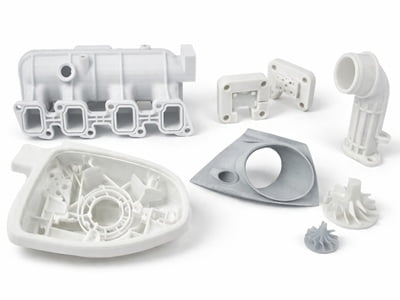
After all the technical details, this is the most important question. I always tell my clients that material selection isn't about finding the "best" material—it's about finding the right-fit material. You're making a calculated trade-off. You don't need a PEEK part if a PETG part will do the job for a fraction of the cost. Here is the simple, four-step process I walk them through.
Step 1: Define the Application's Purpose
Start with the most basic question: What does this part need to do?
- Is it a visual prototype where looks are all that matter? (Use PLA)
- Is it a form/fit test to check assembly? (Use PLA or PETG)
- Is it a functional part that has to bear a load, resist wear, or flex? (Consider PETG, ABS, Nylon, or Composites)
- Is it an end-use part for a demanding industrial environment? (Look at PC, ULTEM, or PEEK)
Step 2: Identify Key Mechanical and Thermal Properties
Make a checklist of non-negotiables. Does it need to be:
- Strong and rigid? -> Look at fiber-reinforced composites.
- Tough and impact-resistant? -> Look at PC or ABS.
- Flexible and rubbery? -> Look at TPU.
- Heat resistant? -> Note the maximum operating temperature and choose accordingly (ABS, ASA, PC, PEEK).
Step 3: Consider the Operating Environment
Where will this part live?
- Indoors or outdoors? If outdoors, you need UV resistance. Choose ASA or PETG over ABS or PLA.
- Exposed to chemicals or oils? Check a chemical resistance chart. Nylon and PEEK are excellent here.
- In contact with food? Use a material specifically certified as food-safe, like certain grades of PETG or PLA.
Step 4: Balance Performance with Cost and Printability
Now, review the materials that meet your criteria. Can your printer handle the high temperatures required for PC? Is the extreme performance of a carbon-fiber composite worth the extra cost over a standard Nylon? The goal is to find the lowest-cost, easiest-to-print material that confidently checks all your requirement boxes. This pragmatic approach ensures you get the performance you need without overspending or over-engineering.
Conclusion
Choosing the right plastic is a balancing act between your part's needs, your budget, and your printer's abilities. By defining your application first, you can confidently select the perfect material for success.
Understanding mechanical properties helps you choose the right plastic for your specific application needs. ↩
Understanding FDM helps you choose the right technology for your plastic material. ↩
Learning about SLA explains its advantages for high-detail and smooth surface printing. ↩
Knowing about PLA helps beginners choose an easy-to-use and eco-friendly material. ↩
Learning about ABS explains its strength and heat resistance for functional parts. ↩
Understanding ASA helps you choose a UV-resistant material for outdoor applications. ↩
Exploring PETG shows its balance of strength and ease of printing for versatile applications. ↩
Understanding PC highlights its impact resistance and high-temperature tolerance for demanding jobs. ↩
Learning about Nylon explains its toughness and self-lubricating properties for durable applications. ↩
Exploring PEEK shows its exceptional heat and chemical resistance for extreme environments. ↩
Understanding TPU helps you create parts that bend and flex without breaking. ↩
Exploring TPE explains its extra flexibility for applications requiring rubber-like properties. ↩