
Understanding 3D Printer Plastic Materials: From Basic Plastics to Industrial Applications?
Struggling to choose the right plastic for your 3D printer? Picking the wrong one wastes time and money. This guide makes it simple to find the perfect material for your project.
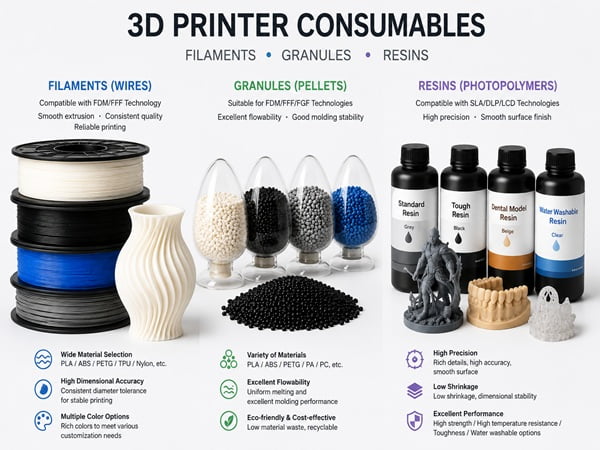
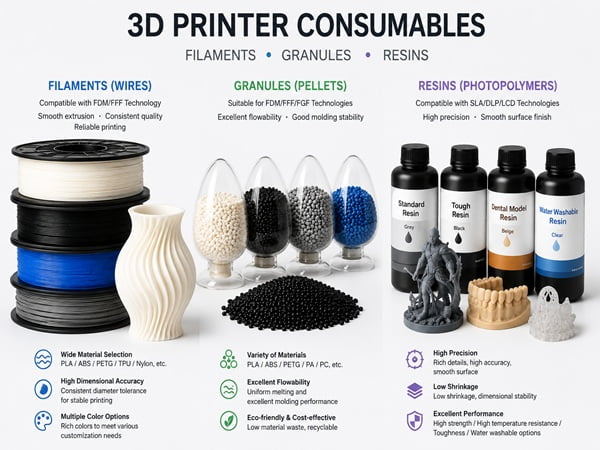
Plastics are the most popular 3D printing materials because they are affordable, versatile, and easy to process.1 They come in many forms like filament, pellets, and resin, suitable for everything from simple models to strong industrial parts, making them ideal for a wide range of applications.
For over 27 years, I've been deep in the world of manufacturing with CHENcan CNC. I've seen materials and technologies evolve, and nothing has changed the game quite like the explosion of plastics in 3D printing. It can seem complex, but it's actually pretty straightforward once you understand the basics. Let's break down the world of 3D printing plastics, from the materials you'd use on your desktop to the advanced polymers we use to build parts for aerospace and automotive giants. This journey will help you make smarter choices for your own projects.
An Overview of Plastic Materials Used in 3D Printing?
The sheer number of 3D printing plastics can feel overwhelming. It's hard to know where to begin when you see so many acronyms. Let's start with a simple, clear overview.
3D printing plastics range from standard materials like PLA and ABS for hobbyists to advanced engineering plastics like PEEK and carbon fiber composites for industrial use.2 This variety allows for the creation of everything from simple models to high-performance, functional parts that can withstand intense stress.
To make things easier, I like to group 3D printing plastics into three main categories. Think of it as a ladder, where each step up offers more performance but also requires more from your printer and your budget.
The Three Tiers of 3D Printing Plastics
| Category | Examples | Primary Use |
|---|---|---|
| Standard Plastics | PLA, ABS, PETG | Visual prototypes, hobbyist projects, non-functional models. |
| Engineering Plastics | Nylon, PC, ASA | Functional prototypes, manufacturing aids (jigs, fixtures), durable end-use parts. |
| High-Performance Plastics | PEEK, PEI, Composites | Demanding industrial applications, metal replacement, high-temperature parts. |
At the bottom, you have your standard plastics. These are perfect for getting started and for parts where looks matter more than strength. In the middle, engineering plastics offer a big jump in durability and are the workhorses for many businesses. At the top, high-performance plastics are for extreme applications where parts must survive intense heat, chemicals, or mechanical loads. As we've helped over 12,000 clients, we've seen this progression firsthand. A company might start by prototyping with PLA, then move to printing functional tools with Nylon, and finally use our industrial machines to create PEEK parts for their final product.
Why Plastics Dominate Modern 3D Printing Technologies?
Have you ever wondered why plastic is the king of 3D printing? Other materials like metal exist, but plastic is absolutely everywhere. Let's explore the simple reasons for its dominance.
Plastics dominate 3D printing due to their low cost, ease of processing, and incredibly wide range of properties.3 They melt at relatively low temperatures, which simplifies printer design and makes them a perfect match for the most common and accessible printing technologies like FDM.
In my experience, the dominance of plastic comes down to a few key advantages that make it practical for almost everyone, from a single designer to a massive factory.
First, cost is a huge factor. Plastic raw material is simply much cheaper to produce than metal powder or specialized resins. This lowers the barrier to entry and makes it affordable to experiment and create multiple iterations of a design.
Second is processability. Most plastics have a low melting point. This means the 3D printer doesn't need a powerful laser or an extremely hot furnace. A simple heating element is often enough, which makes the machines themselves cheaper, safer, and easier to run.
Third, the versatility is unmatched. Need something rigid? There's a plastic for that. Need something flexible and rubbery? There's a plastic for that, too. You can find plastics that are transparent, UV-resistant, food-safe, or as strong as some metals. This huge toolbox of properties means you can find a plastic for almost any job. At CHENcan, many of our automotive clients use plastic 3D printing to rapidly create prototypes of car body panels before committing to the expensive process of machining large metal molds.
| Feature | Plastic (FDM) | Metal (DMLS/SLM) |
|---|---|---|
| Material Cost | Low | Very High |
| Machine Cost | Low to High | Very High |
| Ease of Use | Easy | Very Difficult / Specialized |
| Speed | Fast | Slow |
Forms of Plastic Materials: Filament, Pellet, Powder, and Liquid Resin?
Plastic for 3D printing isn't just one thing. It comes in different forms, and using the wrong one for your machine just won't work. Let's clarify the main forms and their uses.
The main forms are filament (spools of plastic thread for FDM printers), pellets (small granules for large-scale industrial printing), powder (for SLS printers), and liquid resin (for SLA/DLP printers).4 Each form corresponds to a specific 3D printing technology and application.
The form of the plastic you use is determined by your 3D printer's technology. Understanding these forms is the first step to connecting a material to a machine.
Comparing the Four Main Forms of Plastic
| Form | Technology | Description | Best For |
|---|---|---|---|
| Filament | FDM / FFF | Plastic thread wound on a spool. The most common form. | Hobbyists, desktop prototyping, general use. |
| Pellets | Fused Granulate Fabrication (FGF) | Small, raw plastic granules, like coffee beans. | Large-scale industrial printing, very large parts, cost savings. |
| Powder | Selective Laser Sintering (SLS) | Fine, dust-like powder spread in a layer. | Complex, strong parts with no need for support structures. |
| Liquid Resin | SLA / DLP / MSLA | A photopolymer liquid cured by UV light. | High-detail models, jewelry, dental applications. |
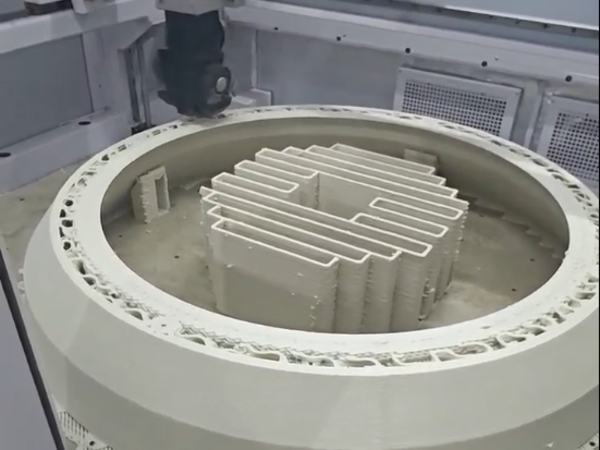
In our work at CHENcan, we deal a lot with pellets. Why? Because for our clients making massive parts like foundry molds for mining machinery or full-size sculptures, using filament would be incredibly slow and expensive. Pellets are the raw, industrial form of plastic, which makes them dramatically cheaper—often up to 10 times less than the equivalent filament. Our Industry 3D Printers are designed to take these raw pellets and print huge objects quickly and affordably. This is a key factor when you choose a printer: you have to match it to your material, size, and production goals.
Standard 3D Printing Plastics and Their Characteristics?
Getting started with 3D printing? The basic plastics like PLA, ABS, and PETG can seem similar, but they have key differences. Let's break down the most common starting materials.
PLA is easy to print and biodegradable, perfect for beginners and visual models.5 ABS is stronger and more heat-resistant but harder to print.6 PETG offers a good balance, combining ABS's strength with PLA's ease of printing, plus good chemical resistance.7
When I first got into 3D printing years ago, PLA was my best friend. It just works. But as soon as I needed to make a part that could handle a bit of stress, I had to learn about the others. These three plastics are the foundation for most desktop 3D printing.
PLA vs. ABS vs. PETG
| Feature | PLA (Polylactic Acid) | ABS (Acrylonitrile Butadiene Styrene) | PETG (Polyethylene Terephthalate Glycol) |
|---|---|---|---|
| Ease of Use | Easy. No heated bed required, doesn't warp easily. | Difficult. Needs a heated bed and enclosure to prevent warping and cracking. | Medium. Can be stringy, but generally easier than ABS. |
| Strength & Durability | Medium. It's rigid but brittle; can snap under pressure. | High. Very durable and impact-resistant. Think LEGO bricks. | High. More flexible than PLA, less brittle, and very tough. |
| Temperature Resistance | Low. Can deform in a hot car on a summer day (around 60°C). | Medium. Good up to about 100°C. | Medium. Good up to about 80°C. |
| Common Uses | Visual prototypes, architectural models, hobbyist prints. | Functional parts like phone cases, drone parts, car trim. | Mechanical parts, food-safe containers, parts that need some flex. |
Choosing between them is a classic trade-off. If you're printing a decorative vase or a model that will sit on a shelf, PLA is the obvious choice. If you're making a replacement part for a lawnmower or a bracket that needs to hold weight, you need to step up to PETG or ABS.
Engineering-Grade Plastics for Functional Parts?
Are your standard plastic parts breaking under pressure? Prototypes are fine, but you need real, functional parts that last. It's time to explore engineering-grade plastics.
Engineering plastics like Nylon, Polycarbonate (PC), and ASA offer superior strength, durability, and temperature resistance.8 They are used for creating functional prototypes, manufacturing aids like jigs and fixtures, and end-use parts that must withstand real-world mechanical stress.
This is where 3D printing gets serious. At CHENcan, we see a huge demand for parts made from these materials. They bridge the gap between simple models and industrial-strength components. When a client needs to create a custom jig for their assembly line, they don't use PLA; they use something that can withstand repeated use and abuse.
Here’s a quick look at the stars of this category:
- Nylon (PA): This is the go-to material for durability and wear resistance. It has a low coefficient of friction, which makes it perfect for parts that rub against each other, like gears, living hinges, and snap-fit components. It's tough and slightly flexible, so it bends instead of breaking.
- Polycarbonate (PC): When you need extreme toughness and impact resistance, you choose PC. It's the same material used to make bulletproof glass and riot shields. It's also very temperature-resistant and can be optically transparent, making it great for protective housings or clear mechanical parts.
- ASA (Acrylonitrile Styrene Acrylate): Think of ASA as a superhero version of ABS. It has all the strength and rigidity of ABS but with one huge advantage: it is highly resistant to UV radiation and weathering. This makes it the perfect choice for parts that will live outdoors, like custom parts for vehicles, garden equipment, or exterior housings.
High-Temperature and High-Strength Plastic Materials?
What happens when even engineering plastics can't handle the heat? Your parts deform in demanding industrial environments. Welcome to the world of high-performance plastics like PEEK and PEI.
High-performance plastics like PEEK and PEI (Ultem) offer exceptional thermal stability, chemical resistance, and mechanical strength.9 They can often replace metal in harsh aerospace, automotive, and medical applications, but require specialized, high-temperature 3D printers to process them.
These materials are in a class of their own. They are not for hobbyists. Printing them requires machines with heated chambers over 100°C and nozzle temperatures exceeding 400°C. This is where our deep experience in building robust industrial CNC machines comes into play. We design our high-end 3D printers to handle the extreme conditions these materials demand.
- PEEK (Polyether Ether Ketone): This is one of the highest-performing thermoplastics available. It maintains its incredible strength and stiffness even at continuous operating temperatures above 250°C (482°F). It's also resistant to almost all chemicals and is biocompatible, so it's even used for spinal implants and other medical devices. It's a true metal-replacement material.
- PEI (Polyetherimide), often known by the brand name Ultem: PEI is another high-temperature champion with an excellent strength-to-weight ratio. It's inherently flame-retardant and produces very little smoke, which is why it's heavily used in the aerospace industry for interior cabin components. It also has great chemical resistance and dimensional stability.
Working with these materials is a game-changer. I remember a client in the oil and gas industry who needed to prototype a custom sensor housing. It had to survive high temperatures and corrosive chemicals downhole. Machining it from metal was slow and expensive. We helped them print it with PEEK on one of our specialized machines, and they had a functional part in days, not weeks.
Reinforced and Composite Plastic Materials in 3D Printing?
Do you need the strength of metal but the light weight of plastic? Standard plastics just aren't stiff or strong enough for some jobs. The solution is reinforced composite plastics.
Reinforced plastics mix a base plastic like Nylon with short-chopped fibers of carbon, glass, or Kevlar.10 This dramatically increases stiffness, strength, and stability without adding much weight, creating parts that can rival aluminum in certain properties and are perfect for high-performance applications.
This is one of the most exciting areas in 3D printing today. By adding a reinforcement, you can transform a good plastic into a great one. The base plastic (the "matrix") holds everything together, while the short fibers provide incredible strength and stiffness.
- Carbon Fiber Reinforced: This is the most popular option for high performance. Adding carbon fiber to a base like Nylon (PA-CF) or PETG (PETG-CF) makes the material significantly stiffer, stronger, and more dimensionally stable. It’s ideal for manufacturing tools (jigs and fixtures), drone frames, and high-performance automotive parts. The resulting parts are incredibly lightweight and strong.
- Glass Fiber Reinforced: This is a more cost-effective alternative to carbon fiber. It still provides a major boost in strength, stiffness, and heat resistance. It's a great choice for functional parts that need to be more robust than standard plastics but don't require the extreme performance (and cost) of carbon fiber.
One important thing to know is that these materials are very abrasive. They will quickly wear out a standard brass nozzle. You need to use a hardened steel nozzle to print them reliably. Our CHENcan CNC machines, especially our large-format pellet printers, are built for this. We can equip them with wear-resistant components to handle these abrasive composites, enabling our clients in the wind energy sector to print massive, strong molds and tooling.
Specialty Plastics: Flexible, Transparent, and Chemical-Resistant Materials?
Not all parts need to be hard and rigid. Sometimes you need to print seals, soft grips, or clear windows for your project. Let's look at the specialty plastics that do these unique jobs.
Specialty plastics include flexible materials like TPU for creating rubber-like parts, transparent materials like PC for see-through components, and chemically resistant plastics like PP for containers. These materials greatly expand the possibilities of what you can create with a 3D printer.
Having these materials in your toolbox opens up a whole new world of design. Instead of just making rigid objects, you can create complex assemblies with integrated soft-touch elements, seals, or windows. It allows you to produce a more complete, finished product directly from the printer.
A Guide to Common Specialty Plastics
| Material Type | Example | Key Property | Common Application |
|---|---|---|---|
| Flexible | TPU (Thermoplastic Polyurethane) | Rubber-like elasticity and excellent abrasion resistance. | Gaskets, seals, flexible joints, phone cases, shoe soles. |
| Transparent | PC (Polycarbonate), Clear PETG | High optical clarity and strength. | Lenses, light covers, transparent housings, visual flow models. |
| Chemical-Resistant | PP (Polypropylene) | Excellent resistance to acids, bases, and many chemicals. | Laboratory equipment, fluid containers, living hinges, automotive parts. |
I recall working with a client in the shipbuilding industry, Cleopatra Boats. They needed to prototype a custom dashboard component that included a rigid housing, a clear gauge cover, and integrated waterproof seals. In the past, this would have required three different manufacturing processes. Using one of our multi-material capable machines, they were able to prototype the entire assembly using ASA for the housing, PC for the clear cover, and TPU for the seals, drastically speeding up their design and testing cycle. It perfectly shows how a diverse material palette can solve complex engineering problems.
How to Select the Right Plastic Material for Your 3D Printing Project?
With so many options, how do you finally choose the right one? Picking the wrong material leads to frustration and failed projects. Let's follow a simple, step-by-step process.
To select the right plastic, first define your project's functional needs: mechanical properties (strength, flexibility), thermal resistance (heat), and environment (UV, chemicals). Then, balance those needs with your budget and printer's capabilities. Always start with the cheapest material that meets your minimum requirements.
This is a question I answer for clients every single day. The best machine in the world is useless if you're using the wrong material. Here is the exact process we use at CHENcan CNC to guide our customers.
-
Define the Part's Job. What does this part need to do? Is it a visual model that just needs to look good? Is it a functional prototype to test a mechanism? Or is it a final end-use part that will be put to work? The answer to this question narrows your choices immediately.
-
List Key Properties. Now, get specific. Make a checklist of non-negotiable requirements.
- Mechanical: Does it need to be super strong? Impact-resistant? Flexible? Wear-resistant?
- Thermal: What is the highest temperature it will experience? Will it be near an engine or in direct sunlight?
- Environmental: Will it be used outdoors (needs UV resistance)? Will it be exposed to oils, fuels, or other chemicals?
-
Match with Your Production Goals and Printer. This is where you connect the material to your reality. As I always say, you must match the printer to your materials, size, and production targets.
- Size & Cost: For very large parts, like foundry patterns or large architectural models, using filament is too slow and expensive. This is where pellet-fed printers shine, as the raw material is much cheaper.
- Printer Capability: Does your printer have what it takes? Can it reach the required nozzle temperature? Does it have a heated bed or enclosure for materials like ABS or ASA? Do you have a hardened nozzle for composites?
Start from the bottom up. Does PLA meet your needs? If not, does PETG? If not, does ASA? By stepping up only when necessary, you save time, money, and printing headaches.
The Future of Plastic Materials in 3D Printing?
Where is the world of 3D printing plastic headed? The technology is changing so fast it can be hard to keep up. Let's look at the exciting innovations on the horizon.
The future of 3D printing plastics is focused on sustainability with bio-based and recycled materials, higher performance with smarter materials, and multi-material printing. Expect to see more advanced composites, conductive plastics, and materials designed for specific, high-tech applications.
After nearly three decades in this industry, I can say we are at a major turning point. The focus is shifting from just making things to making things better, smarter, and more responsibly. Here are the trends I see shaping our future:
- Sustainability: This is huge. There is a massive push for materials made from recycled sources (like rPETG from old plastic bottles) and new, high-performance bioplastics that reduce our reliance on fossil fuels. The goal is a circular economy where old prints can be turned into new material.
- Smart Materials & 4D Printing: We are seeing the emergence of "smart" plastics that can react to their environment. Imagine a material that changes shape when heated (4D printing), conducts electricity to create an integrated circuit, or changes color to indicate stress.
- Next-Generation Composites: The move beyond short, chopped fibers to continuous fiber reinforcement is a game-changer. Printers that can lay down a continuous strand of carbon fiber within a thermoplastic matrix are creating parts with strength properties that are directly comparable to machined aluminum.
- Bioprinting and Medical Materials: The development of biocompatible and bioresorbable plastics is revolutionizing medicine. These materials can be used as scaffolds for growing new tissue or for creating custom implants that dissolve safely inside the body over time.
At CHENcan CNC, we are not just watching this future unfold; we are building it. We are constantly developing our machines to handle these next-generation materials, ensuring our clients are always at the cutting edge of manufacturing technology.
Conclusion
Choosing the right plastic is about matching the material's properties to your project's specific needs. From simple PLA to advanced composites, there is a perfect plastic out there for every job.
"3D printing - Wikipedia", https://en.wikipedia.org/wiki/3D_printing. This source explains the widespread use of plastics in 3D printing due to their affordability, versatility, and ease of processing. Evidence role: general_support; source type: encyclopedia. Supports: Plastics are the most popular 3D printing materials because they are affordable, versatile, and easy to process.. ↩
"Filaments & Materials - 3D Printing - An Introduction - LibGuides", https://libguides.uthscsa.edu/c.php?g=1041937&p=8896644. This source categorizes 3D printing plastics into standard, engineering, and advanced materials, explaining their applications. Evidence role: definition; source type: education. Supports: 3D printing plastics range from standard materials like PLA and ABS for hobbyists to advanced engineering plastics like PEEK and carbon fiber composites for industrial use.. ↩
"3D Printing: Fabricating the Future - NSF Impacts", https://www.nsf.gov/impacts/3d-printing. This source supports the claim that plastics dominate 3D printing due to their affordability, ease of processing, and diverse properties. Evidence role: expert_consensus; source type: research. Supports: Plastics dominate 3D printing due to their low cost, ease of processing, and incredibly wide range of properties.. ↩
"Guide to 3D Printing Materials: Types, Applications, and Properties", https://formlabs.com/blog/3d-printing-materials/. This source explains the different forms of plastic materials used in 3D printing and their corresponding technologies. Evidence role: definition; source type: education. Supports: The main forms are filament (spools of plastic thread for FDM printers), pellets (small granules for large-scale industrial printing), powder (for SLS printers), and liquid resin (for SLA/DLP printers).. ↩
"Mechanical Properties of 3D-Printing Polylactic Acid Parts subjected ...", https://pmc.ncbi.nlm.nih.gov/articles/PMC6926899/. This source confirms PLA's ease of use and biodegradability, making it suitable for beginners and visual models. Evidence role: general_support; source type: education. Supports: PLA is easy to print and biodegradable, perfect for beginners and visual models.. ↩
"A Comprehensive Mechanical Examination of ABS and ABS-like ...", https://pmc.ncbi.nlm.nih.gov/articles/PMC10647641/. This source supports the claim that ABS is stronger and more heat-resistant than PLA but presents challenges in printing. Evidence role: general_support; source type: education. Supports: ABS is stronger and more heat-resistant but harder to print.. ↩
"[PDF] Mechanical Properties Evaluation of 3D Printed PETG and PCTG ...", https://openprairie.sdstate.edu/cgi/viewcontent.cgi?article=1846&context=etd2. This source explains PETG's balanced properties, including strength, ease of printing, and chemical resistance. Evidence role: general_support; source type: education. Supports: PETG offers a good balance, combining ABS's strength with PLA's ease of printing, plus good chemical resistance.. ↩
"Recent advances in additive manufacturing of engineering ...", https://pmc.ncbi.nlm.nih.gov/articles/PMC9057068/. This source confirms the superior strength, durability, and temperature resistance of engineering plastics like Nylon, PC, and ASA. Evidence role: general_support; source type: education. Supports: Engineering plastics like Nylon, Polycarbonate (PC), and ASA offer superior strength, durability, and temperature resistance.. ↩
"High-performance plastics - Wikipedia", https://en.wikipedia.org/wiki/High-performance_plastics. This source supports the claim that high-performance plastics like PEEK and PEI offer exceptional thermal stability, chemical resistance, and mechanical strength. Evidence role: general_support; source type: research. Supports: High-performance plastics like PEEK and PEI (Ultem) offer exceptional thermal stability, chemical resistance, and mechanical strength.. ↩
"3D Printing of Fiber-Reinforced Plastic Composites Using ... - PMC", https://pmc.ncbi.nlm.nih.gov/articles/PMC8399339/. This source explains the composition and benefits of reinforced plastics in 3D printing. Evidence role: definition; source type: education. Supports: Reinforced plastics mix a base plastic like Nylon with short-chopped fibers of carbon, glass, or Kevlar.. ↩