
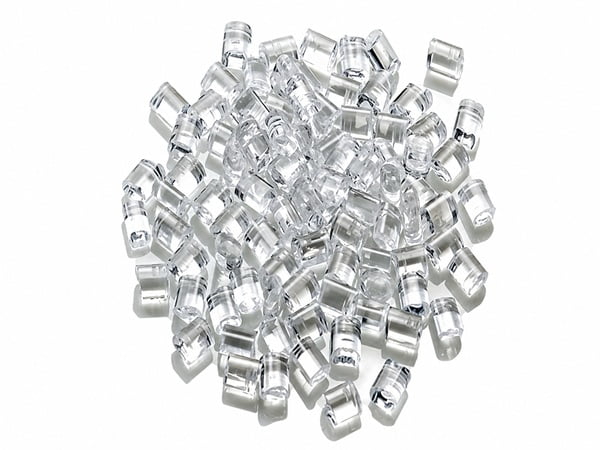
PLA vs ABS for 3D Printing: A Complete Comparison to Help You Choose the Right Material?
Struggling to pick between PLA and ABS for your 3D printing project? This choice can make or break your final part. I'll help you understand which one is right for your specific needs.
PLA is easy to print and eco-friendly1, making it perfect for beginners, visual prototypes, and decorative items. ABS is stronger, more durable, and heat-resistant2, making it the ideal choice for functional parts that need to withstand stress. Your decision should depend on your project's final application.
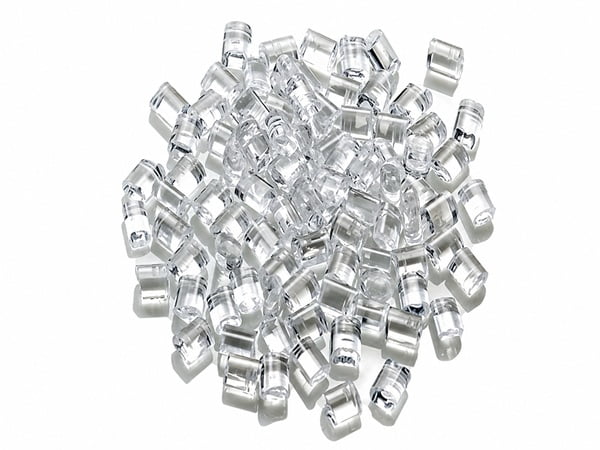
I've spent years working with different materials on all kinds of machines, from small desktop printers to massive industrial ones. This experience has taught me that there's no single "best" material. It all comes down to what you are trying to create. Let's break down the differences between these two popular plastics so you can print with confidence and get the results you want every single time.
What Are PLA and ABS? Understanding the Basics Before Comparing?
New to 3D printing and confused by all the acronyms? PLA and ABS sound complex, but they are just different types of plastic. I'll help you understand the core differences between them.
PLA (Polylactic Acid) is a bioplastic made from renewable resources like corn starch3, making it a more eco-friendly choice. ABS (Acrylonitrile Butadiene Styrene) is a petroleum-based thermoplastic known for its strength and impact resistance4—it's the same material used to make LEGO bricks.
Let's dive a little deeper. The origin of these materials is the biggest factor that influences their properties.
PLA: The User-Friendly Bioplastic
PLA comes from fermented plant starch. Because of this, it has a slightly sweet smell when printed, which is much more pleasant than the smell of melting plastic. It's often the default material for hobbyists and schools because it's non-toxic and very forgiving to print with. In my work with large-scale pellet 3D printers, we often use PLA for creating massive sculptures or furniture prototypes. The client can get a full-size model quickly, and since these are often visual pieces, the extreme durability of an engineering-grade plastic isn't necessary.
ABS: The Industrial Workhorse
ABS is a staple in industrial manufacturing. It's created from fossil fuels and is known for its incredible toughness. Think about car bumpers, power tool housings, and protective cases—that's usually ABS. Its chemical makeup gives it superior mechanical properties, but it also releases fumes with a strong odor during printing. Proper ventilation is not just recommended; it's essential for safety.
| Feature | Polylactic Acid (PLA) | Acrylonitrile Butadiene Styrene (ABS) |
|---|---|---|
| Origin | Plant-based (Corn, Sugarcane) | Petroleum-based |
| Common Use | Hobbyists, Prototypes, Models | Functional Parts, Automotive, Toys |
| Eco-Friendly | Biodegradable (Industrial) | Not Biodegradable |
| Smell When Printing | Sweet, Minimal | Strong, Plastic Odor |
PLA vs ABS Material Properties: Strength, Flexibility, and Heat Resistance?
Do you need a part that can take a hit without breaking? The material properties are what matter most. Let's see how PLA and ABS compare in strength, flexibility, and heat resistance.
ABS is the clear winner for mechanical performance. It is stronger, more flexible, and can withstand much higher temperatures than PLA. PLA is more rigid and brittle, making it unsuitable for parts that will be bent, stressed, or exposed to heat.
When I'm deciding between materials for a project, I always think about the environment the final part will live in. A decorative vase that sits on a shelf has very different needs than a custom jig used in our machine shop. The key is to match the material's properties to the application.
Strength and Flexibility
Tensile strength measures how much a material can be pulled before it breaks. ABS generally has a higher tensile strength5, but more importantly, it bends before it breaks. This flexibility makes it much more durable for parts that experience impact or vibration. PLA, on the other hand, is very stiff. It will hold its shape well under normal loads, but if you apply too much force, it will snap rather than bend.
Heat Resistance
This is one of the biggest differences. PLA has a low glass transition temperature, around 60°C (140°F). This means it will start to soften and deform on a hot day inside a car. ABS is much more robust, with a glass transition temperature of around 105°C (221°F). This makes it a reliable choice for parts used in electronics enclosures, automotive components, or any environment where temperatures can rise.
| Property | PLA | ABS | Winner |
|---|---|---|---|
| Strength (Durability) | Lower (Brittle) | Higher (Tough) | ABS |
| Flexibility (Ductility) | Low (Stiff) | High (Bends before breaking) | ABS |
| Heat Resistance | Low (~60°C) | High (~105°C) | ABS |
Environmental Impact and Sustainability: Is PLA Really Greener Than ABS?
Do you want to make your printing process more sustainable? The environmental impact of your material choice is important. Let's look at whether PLA is truly the "green" option it's made out to be.
PLA is considered more environmentally friendly because it's made from renewable plant resources and is commercially biodegradable6. ABS is petroleum-based and not biodegradable7. However, PLA's biodegradability requires specific industrial composting conditions, not your backyard compost bin.
The "green" label on PLA can be a bit misleading if you don't know the full story. While its plant-based origin is a huge plus, its end-of-life process is more complicated. Most municipal recycling facilities don't process PLA, and it won't break down in a landfill. It needs to be sent to a special industrial composting facility where high temperatures can break it down.
ABS, being petroleum-based, has a larger carbon footprint from its production. It is not biodegradable at all, but it is recyclable (Type 7 plastic), though collection programs can be limited. The biggest environmental concern with ABS during use is the fumes it releases. Printing ABS produces Volatile Organic Compounds (VOCs) and ultrafine particles8, which can be harmful to breathe. I always insist on using an enclosed printer with a proper ventilation system, like a HEPA and carbon filter, whenever we are running an ABS job. PLA, in contrast, releases far fewer VOCs and is generally considered safe to print in a well-ventilated room without an enclosure.
Printability Comparison: Which Is Easier to 3D Print, PLA or ABS?
Are you tired of failed prints, warping, and spaghetti monsters? Choosing an easier material can save you a ton of time and frustration. Let's compare how simple it is to get a good print with PLA versus ABS.
PLA is significantly easier to 3D print than ABS9. It has a lower printing temperature, does not require a heated bed (though it helps), and is much less prone to warping and cracking. This makes PLA the ideal material for beginners.
From my own experience, I can tell you that my first successful prints were all with PLA. It's a very forgiving material that lets you learn the basics of 3D printing without constantly fighting your machine. ABS, on the other hand, requires more control over the printing environment.
The main challenge with ABS is its high rate of thermal contraction. As the plastic cools, it shrinks. If it cools too quickly, the layers pull on each other, causing the print to lift off the bed (warping) or split apart (cracking). This is why a heated print bed is mandatory for ABS—it keeps the bottom layers warm and adhered. An enclosed build chamber is also highly recommended to maintain a stable, warm ambient temperature, preventing drafts from causing sudden cooling. With our industrial pellet printers, managing the temperature for a massive ABS part is a huge engineering challenge. We have to ensure the entire print volume stays consistently hot to avoid catastrophic failures. PLA doesn't have this problem; it shrinks very little, so it sticks to the bed easily and rarely warps, even on an open-frame printer.
Recommended Printing Settings for PLA vs ABS (Temperature, Bed, Speed)?
Are you unsure about the right settings for your printer? Dialing in the correct temperature, bed adhesion, and speed is critical for success. I'll share the typical settings that work for PLA and ABS.
For PLA, use a nozzle temperature of 190-220°C and a bed temperature of 50-70°C. For ABS, you'll need a hotter nozzle at 230-260°C, a much hotter bed at 90-110°C, and an enclosure to trap heat.
These settings are a great starting point, but remember that every printer and every brand of filament can be slightly different. It's always a good idea to print a small calibration model, like a temperature tower, to find the perfect settings for your specific setup.
Let's break down why these settings are so different.
- Nozzle Temperature: This is the temperature needed to melt the plastic. ABS simply has a higher melting point than PLA.
- Bed Temperature: A heated bed helps the first layer stick properly and prevents warping. Since ABS shrinks so much more than PLA, it needs a much hotter bed to maintain a strong grip throughout the print.
- Cooling Fan: With PLA, you want the part cooling fan on at or near 100% after the first few layers. This quickly solidifies the plastic, allowing for sharp details and clean overhangs. With ABS, you want the fan turned off or on very low. Too much cooling will cause the layers to shrink rapidly and crack.
- Enclosure: An enclosure is optional for PLA but almost mandatory for ABS. It traps heat from the print bed, creating a stable, warm environment that prevents warping and layer splitting.
| Setting | PLA | ABS |
|---|---|---|
| Nozzle Temperature | 190-220°C | 230-260°C |
| Bed Temperature | 50-70°C (Optional) | 90-110°C (Required) |
| Print Speed | 40-60 mm/s | 40-60 mm/s |
| Part Cooling Fan | 100% (after first layers) | 0-30% |
| Enclosure | Not Required | Highly Recommended |
Dimensional Accuracy, Warping, and Shrinkage: Real-World Printing Behavior?
Do your printed parts not fit together correctly? Dimensional accuracy is critical for any functional print. Let's examine how the real-world behavior of PLA and ABS affects the final size of your parts.
PLA provides excellent dimensional accuracy right off the printer because it has a very low shrinkage rate. ABS shrinks significantly as it cools, which can lead to warping and less precise dimensions10, making it more challenging for parts that require tight tolerances.
This is a factor that many people overlook until they try to assemble a multi-part project. If you design a part to be exactly 100mm long, a PLA print will be very close to that dimension. An ABS print, however, might come out closer to 99.2mm. That 0.8% shrinkage might not seem like much, but it can be the difference between parts that snap together perfectly and parts that don't fit at all.
This behavior directly influences how we approach industrial projects. When a client needs a large prototype from our pellet 3D printers, we have to account for this. If the part is made from PLA, like a piece of furniture, what we model is very close to what we get. But if it's an industrial part made from ABS, we know that perfect accuracy is difficult to achieve directly from the printer due to warping and shrinkage. In these cases, we often print the part slightly oversized and then use one of our 5-axis CNC machines to mill it down to the exact final dimensions. This hybrid approach gives us the speed of additive manufacturing combined with the precision of subtractive manufacturing.
Post-Processing PLA vs ABS: Sanding, Machining, and Vapor Smoothing?
Do you want to give your 3D prints a smooth, professional finish? Post-processing can turn a rough print into a finished product. Let's compare how easy it is to sand, machine, and smooth PLA and ABS.
Both materials can be sanded, primed, and painted. However, ABS has a significant advantage: it can be easily smoothed with acetone vapor to create a glossy, injection-molded finish. PLA is more difficult to smooth chemically and can melt if sanded too aggressively.
The final finish of a part is often just as important as its mechanical properties. How you plan to finish your print can be a major factor in choosing your material.
Sanding and Machining
You can sand both PLA and ABS, but you need to be careful with PLA. Its low melting point means that the friction from aggressive power sanding can cause it to soften and gum up. Wet sanding is a great technique for both materials to get a smooth surface while keeping temperatures down. When it comes to machining (drilling, milling), ABS performs better. It's less brittle than PLA and is less likely to crack or chip when being machined.
Vapor Smoothing
This is where ABS truly shines. Exposing an ABS print to acetone vapor for a short period melts the outer layer, erasing layer lines and leaving a perfectly smooth, shiny surface. This process is amazing for aesthetic parts. PLA cannot be smoothed with acetone. While there are other chemicals that can smooth PLA, they are often more hazardous and difficult to work with. For industrial ABS parts, we often rely on CNC machining for a precise finish, but for consumer-facing prototypes, nothing beats the look of a vapor-smoothed part.
Applications of PLA vs ABS: When to Use Each Material?
Are you not sure which material is right for your specific project? Choosing the right plastic for the right job is the key to success. I'll show you the best applications for both PLA and ABS.
Use PLA for visual models, rapid prototypes, decorative objects, and parts that won't be subjected to heat or high stress. Choose ABS for functional parts, mechanical components, and items that require durability, impact resistance, and heat tolerance.
Thinking about the final use case is the most important step in material selection. Here's a breakdown of where I've seen these materials succeed.
Common Applications for PLA:
PLA is the king of rapid prototyping and visual models. Its ease of printing and fine detail resolution make it perfect for getting ideas off the screen and into your hands quickly.
- Architectural Models: Perfect for detailed, dimensionally accurate models.
- Figurines and Sculptures: Captures fine details well and is easy to paint. At CHENcan, our clients use our large pellet printers to create life-sized sculptures with PLA.
- Low-Stress Jigs and Fixtures: Good for workshop tools that don't face impact or heat.
- Educational Models: Safe and easy for students to use.
Common Applications for ABS:
ABS is the go-to material for parts that have to work for a living. Its toughness and temperature resistance make it suitable for real-world applications.
- Automotive Parts: Custom brackets, interior trim, and dashboard components.
- Functional Prototypes: For testing form, fit, and function under stress.
- Electronics Enclosures: It's strong and won't warp from the heat generated by components.
- Tool Handles and Machine Parts: Can withstand the wear and tear of daily use. We often see clients print ABS parts and then use our CNC machines to finish them for industrial use.
Cost, Availability, and Material Options: PLA vs ABS in the Market?
Are you worried about the cost of materials for your project? The price and availability of filament can be a deciding factor. Let's look at how PLA and ABS compare in the marketplace.
PLA and ABS are two of the most popular and affordable 3D printing materials available. Their prices are very similar, and you can find them from countless suppliers in a huge variety of colors and special formulations.
For hobbyists and small businesses, the cost difference between a standard spool of PLA and ABS is usually negligible. You can typically find a 1kg spool of either material for around $20-$25. This accessibility is a big reason why they remain the two most common filaments.
Where things get interesting is in the variety of blends available. You can find PLA+ or "Tough PLA," which offers improved impact resistance, getting closer to ABS's performance while remaining easy to print. For ABS, you can find blends reinforced with carbon fiber (ABS-CF) or glass fiber (ABS-GF) for incredibly strong, stiff parts. The market is full of options, so you can almost always find a variation of PLA or ABS that fits your exact needs. In the industrial space where we operate, we purchase materials as raw pellets, not filament. This dramatically lowers the cost per kilogram, making it economically feasible to print very large objects, like boat hulls or foundry patterns, that would be impossibly expensive using traditional filament spools.
PLA vs ABS: Final Decision Guide Based on Your Use Case?
Are you still feeling a little uncertain? Let's simplify everything into a quick decision-making guide. I'll help you make the final call between PLA and ABS based on your project and your printer.
Choose PLA if you are a beginner, your top priority is ease of printing, or you are making visual models that don't need heat or impact resistance. Choose ABS if you need strong, durable, heat-resistant functional parts and you have a printer with an enclosure.
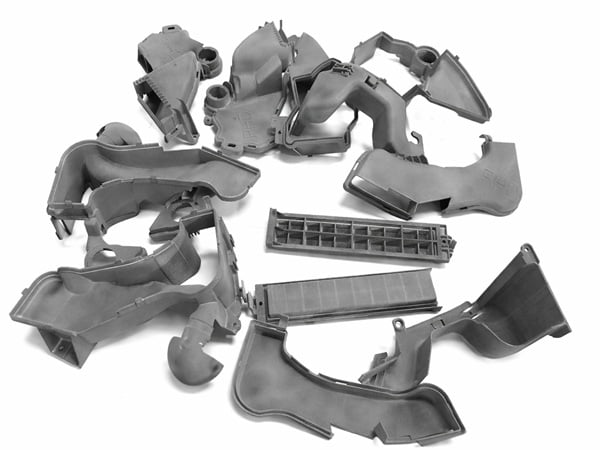
Let's walk through a simple checklist to make the right choice. Ask yourself these questions about your project:
-
Is this part for visual purposes or functional use?
- Visual: (e.g., a model, sculpture, or prototype for looks) -> Use PLA. It's easier to print and captures details beautifully.
- Functional: (e.g., a gear, bracket, or tool) -> Go to Question 2.
-
Will the part be exposed to temperatures above 50°C (122°F) or significant impact/stress?
- No: -> You can likely use a Tough PLA (PLA+). It offers better durability than standard PLA without the printing difficulty of ABS.
- Yes: -> You need the performance of ABS. Go to Question 3.
-
Does your 3D printer have a heated bed that can reach 100°C and an enclosure?
- Yes: -> Use ABS. Your printer is equipped to handle it. Remember to use good ventilation.
- No: -> Do not use ABS. You will likely get failed prints due to warping. You should consider upgrading your printer or using a different high-temperature material like PETG, which is a good compromise between PLA and ABS.
This simple guide should steer you in the right direction for 95% of projects.
Conclusion
In short, PLA is your go-to for ease of use and visual quality, while ABS is the workhorse for strong, functional parts. Your final choice depends entirely on your project's needs.
"Polylactic acid - Wikipedia", https://en.wikipedia.org/wiki/Polylactic_acid. This source explains the ease of printing with PLA and its eco-friendly properties due to its plant-based origin. Evidence role: definition; source type: encyclopedia. Supports: PLA is easy to print and eco-friendly.. Scope note: The eco-friendliness of PLA depends on industrial composting facilities, which are not universally available. ↩
"Understanding the Properties and Uses of ABS Plastic", https://sites.miamioh.edu/student-healthy-life/blog/understanding-the-properties-and-uses-of-abs-plastic/. This source provides data on ABS's mechanical properties, including its strength, durability, and heat resistance. Evidence role: mechanism; source type: research. Supports: ABS is stronger, more durable, and heat-resistant.. Scope note: The durability and heat resistance of ABS may vary depending on specific formulations. ↩
"Polylactic acid - Wikipedia", https://en.wikipedia.org/wiki/Polylactic_acid. This source confirms that PLA is derived from renewable resources such as corn starch and explains its classification as a bioplastic. Evidence role: definition; source type: encyclopedia. Supports: PLA (Polylactic Acid) is a bioplastic made from renewable resources like corn starch.. Scope note: The renewable nature of PLA depends on agricultural practices and resource availability. ↩
"Understanding the Properties and Uses of ABS Plastic", https://sites.miamioh.edu/student-healthy-life/blog/understanding-the-properties-and-uses-of-abs-plastic/. This source details the petroleum-based origin of ABS and its mechanical properties, including strength and impact resistance. Evidence role: definition; source type: education. Supports: ABS (Acrylonitrile Butadiene Styrene) is a petroleum-based thermoplastic known for its strength and impact resistance.. Scope note: The impact resistance of ABS can vary depending on additives and manufacturing processes. ↩
"Understanding the Properties and Uses of ABS Plastic", https://sites.miamioh.edu/student-healthy-life/blog/understanding-the-properties-and-uses-of-abs-plastic/. This source provides comparative tensile strength data for ABS and PLA, supporting the claim that ABS has higher tensile strength. Evidence role: statistic; source type: research. Supports: ABS generally has a higher tensile strength.. Scope note: Tensile strength values may vary based on specific formulations and testing conditions. ↩
"The Life Cycle Assessment for Polylactic Acid (PLA) to Make It a Low ...", https://pmc.ncbi.nlm.nih.gov/articles/PMC8199738/. This source explains the environmental benefits of PLA, including its renewable origin and biodegradability under industrial composting conditions. Evidence role: expert_consensus; source type: institution. Supports: PLA is considered more environmentally friendly because it's made from renewable plant resources and is commercially biodegradable.. Scope note: PLA's biodegradability is limited to industrial composting facilities, not home composting. ↩
"Conductive Additive Manufactured Acrylonitrile Butadiene Styrene ...", https://pmc.ncbi.nlm.nih.gov/articles/PMC10726190/. This source confirms the petroleum-based origin of ABS and its lack of biodegradability. Evidence role: definition; source type: government. Supports: ABS is petroleum-based and not biodegradable.. Scope note: The environmental impact of ABS depends on recycling practices and waste management systems. ↩
"VOC Emission Factors from 3D Printers - ABS (Acrylonitrile ...", https://repository.lsu.edu/gradschool_theses/4850/. This source provides data on the emissions produced during ABS printing, including VOCs and ultrafine particles. Evidence role: mechanism; source type: research. Supports: Printing ABS produces Volatile Organic Compounds (VOCs) and ultrafine particles.. Scope note: Emission levels can vary based on printer settings and filament quality. ↩
"PLA 3D Printing as a Straightforward and Versatile Fabrication ...", https://pmc.ncbi.nlm.nih.gov/articles/PMC10059908/. This source compares the printability of PLA and ABS, highlighting PLA's lower tendency to warp and easier adhesion. Evidence role: general_support; source type: education. Supports: PLA is significantly easier to 3D print than ABS.. Scope note: Ease of printing can vary based on printer model and environmental conditions. ↩
"Influence of Process Parameters on Shrinkage/Warpage and ...", https://ui.adsabs.harvard.edu/abs/2025PESci..65.5561R/abstract. This source explains the thermal contraction of ABS during cooling and its impact on dimensional accuracy. Evidence role: mechanism; source type: research. Supports: ABS shrinks significantly as it cools, which can lead to warping and less precise dimensions.. Scope note: Shrinkage rates can vary based on print settings and filament quality. ↩