
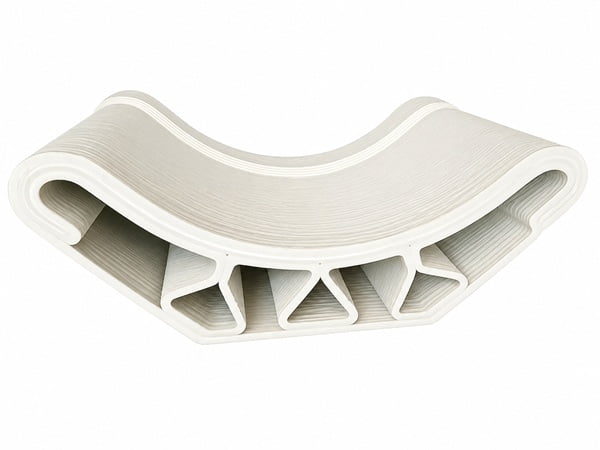
How Do You Navigate the World of 3D Printing Plastics?
leading paragraph: Feeling overwhelmed by the sheer number of 3D printing plastics? Choosing the wrong one means failed prints, weak parts, and wasted money.1 This guide makes your choice simple.
snippet paragraph: To choose the right 3D printing plastic, you must match the material's properties—like strength, flexibility, and heat resistance—to your project's specific needs. This guide details everything from common plastics like PLA and ABS to advanced engineering materials, ensuring you find the perfect fit for your application.
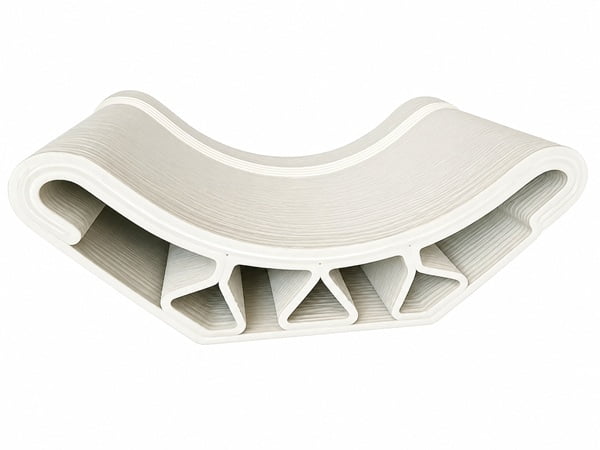
Transition Paragraph: I've been in the CNC and manufacturing industry for over 27 years, and I can tell you that with 3D printing, the material choice is the real game-changer. It's what determines what you can actually create, far more than the machine itself. Your printer gives you the capability, but the plastic defines the function, durability, and ultimate success of your part. To get it right, we have to start with the basics.
What Are Plastics in 3D Printing and Why Do They Matter?
leading paragraph: Confused about why material selection is so critical? You might think any plastic will do, but that assumption leads to parts that break, warp, or fail under pressure.
snippet paragraph: 3D printing plastics are polymers that become printable when heated or cured. They matter because each type has unique properties—strength, flexibility, and chemical resistance—that directly determine the final part's performance, durability, and suitability for its intended use. Your material choice defines the part's function.2
Dive deeper Paragraph: At their core, the plastics we use are called polymers, which are long chains of molecules. Most plastics for filament-based 3D printing are "thermoplastics." This means we can heat them until they become soft and fluid, print them into a shape, and let them cool and harden. We can even reheat and reshape them. This property is what makes them so useful. The reason this matters so much is that the specific polymer you choose dictates everything. You wouldn't use a brittle, low-temperature plastic for a functional gear in a hot engine bay. Likewise, you wouldn't spend extra on a high-strength, chemical-resistant material for a simple decorative model. The material is the foundation of your part's success. It's the difference between a prototype that works and one that shatters.
| Property Category | Why It Matters in 3D Printing | Example Application |
|---|---|---|
| Mechanical | Determines strength, stiffness, and impact resistance. | Functional parts, jigs, and fixtures need high mechanical strength. |
| Thermal | Defines how the part behaves at high or low temperatures. | Automotive parts must resist heat from the engine. |
| Aesthetic | Governs the look, feel, and surface finish of the part. | Consumer products and visual prototypes require a smooth finish. |
| Chemical | Dictates how the material holds up against oils, acids, or solvents. | Containers or parts used in labs need good chemical resistance. |
Filament, Powder, or Resin: How Printing Technology Defines Plastic Choice?
leading paragraph: Seeing plastics in spools, powders, and bottles can be confusing. Picking a filament for a resin printer is a common and costly mistake. Let's match the material form to the technology.
snippet paragraph: The form of plastic you use—filament, powder, or resin—is dictated by your 3D printer's technology. Fused Deposition Modeling (FDM) uses filament spools, Selective Laser Sintering (SLS) uses fine powder, and Stereolithography (SLA) uses liquid resin.3 Each technology requires its specific material type.
Dive deeper Paragraph: Your 3D printer technology is the first filter for material selection. You simply cannot use a material that isn't designed for your machine. The three most common technologies have very different needs. Fused Deposition Modeling (FDM) is the most popular; it melts and extrudes a plastic string, or filament, layer by layer. Stereolithography (SLA) uses a UV laser to cure a liquid photopolymer resin in a vat, creating highly detailed parts. Selective Laser Sintering (SLS) uses a powerful laser to fuse together particles of a polymer powder. At CHENcan, our industrial 3D printers often use a variation of FDM that takes plastic pellets instead of filament. This drastically reduces material costs for large-scale parts, like vehicle body panels or large molds, making industrial printing more economical. Understanding your machine's technology is non-negotiable.
| Technology | Material Form | Common Plastics | Key Advantage |
|---|---|---|---|
| FDM / FGF | Filament / Pellets | PLA, ABS, PETG, PC | Very cost-effective, wide material variety. |
| SLS | Powder | PA (Nylon), TPU | Strong, complex parts with no support structures needed. |
| SLA | Liquid Resin | Standard, Tough, Flexible Resins | Extremely high detail and smooth surface finish. |
ABS vs PLA: The Two Most Common 3D Printing Plastics Explained?
leading paragraph: Stuck choosing between ABS and PLA? One is easy to print, but the other is stronger and more durable. Making the wrong choice can ruin your prototype or functional part.
snippet paragraph: PLA is a biodegradable, easy-to-print plastic perfect for beginners, visual prototypes, and decorative items.4 ABS is a stronger, more durable, and heat-resistant plastic better suited for functional parts, but it requires a heated bed and good ventilation to print successfully.
Dive deeper Paragraph: If you are just starting with FDM printing, you will almost certainly begin with PLA or ABS. They are the workhorses of the industry. PLA (Polylactic Acid) is derived from plant sources like corn starch, making it biodegradable. Its key feature is its ease of use. It prints at low temperatures and doesn't warp easily, so you can get great results without a fancy, enclosed printer. However, it's brittle and has a low melting point, so it's not great for parts that will be stressed or get hot. ABS (Acrylonitrile Butadiene Styrene) is the same plastic used in LEGO bricks. It's much tougher, more durable, and can handle higher temperatures than PLA. This makes it ideal for mechanical parts, enclosures, and car interior components. The trade-off is that it's harder to print. It needs a heated print bed to stick and an enclosure to prevent warping as it cools. It also releases fumes with a strong odor, so you need good ventilation.
| Property | PLA (Polylactic Acid) | ABS (Acrylonitrile Butadiene Styrene) |
|---|---|---|
| Strength & Durability | Low (Brittle) | High (Tough) |
| Temperature Resistance | Low (around 60°C) | Medium (around 100°C) |
| Ease of Printing | Very Easy | Difficult (Prone to warping) |
| Fumes / Odor | Minimal, sweet smell | Strong, unpleasant smell |
| Best For | Visual prototypes, hobby models | Functional parts, enclosures |
PET, PETG, and ASA: Durable Plastics for Functional Parts?
leading paragraph: Need parts that can withstand more abuse than PLA? Your prints are cracking or warping under sunlight or stress. Let's look at some tougher, more versatile alternatives for real-world use.
snippet paragraph: PETG is an excellent all-rounder, combining PLA's ease of printing with ABS's strength and durability.5 It's also food-safe and has low shrinkage. ASA is like a super-powered ABS, offering fantastic UV and weather resistance, which makes it perfect for parts used outdoors.
Dive deeper Paragraph: When PLA isn't strong enough and ABS is too difficult to print, PETG is the material I recommend. PETG (Polyethylene Terephthalate Glycol) is a modified version of PET, the plastic used in water bottles. It's a fantastic middle ground. It offers much better strength and temperature resistance than PLA, but it prints almost as easily, with very little warping. It's also known for being food-safe and having good chemical resistance. We've seen clients use PETG extensively for creating durable items like indoor and outdoor sculptures and custom furniture. For parts that will live outside, however, ASA (Acrylonitrile Styrene Acrylate) is the clear winner. Think of it as an improved version of ABS. It has similar mechanical properties but includes a component that makes it highly resistant to UV radiation and weathering. Parts printed in ASA won't become brittle or yellow in the sun, making it the top choice for garden tools, car exterior trim, and outdoor enclosures.
| Property | PETG | ASA |
|---|---|---|
| UV Resistance | Good | Excellent |
| Strength | High | High |
| Ease of Printing | Easy | Medium (Less warping than ABS) |
| Best For | Functional parts, mechanical components, food-safe containers. | Outdoor applications, automotive exterior parts, signage. |
Engineering Plastics for 3D Printing: PC, PA, and PP?
leading paragraph: Are your standard plastics failing under real-world mechanical stress or chemical exposure? It's time to upgrade your projects to engineering-grade materials that can handle the job.
snippet paragraph: Engineering plastics like Polycarbonate (PC), Polyamide (PA/Nylon), and Polypropylene (PP) offer superior mechanical strength, high-temperature performance, and chemical resistance. They are used for making functional prototypes, jigs, fixtures, and end-use parts that must withstand demanding industrial environments.
Dive deeper Paragraph: When you move from hobbyist projects to true industrial applications, you enter the world of engineering plastics. These materials are designed for performance. Polycarbonate (PC) is incredibly strong, tough, and temperature-resistant, which is why it's used for things like bulletproof glass. It's challenging to print, requiring very high temperatures and an enclosure, but the results are exceptionally durable. Polyamide (PA), commonly known as Nylon, is another top performer. It's famous for its excellent strength, flexibility, and wear resistance, making it perfect for gears, bearings, and living hinges. Its main drawback is that it absorbs moisture from the air, which can affect its properties and printability if not stored correctly. Then there's Polypropylene (PP), a material known for its amazing chemical resistance and toughness. We have had great success with clients using PP to 3D print casting molds, as it serves as a fantastic, durable replacement for traditional wooden molds in foundries.
| Material | Key Feature | Common Challenge | Best Application |
|---|---|---|---|
| PC (Polycarbonate) | Extreme strength and heat resistance. | Very difficult to print (high temp, warps). | Strong functional parts, protective housings. |
| PA (Nylon) | Excellent wear resistance and toughness. | Absorbs moisture (must be kept dry). | Gears, bearings, living hinges. |
| PP (Polypropylene) | Superb chemical resistance and durability. | Very difficult to print (warps severely). | Casting molds, chemical tanks, durable containers. |
High-Performance 3D Printing Plastics: PEEK, PEKK, and ULTEM?
leading paragraph: Working on aerospace or medical applications where failure is not an option? Standard plastics melt or degrade in extreme environments. You need materials that push every boundary of performance.
snippet paragraph: High-performance plastics like PEEK, PEKK, and ULTEM offer exceptional thermal stability, chemical resistance, and mechanical strength that can rival some metals. They are used in the most demanding industries for parts that operate under extreme heat and stress.
Dive deeper Paragraph: At the very top of the polymer pyramid are high-performance plastics. These materials are not for everyday use. They are expensive, extremely difficult to print, and require specialized, high-temperature industrial 3D printers that can reach 400°C or more. PEEK (Polyether Ether Ketone) is one of the most well-known. It has an incredible combination of mechanical strength, biocompatibility, and resistance to chemicals and high temperatures, making it a choice material for medical implants and aerospace components. PEKK (Polyetherketoneketone) is in the same family as PEEK. It offers similar performance but is sometimes considered slightly easier to print because its crystallization rate can be controlled better. ULTEM (PEI) is another leader in this category, valued for its high strength-to-weight ratio, inherent flame retardancy, and consistent performance at elevated temperatures. These materials are true metal-replacement solutions for the most critical applications.
| Material | Max Continuous Service Temp | Key Advantage | Industry |
|---|---|---|---|
| PEEK | ~250°C | Extreme chemical and wear resistance, biocompatible. | Medical, Aerospace |
| PEKK | ~260°C | Similar to PEEK, with slightly better printability. | Aerospace, Oil & Gas |
| ULTEM (PEI) | ~170°C | High strength-to-weight ratio, flame retardant. | Automotive, Aerospace |
Composite Plastics: Carbon Fiber, Glass Fiber, and Reinforced Materials?
leading paragraph: Need parts that are both incredibly strong and lightweight? Your standard plastic parts are too heavy or not stiff enough. Reinforcing plastics with fibers is the answer for high-performance results.
snippet paragraph: Composite plastics are base polymers like Nylon or ABS reinforced with short or continuous fibers, such as carbon fiber or glass fiber. This reinforcement dramatically increases the part's stiffness, strength, and dimensional stability without adding significant weight, creating high-performance parts.
Dive deeper Paragraph: What if you could take a good plastic and make it great? That's the idea behind composites. You start with a base plastic, or "matrix," like Nylon, ABS, or PETG, and you infuse it with tiny, chopped strands of a much stronger material. The most common reinforcements are carbon fiber and glass fiber. Carbon Fiber Reinforced (CFR) plastics are famous for their incredible stiffness and high strength-to-weight ratio.6 Adding carbon fiber makes parts significantly more rigid and dimensionally stable, making them perfect for manufacturing tools like jigs and fixtures, drone frames, and performance automotive parts. Glass Fiber (GF) reinforced plastics are a more cost-effective alternative. They provide a significant boost in strength and impact resistance compared to the base plastic, though they are not as stiff as carbon fiber versions. One thing to remember: these fibers are very abrasive. Printing them requires a hardened steel nozzle on your printer, as they will quickly wear out a standard brass nozzle.
| Reinforcement | Main Benefit | Relative Cost | Best Use Case |
|---|---|---|---|
| None (Base Plastic) | Standard properties | Low | General prototyping |
| Glass Fiber | Increased strength and impact resistance | Medium | Stronger functional parts |
| Carbon Fiber | Massive increase in stiffness and strength-to-weight | High | Lightweight structural parts, jigs & fixtures |
Flexible and Elastomeric Plastics: TPU, TPE, and Soft Materials?
leading paragraph: Trying to print parts that need to bend, stretch, and compress? Rigid plastics just shatter or deform. You need a material that behaves like rubber to get the job done.
snippet paragraph: Flexible plastics like TPU (Thermoplastic Polyurethane) and TPE (Thermoplastic Elastomer) are rubber-like materials that allow for the creation of stretchable and impact-absorbent parts. Their flexibility is defined by a "shore hardness" rating, which indicates how soft or firm they are.
Dive deeper Paragraph: Not everything needs to be rigid. Sometimes, you need parts that can bend, flex, and absorb impacts. That's where flexible filaments come in. This category is broadly known as TPE (Thermoplastic Elastomers), but the most common and easiest to print is TPU (Thermoplastic Polyurethane). These materials feel and act like a firm rubber. They are fantastic for creating seals, gaskets, custom vibration dampeners, protective phone cases, and even shoe soles. The key property to understand with flexibles is "Shore Hardness." This is a scale that measures how resistant a material is to indentation—basically, how soft it is. A lower number, like Shore 85A, is softer and more flexible. A higher number, like Shore 95A or 58D, is much firmer and less flexible, acting more like a very tough plastic. Printing these materials can be tricky; it requires a slow print speed and a printer with a direct-drive extruder to prevent the soft filament from kinking.
| Material Family | Common Type | Key Characteristics | Common Applications |
|---|---|---|---|
| TPE | Generic Flexible | Very soft, can be difficult to print. | Soft grips, toys. |
| TPU | Polyurethane | Easier to print, better abrasion and tear resistance. | Seals, gaskets, phone cases, footwear. |
| TPC | Co-polyester | Good flexibility with higher temperature resistance. | Bellows, automotive components. |
Soluble and Support Materials: PVA, HIPS, and BVOH?
leading paragraph: Struggling with complex overhangs and internal channels? Removing normal supports leaves ugly marks and can even break your print. There's a much cleaner, hands-off way to do it.
snippet paragraph: Soluble support materials like PVA, HIPS, and BVOH are used with dual-extruder 3D printers to create supports that simply dissolve away in a liquid. PVA and BVOH dissolve in water, while HIPS dissolves in a solvent called limonene, leaving a perfect surface finish.
Dive deeper Paragraph: One of the biggest challenges in 3D printing is dealing with overhangs and complex internal geometries. Standard supports, printed from the same material as the model, have to be manually broken away. This process can be difficult and often leaves behind a rough surface. The solution is soluble supports, but this requires a 3D printer with at least two extruders—one for the model material and one for the support material. The most common pairing is PLA with PVA (Polyvinyl Alcohol). You print your model in PLA and all the supports in PVA. When the print is done, you simply submerge the entire part in a bath of plain tap water. Over a few hours, the PVA supports completely dissolve, leaving behind a flawless part. For printing with ABS, the go-to soluble support is HIPS (High Impact Polystyrene), which dissolves in a citrus-based solvent called d-Limonene. Newer materials like BVOH also dissolve in water and are known to do so faster than PVA.
| Support Material | Pairs With | Solvent | Key Benefit |
|---|---|---|---|
| PVA | PLA, PETG | Water | Easy and safe to use, no harsh chemicals. |
| HIPS | ABS | d-Limonene | Allows for complex ABS parts with clean surfaces. |
| BVOH | PLA, PETG, ABS | Water | Dissolves faster than PVA, broader compatibility. |
How to Choose the Right Plastic for Your 3D Printing Application?
leading paragraph: Feeling unsure which plastic is perfect for your project? With so many options, it's easy to make a costly guess. Let's create a simple framework to help you decide.
snippet paragraph: To choose the right plastic, first define your part's key requirements: mechanical load, heat exposure, flexibility, and desired appearance. Then, match these needs to material properties, starting with common plastics like PLA or PETG and only moving to engineering grades if necessary.
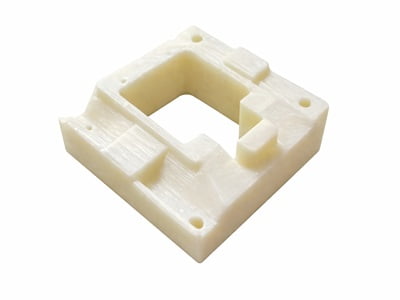
Dive deeper Paragraph: Choosing the right material doesn't have to be complicated. I guide my clients through a simple, step-by-step process. First, define what your part needs to do. Ask yourself these questions:
- Mechanical Needs: Will it be under stress? Does it need to be stiff, tough, or resist impacts?
- Thermal Needs: Will it be exposed to heat? How hot will it get?
- Environmental Needs: Will it be used outdoors (UV exposure)? Will it touch chemicals or oils?
- Geometric Needs: Is it flexible or rigid? Does it have fine details?
Once you have your requirements, you can follow a simple selection path. Start with the most common and easiest materials first.
- Is it a visual model or a non-functional prototype? Start with PLA.
- Does it need more strength or heat resistance than PLA? Use PETG.
- Does it need to be used outdoors or at higher temperatures? Use ASA (or ABS if indoors).
- Does it need to be extremely strong or resist wear? Consider Nylon or PC.
- Does it need to be flexible like rubber? Use TPU.
This process of elimination ensures you don't over-engineer your part or spend more than you need to. You only move to the more advanced and difficult-to-print materials when the application truly demands it.
Conclusion
Choosing the right plastic is about matching material properties to your specific needs. This guide gives you the foundation to print with confidence and achieve professional results every time.
"When bad makes good: Defects strengthen 3D-printed material", https://news.cornell.edu/stories/2021/11/when-bad-makes-good-defects-strengthen-3d-printed-material. This source explains how material selection impacts print quality, part strength, and cost efficiency in 3D printing. Evidence role: mechanism; source type: education. Supports: Choosing the wrong 3D printing plastic can lead to failed prints, weak parts, and wasted money.. ↩
"Polymer 3D Printing Review: Materials, Process, and Design ... - PMC", https://pmc.ncbi.nlm.nih.gov/articles/PMC8124560/. This source discusses how material properties like strength and flexibility determine the functionality of 3D printed parts. Evidence role: mechanism; source type: education. Supports: Material choice in 3D printing directly determines the functionality of the final part.. ↩
"3D Printing Materials: FDM, SLA, SLS & Metal Guide - HP Academy", https://www.hpacademy.com/technical-articles/3d-printing-materials-fdm-sla-sls-and-metal-guide/. This source provides an overview of the material forms used in FDM, SLS, and SLA 3D printing technologies. Evidence role: definition; source type: encyclopedia. Supports: Different 3D printing technologies require specific material forms, such as filament, powder, or resin.. ↩
"Biodegradation Assessment of Poly (Lactic Acid) Filled with ... - PMC", https://pmc.ncbi.nlm.nih.gov/articles/PMC6376044/. This source explains the properties of PLA, including its biodegradability and ease of use for beginners. Evidence role: definition; source type: encyclopedia. Supports: PLA is biodegradable and suitable for beginners and non-functional applications like decorative items.. ↩
"[PDF] Mechanical Properties Evaluation of 3D Printed PETG and PCTG ...", https://openprairie.sdstate.edu/cgi/viewcontent.cgi?article=1846&context=etd2. This source compares PETG's properties to PLA and ABS, highlighting its balanced ease of use and strength. Evidence role: definition; source type: education. Supports: PETG combines the ease of printing of PLA with the strength and durability of ABS.. ↩
"Carbon-fiber reinforced polymer - Wikipedia", https://en.wikipedia.org/wiki/Carbon-fiber_reinforced_polymer. This source explains the mechanical advantages of Carbon Fiber Reinforced plastics, including their stiffness and strength-to-weight ratio. Evidence role: definition; source type: education. Supports: Carbon Fiber Reinforced plastics are stiff and have a high strength-to-weight ratio, making them ideal for high-performance applications.. ↩