
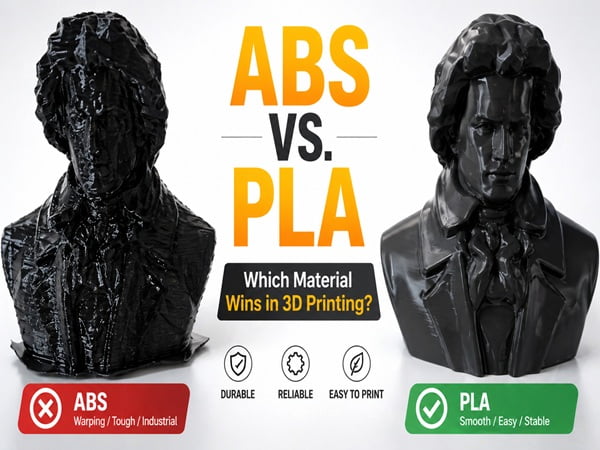
Struggling to pick the right plastic for your 3D printing project? The wrong choice can lead to failed prints and wasted material, costing you time and money.
For functional parts needing strength and heat resistance, choose ABS. For easy-to-print prototypes and decorative items where detail is key, PLA is your best bet. The choice depends entirely on your application's specific demands.
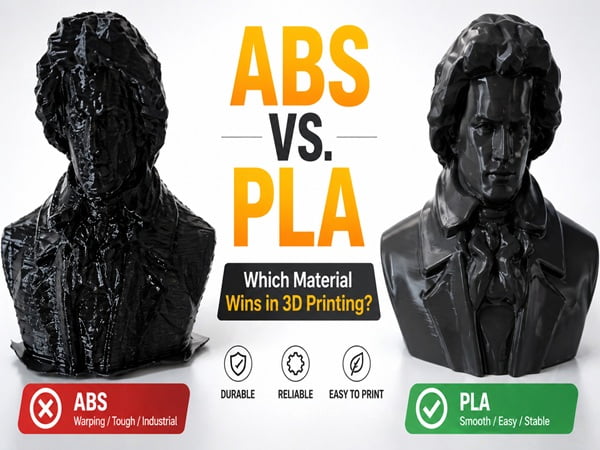
This is a common question we get at CHENcan CNC. I've spent years working with both materials, especially on our large-format industrial 3D printers. Let's break down the differences so you can make an informed decision every time. Choosing the right material is the first step to a successful print.
ABS and PLA Explained: What Makes These Plastics Different?
Confused by the alphabet soup of 3D printing plastics? Using the wrong one can ruin your project before it even starts. Let's clear up the confusion.
PLA (Polylactic Acid) is a biodegradable plastic made from renewable resources like corn starch.1 ABS (Acrylonitrile Butadiene Styrene) is a petroleum-based thermoplastic known for its strength and impact resistance, the same material used for LEGO bricks.2
Let's get into the specifics. PLA is part of the polyester family. Think of it as the friendly, easy-going material. It prints at lower temperatures and doesn't require a heated bed, making it accessible for beginners. Its plant-based origin also makes it a more eco-friendly option. On the other hand, ABS is a tough, engineering-grade thermoplastic. The 'Acrylonitrile' provides chemical resistance and thermal stability, 'Butadiene' adds toughness and impact strength, and 'Styrene' gives it a nice, glossy finish. This composition makes ABS stronger and more durable than PLA, but it also means it needs higher printing temperatures and a controlled environment to prevent warping. It’s the go-to for parts that need to withstand stress and heat. Understanding their core chemical makeup is key to knowing how they'll behave during and after printing.
Mechanical Strength, Flexibility, and Durability Compared?
Need your printed part to be strong and last a long time? A weak material will fail under stress, potentially damaging your entire assembly. Let's compare their performance.
ABS is the winner for strength and durability. It offers better impact resistance and can bend before breaking, making it ideal for functional parts. PLA is more rigid and brittle, meaning it will snap under pressure rather than flex.3
When we talk about mechanical properties, it's not just about one thing. Let's break it down. ABS has superior impact strength.4 Imagine dropping a part; the ABS part is more likely to survive without cracking. It also has better tensile strength, meaning it can withstand being pulled apart. This flexibility before failure is a huge advantage for mechanical components like gears, brackets, or enclosures that might experience shock or stress. PLA, by contrast, is stiffer. This can be good for things that need to be rigid, like architectural models or display pieces. But if you apply too much force, it will shatter. Think of it like this: PLA is like glass, strong but brittle. ABS is more like a hard rubber, tough and able to absorb impact. For any parts that will be handled, dropped, or put under mechanical load, my experience always points towards ABS for better long-term durability.
Heat Resistance and Thermal Performance: Why It Matters?
Worried your 3D printed part will melt or deform in the sun? Low heat resistance can cause your project to fail in real-world conditions, wasting all your effort.
ABS has a significantly higher heat resistance than PLA. ABS parts remain stable up to about 100°C (212°F), while PLA starts to deform and soften around 60°C (140°F).5 This is a critical difference for functional applications.
The glass transition temperature is the key metric here. This is the temperature where the material starts to soften and lose its structural integrity. For PLA, this is quite low, around 60°C. This means a PLA part left in a hot car on a summer day will likely warp and become useless. I've seen it happen many times. For this reason, PLA is not suitable for parts used outdoors or in any environment with elevated temperatures. ABS, however, has a glass transition temperature closer to 100°C. This makes it a much better choice for parts that will be near motors, electronics, or used in hot climates. For example, we create many automotive prototypes and components with our industrial printers, and ABS is the standard choice precisely for its thermal performance. If your part needs to function reliably under heat, there's no contest: ABS is the material you need.
Ease of Printing: Warping, Shrinkage, and Print Stability?
Frustrated with prints that warp, lift off the bed, or fail halfway through? Printing difficulties can be a major headache, wasting time and expensive filament.
PLA is much easier to print than ABS.6 It requires lower temperatures, doesn't need a heated bed (though it helps), and is much less prone to warping or shrinking. This makes PLA the ideal choice for beginners and hassle-free printing.
The biggest challenge with printing ABS is thermal contraction. As it cools from its high extrusion temperature, it shrinks. This shrinkage causes stress within the part, leading to warping, where the corners lift off the print bed, and layer separation or cracking. To combat this, you absolutely need a heated print bed (around 90-110°C) and, ideally, an enclosed printer to maintain a stable, warm ambient temperature. This traps heat and slows the cooling process, reducing stress. PLA, on the other hand, has very minimal shrinkage. You can print it on a cold bed, though a slightly heated bed (50-60°C) improves first-layer adhesion. It's forgiving and reliable, which is why most desktop 3D printers are demonstrated using PLA. On our large CHENcan industrial printers, we have heated chambers to manage ABS perfectly, but for someone starting out on a smaller machine, PLA offers a much smoother and more successful printing experience right out of the box.
Surface Finish and Post-Processing Options?
Want your prints to look professional and smooth, not like a stack of layers? A rough surface finish can make your final product look amateurish and unprofessional.
ABS offers superior post-processing options, most notably acetone vapor smoothing, which creates a glossy, injection-molded finish.7 PLA is harder to smooth chemically but can be sanded and painted. The raw finish of PLA is often slightly glossier than ABS.
Post-processing is where you can take a 3D print from a prototype to a finished-looking product. With ABS, the magic trick is acetone. By exposing an ABS print to acetone vapor in a controlled way, you can melt the outer surface just enough to eliminate layer lines completely. This results in a smooth, shiny surface that looks like it came from an injection mold. This is a huge advantage for creating consumer-facing parts. PLA, however, is resistant to acetone. Smoothing it requires more manual labor, like careful sanding, filling with primer, and painting. While you can achieve a great finish with PLA, it takes more work. Solvents that can smooth PLA, like THF or MEK, are much more hazardous and less common. So, if your goal is a perfect, glossy finish with minimal effort, and you're prepared for the safety precautions of using acetone, ABS is the clear winner.
Environmental Impact and Material Sustainability?
Concerned about the environmental footprint of your 3D printing hobby or business? Using petroleum-based plastics contributes to waste and relies on finite resources. Let's look at greener options.
PLA is the more environmentally friendly option.8 It's a bioplastic derived from renewable resources like corn or sugarcane and is biodegradable under industrial composting conditions. ABS is a petroleum-based plastic and is not biodegradable.9
Sustainability is becoming a major consideration in manufacturing. PLA's big selling point here is its origin. Being made from plants makes it a renewable resource, which is a significant advantage over the fossil fuels used to make ABS. Furthermore, PLA can biodegrade. It's important to be specific here: it requires an industrial composting facility with high heat and humidity to break down, so you can't just throw it in your garden compost pile. Still, it's a better end-of-life scenario than ABS, which will sit in a landfill for hundreds of years. ABS can be recycled, but it must be sorted into its own specific waste stream, which isn't always available. From a production standpoint, PLA also requires less energy to process into filament. For businesses and individuals looking to minimize their environmental impact, PLA is the clear choice, as long as its mechanical and thermal properties meet the project's needs.
Health, Safety, and Emissions During Printing?
Worried about fumes and particles released while 3D printing in your office or workshop? Poor air quality can be a serious health concern for you and your team.
PLA is generally considered safer to print with.10 It emits a faint, sweet smell and releases fewer volatile organic compounds (VOCs). ABS releases a strong, unpleasant plastic smell and significantly more VOCs, including styrene, requiring good ventilation.11
When you melt plastic, it releases emissions. Studies have shown that both materials release ultrafine particles (UFPs), but ABS is a bigger offender. The main concern with ABS is the emission of styrene, a VOC that is classified as a possible human carcinogen. This is why printing ABS absolutely requires good ventilation. Ideally, you should use an enclosed printer with a carbon filter or a HEPA filter, and operate it in a well-ventilated room, not in your main living or office space. I always make sure our workshop's ventilation systems are running at full capacity when we're running large ABS jobs. PLA, by comparison, is much more benign. The fumes are minimal and not considered toxic, though good ventilation is always a good practice for any 3D printing. For printing in a school, home, or office environment, PLA is by far the safer and more pleasant material to work with.
Typical Applications: When to Use ABS vs When to Use PLA?
Not sure which material fits your specific project? Choosing the wrong one means your part might not perform as needed, leading to failure and redesigns.
Use PLA for visual prototypes, architectural models, and decorative items. Use ABS for functional parts, mechanical components, automotive parts, and anything requiring heat resistance and durability, like the material used for LEGO bricks.
Let's get practical with a comparison table. This is how I decide which material to use for a job.
| Feature Required | Best Choice | Example Applications |
|---|---|---|
| High Detail, Visual Quality | PLA | Architectural models, figurines, concept prototypes. |
| Strength & Durability | ABS | Snap-fit parts, gears, phone cases, drone frames. |
| Heat Resistance | ABS | Car interior parts, enclosures for electronics, fan shrouds. |
| Ease of Printing | PLA | Beginners, schools, quick iterations, large prints on open machines. |
| Smooth, Glossy Finish | ABS | Final-use products, marketing models (with acetone smoothing). |
| Biodegradability | PLA | Disposable items, projects with a focus on sustainability. |
| Flexibility (Bend before break) | ABS | Living hinges (to some extent), protective housings. |
| Rigidity (Stiffness) | PLA | Frames, structural models that don't take impact. |
Essentially, the choice comes down to form versus function. If the part needs to look good and won't be under stress, PLA is perfect. If the part has a job to do, especially if it involves heat or impact, ABS is the professional choice.
Cost, Availability, and Material Consistency?
Balancing your budget while ensuring you get quality material? Cheap, inconsistent filament can cause print failures and damage your printer, costing more in the long run.
PLA and ABS are the two most common and affordable 3D printing materials.12 Their prices are very similar, with PLA sometimes being slightly cheaper. Both are widely available, but quality can vary between brands.
In the world of 3D printing filaments, PLA and ABS are commodities. They are everywhere. A standard 1kg spool of either material typically costs between $20 and $30 from a reputable brand. You might find cheaper options, but I'd caution against them. Inconsistent diameter, impurities, and poor winding can lead to clogged nozzles and failed prints. It’s not worth the savings. What I find interesting is how regional availability and cost can shift preferences. For example, when working with clients using our industrial pellet-fed 3D printers, we notice different trends. In China, PP (Polypropylene) pellets can be more cost-effective and readily available for certain large-scale applications. However, for a project with a client in India, ABS pellets were the more popular and economical choice. So while filament spools are globally priced similarly, for industrial-scale use, local supply chains can make one material much more attractive.
Final Verdict: Which Plastic Should You Choose for Your Project?
Still on the fence about which material to choose? Making the final call can feel overwhelming, but a simple framework can guide your decision easily.
If you're a beginner or your part doesn't need to withstand heat or impact, start with PLA. For functional, durable parts that need to perform under stress, choose ABS.
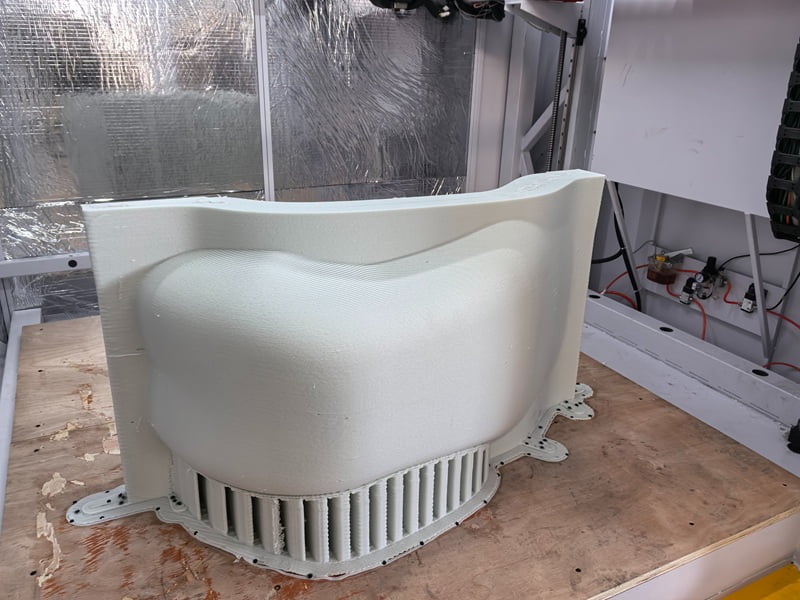
There's no single "best" material. The right choice is always project-dependent. I've spent over 27 years in this industry, and I still ask myself a few key questions before starting any print job.
- What is the part's job? Is it for looking at, or for doing something? If it's for doing something, it needs to be tough, so I lean towards ABS.
- What environment will it live in? Will it get hot? Will it be outdoors? If the answer is yes to either, ABS is the only choice. A PLA part in a hot car is a melted part.
- How easy do I need the print to be? If I'm iterating quickly, PLA's reliability is a huge time-saver. For complex ABS prints, I know I need to use one of our enclosed CHENcan machines.
- What finish do I need? If the client wants a perfectly smooth, injection-molded look, I'll plan for ABS and acetone vapor smoothing.
For most hobbyists and beginners, PLA is the answer. It lets you learn and succeed without the frustrations of ABS. For engineers creating functional parts, mastering ABS is a necessary and valuable skill.
Conclusion
Choose based on your application. Use PLA for ease and visual models, and ABS for functional parts that require strength and heat resistance.
There's no single "best" material. The right choice is always project-dependent. I've spent over 27 years in this industry, and I still ask myself a few key questions before starting any print job.
- What is the part's job? Is it for looking at, or for doing something? If it's for doing something, it needs to be tough, so I lean towards ABS.
- What environment will it live in? Will it get hot? Will it be outdoors? If the answer is yes to either, ABS is the only choice. A PLA part in a hot car is a melted part.
- How easy do I need the print to be? If I'm iterating quickly, PLA's reliability is a huge time-saver. For complex ABS prints, I know I need to use one of our enclosed CHENcan machines.
- What finish do I need? If the client wants a perfectly smooth, injection-molded look, I'll plan for ABS and acetone vapor smoothing.
For most hobbyists and beginners, PLA is the answer. It lets you learn and succeed without the frustrations of ABS. For e
"Commodity Polymers from Renewable Resources: Polylactic Acid", https://www.ncbi.nlm.nih.gov/books/NBK44131/. This source explains the composition and renewable nature of PLA, confirming its derivation from corn starch and other plant-based materials. Evidence role: definition; source type: encyclopedia. Supports: PLA is a biodegradable plastic made from renewable resources like corn starch.. ↩
"Acrylonitrile butadiene styrene - Wikipedia", https://en.wikipedia.org/wiki/Acrylonitrile_butadiene_styrene. This source confirms that ABS is a petroleum-based thermoplastic and highlights its use in durable products like LEGO bricks. Evidence role: definition; source type: encyclopedia. Supports: ABS is a petroleum-based thermoplastic known for its strength and impact resistance, the same material used for LEGO bricks.. ↩
"Why PLA Filament Becomes Brittle and How to Prevent It", https://www.sovol3d.com/blogs/news/pla-brittle-causes-prevention-and-reviving-old-filament?srsltid=AfmBOopOFp3z1DgOsKKIXBj-m50RWQ5_waFeSS7FYQ_d3vpYveRfEjSr. This source discusses the mechanical properties of PLA, including its rigidity and tendency to snap under stress. Evidence role: mechanism; source type: research. Supports: PLA is more rigid and brittle, meaning it will snap under pressure rather than flex.. ↩
"Acrylonitrile butadiene styrene - Wikipedia", https://en.wikipedia.org/wiki/Acrylonitrile_butadiene_styrene. This source provides data on the impact strength of ABS compared to other common 3D printing materials, supporting its superior durability. Evidence role: statistic; source type: research. Supports: ABS has superior impact strength.. ↩
"Evaluation of dynamic properties in ABS and PLA thermoplastics ...", https://pmc.ncbi.nlm.nih.gov/articles/PMC12663159/. This source provides the glass transition temperatures of ABS and PLA, confirming their respective thermal performance limits. Evidence role: statistic; source type: research. Supports: ABS parts remain stable up to about 100°C (212°F), while PLA starts to deform and soften around 60°C (140°F).. ↩
"PLA+ vs ABS : r/3Dprinting - Reddit", https://www.reddit.com/r/3Dprinting/comments/ywo63x/pla_vs_abs/. This source compares the printing characteristics of PLA and ABS, confirming PLA's ease of use due to lower temperature requirements and reduced warping. Evidence role: general_support; source type: research. Supports: PLA is much easier to print than ABS.. ↩
"ABS Acetone Smoothing: 3D Print Vapor Smoothing Guide - All3DP", https://all3dp.com/2/abs-acetone-smoothing-3d-print-vapor-smoothing/. This source explains the post-processing techniques for ABS, including acetone vapor smoothing, and its effects on surface finish. Evidence role: mechanism; source type: education. Supports: ABS offers superior post-processing options, most notably acetone vapor smoothing, which creates a glossy, injection-molded finish.. ↩
"Polylactic acid - Wikipedia", https://en.wikipedia.org/wiki/Polylactic_acid. This source discusses the environmental benefits of PLA, including its renewable origins and biodegradability under industrial composting conditions. Evidence role: general_support; source type: institution. Supports: PLA is the more environmentally friendly option.. Scope note: The biodegradability of PLA is limited to industrial composting facilities and does not apply to home composting. ↩
"Closing the Gap between Bio-Based and Petroleum-Based Plastic ...", https://pmc.ncbi.nlm.nih.gov/articles/PMC9787566/. This source confirms that ABS is derived from petroleum and lacks biodegradability, contributing to its environmental impact. Evidence role: definition; source type: encyclopedia. Supports: ABS is a petroleum-based plastic and is not biodegradable.. ↩
"Health and safety hazards of 3D printing - Wikipedia", https://en.wikipedia.org/wiki/Health_and_safety_hazards_of_3D_printing. This source evaluates the emissions and safety of printing with PLA, confirming its lower VOC release compared to ABS. Evidence role: expert_consensus; source type: research. Supports: PLA is generally considered safer to print with.. Scope note: The safety of PLA printing is relative and still requires good ventilation to minimize exposure to ultrafine particles. ↩
"Emission Profiles of Volatiles during 3D Printing with ABS, ASA ...", https://pmc.ncbi.nlm.nih.gov/articles/PMC9229569/. This source details the VOC emissions from ABS during printing, including the release of styrene, and emphasizes the need for proper ventilation. Evidence role: mechanism; source type: research. Supports: ABS releases a strong, unpleasant plastic smell and significantly more VOCs, including styrene, requiring good ventilation.. ↩
"Guide to 3D Printing Materials: Types, Applications, and Properties", https://formlabs.com/blog/3d-printing-materials/. This source confirms the widespread use and affordability of PLA and ABS as standard 3D printing materials. Evidence role: general_support; source type: education. Supports: PLA and ABS are the two most common and affordable 3D printing materials.. Scope note: The affordability of PLA and ABS may vary regionally and by brand. ↩