

3D Printers for Plastic: A Complete Guide to Materials, Technologies, and Industrial Applications?
Struggling with the endless options for plastic 3D printing? This confusion leads to failed prints, wasted time, and high costs. You need a clear path to the right choice.
To pick the right plastic 3D printer, first understand your application. The best choice always balances four key factors: the required accuracy, the size of your part, the needed production speed, and your overall budget. No single solution fits all needs.

I've spent over two decades in this industry, and I've seen how confusing the world of plastic 3D printing can be for newcomers. But it doesn't have to be a mystery. My goal is to break it all down for you, step by step. Let's go through the materials, technologies, and applications together so you can make an informed decision for your next project, confident you've chosen the right path.
What Does “Plastic” Mean in 3D Printing?
Thinking all 3D printing plastics are the same? This common mistake can ruin your project. Different plastics have vastly different properties, affecting everything from strength to heat resistance.1
In 3D printing, "plastic" refers to a wide range of polymers. Most are thermoplastics, which can be repeatedly melted and solidified, like PLA or ABS. Others are thermosets, which cure into a solid state and cannot be remelted, commonly used in resin printing.
When we talk about plastics in manufacturing, we're usually talking about polymers. In 3D printing, the most common type is a thermoplastic. Think of it like butter; you can melt it and it will become solid again when it cools. This property is perfect for technologies like Fused Deposition Modeling (FDM). On the other hand, we have thermosets. These are more like eggs; once you cook them (cure them with light or heat), they change chemically and can't go back to a liquid state. This is the principle behind resin-based printing like SLA. Understanding this basic difference is the first step. It dictates which printing technologies you can use and what properties your final part will have, from flexibility and strength to its ability to withstand high temperatures in demanding industrial environments.
How Plastics Are Printed: Filaments, Pellets, Powders, and Resins?
Does the form of your plastic matter? Absolutely. Using spools of filament when you need industrial-scale pellets can dramatically increase your costs and limit your production speed for large parts.
Plastic for 3D printing comes in four main forms.2 Filaments are spools of thread for FDM printers. Pellets are small, cheap granules for large-format industrial printers. Powders are used in SLS and MJF machines. Resins are liquid photopolymers for SLA printers.
The form of the plastic raw material is directly tied to the printing technology and the application's scale. For hobbyists and small prototypes, filaments are the standard. They are convenient spools of plastic thread. But in our industrial work, we often use pellets. These are the raw, unprocessed plastic granules that filaments are made from. Printing directly with pellets using a technology like Fused Granular Fabrication (FGF) can be up to 10 times cheaper and significantly faster for very large parts, like boat hulls or foundry patterns. Then you have powders, fine particles used in powder bed fusion methods like SLS, which allow for complex geometries without support structures. Finally, liquid resins are used in SLA and similar technologies to create parts with incredibly fine detail. Choosing between them is a trade-off between cost, speed, detail, and the scale of your project.
FDM, SLS, SLA, and MJF: Which 3D Printing Technology for Plastic?
Drowning in a sea of acronyms like FDM, SLS, and SLA? Choosing the wrong process means you could be paying for precision you don't need or getting parts that aren't strong enough.
Choose your technology based on your needs. FDM/FGF is great for large, low-cost parts and prototypes. SLA offers high detail for models and patterns. SLS and MJF are excellent for strong, complex functional parts without needing support structures, making them ideal for batch production.
This is where things get interesting. Let's simplify the main players. Think of Fused Deposition Modeling (FDM), and its industrial big brother Fused Granular Fabrication (FGF), as a hot glue gun building an object layer by layer. It's versatile and cost-effective. Stereolithography (SLA) uses a laser to cure liquid resin, giving you beautiful, high-detail surfaces, perfect for visual models. Selective Laser Sintering (SLS) and Multi Jet Fusion (MJF) are different. They use a laser or detailing agent to fuse powdered plastic together. Their big advantage is that the unused powder supports the part during printing, so you can create very complex internal geometries. I've found a simple table helps my clients understand the trade-offs:
| Technology | Best For | Main Advantage | Main Limitation |
|---|---|---|---|
| FDM/FGF | Large parts, prototypes, tools | Low cost, large build size | Lower resolution, visible layers |
| SLA | Detailed models, molds | High accuracy, smooth finish | Can be brittle, UV sensitive |
| SLS/MJF | Functional parts, complex geo | Strong parts, no supports needed | Higher cost, rougher surface |
Common Plastics for 3D Printing: ABS, PLA, PETG, and More?
Are you just using PLA for everything? While it's easy to print, it's often the wrong choice for functional parts, leading to breakage and failure under real-world stress or heat.
PLA is easy to print and biodegradable, great for simple models. ABS is stronger and more temperature-resistant, good for functional parts. PETG is a good middle ground, offering the ease of PLA with more strength and flexibility, making it a versatile choice.
Let's talk about the everyday workhorse plastics. Most people start with PLA (Polylactic Acid). It's plant-based, easy to print, and great for visual prototypes. But it's brittle and melts at low temperatures, so it's not for parts you'll leave in a hot car. Then there's ABS (Acrylonitrile Butadiene Styrene)—the same stuff LEGOs are made of. It's tougher and handles heat better, but it can be tricky to print as it tends to warp. For many of our clients, PETG (Polyethylene Terephthalate Glycol) is the sweet spot. It's almost as easy to print as PLA but offers much better strength, temperature resistance, and chemical resistance. We often recommend it for functional prototypes and fixtures. For large-scale parts like casting patterns or large sculptures, we often use ABS or PETG in pellet form to keep costs down and printing speeds high.
Engineering & High-Performance Plastics: PC, Nylon, PEEK, and PEI?
Do your plastic parts need to survive extreme heat, chemicals, or mechanical stress? Standard plastics will fail. You need to step up to engineering-grade materials, but which one is right?
For demanding applications, use engineering plastics. Polycarbonate (PC) is incredibly tough and temperature-resistant. Nylon (PA) is strong and flexible with low friction. PEEK and PEI (ULTEM) are high-performance polymers that can replace metal in aerospace and medical applications.
When standard plastics aren't enough, we move into the world of engineering and high-performance polymers. These materials are game-changers for industrial applications. Polycarbonate (PC) is known for its amazing impact strength and clarity. Think bulletproof glass. Nylon (PA) is tough and has a low coefficient of friction, making it perfect for gears, bearings, and living hinges. But when the application is truly extreme, we look at materials like PEEK and PEI (often sold as ULTEM). These are what we call "ultra-polymers." They offer incredible strength, chemical inertness, and can withstand very high temperatures, sometimes over 250°C. We use these to print parts for aerospace, automotive, and medical industries that need to perform flawlessly in the most demanding environments, often replacing machined aluminum or steel components at a fraction of the weight.
Flexible, Composite, and Specialty Plastic Materials?
Think 3D printed plastic is always hard and rigid? This limited view could be holding back your designs. You could be missing out on creating flexible seals, strong-as-metal parts, or conductive circuits.
3D printing plastics go beyond rigid. TPU and other TPEs create flexible, rubber-like parts. Composites, like carbon fiber-filled Nylon, add incredible strength and stiffness. There are also specialty materials that are conductive, wood-filled, or dissolvable for support structures.
The innovation in materials is one of the most exciting areas of 3D printing. You are no longer limited to hard plastics. Flexible materials, like TPU (Thermoplastic Polyurethane), allow us to print things like gaskets, seals, and flexible grips that behave like rubber. Then we have composites. By mixing materials like chopped carbon fiber, fiberglass, or kevlar into a base plastic like Nylon or ABS, we can create parts that are incredibly strong and stiff for their weight. At CHENcan, we've helped clients create lightweight jigs and fixtures using carbon fiber composites that are as strong as aluminum but much lighter and faster to produce. There are also other specialty materials for niche applications, like water-soluble support materials that simply dissolve away, or even materials filled with metal or wood particles to achieve unique aesthetic finishes.
Industrial vs Desktop Plastic 3D Printers: Key Differences?
Thinking of using a cheap desktop printer for your business? This can be a costly mistake. Constant failures, poor part quality, and small build sizes can quickly erase any initial savings.
Industrial printers offer larger build volumes, higher reliability, and wider material compatibility (like high-temp plastics and pellets) than desktop models.3 They are built for 24/7 operation and produce consistent, engineering-grade parts, while desktop printers are better suited for hobbyists and simple mock-ups.
This is a question I get almost every day. A $500 desktop printer and a $100,000 industrial machine might both use FDM technology, but they are worlds apart. The key differences are Scale, Reliability, and Material Capability. Desktop printers have small build volumes. Our industrial machines can print parts the size of a person. Desktop printers are made with consumer-grade parts. Industrial printers, like our CHENcan CNCs, have rigid steel frames, precision ball screws, and servo motors designed for thousands of hours of continuous, repeatable operation. Most importantly, industrial printers have heated chambers and high-temperature extruders that can handle engineering and high-performance plastics like PEEK or ULTEM. They can also use cost-effective pellets, something no desktop printer can do. A desktop printer is a tool for tinkering; an industrial printer is a manufacturing machine.
Choosing the Right 3D Printer for Your Plastic Application?
Feeling overwhelmed by all the choices? Don't just buy the printer with the best specs on paper. This approach often leads to buying a machine that is overkill or completely wrong for your needs.
To choose the right printer, focus on your application's core needs. It's a balance of four things: Size (how big are your parts?), Accuracy (how much detail do you need?), Speed (how fast do you need it?), and Cost (what's your budget?).
After 27 years in this business, I've learned that the best choice is never about a single feature. It's always a trade-off. You must balance these four critical factors. First, Part Size. Do you need small, intricate parts or massive ones? This will immediately narrow your choices. For large items like foundry patterns or architectural models, you need a large-format machine, often one that uses pellets for cost-efficiency.4 Second, Accuracy & Finish. Do you need a super-smooth, injection-mold-like surface, or is a standard FDM finish acceptable? This will point you toward SLA or FDM/FGF. Third, Speed & Throughput. Are you making one-off prototypes or production runs of hundreds of parts? This affects the choice between technologies like FDM and SLS/MJF. Finally, Total Cost of Ownership. This includes the machine, materials, and labor. For example, FGF pellet printing has a higher initial machine cost but dramatically lower material costs for large-scale production.
From Prototyping to End-Use Parts: Plastic 3D Printing Use Cases?
Still think 3D printing is just for cheap prototypes and trinkets? This outdated view is causing you to miss out on massive opportunities in custom tooling, jigs, fixtures, and even final production parts.
Plastic 3D printing is used across the entire production cycle.5 It accelerates prototyping, creates custom jigs and fixtures to improve manufacturing, and increasingly, produces strong, lightweight end-use parts in industries like aerospace, automotive, and marine.
The applications for industrial plastic 3D printing are incredible. Of course, there is Rapid Prototyping. We help car companies print full-size bumpers overnight to check fit and form. But the real value often comes later. We see clients printing Jigs, Fixtures, and Tooling. Imagine creating a custom fixture for a welding or assembly line in just a few hours, perfectly contoured to the part it needs to hold. This is a huge cost and time saving over traditional machining. And now, with advanced materials, we are deep into End-Use Part Production. We've worked with shipbuilders to print large, complex, and non-corroding components for yachts. We've helped aerospace clients create lightweight ducting from ULTEM. From massive sculptures printed in ABS pellets to durable mining equipment components, the possibilities are no longer theoretical; they are happening on factory floors today.6
The Future of Plastic 3D Printing: Sustainability, Scale, and Automation?
Where is plastic 3D printing headed? If you're not paying attention to the trends, you risk investing in technology that will quickly become obsolete, leaving you behind your competitors.
The future of plastic 3D printing is focused on three areas: Sustainability, with more recycled and bio-based materials; Scale, with even larger and faster machines; and Automation, integrating printers into fully automated production lines for lights-out manufacturing.
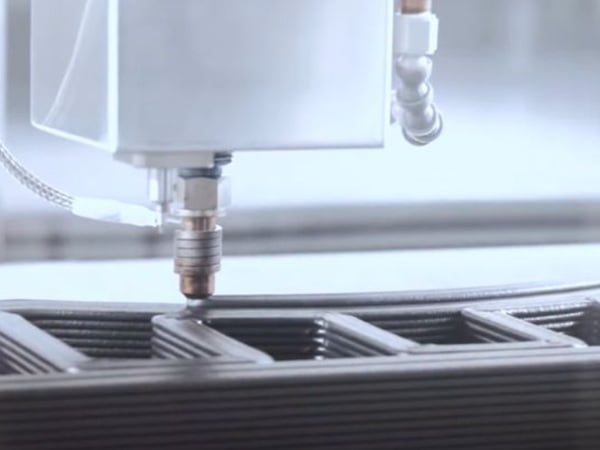
As I look at the next decade, I see three major trends shaping our industry. First is Sustainability. There's a huge push towards using recycled materials. Pellet-based printing is perfect for this, as it can directly use shredded and recycled plastic waste, closing the loop on manufacturing. Second is Scale. Everything is getting bigger and faster. The demand for printing massive parts, like entire boat molds or construction components, is driving innovation in large-format FGF systems. We're constantly working on increasing the deposition rate and build envelope of our machines. Finally, Automation. The goal is a "lights-out" factory. We are integrating our 3D printers with robotic arms for part removal and post-processing, connecting them to factory MES systems, and creating a seamless workflow from digital file to finished part without human intervention. The printer is becoming just one component in a larger, smarter manufacturing ecosystem.
Conclusion
In the end, choosing the right plastic, technology, and printer is about understanding your specific project needs. There is no single best solution, only the best solution for your application.
"3D printing filament - Wikipedia", https://en.wikipedia.org/wiki/3D_printing_filament. This source explains the diverse properties of 3D printing plastics, including their mechanical and thermal characteristics. Evidence role: definition; source type: encyclopedia. Supports: Different plastics have vastly different properties, affecting everything from strength to heat resistance.. ↩
"3D printing filament - Wikipedia", https://en.wikipedia.org/wiki/3D_printing_filament. This source categorizes the main forms of plastic used in 3D printing, including filaments, pellets, powders, and resins. Evidence role: definition; source type: encyclopedia. Supports: Plastic for 3D printing comes in four main forms.. ↩
"Industrial 3d Printing vs Consumer 3d Printers for PC Print Farm to ...", https://www.reddit.com/r/AdditiveManufacturing/comments/1ilzy35/industrial_3d_printing_vs_consumer_3d_printers/. This source compares industrial and desktop 3D printers, emphasizing build volume, reliability, and material compatibility. Evidence role: expert_consensus; source type: institution. Supports: Industrial printers offer larger build volumes, higher reliability, and wider material compatibility (like high-temp plastics and pellets) than desktop models.. Scope note: The comparison may not account for recent advancements in desktop printers. ↩
"Effort Foundry Adds New 3D Pattern Printer", https://effortfoundry.com/effort-foundry-adds-new-3d-pattern-printer/. This source explains the advantages of large-format 3D printers using pellets for cost-effective production of large items. Evidence role: mechanism; source type: research. Supports: For large items like foundry patterns or architectural models, you need a large-format machine, often one that uses pellets for cost-efficiency.. Scope note: The source may focus on specific use cases rather than general applicability. ↩
"3D printing processes - Wikipedia", https://en.wikipedia.org/wiki/3D_printing_processes. This source outlines the use of plastic 3D printing in prototyping, tooling, and end-use part production. Evidence role: general_support; source type: education. Supports: Plastic 3D printing is used across the entire production cycle.. Scope note: The source may focus on specific industries rather than general applications. ↩
"Pellet 3D Printing and its Applications | Top 3D Shop", https://top3dshop.com/blog/pellet-3d-printing-and-its-applications. This source provides examples of industrial applications of 3D printing, including sculptures and mining equipment. Evidence role: case_reference; source type: research. Supports: From massive sculptures printed in ABS pellets to durable mining equipment components, the possibilities are no longer theoretical; they are happening on factory floors today.. Scope note: The source may focus on specific examples rather than general trends. ↩