
What Are the Key Types of Industrial FGF 3D Printers?
Choosing the right industrial 3D printer feels complicated. A bad decision can waste a lot of time and money, but this guide will make it simple for you.
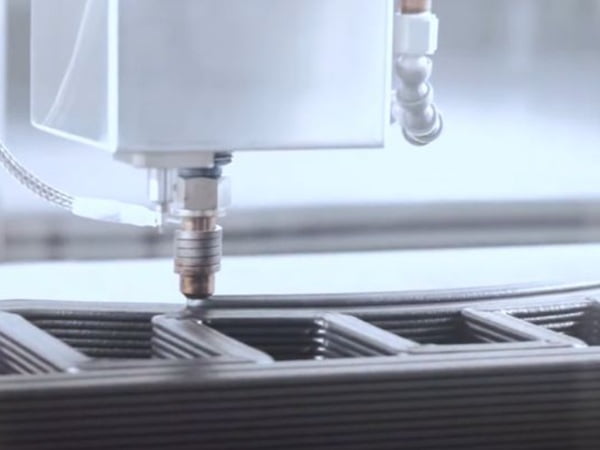
Industrial FGF (Fused Granulate Fabrication) 3D printers are defined by their motion systems. The main types are Gantry, Robotic Arm, and Hybrid CNC models. Each offers a unique balance of print size, precision, and flexibility, making them suitable for different industrial applications.
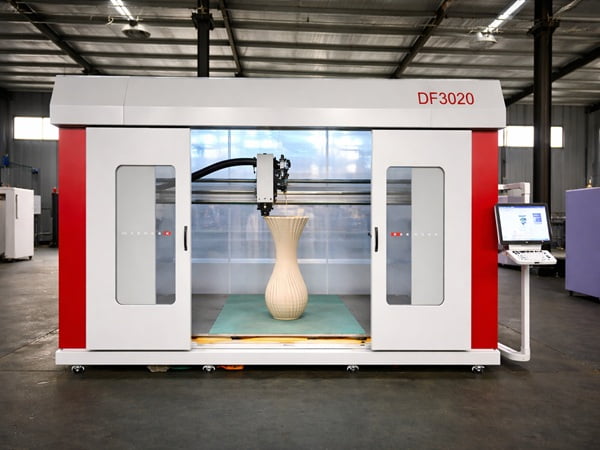
When I first got into large-format 3D printing, I focused too much on the extruder and the materials. I learned a tough lesson: the real core of an industrial printer is its mechanical design. The motion system—the bones of the machine—is what truly dictates what you can and cannot create. It sets the boundaries for your precision, your part size, and the applications you can tackle. Understanding these systems is the first step toward making a smart investment. Let's break down the most important types so you can see which one fits your work.
How do motion systems define FGF 3D printer types?
Are you confused by all the technical terms for 3D printers? It can seem very complex. I will explain why the machine's movement structure is the most important thing.
The motion system is the mechanical design that controls the extruder's movement. This structure directly determines the printer's final precision, maximum build size, and the kinds of jobs it can handle. It is the foundation of the printer's performance.
At its heart, a 3D printer is a robot that follows instructions to place material. The motion system is the part of the robot that moves the print head around. Think of it as the printer's skeleton. This structure is more important than almost any other feature. A weak or poorly designed system will never produce accurate parts, no matter how good the extruder is.
I've seen companies spend a fortune on a machine only to find it can't hold the tolerances they need. This is almost always a problem with the core mechanical design. The main types of systems we see in industrial FGF printers are:
| Motion System Type | Primary Strength | Best For | Key Weakness |
|---|---|---|---|
| Gantry (Cartesian) | Stability & Scalability | Very large, dimensionally accurate parts | Limited to simple, layered geometry |
| Robotic Arm | Geometric Freedom | Printing on curved surfaces, complex shapes | Lower absolute precision, complex programming |
| Hybrid (Gantry + CNC) | Precision & Finish | Functional parts needing tight tolerances | Higher cost and complexity |
Ultimately, the choice of motion system defines the printer's personality. It determines if the machine is a workhorse for huge molds, a flexible artist for complex shapes, or a precision tool for finished parts.
Can gantry FGF printers scale up without losing precision?
Do you need to print very large parts? But you are worried that bigger prints mean lower quality. Gantry systems provide a great balance between massive size and good accuracy.
Yes, gantry FGF printers are excellent for large-scale printing while keeping good precision. Their rigid overhead frame moves the print head. This stable structure minimizes vibration, making it perfect for producing large, accurate parts like molds and patterns.
A gantry printer works a lot like an overhead crane. The print head is mounted on a rigid beam (the gantry) that moves back and forth (Y-axis) along two rails (X-axis), while the entire structure or the print bed moves up and down (Z-axis). This simple, robust design is incredibly effective for large-format printing. The key to maintaining precision at a large scale is the quality of the build.
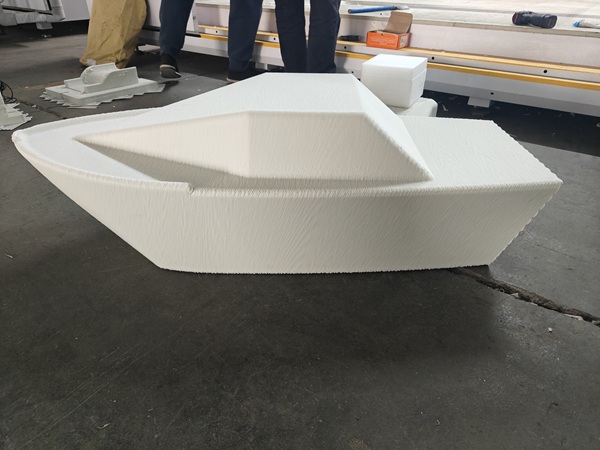
I remember working on a project for a boat manufacturer. They needed to print a full-size hull mold that was over 10 meters long. A filament printer would have taken months and cost a fortune. A gantry FGF printer was the only real option. We used a machine with a heavy, stress-relieved steel frame, high-precision linear rails, and powerful servo motors. The rigid structure meant that even when the print head was moving quickly across the huge build area, there was almost no vibration or flexing. The final mold was dimensionally accurate to within a few millimeters over its entire length, which was amazing for a part that size. This is where gantry systems shine. They make it possible to build big without giving up the quality needed for industrial tooling.
What is the advantage of a robotic arm FGF printer?
Are you limited by a flat, rectangular build area? Do you need to print on parts that are not flat? A robotic arm printer gives you freedom beyond the standard box.
The main advantage of a robotic arm FGF printer is its multi-axis freedom. Instead of just three axes (X, Y, Z), it uses a 6-axis arm. This lets it print complex, non-planar geometries and add material to existing curved parts.
While a gantry system is locked into a boxy workspace, a robotic arm can move and orient the print head in almost any direction. This is a game-changer for certain applications. Instead of building a part from the ground up in flat layers, a robotic arm can print directly onto an existing surface. Think about adding custom features to a pre-made car fender or reinforcing a complex composite structure. This is called conformal printing.
This technology opens up completely new ways of manufacturing. For example, in architecture, you can create incredibly complex, curved facade panels that would be impossible with a traditional printer. In art, you can build large, organic sculptures with no need for support structures. However, this flexibility comes with a trade-off. Programming the toolpaths for a 6-axis robot is much more complex than slicing a model for a 3-axis gantry. Also, the absolute positional accuracy of a long, articulated arm is generally lower than that of a rigid gantry system. So, you choose a robotic arm when geometric freedom is more important than absolute, high-tolerance precision. It's the right tool for creating shapes that other printers simply can't.
Why choose a pellet-based FGF printer over a filament one?
Are you tired of paying for expensive filament spools? And are your large print jobs taking way too long? Pellet-based extrusion gives you a huge upgrade in both cost and speed.
Pellet-based FGF printers are better for industrial use because raw plastic pellets are much cheaper than filament. The extrusion systems also have much higher flow rates, so you can print large objects many times faster than with filament printers.
The switch from filament to pellets was a major turning point for me in industrial 3D printing. The benefits are just too big to ignore for any serious manufacturing application. Filament is essentially just plastic pellets that have already been melted, extruded into a thin string, and wound onto a spool. You are paying a premium for that extra processing step. By using raw pellets directly, you cut out the middleman and drastically lower your material costs, often by 80% or more.
But the savings are only half the story. The other key advantage is speed. A standard filament extruder is limited in how fast it can melt and push out plastic. An FGF pellet extruder uses a large heated barrel with a rotating screw, like a small version of an industrial injection molding machine. This design can melt and extrude material at a much higher rate. We're talking about printing kilograms per hour, not grams per hour.
| Feature | Filament (FDM) | Pellets (FGF) | Advantage |
|---|---|---|---|
| Material Cost | High ($20-$100+ / kg) | Low ($2-$10 / kg) | Pellets |
| Print Speed | Slow (grams/hour) | Very Fast (kg/hour) | Pellets |
| Material Variety | Limited | Nearly Unlimited | Pellets |
| Storage | Bulky spools | Compact bags/drums | Pellets |
This combination of low cost and high speed makes it practical to print very large objects, like molds, tools, and full-scale prototypes, that would be completely unfeasible with filament.
What is a hybrid FGF printer and when do you need one?
Do your 3D printed parts always need extra finishing work? This adds manual labor and slows down your process. A hybrid machine prints and machines in one step.
A hybrid FGF printer combines additive manufacturing (3D printing) with subtractive manufacturing (CNC machining) in one machine. You need one when you want the freedom of 3D printing but also need the smooth finish and tight tolerances of CNC machining.
This is where we bring everything together. My company, CHENcan CNC, has deep roots in CNC machining, so developing hybrid systems was a natural step for us. The concept is simple but powerful. You get the best of both worlds: additive and subtractive. The process usually works like this: First, the machine uses the FGF pellet extruder to quickly build the main shape of the part. This is called creating the "near-net shape." You print it slightly larger than the final dimensions.
Then, the machine automatically switches its tool head from the extruder to a CNC milling spindle. It uses the high-speed spindle to machine the critical surfaces of the part. It can drill precise holes, mill flat mating surfaces, and create features with tolerances that 3D printing alone could never achieve. The biggest advantage is that the part never leaves the machine. This "single-setup" process is incredibly accurate because you don't have to worry about errors from moving the part and setting it up again on a separate CNC machine. You need a hybrid machine when your final part must be both geometrically complex and highly precise. It's the ideal solution for functional prototypes, jigs, fixtures, and molds.
How do you choose the right FGF 3D printer for your application?
Are you feeling overwhelmed by all the different printer types? It can be hard to know where to start. Choosing the right machine is about asking what you really need.
To choose the right FGF printer, first decide your main priority: size, precision, or flexibility. For the biggest parts, get a gantry printer. For perfect finishes and tight tolerances, a hybrid CNC is best. For complex curves, a robotic arm is the choice.
I always tell my clients that choosing a large-format printer is not really about the machine. It's about what you need to make. The machine is just a tool, and you need to pick the right tool for the job. Let's forget the technical specifications for a moment and focus on your goal. I've found it helps to simplify the decision down to three main priorities.
What is your number one priority?
-
Maximum Size and Scale: Is your main goal to print the largest objects possible, like boat molds, architectural models, or foundry patterns? If you need to build parts measured in meters, your choice is clear.
- Your Best Choice: A Gantry FGF Printer.
- Why: Its rigid structure is the most cost-effective way to achieve dimensional accuracy over huge build volumes.
-
Ultimate Precision and Surface Finish: Is your goal to create functional parts that need to fit perfectly with other components? Do you need a surface finish that looks and feels like a final product, right off the machine?
- Your Best Choice: A Hybrid FGF + CNC Printer.
- Why: It combines the speed of additive with the unbeatable accuracy of subtractive machining, all in one setup.
-
Total Geometric Freedom: Is your goal to create complex, organic shapes that are impossible with traditional layers? Do you need to add material to an existing curved part?
- Your Best Choice: A Robotic Arm FGF Printer.
- Why: The 6-axis motion provides the flexibility to print non-planar shapes and create things that other machines can't.
By starting with your end goal, the choice becomes much simpler. You are no longer buying a machine; you are investing in a capability.
Conclusion
Choosing the right industrial FGF printer is about matching the machine's core structure to your main goal. Decide if you need size, precision, or flexibility first, and the best choice will become clear.