
What Is PLA Plastic: Properties, Uses, Advantages, and Real-World Limitations?
Are you struggling to pick the right plastic for your next big project? Choosing the wrong material wastes time and money. Let me explain PLA plastic1 to help you decide.
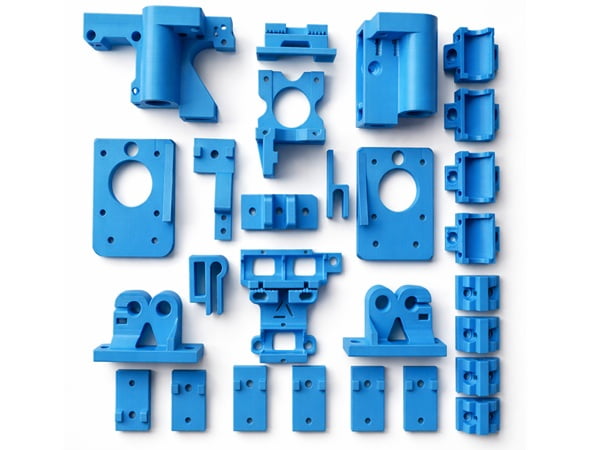
PLA (Polylactic Acid) is a popular thermoplastic made from renewable resources like corn starch. It is widely used in 3D printing2 and packaging because it is easy to process. However, it has low heat resistance and lacks the strength needed for heavy-duty structural parts.
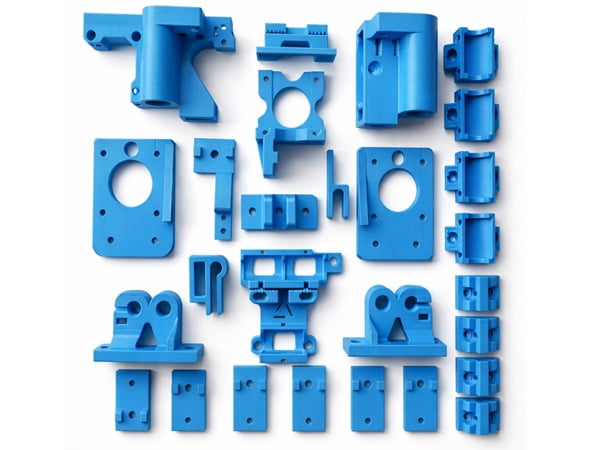
I have seen many clients make mistakes with PLA. They think it works for everything. But it does not. If you know how PLA actually works, you can save your business a lot of trouble. Let us break down everything you need to know about this material.
What Is PLA Plastic and Why Is It So Widely Used?
Do you want an easy material to print with? Many plastics warp or smell bad. PLA solves this problem because it prints smoothly and has no toxic fumes.
PLA is a biodegradable polymer made from plant sugars. It is widely used because it melts easily, does not shrink much, and sticks well to print beds. This makes it the top choice for beginners and professionals making prototypes, crafts, and visual models.
The Real Value of PLA
I often talk to engineers and designers who need fast results. They choose PLA because it is very friendly to process. You do not need a heated chamber to print it. This saves machine costs and setup time. At CHENcan CNC3, we build industrial 3D printers. We see many clients use PLA for interior design parts and large art crafts.
Why People Choose It
PLA is safe and easy. But you must understand its core value. It is best for visual parts. It is not for functional parts. Here is a quick look at why it wins in many shops:
| Feature | Benefit for Users |
|---|---|
| Low Melting Point | Saves energy and prints fast. |
| No Warping | Good for large visual models. |
| Plant-Based | Safe for indoor use and offices. |
You can print a large statue with our pellet 3D printer4 using PLA. It will look perfect. But if you put that statue outside in the hot sun, it will fail. You must match the material to the right job.
How Is PLA Plastic Made From Renewable Resources to Polymer?
Are you worried about plastic waste from fossil fuels? Traditional plastics harm the earth. PLA offers a cleaner choice by using plants instead of oil.
PLA is made by fermenting plant starch from crops like corn or sugarcane. This process turns the sugar into lactic acid. The lactic acid is then linked together through a chemical process to form the hard polylactic acid polymer chain.
The Journey from Farm to Factory
Many people do not know how plants become hard plastic. The process is quite simple to understand. First, factories mill the corn to get the starch. Then, they add enzymes to turn the starch into sugar. Bacteria eat this sugar and make lactic acid. Finally, machines link these acid molecules together to make long plastic chains.
A Green Alternative
I like telling my customers about this process. It shows why PLA is safer to use in our industry 3D printers. You do not get the nasty smell of oil-based plastics.
| Production Step | What Happens |
|---|---|
| 1. Milling | Extract starch from corn. |
| 2. Fermentation | Bacteria turn sugar into lactic acid. |
| 3. Polymerization | Lactic acid molecules link into PLA plastic. |
Because it comes from plants, PLA is a bio-based plastic. This is very important for companies that want to reduce their carbon footprint. But the farming process still uses water and land. It is better than oil, but it is not completely free of environmental impact.
Is PLA Plastic Really Biodegradable in Reality vs Myths?
Do you think PLA will just melt away in your garden? Many people throw PLA in the trash, thinking it breaks down fast. This is a big mistake.
PLA is technically biodegradable, but only under specific industrial conditions. It needs high heat, specific microbes, and high humidity to break down. If you throw PLA in the ocean or a normal landfill, it will last for hundreds of years.
The Industrial Compost Reality
I hear this myth all the time. A client will buy our pellet 3D printer. They will say they want to make green parts that disappear in the dirt. I have to tell them the truth. PLA needs a commercial compost facility. These facilities heat the plastic to over 60 degrees Celsius for many days. Your home garden cannot do this.
Breaking Down the Myth
To help you understand, let us look at the facts. You must handle PLA waste correctly.
| Disposal Method | What Happens to PLA |
|---|---|
| Home Compost Bin | Nothing. It stays hard for years. |
| Ocean Water | Breaks down very slowly, acting like microplastics. |
| Industrial Facility | Breaks down completely in a few months. |
If your company uses a lot of PLA, you need a plan for the waste. You cannot just throw it away and feel good about it. You must send it to the right recycling or compost center. This is the only way to truly protect the environment.
What Are the Key Mechanical and Thermal Properties of PLA Plastic?
Are your 3D printed parts breaking easily? Using the wrong plastic causes weak products. Knowing PLA properties helps you avoid making fragile items.
PLA is a stiff and hard material with good tensile strength. However, it is very brittle and will crack under impact. Thermally, PLA has a low glass transition temperature of around 60 degrees Celsius, meaning it gets soft easily in hot environments.
The Balance of Strength and Heat
At CHENcan CNC3, we test many materials. PLA is interesting. It is actually stronger than ABS when you pull it. But it has no flexibility. If you drop a PLA part, it shatters. This is a big real-world limitation. You cannot use it for parts that take hits or vibrations.
Thermal Weakness
The biggest problem with PLA is heat. I always warn my clients about this. If you leave a PLA part inside a hot car during summer, it will melt and lose its shape.
| Property | PLA Performance |
|---|---|
| Tensile Strength | High (good for static loads). |
| Impact Resistance | Low (very brittle). |
| Heat Resistance | Very Low (softens at 60°C). |
Because of these properties, you must choose PLA only for the right jobs. It is perfect for indoor display models. It is terrible for car engine parts or outdoor signs. Understanding this thermal limit is crucial for any manufacturing project.
How Is PLA Plastic Used in 3D Printing Filament vs Pellet?
Are you spending too much money on 3D printing filament? Filament is expensive for large parts. Pellet printing offers a cheaper and faster way to build big items.
PLA filament is a thin wire used in standard desktop 3D printers for small, detailed parts. PLA pellets are small raw plastic beads used in industrial 3D printers. Pellets are much cheaper and allow for much faster printing of large-scale objects.
The Shift to Pellet Printing
I have helped many clients move from filament to pellets. When you print a small toy, filament is fine. But what if you want to print a full-size chair? Filament will take weeks and cost a lot of money. This is why we build Industry 3D Printers that use pellets directly.
Cost and Speed Advantages
PLA pellets are the raw material for filament. By skipping the filament-making process, you save money. You also melt pellets much faster in big machines.
| Application Type | Best Material Form | Why? |
|---|---|---|
| Small Prototypes | PLA Filament | Better detail, easy to load. |
| Large Sculptures | PLA Pellets | Very fast, high volume output. |
| Interior Design | PLA Pellets | Low cost per kilogram for big parts. |
Our clients use PLA pellets to print large indoor decorations. The material flows easily through the big nozzles of our pellet printers. This combination of PLA's easy flow and cheap pellets makes large-scale 3D printing5 possible for many businesses today.
How Easy Is PLA Plastic to Process and Print?
Do you hate dealing with warped parts and blocked nozzles? Poor materials ruin your workflow. PLA is famous because it removes these headaches and prints perfectly almost every time.
PLA is the easiest plastic to 3D print. It melts at a low temperature, flows smoothly, and sticks well to the print bed without a heated chamber. It has almost no shrinkage, which means large parts do not warp or curl up at the corners.
The King of Processing Friendliness
In my 27 years in the CNC and manufacturing industry, I have seen many difficult materials. PLA is the opposite. Its greatest advantage is its processing friendliness. You do not need expensive, high-temperature machines to use it. This is why it is everywhere in the market.
No Warping Means Better Big Parts
Shrinkage is a big problem when our clients use our large 3D printers. If a plastic shrinks, a two-meter-long part will bend and fail. PLA does not do this.
| Processing Feature | Why It Matters |
|---|---|
| Low Shrinkage | Keeps large parts flat and accurate. |
| Good Layer Adhesion | Makes the final part solid. |
| Low Odor | Keeps the factory air clean. |
This stability makes PLA ideal for large interior design panels and art crafts. You just load the material, set a basic temperature, and let the machine run. The reliable results save time and reduce wasted material for our customers.
What Are the Common Applications of PLA Plastic Across Industries?
Are you unsure if PLA fits your industry needs? Picking a material blindly wastes time. Seeing how others use PLA can give you the right ideas for your business.
PLA is widely used for prototyping, architectural models, and educational tools. In the packaging industry, it is used for food containers. In large-scale 3D printing, businesses use PLA for art crafts, movie props, and interior design elements that stay indoors.
Beyond Just Small Toys
Many people think PLA is only for hobbyists. This is not true. I see real businesses using PLA every day. Because it holds detail well, architects use it to print city models. Packaging companies use it for clear boxes because it is food-safe.
Large Scale Industrial Uses
At CHENcan CNC3, our clients use PLA in big ways. They use our pellet 3D printers to make things you see every day.
| Industry | Common PLA Application |
|---|---|
| Interior Design | Wall panels, custom lampshades. |
| Art and Events | Large sculptures, exhibition booths. |
| Packaging | Disposable cups, food trays. |
| Foundry | Sacrificial patterns for metal casting. |
For example, one of our clients prints huge statues for shopping malls. Since the malls are indoors and air-conditioned, the PLA will never melt. They get a huge, beautiful shape quickly and cheaply. This shows how PLA shines when you match it to the right environment.
Where Does PLA Plastic Fail in Heat Resistance Strength and Durability?
Have you ever seen a 3D printed part melt in the sun? Using PLA for the wrong job ruins your product. You must know its limits to avoid failures.
PLA fails in environments with high heat, high stress, or outdoor weather. It softens at just 60 degrees Celsius. It is brittle and breaks under impact. It also absorbs moisture over time, which makes it unsuitable for long-term outdoor use or heavy-duty structural applications.
The Real-World Limitations
I always speak plainly to my clients. PLA's biggest flaw is its long-term performance and thermal stability. If you need a part to hold a heavy motor, do not use PLA. If you need a part for a car engine bay, do not use PLA. It will fail. This is critical in large structural applications.
Breaking Down the Weaknesses
You have to plan for these limits. If you ignore them, your project will break down.
| Weakness | Real-World Problem |
|---|---|
| Low Heat Resistance | Parts melt in hot cars or sunlight. |
| High Brittleness | Parts snap instead of bending under pressure. |
| Creep | Parts slowly change shape under constant weight. |
When a client wants to print a large outdoor wind turbine mold, I tell them to avoid PLA. We guide them to use ABS or PETG instead. You must respect the limits of PLA. It is a great material, but it is not magic. It cannot survive tough environments.
How Does PLA Plastic Compare vs Other Plastics for Your Needs?
Are you stuck choosing between PLA, ABS, and PETG? Guessing leads to bad products. Comparing plastics directly helps you pick the exact right material for your specific job.
PLA is best for easy printing and indoor visual models. ABS is much tougher and handles heat well, but it shrinks and smells bad during printing. PETG offers a middle ground, providing more strength and flexibility than PLA while still being relatively easy to print.
Making the Right Choice
I spend a lot of time helping engineers choose materials. The choice depends entirely on your final goal. If you want a fast, beautiful prototype, choose PLA. If you need a strong drone frame that takes hits, choose ABS or Nylon.
A Simple Comparison
To make this easy, I use a simple rule. Use PLA until you have a reason not to. Here is how it compares to common alternatives:
| Material | Best Feature | Biggest Drawback |
|---|---|---|
| PLA | Easiest to print, stiff. | Melts easily, very brittle. |
| ABS | High impact and heat resistance. | Hard to print, high shrinkage. |
| PETG | Strong and flexible, good water resistance. | Can be stringy during printing. |
Our Gantry Machining Centers often cut materials that are much harder than PLA. But in our 3D printing division, PLA remains the top choice for non-structural jobs. Knowing when to drop PLA and switch to ABS or PETG is the mark of a smart manufacturer.
What About the Cost Availability and Major PLA Plastic Manufacturers?
Are you worried about supply chain issues for your materials? Running out of plastic stops production. Knowing where to buy and what it costs keeps your business running smoothly.
PLA is one of the most affordable and widely available plastics in the 3D printing market. You can buy it globally from many suppliers. Major chemical companies like NatureWorks and TotalEnergies Corbion produce raw PLA resin in massive quantities to supply global demand.
A Global Supply Chain
One reason our clients love PLA is that they can buy it anywhere. Whether you are in Europe, America, or Asia, PLA is always in stock. This availability is crucial for large-scale production. If you run an industrial pellet printer, you need hundreds of kilograms of material fast.
Cost Expectations
PLA is very cost-effective. The price goes down even more when you buy raw pellets instead of spooled filament.
| Material Form | Average Cost | Best Buyer |
|---|---|---|
| PLA Filament | Higher ($15-$25/kg) | Desktop printer users. |
| PLA Pellets | Very Low ($2-$5/kg) | Industrial pellet printer users. |
Big companies like NatureWorks make sure the supply never runs out. At CHENcan CNC, we ship machines to over 70 countries. We always tell our global clients that finding cheap, high-quality PLA locally will never be a problem. This stable supply chain makes PLA a safe financial bet for your business.
Conclusion
PLA is an incredibly easy and popular plastic for 3D printing and indoor models. However, you must respect its strict heat and strength limits for your projects to succeed.
Explore the benefits and limitations of PLA plastic to make informed decisions for your projects. ↩
Discover why PLA is favored in 3D printing for its ease of use and processing advantages. ↩
Learn how CHENcan CNC incorporates PLA plastic into their industrial 3D printing solutions. ↩
Discover the benefits of using pellet 3D printers for large-scale PLA printing projects. ↩
Explore the advantages of using PLA for large-scale 3D printing projects. ↩