
Struggling to choose between PLA and ABS for your 3D printing project? The wrong choice can lead to failed prints and wasted material, costing you time and money.
PLA is an easy-to-use, biodegradable material perfect for beginners, visual prototypes, and artistic models. ABS is a stronger, more durable plastic ideal for functional parts1, industrial applications2, and components that need to withstand heat and impact. Your choice depends on the part's final use.
Choosing the right material is one of the most critical decisions in 3D printing. It affects everything from the printing process itself to the final part's strength, appearance, and longevity3. As someone who has spent decades in the manufacturing world, I've seen how this choice can make or break a project. Let's break down the key differences between these two popular materials to help you make an informed decision, whether you're making a simple model or a complex industrial part.
What Are PLA and ABS? A Quick Overview?
Confused about what PLA and ABS actually are? These acronyms represent two of the most common plastics in 3D printing, but they have very different origins and properties.
PLA (Polylactic Acid4) is a biodegradable thermoplastic derived from renewable resources like corn starch or sugarcane. ABS (Acrylonitrile Butadiene Styrene5) is a common oil-based thermoplastic known for its toughness, used in everything from LEGO bricks to car parts.
Let's dive a little deeper into what makes these materials unique. I've worked with both extensively, not just in filament form but also as pellets for our large-scale industrial 3D printers. Understanding their core identity is the first step.
PLA: The Eco-Friendly Starter
PLA is often called the "beginner's plastic" for a good reason. It’s forgiving to print with and doesn't require a heated bed, although one helps. Its plant-based origin makes it biodegradable under industrial composting conditions, which is a big plus for many users focused on sustainability. It has a slightly sweet smell when printed, which is much more pleasant than the alternatives. However, its low melting point means it's not suitable for anything that will be exposed to heat, like a part left in a hot car.
ABS: The Industrial Workhorse
ABS is a staple in traditional manufacturing, and for good reason. It’s tough, durable, and has good resistance to heat and impact. This is the material I see used most often for functional parts1 in our industry. Think about jigs, fixtures, and even molds for casting. Its chemical makeup gives it these strong properties but also makes it trickier to print and requires more safety precautions due to the fumes it releases.
Material Properties Compared: Strength, Flexibility, and Heat Resistance?
Are you worried your 3D printed part will break or melt? The material's inherent properties are critical. Choosing the wrong one can lead to a part that fails in its real-world application.
PLA is rigid but brittle, while ABS is more ductile and impact-resistant. For heat, ABS is the clear winner, withstanding temperatures around 100°C, whereas PLA will start to deform and soften at temperatures as low as 60°C.
In my 27 years of experience, matching material properties to the application is everything. I remember a client who printed a functional engine cover prototype in PLA. It looked perfect, but the moment the engine warmed up, the part warped into an unrecognizable shape. We reprinted it in ABS, and it performed flawlessly. This is why a deep dive into the data is so important. Let's compare them side-by-side.
Strength and Durability
Tensile strength measures how much a material can be stretched before it breaks. PLA actually has a slightly higher tensile strength6, meaning it's very rigid. However, it's also brittle. Like glass, it will shatter under sharp impact. ABS has lower tensile strength6 but much higher impact resistance. It will bend and deform before it breaks, making it far more durable for parts that might be dropped or subjected to stress.
Heat Resistance
This is a major point of difference.
- PLA: Glass transition temperature is around 60°C (140°F). Don't leave it in a hot car or use it for parts near motors or electronics.
- ABS: Glass transition temperature is around 105°C (221°F). This makes it suitable for many automotive and electronic housings.
Here’s a simple table to summarize:
| Property | PLA (Polylactic Acid4) | ABS (Acrylonitrile Butadiene Styrene5) |
|---|---|---|
| Strength | High tensile strength6, but brittle | Lower tensile strength6, but high impact resistance |
| Flexibility | Low (Rigid) | Medium (Ductile, bends before breaking) |
| Heat Resistance | Low (Softens around 60°C) | High (Stable up to ~100°C) |
| Durability | Prone to breaking on impact | Very durable and tough |
Printability Comparison: Temperature, Warping, and Ease of Use?
Tired of failed prints, warping, and spaghetti monsters? The material you choose has a huge impact on print success. A difficult material can turn a simple project into a frustrating nightmare.
PLA is significantly easier to print than ABS. It prints at lower temperatures, doesn't require a heated bed (though it helps), and is much less prone to warping. ABS requires higher temperatures for both the nozzle and bed and often needs an enclosure to prevent warping and layer splitting.
When we set up our industrial 3D printers for clients, printability is a top concern. We want them to get reliable, repeatable results. While our machines can handle difficult materials with ease, the fundamental challenges of each plastic remain. For someone starting out, or for a project with a tight deadline, ease of use can be the deciding factor. Let's look at the specific printing requirements for each.
Printing Temperatures
Temperature control is key.
- PLA: Prints at a nozzle temperature of 190-220°C. A heated bed is optional but recommended at 50-60°C to improve first-layer adhesion.
- ABS: Requires a much hotter nozzle, typically 230-260°C. A heated bed is mandatory, set to 90-110°C, to prevent the part from detaching and warping.
Warping and Adhesion
This is the biggest headache with ABS. As it cools, it shrinks significantly, causing the corners of the print to lift off the bed.
- PLA: Has very low shrinkage, so warping is minimal. It sticks well to common bed surfaces like blue painter's tape or a PEI sheet.
- ABS: High shrinkage causes severe warping. An enclosed printer is highly recommended to maintain a stable, warm ambient temperature. A "brim" or "raft" in your slicer settings and a slurry made from ABS and acetone are often used to secure it to the bed.
Here's a breakdown of the printing environment:
| Printing Parameter | PLA | ABS |
|---|---|---|
| Nozzle Temp | 190-220°C | 230-260°C |
| Bed Temp | 0-60°C (Optional) | 90-110°C (Mandatory) |
| Enclosure | Not needed | Highly recommended |
| Warping | Very Low | High |
| Ease of Use | Easy | Difficult |
Surface Finish and Post-Processing Options?
Does your final part need to look perfect? The raw finish from the printer is rarely the final step. Understanding your post-processing options can elevate a good print to a great one.
PLA parts can be sanded and painted, but are harder to smooth chemically. ABS provides a huge advantage with its ability to be "acetone smoothed7," which melts the outer layer to create a glossy, injection-molded-like surface finish.
In my line of work, especially with prototypes and molds, the final finish is crucial. As my insights noted, many PLA prints for design or artistic purposes get painted. A client creating architectural models8 will almost always sand and paint the PLA parts to get the desired look. On the other hand, for industrial patterns made from ABS, we might use acetone smoothing to eliminate layer lines before using the part as a master for a vacuum forming mold. The post-processing technique is tied directly to the material and its end use.
Sanding and Painting
Both PLA and ABS can be sanded to remove layer lines. Start with a coarse grit sandpaper (like 120) and move to finer grits (400, 800, or higher) for a smooth finish. After sanding, both materials take primer and acrylic paint very well. For PLA, this is the primary method for achieving a smooth, colorful finish. This is very common for creating display pieces and visual prototypes.
Chemical Smoothing
This is where ABS truly shines.
- ABS: It is soluble in acetone. Exposing an ABS print to acetone vapor for a short period melts the outer surface, fusing the layer lines together and creating a very smooth, glossy finish. This not only improves aesthetics but can also increase the part's strength and make it watertight. This process must be done in a well-ventilated area with proper safety gear.
- PLA: Is not soluble in acetone. While there are other chemicals that can smooth PLA (like THF or MEK), they are much more hazardous and less commonly used. For most users, chemical smoothing is not a practical option for PLA.
Durability and Environmental Resistance (Heat, UV, Moisture)?
Will your part be used outdoors or in a tough environment? A print that looks great on your desk can quickly fail when exposed to sunlight, heat, or moisture. This is a critical factor for industrial parts.
ABS offers superior durability against heat and physical impact. However, it degrades under prolonged UV exposure, becoming brittle and discolored. PLA has poor heat and moisture resistance and is not suitable for most outdoor or demanding applications.
I often advise clients in the marine and automotive industries on this topic. A client making custom boat fittings can't use PLA; it would warp in the summer sun and absorb moisture. We guide them toward ABS (and often more advanced materials like ASA for UV resistance9). The long-term performance of a part is just as important as how it looks coming off the printer. Let's examine how these materials hold up against the elements.
Heat and UV Resistance
- PLA: As we've covered, it has very low heat resistance. It also degrades relatively quickly when exposed to direct sunlight (UV radiation). It becomes brittle and can lose its color. It is strictly an indoor material unless it's for very temporary outdoor use.
- ABS: Its high heat resistance is a key feature. However, it has poor UV resistance9. If left in the sun for months, it will turn yellow and become very brittle. For outdoor applications, parts should be painted with a UV-resistant coating, or a different material like ASA (which is chemically similar to ABS but with built-in UV resistance9) should be used.
Moisture Resistance
- PLA: Is hygroscopic10, meaning it readily absorbs moisture from the air. This can not only ruin a spool of filament before printing but also cause the final part to become more brittle over time.
- ABS: Is much less hygroscopic10 than PLA. While the filament should still be kept dry for best printing results, the final part has good resistance to water and moisture, making it more reliable in humid environments.
Health, Safety, and Emissions During Printing?
Is 3D printing safe for your office, workshop, or home? The fumes and particles released during printing are an important consideration that is often overlooked, especially with industrial-scale use.
Printing PLA is generally considered safe, releasing minimal odor and low levels of ultrafine particles (UFPs). ABS, on the other hand, releases a strong, unpleasant plastic odor and significantly higher levels of UFPs and styrene, a potentially hazardous volatile organic compound (VOC).
At our production bases, safety is paramount. We operate large-scale machinery, and air quality is constantly monitored. When we install our industrial printers at a client's facility, we always discuss ventilation requirements. The choice between PLA and ABS isn't just technical; it's also about creating a safe working environment for your team. This is non-negotiable in a professional setting.
PLA Emissions
When heated, PLA emits a faint, slightly sweet smell that many compare to waffles. Studies have shown that it releases some ultrafine particles, but the VOCs are minimal. While good ventilation is always a best practice for any 3D printing, PLA is widely considered safe to print in a home or office environment without a dedicated fume extraction system.
ABS Emissions
Printing ABS is a different story. It releases a strong, unpleasant smell of melting plastic. More importantly, it emits high levels of UFPs and styrene gas. Styrene is classified as a possible human carcinogen. Because of this, you should never print ABS without proper ventilation. At a minimum, the printer should be in a well-ventilated room, ideally near an open window. For anyone printing ABS regularly, a dedicated enclosure with a fume extractor that vents outside or through a carbon/HEPA filter is strongly recommended. This is standard procedure in any industrial or professional setting.
Typical Applications: When to Use PLA vs ABS?
Are you wondering which material is best for your specific project? Matching the material to the application is the key to success. Using the wrong one leads to failure and wasted resources.
Use PLA for visual models11, non-functional prototypes, artistic prints, and educational projects where ease of use is key. Use ABS for functional parts1, mechanical components, jigs, fixtures, automotive parts, and industrial molds that require strength and heat resistance.
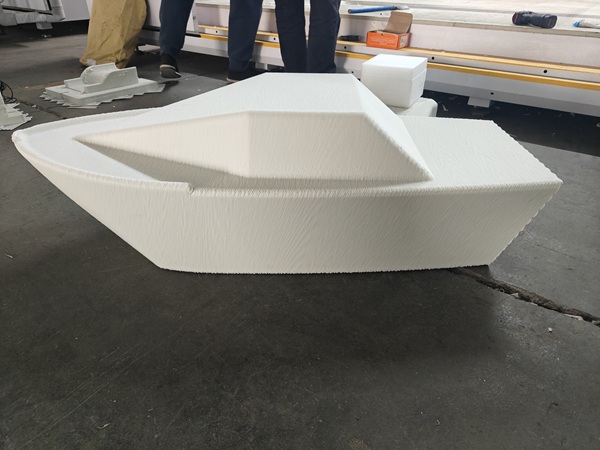
This is where my experience really comes into play, connecting materials to real-world manufacturing. As I mentioned in my insights, I see a clear divide. PLA is fantastic for the "look and feel" stage. We've had automotive design clients print entire dashboards in PLA on our large gantry machines to check ergonomics and appearance. But when it comes to the "work and perform" stage, ABS is the go-to. A foundry will use an ABS pattern, often finished on one of our CNC routers, to create a sand mold for casting metal parts. The application dictates everything.
Common Uses for PLA
- Visual Prototypes: Quickly and cheaply create models to show clients or evaluate design aesthetics.
- Architectural Models: Its rigidity and paintability make it great for detailed building models.
- Artistic & Hobbyist Prints: Figurines, sculptures, and decorative items where strength is not a concern.
- Educational Tools: Safe and easy to use in a classroom setting.
Common Uses for ABS
- Functional Prototypes: Testing parts that need to withstand mechanical stress, like snap-fit enclosures or gear mechanisms.
- Industrial Jigs and Fixtures: Creating custom tools to hold parts during assembly or machining.
- End-Use Parts: Small-run production of durable plastic parts for machinery or consumer goods.
- Molds and Patterns: As my insight pointed out, ABS is perfect for creating patterns for vacuum forming or sand casting, often used in conjunction with CNC machines for final finishing.
Cost Comparison: Filament, Pellets, and Real Printing Costs?
Is PLA or ABS cheaper? The sticker price on a spool is only part of the story. The real cost includes energy consumption, failed prints, and the price of different material forms like pellets.
Generally, spools of PLA and ABS filament are priced very similarly, with PLA sometimes being slightly cheaper. However, the real cost of printing with ABS can be higher due to the energy needed for higher temperatures and a higher rate of failed prints for beginners.
When I talk to purchasing managers, we don't just discuss the price per kilogram. We discuss the total cost of ownership. For our industrial clients using our pellet-fed 3D printers, the cost savings are massive. Plastic pellets can be 5 to 10 times cheaper than filament. While PLA and ABS filament costs are competitive, the operational costs can differ. An uninsulated printer running at high ABS temperatures in a cool workshop will consume a lot more electricity. Failed prints due to warping also add up, wasting both material and machine time.
Material Cost
- Filament: A standard 1kg spool of PLA and ABS typically costs between $20 and $30 from most reputable brands. There is very little price difference between them for standard colors and formulations.
- Pellets: This is where the big savings happen for industrial users. Plastic pellets, the raw material used to make filament, are significantly cheaper. For businesses like ours that offer industrial 3D printers that can print directly from pellets, this dramatically reduces material costs for large parts and batch production.
Operational Costs
- Energy: ABS requires higher nozzle and bed temperatures, consuming more electricity per print compared to PLA. This can add up over time, especially for large prints or continuous operation.
- Failure Rate: For inexperienced users, the failure rate with ABS due to warping and poor adhesion is much higher than with PLA. Every failed print is a direct cost in wasted material and time.
- Printer Requirements: To print ABS reliably, you may need to invest in an enclosure, which adds to the initial setup cost.
PLA vs ABS for Beginners, Professionals, and Industrial Users?
Should a beginner use the same material as an industrial professional? Absolutely not. The best material depends heavily on your skill level, your equipment, and the demands of your project.
Beginners should start with PLA due to its ease of use and forgiving nature. Professionals might use both, choosing based on the project. Industrial users often lean towards ABS and other engineering-grade materials for their superior mechanical and thermal properties.
I guide different types of customers every day. A student with their first desktop printer gets a very different recommendation than an engineer at a major automotive company. The beginner needs early success to stay motivated, which PLA provides. The professional, like a marketing manager creating trade show displays, needs reliability and a good finish, so they might also choose PLA. But the engineer in our target market, who needs a part to perform under stress, will almost always need the capabilities of ABS or even more advanced composites, printed on a robust machine like our CHENcan printers.
For Beginners
Start with PLA. Period. It's the easiest way to learn the fundamentals of 3D printing without the frustration of warping, bed adhesion problems, and managing fumes. You will get successful prints faster, which builds confidence. Once you have mastered printing with PLA, you can then move on to trying ABS.
For Hobbyists and Professionals
You will likely use both.
- Use PLA for: Quick design iterations, visual-only models, custom marketing materials, and any part where form is more important than function.
- Use ABS for: Parts that need to be durable, withstand some heat, or require a smooth finish via acetone vapor. This includes functional items like tool holders, electronics enclosures, and mechanical prototypes.
For Industrial Users
In an industrial context, the choice is driven entirely by performance requirements. While PLA can be used for quick, low-cost fitment checks, ABS is the starting point for most functional applications. Our industrial clients often use ABS for creating large-scale foundry patterns, custom jigs for their assembly lines, or durable molds for vacuum forming. They have the right equipment—enclosed, high-temperature printers and proper ventilation—to handle it effectively and safely. For them, the superior properties of ABS are not a bonus; they are a requirement.
PLA or ABS? Final Recommendations by Application Scenario?
Still unsure which one to pick for your next print? Let's cut through the noise with a simple guide. This final recommendation will help you make a quick, confident decision based on your specific needs.
For visual models and non-functional parts, choose PLA. For any part that needs to be strong, handle heat, or survive impacts, choose ABS. If printing ease is your top priority, stick with PLA. If performance is non-negotiable, use ABS.
Over my career, I've learned that the best way to help someone is to give them a clear path. You don't always need to know every single technical detail if you can confidently answer the question, "What am I trying to achieve with this part?" Based on the hundreds of applications I've seen, from small workshops to massive manufacturing plants, the choice usually comes down to a few key scenarios. Here is a final breakdown to make your decision easy.
Quick Recommendation Table
| If your primary need is... | Then choose... | Because... |
|---|---|---|
| Ease of Use / You're a Beginner | PLA | It's forgiving, prints at low temps, and doesn't warp easily. |
| Visual Quality / Aesthetics | PLA | It produces sharp details and is easy to sand and paint for a great finish. |
| Strength & Durability | ABS | It can withstand impacts and bend before breaking, making it tough. |
| Heat Resistance | ABS | It won't deform in environments up to 100°C, like inside a car. |
| Outdoor Use | Neither (Consider ASA) | PLA degrades in sun/heat; ABS degrades in UV. Paint ABS for protection. |
| Creating Industrial Molds/Patterns | ABS | Its durability and post-processing options make it ideal for tooling. |
| Budget & Eco-Friendliness | PLA | It's made from renewable resources and is biodegradable. |
| Glossy, Smooth Finish | ABS | It can be easily acetone-smoothed for an injection-molded look. |
Ultimately, both PLA and ABS are fantastic materials with a place in every 3D printing workspace. By understanding their core differences, you can stock both and choose the right one for every job, ensuring your parts meet expectations every single time.
Conclusion
Choosing between PLA and ABS depends on your application. PLA is for easy, visual prints, while ABS is for strong, functional parts. Understanding their differences is key to successful printing.
ABS's durability and heat resistance make it perfect for parts that need to perform under mechanical stress. ↩
Understanding ABS's role in industrial applications can guide you in choosing the right material for durable and heat-resistant parts. ↩
Material choice directly impacts the durability, look, and lifespan of your 3D printed parts, crucial for project success. ↩
Learning about PLA's properties can help you decide if it's suitable for your project, especially for eco-friendly and easy-to-use applications. ↩
ABS offers toughness and heat resistance, making it ideal for functional parts. Discover its benefits for your projects. ↩
Tensile strength determines how much a material can be stretched before breaking, crucial for assessing durability. ↩
Acetone smoothing creates a glossy finish and enhances strength, making ABS prints look professional and durable. ↩
PLA's rigidity and paintability make it suitable for detailed architectural models, enhancing design presentations. ↩
UV resistance ensures your parts don't degrade or discolor when exposed to sunlight, maintaining their integrity. ↩
Hygroscopic materials absorb moisture, affecting print quality and durability. Learn how to manage this property. ↩
PLA's ease of use and aesthetic qualities make it ideal for creating detailed and attractive visual models. ↩