
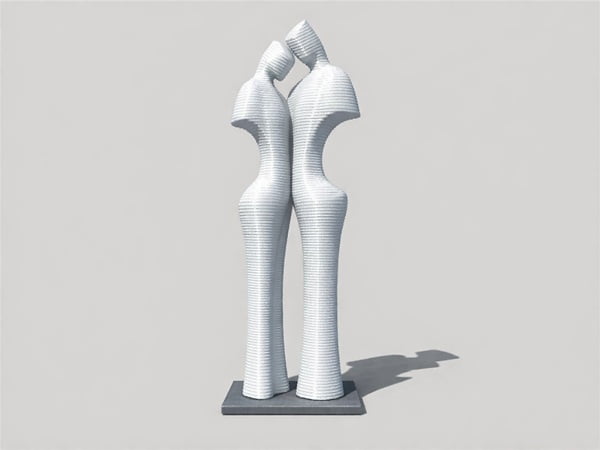
The Evolution of 3D Printed Sculptures: Redefining Artistic Expression with Cutting-Edge Technology?
Are you struggling to make complex sculptures by hand? The slow process kills creativity. 3D printing offers a fast, precise way to build your artistic vision without limits.
3D printed sculptures1 use digital files and industrial machines to build physical art layer by layer. This technology gives artists total freedom, reduces production time, and lowers costs compared to traditional hand carving or molding methods.
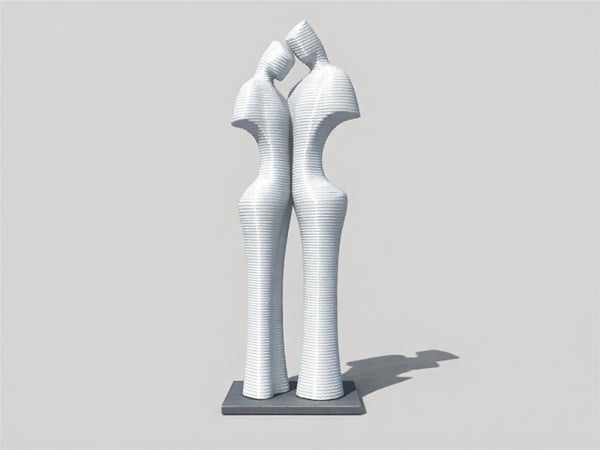
You might think traditional methods are the only way to make real art. Let me show you why changing your tools will change your results forever.
A New Frontier in Sculpting: Why 3D Printing is the Future of Art?
Feeling stuck with clay and stone? Traditional materials limit your scale. 3D printing opens a new world where your imagination is the only limit you face.
3D printing is the future of art because it lets creators build complex, large-scale designs quickly. It removes physical limits, speeds up testing, and makes custom art production highly efficient.
The Shift to Digital Sculpting
I remember when a client asked me to make a huge statue. Hand carving took months. We had to worry about the stone breaking. Now, we use 3D printing. The change is huge. 3D printing changes how we think about space and form. You do not start with a big block and cut it away. You start with nothing and add exactly what you need. This is additive manufacturing2.
This shift is very important for artists. It means you can try new ideas without wasting expensive materials. If you make a mistake on a computer, you just click undo. You cannot do that with a piece of marble. We see many young artists using these machines now. They want to make things that human hands cannot easily make. This technology gives them the power to do that.
| Feature | Traditional Sculpting | 3D Printing Art |
|---|---|---|
| Creation Method | Subtractive (cutting away) | Additive (adding layers) |
| Speed | Very slow | Very fast |
| Risk of Error | High | Low |
| Design Freedom | Limited by tools | Unlimited |
From Concept to Creation: How 3D Printers Bring Sculptures to Life?
Taking a design from screen to reality is hard. Manual scaling causes errors. Industrial 3D printers turn your digital models into perfect physical pieces instantly.
3D printers bring sculptures to life by reading CAD files and depositing materials layer by layer. This exact process ensures the final physical piece matches the original digital concept perfectly.
The Digital Workflow
The journey from an idea to a real object is simple but amazing. First, you draw your idea on a computer. We call this CAD design. Then, a special software slices your design into hundreds of flat layers. This software tells the machine exactly where to move. Finally, the printer starts working. It builds the sculpture from the bottom to the top.
I watch our Industry 3D Printers3 do this every day. It still feels like magic. You just need a good digital file. The machine does the hard work. This process is very helpful for artists who want to make exact copies of their work. You can print the same file ten times. Every piece will look exactly the same. This consistency is hard to get with hand tools. It also lets artists share their files across the world. Someone in another country can print your art.
| Step | Action | Tool Used |
|---|---|---|
| 1 | Create the 3D model | CAD Software |
| 2 | Slice the model | Slicing Software |
| 3 | Print the object | Industry 3D Printer |
| 4 | Finish the surface | Sanding tools / 5-Axis CNC |
Exploring the Benefits: Why Artists are Turning to 3D Printing for Sculptures?
Are high labor costs hurting your art business? Spending months on one piece is risky. 3D printing saves time and money while boosting your output quality.
Artists turn to 3D printing because it cuts labor time, reduces material waste, and allows for exact copies. It helps creators test ideas fast and scale up production safely.
Solving Business Problems for Artists
Art is passion, but it is also a business. I talk to many sculpture makers. They all have the same problem. Making art takes too much time. Time is money. If you spend three months on one sculpture, you need to sell it for a high price. But high prices push buyers away. 3D printing solves this problem. It makes production fast.
When you print a sculpture, you can work on other things. The machine runs by itself. You can even run it at night. This increases how much art you can make. Also, you do not need heavy lifting equipment for a digital file. You just need a good printer. This lowers the physical stress on the artist. Many of our clients at CHENcan CNC tell me they doubled their sales after buying a printer. They can offer more products to more people.
| Benefit | Description | Business Impact |
|---|---|---|
| Faster Production | Machine works 24/7 | Sell more items |
| Lower Labor | No manual carving needed | Save money on wages |
| Exact Copies | Print the same file again | Build a product line |
| Easy Scaling | Print small or large sizes | Reach different buyers |
The Materials Behind the Masterpieces: Choosing the Right Pellets for 3D Printed Sculptures?
Worried about expensive printing materials? Standard filament limits your options. Pellet 3D printing gives you cheaper, stronger, and more diverse material choices for your art.
Choosing the right pellets means looking at strength, cost, and finish. Pellet 3D printers use standard plastic granules, which lowers costs and removes material limits. You can even reuse scrap materials.
The Power of Pellet Printing
I want to share a very important insight here. In the past, people only used expensive plastic wire, called filament, for 3D printing. Now, things are different. The diversity of materials is huge. The prices are dropping fast. This makes pellet 3D printers much more popular. You are no longer limited to just one or two specific materials. You can buy cheap industrial pellets in big bags.
This changes everything for sculpture makers. You can use strong materials, flexible materials, or materials that handle the sun well. Even better, these materials are reusable. If a print fails, or if you make a test piece, you do not throw it away. You can grind it up and melt it again. This saves a lot of money. Our Industry 3D Printers are built exactly for this. We want our clients to have total freedom with their materials.
| Material Type | Cost | Best Use Case | Reusable? |
|---|---|---|---|
| Standard PLA Pellets | Very Low | Indoor display models | Yes |
| ABS/PETG Pellets | Low | Outdoor, strong sculptures | Yes |
| Composite Pellets | Medium | High-end textured art | Varies |
Cost-Efficiency and Speed: How 3D Printing Makes Large-Scale Sculpting Affordable?
Large sculptures usually cost a fortune. Big molds and heavy materials drain your budget quickly. Large-format 3D printing makes huge art cheap and fast.
3D printing makes large-scale sculpting affordable by removing the need for expensive molds. Using cheap pellet materials speeds up print time and cuts costs, letting artists build huge pieces easily.
Breaking Down the Costs
Making a giant sculpture the old way is very expensive. First, you have to make a mold. A big mold can cost thousands of dollars. Then you have to pour expensive materials into it. If you only want to make one sculpture, the mold is a huge waste of money. I see artists lose projects because they cannot afford the setup costs.
3D printing changes this math completely. You do not need a mold at all. The printer just builds the final shape directly. Because we use pellet materials, the cost of the plastic is very low. You buy it by the kilogram for a very cheap price. The machine prints fast, using thick layers. This means a giant statue that used to take three months can now be printed in one week. The savings are massive. You can finally say yes to big projects without risking your own money.
| Expense Type | Traditional Molding | Pellet 3D Printing |
|---|---|---|
| Setup / Mold Cost | Very High ($$$) | Zero ($0) |
| Material Cost | High | Very Low |
| Labor Cost | High | Low |
| Total Time | Months | Days / Weeks |
Eco-Art: Sustainable Practices in 3D Printing Sculpture?
Does your art waste too much material? Carving throws away chunks of good stone or wood. 3D printing only uses what you need, saving the planet.
Sustainable 3D printing focuses on zero waste and recycled materials. Because pellet printers can use recycled plastics and melt down old prints, artists can create eco-friendly sculptures easily.
Creating Art Without Waste
We must care about the earth. Traditional carving is a subtractive process. This means you start with a big block and cut away the parts you do not want. Those cut parts usually go in the trash. It is a big waste. 3D printing is different. It only puts material exactly where the design needs it. There are no heavy scraps to throw away.
Also, the material diversity I mentioned earlier plays a big role here. Because materials are reusable, you can run a zero-waste studio. You can buy recycled plastic pellets made from old water bottles or car parts. You turn trash into beautiful art. If you do not like your sculpture, you can grind it down into pellets and print a new one. This loop is perfect for modern artists who want to protect the environment. It also gives your art a great story to tell buyers.
| Method | Material Waste | Use of Recycled Plastic |
|---|---|---|
| Stone Carving | High (Dust and chunks) | No |
| Resin Casting | Medium (Mold waste) | No |
| Pellet 3D Printing | Near Zero | Yes, very easy |
The Best 3D Printers for Sculpting: What to Look for When Choosing Your Equipment?
Confused by too many printer choices? Buying the wrong machine wastes your money. You need an industrial-grade printer built for scale, speed, and reliability.
When choosing a 3D printer for sculpting, look for large build volumes, pellet extrusion systems, and high-speed movement. A strong frame and reliable software are also key for long print jobs.
Finding the Right Machine
At CHENcan CNC, we have 27 years of experience building machines. I know exactly what makes a machine good or bad. For sculpture making, you cannot use a small desktop printer. You need a real industrial machine. First, look at the build volume. You want a machine that can print big pieces in one go. Joining small pieces together later is a lot of hard work.
Second, you must choose a pellet extruder. Do not buy a large filament printer. Filament is too slow and too expensive for big art. A pellet system pushes out more plastic faster. Third, look at the machine frame. It must be heavy and strong. Fast printing causes vibrations. A weak frame will shake, and your sculpture will look bad. We build our machines with heavy steel frames to stop this. You need a stable tool to make good art.
| Feature to Check | Why It Matters for Sculpting |
|---|---|
| Build Volume | Allows for large, single-piece sculptures |
| Pellet Extruder | Lowers material cost, increases print speed |
| Heavy Steel Frame | Stops vibrations, improves surface quality |
| Open Material System | Lets you use cheap, diverse materials |
Mastering the Craft: How 3D Printing is Opening New Dimensions in Sculpture Design?
Are your designs too simple? Hand tools can only cut so deep. 3D printing lets you build crazy shapes inside other shapes with zero extra effort.
3D printing opens new dimensions by allowing artists to create impossible geometries. You can design hollow structures, interlocking parts, and extreme details that traditional carving simply cannot achieve.
Designing Without Limits
When you use hand tools, you always have to think about the tool. Can my chisel reach inside this hole? Can the mold release this shape? These questions limit your art. With 3D printing, you stop worrying about the tool. You only focus on the shape.
You can make a ball inside another ball. You can make complex math shapes that twist and turn. You can make sculptures that are completely hollow inside to save weight. This is very useful for hanging art from a ceiling. I love seeing what our clients design. They make things that look like alien plants or complex webs. This technology frees your mind. You just design it, and the machine prints it. You do not need to figure out how to carve it. The machine figures it out for you.
| Design Feature | Traditional Limits | 3D Printing Capability |
|---|---|---|
| Hollow Interiors | Very difficult, needs splitting | Easy, done automatically |
| Interlocking Parts | Requires assembly | Can be printed fully assembled |
| Complex Textures | Takes hours of manual work | Printed directly from the file |
Beyond Plastic: Innovative Materials Shaping the Future of 3D Printed Art?
Tired of plain plastic looks? Standard plastics feel cheap and light. New composite materials give your printed art the look and feel of real wood or metal.
Innovative materials for 3D printed art include wood-filled, metal-filled, and carbon-fiber composites4. These advanced pellets give sculptures unique textures, higher strength, and premium finishes that go beyond basic plastic.
Upgrading Your Art's Value
Many artists worry that plastic art will not sell for a high price. Buyers want things that feel heavy and real. This is where material diversity helps again. Because you use a pellet printer, you can use composite pellets5. These are plastic pellets mixed with real wood dust, real metal powder, or carbon fiber.
When you print with wood-filled pellets, the sculpture smells like wood. You can even sand it and stain it like real wood. When you use metal-filled pellets, the sculpture is heavy. It feels cold. You can polish it to shine like bronze or copper. This completely changes how people see your art. The price of these composite pellets is also dropping. This means you can make premium art for a very low cost. You get the fast speed of 3D printing but the rich look of traditional materials.
| Pellet Material | Visual Effect | Post-Processing Options |
|---|---|---|
| Wood-Filled | Looks like carved wood | Sanding, wood staining |
| Bronze-Filled | Looks and feels like heavy metal | Polishing, chemical aging |
| Carbon-Fiber | Matte black, high tech look | Light sanding, clear coating |
The Future of Sculpture: What’s Next for 3D Printed Art and Technology?
Worried about falling behind? Technology moves fast in the art world. Staying ahead means adopting new tools before your competitors do and learning new skills.
The future of 3D printed sculpture includes faster print speeds, AI design tools, and even more material choices. Industrial pellet printers will become the standard tool for all professional makers.
Combining Technologies for Perfection
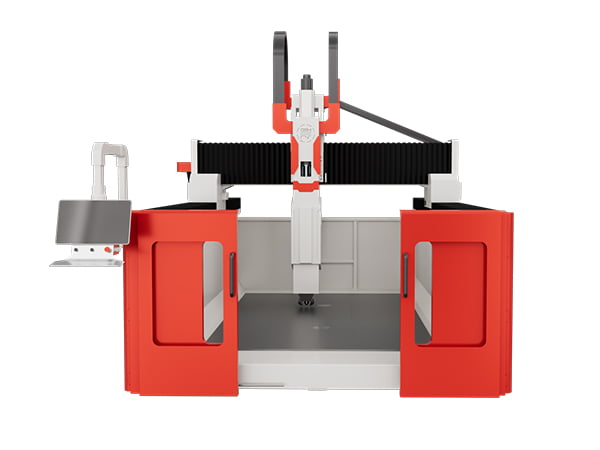
What comes next for art? I see the future in our factory every day. 3D printing is great, but it leaves layer lines. Sometimes artists want a perfectly smooth surface. The future is combining machines. We already see clients using our Industry 3D Printer to build the rough shape fast. Then, they put the printed piece into our 5-Axis Machining Center. The CNC machine mills the surface perfectly smooth.
This hybrid approach is the ultimate way to make sculptures. You save material by printing the shape. You get perfect details by milling the surface. Also, AI is changing how we design. Soon, you will just tell a computer what you want, and it will generate the 3D file for you. The artists who learn to use these industrial tools now will lead the market tomorrow. Do not wait. The future of sculpture is already here.
| Technology Trend | What It Does | Benefit for Artists |
|---|---|---|
| Hybrid Manufacturing | Combines 3D printing and CNC milling | Fast builds with perfect smooth finishes |
| AI Design Tools | Generates 3D models from text | Speeds up the design phase |
| Faster Extruders | Pushes more pellets per hour | Cuts print time in half |
Conclusion
3D printing changes how we make sculptures forever. By using industrial pellet printers, you save money, speed up work, use diverse materials, and push your art to the next level.
Explore how 3D printed sculptures offer artists freedom, reduce production time, and lower costs compared to traditional methods. ↩
Learn how additive manufacturing allows artists to add exactly what they need, reducing waste and enabling creative freedom. ↩
Discover how Industry 3D Printers transform digital models into physical sculptures, offering speed and accuracy. ↩
Explore how carbon-fiber composites provide a high-tech look and strength to 3D printed sculptures. ↩
Understand how composite pellets enhance the texture and finish of 3D printed sculptures, offering premium looks. ↩