
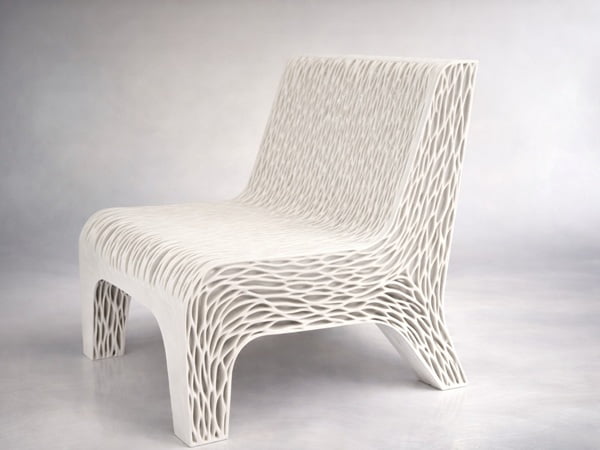
Traditional design methods are often slow and limit your creative freedom. You feel stuck with expensive molds and long lead times that delay your projects. 3D printing changes this game completely.
3D printing revolutionizes architecture by enabling rapid prototyping, creating complex interior geometries, and producing custom furniture using pellet extrusion technology1. It reduces material waste, speeds up production, and allows for using recycled materials2, making design both efficient and eco-friendly.
Architects and designers are constantly looking for new tools to express their vision. Let's look at how this technology works in the real world to solve your problems.
The Role of 3D Printing in Modern Architectural Design?
Old construction methods cannot handle today's complex aesthetic demands efficiently. You need a way to bridge the gap between digital design and physical reality quickly.
3D printing reshapes design by moving beyond structural walls to intricate interior elements, decorative panels, and custom molds. It allows for shapes that traditional machining cannot easily produce.
I have seen a major shift in how we apply this technology at CHENcan CNC. Many people think 3D printing in architecture is only about printing concrete walls for houses. However, the real innovation happens inside the building. We focus heavily on industrial pellet 3D printers3. These machines differ greatly from concrete printers. They use thermoplastic pellets to create stunning interior decorations, partition walls, and unique furniture.
This technology allows you to create non-standard shapes. In the past, if you wanted a curved wall or a twisted reception desk, you needed a complex mold. That mold cost a fortune. Now, we print the final product directly. This is vital for commercial spaces like hotels or offices where branding is key. You can print a unique texture that no one else has.
| Feature | Traditional Methods | Pellet 3D Printing |
|---|---|---|
| Design Freedom | Limited by molds/tools | Unlimited geometry |
| Material Cost | High (wasteful) | Low (pellets are cheap) |
| Lead Time | Weeks or Months | Days |
| Application | Standard structures | Custom interiors/Furniture |
Why Architects are Turning to 3D Printing for Prototyping and Modeling?
Hand-making models is tedious, expensive, and often inaccurate. You lose time and money when clients cannot visualize the final result correctly.
Architects use 3D printing for prototyping because it offers speed and precision. You can iterate designs rapidly, testing form and function before committing to expensive full-scale production.
In my 27 years of experience in manufacturing, I know that seeing is believing. Before we build a full-size sandwich panel machining center or a large gantry machine, we test the design. Architects do the same. With our industrial 3D printers, you are not limited to tiny table-top models. You can print 1:1 scale sections of a facade or a chair.
This capability changes how you present to clients. Instead of showing a drawing, you show a physical piece of the building. If the client wants to change a curve, you adjust the file and print it again overnight. This rapid iteration saves weeks of discussion. It also reduces errors. You catch design flaws in the model phase, not on the construction site. We serve over 12,000 clients, and those who prototype always have smoother project executions.
Transforming Building Design: Complex Geometries Made Possible?
Standard manufacturing forces you into boxy, flat designs. You want curves and organic shapes, but costs are usually too high to justify them.
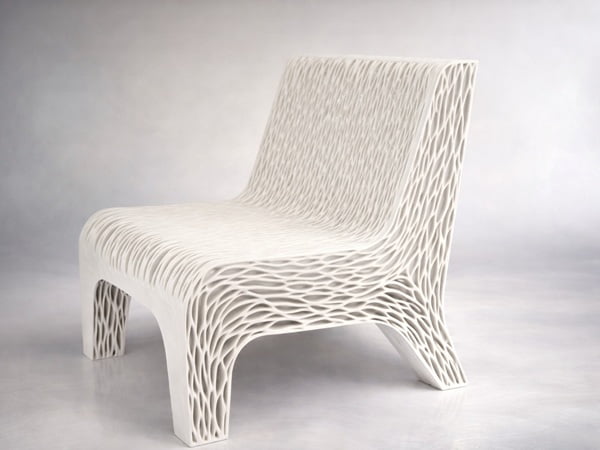
3D printing allows architects to push boundaries with intricate shapes. It creates complex geometries, like parametric walls and organic furniture, without the need for expensive custom molds.
The biggest advantage of additive manufacturing is "complexity for free." In traditional CNC routing, cutting a complex 3D curve takes a long time and wastes material. With our pellet 3D printers, the machine simply deposits material where it is needed. This opens the door for parametric design. This is a method where algorithms define the shape.
Imagine a wall panel that ripples like water. To carve this out of wood is difficult. To cast it requires a mold. To print it is simple. The extruder follows the path and builds the wave layer by layer. This is perfect for acoustic panels in concert halls or feature walls in lobbies. I have seen designers create lattice structures that are strong but lightweight. These shapes are impossible to make with traditional casting.
- Organic Shapes: Mimic nature with flowing lines.
- Lightweight Structures: Hollow interiors save weight.
- Integrated Functions: Print channels for wiring directly into the wall.
Cutting Construction Time and Cost: Real-World Applications of 3D Printed Buildings?
Projects often go over budget and miss critical deadlines. You face pressure to deliver unique results without increasing your operational costs.
3D printing reduces costs by eliminating tooling requirements. In real projects, printing interior components directly saves weeks compared to traditional carpentry or casting methods.
Let's talk about money and time. In the construction of bespoke interiors, labor is the biggest cost. Skilled carpenters who can build curved staircases are rare and expensive. A 3D printer does not get tired and does not charge overtime. At CHENcan CNC, we help clients set up production lines where the machine runs 24/7.
For example, consider a custom reception desk for a corporate HQ. Traditionally, you build a frame, bend plywood, adhere laminate, and finish the edges. This takes days. With a large-scale pellet printer, you print the entire body of the desk in one piece in roughly 10 hours. You use cheap pellet materials, which cost significantly less than filament or high-grade lumber. The post-processing involves simple sanding and painting. The total time reduction can be up to 70%. This efficiency allows you to bid more competitively on projects.
Sustainability and 3D Printing: Building with Recycled and Eco-Friendly Materials?
The construction industry creates too much waste and pollution. You want to build green, but sustainable materials are often hard to source or too expensive.
Pellet 3D printing has a massive environmental advantage because it uses recycled plastics and wood composites. This lowers the carbon footprint of architectural projects significantly.
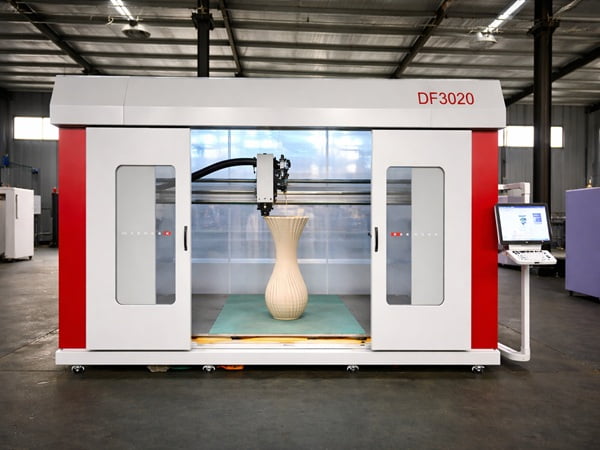
Sustainability is not just a buzzword; it is a requirement. My clients often ask how they can reduce their environmental impact. Our industrial 3D printers use pellet extrusion. This is the key. Pellets are the raw form of plastic. We can use recycled PETG, ABS, or even mixtures of plastic and wood fiber.
This means you can take waste plastic, grind it down, and print a beautiful piece of furniture. It closes the loop. Also, 3D printing is an additive process. You only use the material you need. There are no off-cuts like you have with timber or stone.
- Recycled Materials: Use rPET or rPLA.
- Zero Waste: No scraps left on the factory floor.
- Biodegradable Options: Use PLA derived from corn starch.
- Local Production: Print on-site to reduce shipping emissions.
From Design to Reality: The Complete Workflow of 3D Printed Architecture?
The gap between a CAD file and a finished product seems huge. You worry about technical difficulties during the actual manufacturing phase.
The workflow is straightforward: design in CAD, slice the file for the printer, and print. This seamless process ensures the final object matches your digital vision perfectly.
Understanding the workflow removes the fear of new technology. At CHENcan, we offer full-process customization and support, so I explain this daily. It starts with your idea. You use software like Rhino or Revit to create the 3D model. Then, you export this as an STL or OBJ file.
Next comes the "slicing." This is where you tell the printer how to move. You set the layer height, speed, and temperature. Our software helps optimize these parameters for you. Once the file is ready, you load the pellets into the hopper. The machine heats the plastic and lays it down.
After printing, there is post-processing. Since we target high-end interiors, the surface finish matters. You can sand the ridges down, apply putty, and paint it. The result looks like a high-end manufactured part, not a rough prototype. We provide training on this entire chain to ensure you get professional results.
Advantages of 3D Printed Architectural Models: Speed, Accuracy, and Cost-Effectiveness?
Small scale models take skilled labor weeks to build by hand. You need to show investors a physical concept immediately to secure funding.
3D printing offers unmatched speed and accuracy for models. You can produce highly detailed scale models overnight at a fraction of the cost of hand-building.
When we talk about models, precision is everything. A hand-cut foam model is good for volume study, but it lacks detail. A 3D printed model captures every window frame and column. For large developments, like a new stadium or a shopping mall, accuracy sells the project.
Using our smaller or medium-sized machines, you can print complex cityscapes. If you need a large master plan model, you print it in sections and assemble them. The cost difference is huge. A professional model making firm charges thousands of dollars for a single model. With your own printer, the material cost is just a few dollars. The machine pays for itself after a few projects. Plus, if the client hates the roof design, you just print a new roof, not a whole new house.
Breaking Traditional Limits: How 3D Printing Is Changing the Way We Build Homes?
Housing shortages and high costs are global issues. You need innovative approaches to make living spaces functional, beautiful, and affordable.
3D printing changes home building by enabling customized interior solutions. It allows for affordable, bespoke furniture and fixtures that fit perfectly into modern urban living spaces.
We need to differentiate here. While some companies print concrete walls, the immediate revolution is in the components of the home. I see a trend toward "mass customization." In small urban apartments, standard furniture often does not fit well.
With 3D printing, you can design a storage unit that fits exactly into an awkward corner. You can print a partition wall that separates a room without blocking light. This is very different from traditional construction. It allows a high level of design in affordable housing. You are not stuck with the cheapest standard options. You can have designer-quality shapes at a low cost. This democratization of design is what excites me most about our industry.
Future Trends: The Evolution of 3D Printing in Architecture and Design?
Technology moves fast, and you do not want to be left behind. You need to know where the industry is heading next to stay competitive.
The future lies in large-scale pellet printing and hybrid manufacturing. Expect to see more integration of 3D printed molds for concrete casting and direct printing of functional furniture.
What is next? I believe we will see machines getting bigger and faster. At CHENcan, we are constantly upgrading our Gantry systems. We are moving toward hybrid manufacturing. This combines 3D printing and CNC milling. You print a rough shape quickly, and then a milling tool trims it to perfect tolerance. This gives you the speed of printing with the precision of machining.
Another trend is 3D printed molds. Instead of printing the concrete directly, which can be messy and rough, you print a precise plastic mold. Then you cast concrete into it. You can reuse the mold or recycle it. This allows for perfect concrete finishes with complex textures that were previously impossible.
The Best 3D Printers for Architectural Design: Top Models and Technologies to Consider?
Choosing the right machine is confusing with so many options. You fear buying equipment that cannot handle industrial workloads or limits your size.
The best printers for architecture are industrial pellet extruders. They offer scalability, lower material costs, and the ability to print large furniture and structural components efficiently.
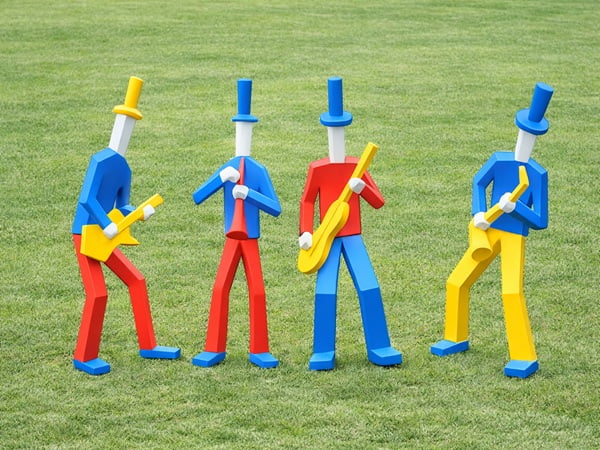
If you are a professional firm, do not buy a hobbyist desktop printer. You need an Industry 3D Printer. Specifically, you want a pellet printer. Why? Because filament is expensive and slow. Pellets allow for high-flow printing. You can print a chair in hours, not days.
Look for a machine with a large build volume. Our CHENcan machines are based on a gantry structure. This is the same stable structure we use for our heavy metal cutting machines. It ensures the print head does not wobble, even when printing tall items. We also offer full-process customization. We tune the machine to the specific materials you want to use.
| Spec | Hobby Printer | CHENcan Industrial Pellet Printer |
|---|---|---|
| Material | Filament (Expensive) | Pellets (Cheap) |
| Size | Small (<500mm) | Large (Meters) |
| Speed | Slow | Fast High-Flow |
| Use Case | Small Models | 1:1 Furniture & Walls |
Conclusion
3D printing is transforming architecture by shifting focus from standard construction to customized, sustainable interior design and furniture creation. It offers you speed, freedom of shape, and significant cost savings.
Exploring pellet extrusion technology reveals how it enables complex designs and reduces material costs. ↩
Discover how using recycled materials in 3D printing contributes to eco-friendly architectural practices. ↩
Industrial pellet 3D printers offer scalability and efficiency for large-scale architectural projects. ↩