
How is 3D Printing Revolutionizing Sculpture Techniques, Materials, and Future Trends?
Traditional sculpting is often slow, expensive, and unforgiving if you make a mistake. Are you tired of wasting materials and spending months on a single project that requires complex manual labor?
3D printing revolutionizes sculpture1 by offering faster production speeds, lower material costs, and the ability to create complex geometries impossible by hand. It allows artists and manufacturers to scale designs easily, use recyclable materials like plastic pellets, and produce large-scale molds or finished art pieces with high precision.
I have seen the industry change rapidly over the last 27 years. Artists and engineers are moving away from clay and stone. They are looking for digital solutions. In this post, I will explain how this technology works and why it is the future of art and manufacturing.
How has sculpture evolved in the age of 3D printing?
Sculpting used to be a physical battle against heavy materials like stone, wood, or metal. It required immense physical strength and years of training to master the tools.
3D printing has changed the game by turning sculpting into a digital process first, allowing for rapid iteration and testing before the final piece is ever made.
In the past, if I wanted to create a large statue, I had to start with a huge block of material. This is called subtractive manufacturing. I would cut away what I did not need. This creates a lot of waste. Today, we use additive manufacturing2. We only use the material we need. This shift is huge. It means we can try new shapes that were impossible before. We can make hollow structures that are light but strong.
At CHENcan CNC, we see clients who used to spend months carving foam or wood. Now, they send a digital file to our machines. The machine does the hard work. The artist can focus on the design. This evolution does not replace the artist. It gives the artist a new, powerful tool. It bridges the gap between traditional art and modern industrial manufacturing. The chisel has been replaced by the nozzle, but the creativity remains the same.
How do 3D printers work and what is the technology behind sculpture creation?
Many people see a 3D printer working but do not understand the process. It can look like magic, but it is actually simple science.
3D printers create sculptures by laying down thin layers of melted material one on top of the other, following a specific path generated by a computer code called G-code.
To understand this better, imagine a hot glue gun. If you move the glue gun in a circle, you make a ring. If you do this again on top of the first ring, the wall gets higher. This is how our large industrial printers work. We call this Fused Deposition Modeling (FDM)3 or Fused Granular Fabrication (FGF)4 when we use pellets.
The process starts with a 3D model on a computer. We slice this model into thousands of horizontal layers. The software sends these layers to the printer. The printer heats up the plastic material until it flows like thick honey. The nozzle moves along the X and Y axes to draw the shape. Then, the nozzle moves up on the Z axis to start the next layer.
Here is a simple breakdown of the workflow:
| Step | Action | Purpose |
|---|---|---|
| 1 | Design | Create the 3D model in CAD software. |
| 2 | Slicing | Convert the model into G-code layers. |
| 3 | Setup | Load material (pellets) and heat the machine. |
| 4 | Printing | The machine builds the object layer by layer. |
| 5 | Cooling | The plastic hardens to hold its shape. |
For large sculptures, we use heavy-duty gantries. These ensure the machine is stable. Stability is key for accuracy. If the machine shakes, the print looks bad. Our machines are built to be heavy and rigid to prevent this.
What are the benefits of 3D printing in sculpture regarding cost, speed, and precision?
Two of the biggest questions I get from potential customers are about time and money. Everyone wants to know if this technology is actually worth the investment.
The main benefits of 3D printing in sculpture are significant cost reductions through less material waste, 24/7 production speeds, and the ability to replicate exact details perfectly every time.
Let us talk about cost first. In traditional machining, you pay for a big block of material and throw half of it away as dust. With 3D printing, you only pay for what creates the sculpture. There is almost no waste. Also, labor costs are lower. You do not need a master carver to stand there for weeks. You set up the machine, and it runs on its own. It can work at night while you sleep.
Speed is another huge factor. A project that takes six weeks by hand can take three days on our machines. This is vital for industries like movie set production or theme parks. They often have tight deadlines. They cannot wait for traditional methods.
Precision is the final piece. If you need two identical statues, doing it by hand is very hard. No two handmade items are exactly the same. With a 3D printer, the second one is a perfect copy of the first. This is great for batch production. You can scale the design up or down easily. You can print a small prototype to check the look. Then, you can print the full-size version. The geometry stays the same.
How do you choose the right 3D printing materials for sculptures?
The material you choose determines the look, feel, and durability of your sculpture. It is one of the most critical decisions in the process.
You should choose materials based on the sculpture's location (indoor vs. outdoor), size, and budget, with thermoplastic pellets5 offering the best balance of cost and performance for large projects.
At CHENcan, we strongly advocate for pellet materials. This is a key insight I want to share. Most hobby printers use filament (plastic wire on a spool). Filament is expensive and slow. For large sculptures, pellets are the best choice. Pellets are the raw form of plastic. They are much cheaper than filament. This lowers your production cost significantly.
Here is why I prefer pellets for sculpture:
- Cost: Pellets cost a fraction of the price of filament.
- Variety: You can mix different pellets to get custom colors or properties.
- Eco-friendly: You can use recycled plastic.
Common materials include:
- PLA (Polylactic Acid)6: It is easy to print and smells sweet. It is biodegradable. It is great for indoor art.
- PETG7: This is stronger and handles heat better. It is good for functional parts.
- ABS/ASA8: These are very durable. ASA is UV resistant, so it is perfect for outdoor sculptures that sit in the sun.
- Composite Materials: We can mix wood fiber or metal powder into the plastic. This makes the print look like wood or bronze without the heavy weight.
Using pellets makes the molding process simpler. The material flows faster, so we can use larger nozzles. This cuts down printing time. Also, the shelf life of pellets is very long. They are easy to store and maintain.
Why are digital models important in designing for 3D printing?
You cannot print a physical object without a digital blueprint. The quality of your final sculpture depends entirely on the quality of your digital file.
Digital models are the foundation of 3D printing, allowing designers to fix errors, optimize wall thickness, and hollow out parts to save weight before the printing process begins.
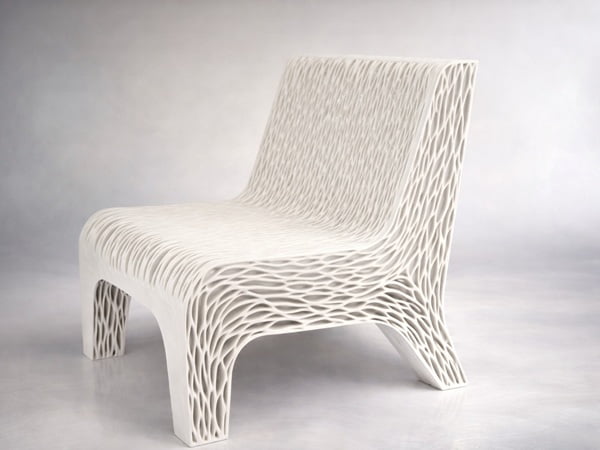
Designing for 3D printing is different from designing for a screen. In a video game, a character can have floating parts. In 3D printing, gravity exists. If a part has no support, it will fall. I always tell my clients to check their "mesh." The mesh must be watertight. This means there are no holes in the surface of the digital model.
We use software to check for "overhangs." An overhang is a part that sticks out. If it sticks out too far, we need to add support structures. These are like scaffolding. We break them off after the print is done. Good design minimizes these supports to save material.
Another key aspect is "infill." We rarely print sculptures 100% solid. That would be too heavy and expensive. Instead, we design the inside to have a honeycomb pattern. This is strong but mostly air. The digital model lets us control this density. We can make the base heavy for stability and the top light. This level of control is impossible with stone or wood.
What is the environmental impact of 3D printed art?
Sustainability is a major concern in modern manufacturing. We need to think about how our art impacts the planet.
3D printed art is surprisingly eco-friendly because it uses additive manufacturing to reduce waste, and many thermoplastic materials can be melted down and reused for new projects.
I believe 3D printing is a green technology. The most exciting part is reusability. As I mentioned before, we focus on pellet extrusion. If a print fails, or if a client no longer needs a mold, we do not have to throw it in a landfill.
We can take that plastic sculpture and put it into a shredder. The shredder turns the sculpture back into small granules or pellets. We can then put these pellets back into the 3D printer and make something new. This is a closed loop. It saves money and saves the environment.
Compare this to styrofoam carving. Styrofoam waste is terrible for the earth. It is light, flies everywhere, and does not decompose. CNC milling of foam creates huge amounts of dust. 3D printing is clean. The material goes exactly where it is needed.
Also, many of the plastics we use, like PLA, are made from corn starch. They are not petroleum-based. This reduces our carbon footprint. For our clients in Europe and North America, these environmental factors are becoming very important for their business image.
How is large-scale sculpture pushing boundaries with 3D printing?
Size used to be a major limitation for 3D printers. But today, if you can imagine it, we can likely print it.
Large-scale 3D printing pushes boundaries by enabling the creation of massive, single-piece structures or modular sections for statues, furniture, and architectural elements that are meters high.
At CHENcan, we specialize in big machines. Our Gantry 3D Printers are huge. We are not talking about small desktop toys. We are talking about machines that you can walk inside. We can print objects that are several meters long.
When printing large scale, stability is the main challenge. The higher you go, the more the object can wobble. We solve this with robust gantry systems. We use high-quality servo motors to ensure every movement is smooth.
For truly massive sculptures, like a 10-meter statue, we print in sections. We cut the digital model into pieces like a puzzle. We print each piece separately. Then, we assemble them on-site. Because the machine is so precise, the seams fit together perfectly. After some gluing and sanding, you cannot tell it was made in parts. This allows us to ship huge art pieces in standard containers. It solves the logistics problem of transporting giant sculptures.
What is the role of pellet-fed 3D printers9 in sculptural art?
I have mentioned pellets before, but I want to dive deeper into why this specific technology is the standard for industrial art.
Pellet-fed 3D printers, or FGF machines, are essential for professional sculptors because they offer high flow rates for fast printing and handle industrial-grade materials at a much lower cost.
The "extruder" is the heart of the printer. In a filament printer, a motor pushes a thin wire. This is slow. In our pellet printers, we use a screw, like in an injection molding machine. This screw rotates and pushes a large volume of melted plastic.
This high flow rate allows us to use large nozzles. A standard nozzle is 0.4mm. Our pellet nozzles can be 3mm, 5mm, or even 8mm wide. This means we can print thick, strong walls in a single pass. A chair that takes days to print with filament might take only a few hours with pellets.
For sculptors, this speed is freedom. You can make a mistake, scrap it, and reprint it the same day. Also, pellets allow for composite materials. We can mix glass fiber into the pellets. This makes the sculpture incredibly stiff and strong. It is perfect for making molds for concrete casting or fiberglass layups. The pellet printer becomes a rapid tooling machine.
What innovative techniques are breaking traditional boundaries in 3D printed sculpture?
Artists are not just printing plastic shapes; they are combining technologies to create entirely new forms of art.
Innovative techniques include combining 3D printing with CNC machining for surface finishing, using printed parts as sacrificial molds for metal casting, and integrating internal lighting or electronics.
One of the most powerful techniques is the hybrid approach. Since CHENcan manufactures both 3D printers and CNC routers, we often see clients use both. First, they 3D print the sculpture slightly larger than the final size. This is "near net shape." Then, they use a CNC router to trim the surface. The router bit smoothes out the layer lines. The result looks like a machined block, but it is hollow and light.
Another technique is using 3D prints as molds. You can print a negative mold of a statue. Then you pour concrete or resin into it. Once it cures, you peel away the plastic. This is much faster than making a traditional mold from silicone and plaster.
We also see artists using "sacrificial" prints. They print in a material that burns away cleanly. They coat the print in ceramic and pour in molten bronze. The plastic vaporizes, leaving the metal in its place. This is a modern update to the ancient lost-wax casting method. It allows for geometries that were impossible to carve in wax.
What does the future hold for the next frontier of 3D printed sculpture?
We are just scratching the surface of what is possible. The technology is improving every year.
The future of 3D printed sculpture lies in AI-generated designs, faster printing speeds with 5-axis motion, and the use of fully biodegradable, organic materials that leave no trace.
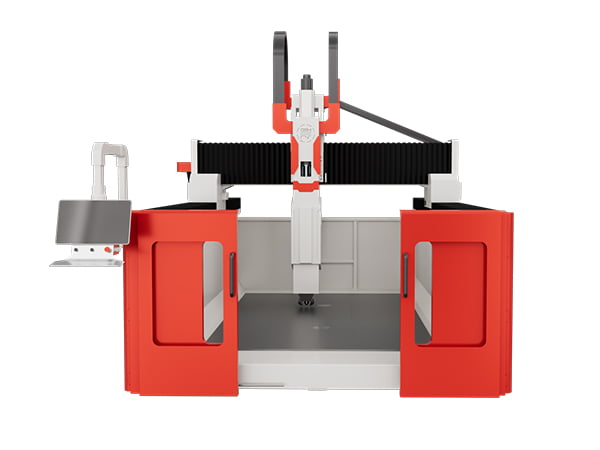
I predict that 5-axis printing will become more common. Currently, most printers layer flat, one on top of another. A 5-axis printer can tilt the nozzle and the bed. It can print curves without supports. This will save even more material and allow for even stronger parts because the grain of the plastic can follow the curve of the sculpture.
Materials will also evolve. We will see plastics made from algae or mushrooms that are fully home-compostable. This will make temporary art installations truly sustainable.
Finally, software will get smarter. We will see "generative design." You tell the computer the size and weight you need, and the AI grows a shape that fits. These shapes often look like bones or tree branches. They are organic and efficient. 3D printing is the only way to manufacture them. The future of sculpture is a collaboration between human creativity, artificial intelligence, and robotic precision.
Conclusion
3D printing is transforming sculpture by reducing costs, increasing speed, and enabling complex, sustainable designs through pellet materials. It empowers artists to create without limits.
Explore how 3D printing transforms traditional sculpting, offering faster production, lower costs, and complex designs impossible by hand. ↩
Learn about additive manufacturing, a process that uses only necessary materials, reducing waste and enabling innovative designs. ↩
Understand the FDM process, a key 3D printing technique that builds objects layer by layer, crucial for creating detailed sculptures. ↩
Learn about FGF, a method using pellets for fast and efficient 3D printing, ideal for large-scale projects. ↩
Discover the benefits of using thermoplastic pellets in 3D printing, including cost-effectiveness and versatility for large projects. ↩
Discover why PLA is a popular choice for 3D printing, known for its ease of use and biodegradability. ↩
Find out about PETG, a strong and heat-resistant material ideal for functional 3D printed parts. ↩
Learn about ABS and ASA, durable materials used in 3D printing, with ASA being UV resistant for outdoor use. ↩
Learn about pellet-fed 3D printers, which offer fast printing and handle industrial-grade materials at lower costs. ↩