
Do you struggle with plastic parts that warp, bend, or break under stress? Standard 3D printing materials often fail in demanding industrial environments, leading to wasted time and increased production costs.
Carbon fiber 3D printers1 solve this by reinforcing plastic with strong fibers to create parts that are stiff, heat-resistant, and durable. These machines allow manufacturers to produce industrial-grade tools, molds, and end-use parts that can often replace metal components.
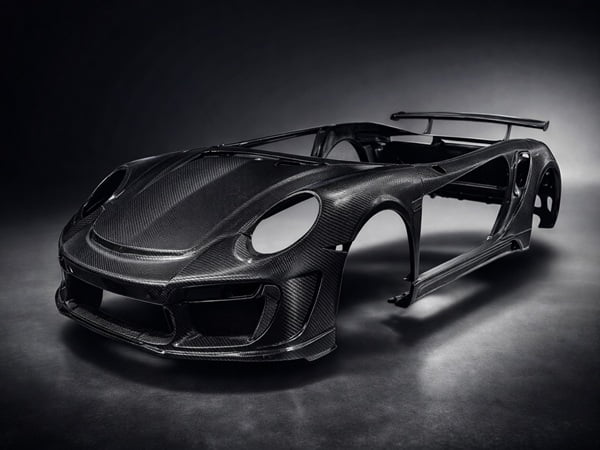
In this article, I will explain the technology behind these printers and the materials they use. You will learn how to apply this technology to improve your manufacturing process.
What Makes a 3D Printer Capable of Carbon Fiber Printing?
Does your standard 3D printer clog or break when you try to print with strong materials? Standard brass nozzles and weak extruders are not built to handle the abrasive nature of carbon fiber composites.
A 3D printer capable of carbon fiber printing must have hardened steel components and a high-temperature extrusion system. These upgrades prevent rapid wear and tear while ensuring the material melts and flows correctly during the printing process.
To handle carbon fiber, the hardware needs to be tough. Carbon fiber is very abrasive. It acts like sandpaper inside the machine. If you use a standard brass nozzle, the fiber will ruin the hole size in a few hours. I have seen this happen many times. The print quality drops immediately. So, you need nozzles made of hardened steel, ruby, or tungsten carbide.
Also, the extruder gears must be hard. They push the material through. If they are soft, they will slip. The heating system is also important. Carbon fiber composites usually need higher temperatures than normal plastic. The machine must maintain a stable temperature. This ensures the layers stick together well. At CHENcan CNC2, we focus on industrial machines. We use robust screw extrusion systems for our pellet printers. This handles the abrasive material much better than small gears. A heated bed and an enclosed chamber are also vital. They stop the part from cooling too fast. If it cools too fast, it will warp.
Carbon Fiber Reinforced Plastics vs Continuous Fiber Printing?
Are you confused about the difference between chopped carbon fiber and continuous carbon fiber? Choosing the wrong type can lead to parts that are not strong enough for your specific application.
Carbon fiber reinforced plastics use chopped fibers mixed into the plastic for general stiffness, while continuous fiber printing lays down long strands for maximum strength. Continuous fiber parts are much stronger but the machines are more complex and expensive.
We need to look at the two main methods here. Most "carbon fiber" filaments or pellets are the chopped type. This means tiny pieces of carbon fiber are mixed into the plastic resin. Think of it like concrete with stones in it. The fibers are everywhere. This makes the part stiff and gives it a nice matte finish. It is easier to print. Our large-scale pellet printers use this method. It is great for molds and large tools.
Continuous fiber is different. The printer lays down a long, unbroken strand of fiber. It is like placing steel rebar inside the plastic. This makes the part incredibly strong. It can be as strong as aluminum. However, the design process is harder. You have to plan where the fiber goes. The machines are also slower.
| Feature | Chopped Fiber (Reinforced) | Continuous Fiber |
|---|---|---|
| Strength | High Stiffness | Extreme Strength (Metal-like) |
| Print Speed | Fast | Slow |
| Cost | Lower | High |
| Complexity | Low (Standard Slicing) | High (Fiber Routing) |
| Typical Use | Molds, Housings, Jigs | Structural Brackets, Load Bearing |
Key Mechanical Advantages of Carbon Fiber 3D Printed Parts?
Do your current plastic parts deform or lose their shape when they carry a heavy load? This is a common problem when using standard plastics for industrial jigs and fixtures.
The key mechanical advantage of carbon fiber 3D printed parts is their high stiffness-to-weight ratio3. They provide the rigidity needed for industrial applications without the heavy weight of metal, making them perfect for robotic arms and assembly tools.
I have found that adding carbon fiber to plastic changes everything. As I mentioned in my insights, adding a specific proportion of carbon fiber allows the material to resist deformation. It holds its shape much better than plain plastic. When you apply force, it does not bend easily. This is crucial for accuracy.
For example, if you make a checking fixture for a car part, it must stay perfect. If it bends, your measurements are wrong. Carbon fiber parts are also very stable. They do not shrink or expand much with temperature changes. This dimensional stability is vital for our customers in the automotive and aerospace sectors. Also, the parts are light. A worker can lift a large jig easily. If it were made of steel, they would need a crane. This improves safety and speed on the factory floor. The combination of being light yet rigid is the main reason our clients choose this technology.
Common Carbon Fiber Materials: ABS-CF, PC-CF, PA-CF and Beyond?
Are you unsure which base plastic is best for your carbon fiber project? Each material offers different properties, and picking the wrong one can result in part failure in the field.
The most common materials are PA-CF (Nylon), ABS-CF, and PC-CF, each offering unique benefits. PA-CF is known for its toughness and chemical resistance, while PC-CF offers superior heat resistance, and ABS-CF is easier to print for general purposes.
Let's break down these materials. We often see these acronyms, but what do they mean for you?
- PA-CF (Nylon with Carbon Fiber)4: This is the king of industrial printing. Nylon is tough. It does not break easily when you hit it. When you add carbon fiber, it becomes stiff too. It resists oil and chemicals. This is great for factory floors.
- ABS-CF: ABS is a standard plastic. Adding fiber makes it warp less. It is good for general parts that do not get too hot or wet. It is usually cheaper than Nylon.
- PC-CF (Polycarbonate with Carbon Fiber)5: This is for high heat. Polycarbonate is very strong. With carbon fiber, it can handle high temperatures without getting soft.
- PETG-CF: This is easier to print. It handles moisture better than Nylon. It is good for outdoor parts.
At CHENcan, we often use pellet versions of these materials. Pellets are cheaper than filament. This allows us to mix custom ratios. We can adjust the amount of fiber to suit the specific job.
Thermal, Wear, and Chemical Resistance in Carbon Fiber Prints?
Do your parts wear out quickly or melt when exposed to friction and heat? Standard PLA or ABS often cannot survive in harsh manufacturing environments where heat and abrasion are constant.
Carbon fiber prints offer significantly improved thermal stability and wear resistance compared to standard plastics. The fibers help dissipate heat and provide a hard surface that resists abrasion, extending the lifespan of tools and parts.
In my experience, durability is the main goal for industry. As I noted earlier, carbon fiber makes the material more wear-resistant and heat-resistant. This is a big deal for moving parts. Think about a gear or a sliding block. Plain plastic rubs away quickly. Carbon fiber acts like a shield. It slows down the wear.
Heat is another factor. In an engine bay or near a molding machine, it gets hot. Standard plastic gets soft. It loses its shape. Carbon fiber increases the Heat Deflection Temperature (HDT). The fibers form a skeleton inside the plastic. This skeleton holds the shape even when the plastic gets warm.
Chemical resistance depends mostly on the base plastic, like Nylon. But the tight structure of fiber-filled prints helps too. For our customers making sandwich panel machining centers or molds, these properties are essential. The tools last longer. This means less downtime for replacement.
Industrial Applications of Carbon Fiber 3D Printing Across Sectors?
Are you wondering if carbon fiber 3D printing is actually useful for your specific industry? Many businesses are already replacing traditional metal machining with this technology to save costs and time.
Industrial applications include manufacturing aerospace tooling6, automotive assembly jigs, drone components, and custom prosthetics. These sectors value the technology for its ability to produce lightweight, strong, and custom parts on demand.
We serve many industries at CHENcan, and I see carbon fiber used everywhere.
- Automotive: They use it for "jigs and fixtures." These are tools that hold car parts in place while workers assemble them. They used to machine these from aluminum. Now, they print them. It is faster and lighter.
- Aerospace: Weight is money here. They print interior parts and brackets. Also, they make layup molds for carbon fiber sheets.
- Wind Energy: We have clients who need large molds for blade components. Our large gantry printers can do this.
- Foundry: Pattern making is huge. You can print a pattern for sand casting. It is much faster than carving wood.
- Medical: Custom braces and prosthetics benefit from the stiffness.
The key is "low volume, high value." If you need one million parts, use injection molding. If you need ten complex, strong tools, use carbon fiber 3D printing.
Design Guidelines for Printing Structural Parts with Carbon Fiber?
Do your printed parts break along the layer lines when you test them? Designing for carbon fiber requires understanding how the fibers align and where the weak points are in a 3D print.
When designing for carbon fiber, you must account for fiber orientation and avoid sharp corners to reduce stress. It is crucial to orient the part so that the main stress forces run parallel to the layers, not against them.
Design is just as important as the machine. You cannot just take a metal design and print it. You have to think about the process.
First, think about orientation. The fibers lie flat in the X and Y direction. This makes the part very strong in that direction. But the Z-axis (up and down) depends on the layers sticking together. It is the weakest point. You should rotate your part in the software. Make sure the heavy load pulls on the fibers, not the layers.
Second, watch your wall thickness. Carbon fiber material can clog small gaps. I recommend thicker walls than usual. This makes the part rigid.
Third, use fillets. A sharp corner is a stress point. It will crack there. Add a curve (fillet) to every corner. This spreads the stress out.
| Design Tip | Reason |
|---|---|
| Avoid Sharp Corners | Prevents stress cracks |
| Check Orientation | Maximizes fiber strength |
| Thicker Nozzles | Prevents clogging (0.6mm+) |
| Increase Infill | Adds internal support |
Pellet-Based vs Filament-Based Carbon Fiber 3D Printers?
Is the high cost of carbon fiber filament stopping you from printing large industrial parts? Using filament for massive objects is often too expensive and too slow for real production environments.
Pellet-based 3D printers use raw plastic granules which are significantly cheaper and print much faster than filament systems. This makes pellet printing the superior choice for large-scale industrial molds, furniture, and heavy-duty tooling.
This is a topic I know very well because CHENcan specializes in Industry 3D Printers that use pellets.
Filament printers are good for small things. But filament is expensive. You pay for the plastic to be made into a wire. Pellet printers skip this step. We buy the same raw pellets that injection molding factories use. The cost is maybe 10% of the filament cost.
Also, speed is different. A filament printer pushes a thin wire. A pellet printer uses a screw. It melts a lot of plastic at once. We can print huge chairs, boat molds, or car panels in one day.
However, pellet printers are usually bigger machines. They are not for your desktop. They are for the factory floor. If you need to print small, tiny gears, use filament. If you need to print a car bumper mold, use pellets.
| Feature | Filament (FDM) | Pellet (FGF) |
|---|---|---|
| Material Cost | High ($50-$150/kg) | Low ($5-$20/kg) |
| Print Speed | Slow | Very Fast |
| Detail | Fine detail | Coarser detail |
| Machine Size | Small/Medium | Large/Gantry |
Large-Format Carbon Fiber Printing for Tooling, Molds, and Fixtures?
Do you wait weeks for CNC machine shops to deliver large molds or patterns? Outsourcing large tooling is slow and expensive, often causing bottlenecks in your production schedule.
Large-format carbon fiber printing allows you to produce massive molds and fixtures in-house in a matter of days. This capability drastically reduces lead times and allows for rapid iteration of designs for sectors like marine and automotive.
At CHENcan, we build Gantry Machining Centers and large 3D printers. We see the shift happening. Companies used to buy big blocks of foam or epoxy. Then they would cut it away with a CNC machine. This creates a lot of waste.
With large-format printing, you add material only where you need it. You print the shape close to the final size. This is called "near-net shape." Then, you can use a CNC machine to trim just the surface. This is much faster.
Carbon fiber is perfect here. Large prints like to warp as they cool. The carbon fiber stops this. It keeps the large mold flat and accurate. We have clients making yacht molds and wind blade molds this way. It saves them massive amounts of money on raw materials.
How to Choose the Right Carbon Fiber 3D Printer for Your Production Needs?
Are you overwhelmed by the number of 3D printers on the market and unsure which one fits your business? Selecting the wrong machine can lead to production delays and wasted investment.
To choose the right printer, you must assess your required build volume, speed, and budget. For small, detailed parts, a filament printer is best; for large, heavy-duty industrial parts, a pellet-based system is the most efficient solution.
I help customers make this choice every day. Here is a simple way to think about it.
- Size: How big is the biggest part you need to make? If it is larger than a basketball, start looking at large-format machines. If it is huge, like a car door, look at our pellet printers.
- Volume: How many parts do you need? If you print all day, every day, material cost matters. Pellets will save you thousands of dollars a year.
- Detail: Do you need tiny features? Filament is better for small details.
- Budget: Pellet machines cost more to buy upfront but are cheaper to run. Filament machines are cheaper to buy but expensive to run.
At CHENcan CNC, we offer full-process customization. We can look at your specific products. We can design the machine size and performance to fit exactly what you need. We have 27 years of experience in manufacturing. We know how to build machines that last.
Conclusion
Carbon fiber 3D printing changes how we make strong, light, and heat-resistant parts. It saves time and money. Whether you need small jigs or huge molds, there is a solution. Contact us at CHENcan CNC to find the right machine for you.
Discover how carbon fiber 3D printers can enhance the strength and durability of your parts, making them suitable for industrial applications. ↩
Learn about CHENcan CNC's contributions to industrial 3D printing, focusing on robust and efficient solutions for various sectors. ↩
Discover why a high stiffness-to-weight ratio is crucial for industrial applications, offering strength without added weight. ↩
Explore the advantages of using PA-CF for its toughness and chemical resistance, making it ideal for industrial environments. ↩
Learn why PC-CF is preferred for applications requiring superior heat resistance, maintaining strength under high temperatures. ↩
Discover the applications of carbon fiber 3D printing in aerospace, where lightweight and strong components are essential. ↩