
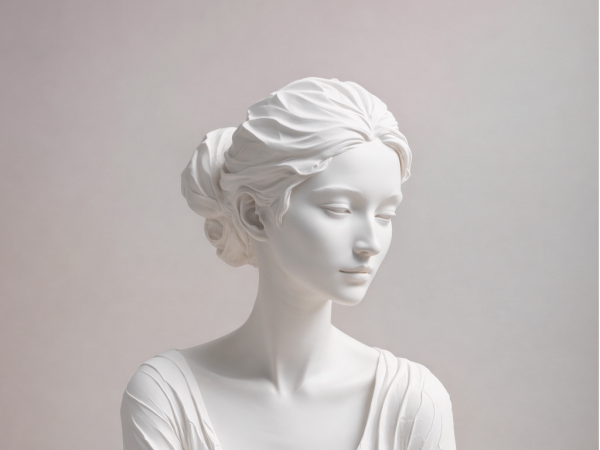
Are you struggling with slow traditional sculpture methods? The long wait for custom art hurts your business. We have a better way to make large sculptures fast.
Yes, 3D printing upgrades sculpture1 from slow artistic creation to fast industrial production. Large-scale pellet 3D printers2 allow you to repeat production, control costs, and deliver large pieces quickly. You get exact copies every time without the long wait.
You might wonder how a machine replaces a sculptor. Let me show you exactly how this technology changes the game for large-scale art production.
How Is the Evolution of Sculpture Changing in the Age of 3D Printing?
Hand carving statues takes months. Delays cost you money and clients. 3D printing fixes this problem by speeding up the whole manufacturing process.
The evolution of sculpture in the 3D printing age moves art from slow hand-carving to fast digital manufacturing. Artists design on computers. Machines print the designs in hours. This shift allows mass production of unique art pieces.
I remember a client. He spent weeks carving one foam model. He lost a big order because he was too slow. We showed him our Industry 3D Printer. He changed his whole business model. Traditional carving requires special skills. It takes a long time. 3D printing only needs a digital file. You can print the same file 100 times. The result is always exactly the same. This is true industrial production. It is not just art anymore.
Traditional vs. 3D Printed Sculpture
| Feature | Traditional Hand Carving | 3D Printing Production |
|---|---|---|
| Speed | Very slow | Very fast |
| Repeatability | Hard to copy exactly | Exact copies every time |
| Labor Cost | High | Low |
You can see the clear difference here. Engineers and bosses love this change. You control the time. You control the cost. You do not depend on one artist. A machine works all night. Your workers can go home. The next morning, the sculpture is ready. This makes your delivery very fast. Fast delivery makes your clients happy. Happy clients bring more orders. This technology upgrades your business from a small studio to a real factory.
Can 3D Printers Really Create Sculptures?
People doubt machines can make real art. Fake-looking plastic parts ruin your brand. Industrial 3D printers3 actually create smooth, detailed sculptures that look amazing.
Yes, 3D printers can create highly detailed sculptures. Industrial 3D printers use computer-aided design to melt and build materials layer by layer. They create huge, complex shapes that hand tools simply cannot make.
Many clients ask me about print quality. They worry the printed parts will look cheap. I tell them no. Our CHENcan CNC Industry 3D Printer4 uses advanced technology. It prints with high precision. We use large nozzles for fast printing. We use small nozzles for fine details. The machine follows the digital path perfectly. You get a solid, beautiful shape.
Common 3D Printing Technologies for Art
| Technology | Material Form | Best Application |
|---|---|---|
| FDM | Plastic wire | Small, detailed parts |
| FGF | Plastic pellets | Large, fast sculptures |
| SLA | Liquid resin | Tiny, high-detail models |
For large sculptures, FGF is the best choice. FGF stands for Fused Granular Fabrication. It uses raw plastic pellets. This is what our machines do. You melt the pellets. The machine pushes the melted plastic out. It builds the sculpture from the bottom to the top. This method is very stable. It works great for big projects. You get a strong sculpture every time. You can sand it. You can paint it. It looks just like traditional art.
Why Are 3D Printed Sculptures Transforming Modern Art?
Modern artists want to build huge structures. Gravity and heavy materials stop them. 3D printing removes these limits and lets artists build anything they imagine.
3D printed sculptures transform modern art by breaking physical limits. Artists can design impossible shapes with hollow insides. The machines produce these designs quickly and cheaply. This technology turns unique art into a scalable business.
I met an artist in Europe last year. He wanted a sculpture with a crazy twisted shape. Normal metal casting was too expensive. Traditional carving would break the thin parts. We used our Industry 3D Printer to make it. The hollow structure saved weight. The plastic material was strong. The machine printed the exact twisted shape perfectly.
How 3D Printing Changes Art Creation
| Aspect | Traditional Art | 3D Printed Art |
|---|---|---|
| Design Limits | High limits | Very low limits |
| Weight | Heavy | Light |
| Scaling | Hard to resize | Easy to resize |
This transformation is huge for business. Marketing teams can order 50 identical statues for a global campaign. You just scale the 3D model up or down in the computer. You click print. The machine does the rest of the work. It changes art from a single event into a reliable product line. You can deliver large orders on time. You do not worry about gravity breaking your model. You just print and deliver.
Is Pellet-Based 3D Printing a Game Changer for Sculpture Production?
Printing big statues with thin plastic wire takes weeks. The wire breaks and ruins the job. Pellet-based printing uses raw plastic grains to print huge items fast.
Yes, pellet-based 3D printing is a major game changer. It uses raw plastic pellets instead of filament. This method prints up to ten times faster. It also cuts material costs significantly, making large-scale industrial sculpture production highly profitable.
At CHENcan CNC, we focus on pellet materials for our Industry 3D Printers. I have seen customers cry over failed filament prints. They waited 200 hours. The wire broke. The print failed. Filament is too slow for big sculptures. Pellets change everything. Pellets are the raw material used in normal plastic factories. They are very cheap. They flow very fast through our large extruders.
Filament vs. Pellet 3D Printing
| Feature | Filament (FDM) | Pellet (FGF) |
|---|---|---|
| Material Cost | High | Very low |
| Print Speed | Slow | Very fast |
| Max Size | Small to Medium | Very Large |
You buy pellets in huge bags. You pour them into the hopper. The machine melts them fast. You can print a life-size statue in one day. This is how you upgrade to true industrial production. Bosses love the low material cost. Engineers love the speed. You get a strong, thick wall. It is ready for painting. You do not waste time waiting for thin plastic wires.
What Are the Key Advantages of Printing Sculptures with Pellets in Cost, Speed, and Scale?
High material costs kill your profit margins. Slow production loses big contracts. Pellet printing fixes both by giving you massive scale at a fraction of the cost.
The key advantages of pellet printing are extremely low material costs, rapid production speeds, and the ability to print massive sizes. You buy raw plastic cheaply. The high-flow extruder prints kilograms per hour. You can easily produce sculptures measuring several meters tall.
Let me explain the real business benefits. I talked to a purchasing manager at a theme park company. They needed 20 giant dinosaur sculptures. Hand carving would take six months. They used our pellet 3D printer. We finished the job in three weeks. They saved a massive amount of money.
Business Benefits of Pellet Printing
| Advantage | Description | Business Impact |
|---|---|---|
| Cost Reduction | Pellets are very cheap | Higher profit margins |
| Speed Increase | Prints many kilograms per hour | Fast delivery to clients |
| Massive Scale | Prints parts over 3 meters | Take on bigger projects |
You control the cost because raw pellets are cheap. You control the speed because the machine pushes out a lot of plastic quickly. You can take on huge jobs. You do not need to glue small parts together anymore. You just print the whole thing at once. This makes your factory very efficient. You win more bids because your price is lower. Your delivery is faster. Your clients trust you more.
Which Materials Work Best for 3D Printed Sculptures Like PETG, ABS, and Advanced Polymers?
Choosing the wrong plastic makes your sculpture crack in the sun. Ruined outdoor art destroys your reputation. Using the right industrial polymers ensures your art lasts forever.
The best materials for 3D printed sculptures are PETG, ABS, and advanced polymers5. PETG offers great weather resistance for outdoor use. ABS provides high strength and easy sanding. Advanced fiber-filled polymers add stiffness for massive structural pieces.
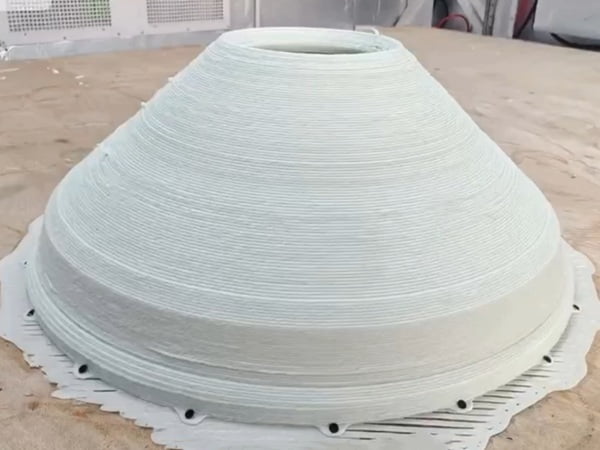
Material choice is very important. I always ask my clients where the sculpture will go. If it goes outside, we need UV resistance. If it stays inside, we might want easy painting. Our Industry 3D Printers handle many different pellet types. The screw design in our extruder melts them perfectly. We test all materials to ensure good performance.
Top Materials for Large Sculptures
| Material | Best Feature | Common Use Case |
|---|---|---|
| PETG | UV and water resistant | Outdoor public art |
| ABS | Easy to sand and paint | Indoor gallery statues |
| PLA | Eco-friendly and cheap | Temporary exhibition props |
You must match the plastic to the job. ABS is great because you can sand it very smooth. You can paint it to look like bronze or stone. Nobody will know it is plastic. PETG is tough. It will not break easily if someone bumps into it. Using standard industrial pellets gives you hundreds of choices. You get the perfect material for every single project. You deliver high quality to your buyers.
How Can You Print Large and Complex Sculptures Without Assembly?
Gluing small printed parts together creates weak spots. The seams look ugly and take hours to hide. Large-format 3D printers build massive sculptures in one solid piece.
You can print large and complex sculptures without assembly by using large-format industrial 3D printers. These machines have massive build volumes. They print the entire design in one continuous process. This eliminates weak joints, saves assembly time, and produces a stronger product.
I hate hiding seams. A client once brought me a sculpture made of 50 glued pieces. It looked terrible. It fell apart during shipping. I showed him our large Industry 3D Printer. We printed his next two-meter design in one single run. We used no glue. We had no weak lines. The client was very happy.
Single-Piece vs. Multi-Piece Printing
| Feature | Multi-Piece Assembly | Single-Piece Large Print |
|---|---|---|
| Structural Strength | Weak at the joints | Strong everywhere |
| Labor Time | High | Low |
| Visual Quality | Seams are visible | Smooth surface |
Printing in one piece is a huge advantage. It saves your workers a lot of time. You do not pay people to glue and clamp parts. The machine runs all night by itself. It builds the complex shape using support materials. When you come to work the next morning, the giant sculpture is done. You just remove it from the machine. It is ready for the final finish. You save labor money.
How Do You Choose the Best 3D Printer for Sculpture Projects?
Buying a weak hobby printer for a factory ruins production. The machine breaks down constantly. You must choose an industrial-grade printer built for heavy, continuous manufacturing.
You choose the best 3D printer for sculptures by looking at build volume, extrusion speed, and machine stability. You need an industrial pellet printer with a large working area. It must have a heavy-duty frame and a high-flow extruder to run continuously.
Many bosses make a big mistake here. They buy cheap machines to save money. Then the machine breaks during a big order. At CHENcan CNC, we have 27 years of experience building heavy machines. Our 3D printers use thick steel frames. We use high-precision guide rails. We build machines for real factories.
Key Specs for an Industrial Sculpture Printer
| Specification | Why It Matters | Our Recommendation |
|---|---|---|
| Extruder Type | Determines speed and cost | Pellet Extruder (FGF) |
| Build Volume | Determines max size | At least 2m x 2m x 2m |
| Frame Weight | Stops vibrations | Heavy cast iron or thick steel |
You need a machine that works 24 hours a day. It must be stable. A light frame will shake. Shaking makes the print look bad. You also need good software to control the machine. We provide full-process manufacturing control. We help you set the correct parameters. You get a machine that actually does the hard work for you. Do not compromise on the machine body. Buy a real industrial tool.
How Does Sustainability Work in 3D Printed Sculpture With Recycling and Eco-Friendly Materials?
Art production creates tons of wasted material. Throwing away plastic hurts the earth and wastes your money. Pellet 3D printing lets you recycle old prints into new art.
Sustainability in 3D printed sculpture works by using recyclable plastics and eco-friendly pellets. You can grind up failed prints or old sculptures into new pellets. You feed these recycled pellets back into the machine. This creates a zero-waste loop and lowers material costs.
I love talking about this part. A client makes stage props for concerts. After the tour, they used to throw the giant props in the trash. Now, they use our pellet printer. They chop the old props into small pieces. They put the pieces back into the printer hopper. They print the props for the next tour.
The Sustainable Printing Loop
| Step | Action | Benefit |
|---|---|---|
| 1. Print | Create the sculpture | Fast and cheap |
| 2. Grind | Shred old prints into pellets | Solves waste disposal |
| 3. Reuse | Print new items with scrap | Zero material cost |
This is perfect for temporary exhibitions. You do not fill up landfills. You also save a lot of money on raw materials. You can also use PLA pellets. PLA is made from plants. It is naturally biodegradable. Marketing teams love to tell customers about eco-friendly art. It makes your brand look very responsible. It is good for the earth. It is also very good for your wallet.
What Is the Future of 3D Printed Sculptures With Multi-Material and AI Design?
Sticking to old design methods makes your art look boring. Competitors will steal your clients with crazy new designs. AI and multi-material printing will define the next era of sculpture.
The future of 3D printed sculptures includes multi-material printing and AI-driven design. AI software will instantly generate complex 3D models. Advanced printers will mix hard and soft plastics in a single print. This will create highly advanced industrial art pieces automatically.
We are always looking ahead at CHENcan CNC. Our R&D team tests new ideas every day. I believe AI will change how engineers and artists work together. You will type a sentence. The AI will make a perfect 3D model. Then, our machine will print it. We will make production even easier.
Future Trends in 3D Sculpture
| Trend | How It Works | Business Value |
|---|---|---|
| AI Design | Software generates the 3D file | Fast design process |
| Multi-Material | Printing hard and soft parts together | Creates new types of art |
| Cloud Printing | Sending files to global machines | Saves shipping costs |
Imagine printing a statue. It has a hard skeleton. It has a soft skin. You do this in one machine run. This is coming soon. The machines will get smarter. They will check their own quality using lasers while they print. We already use high-end laser testing devices in our factory. The future means even less human labor. It means total industrial automation for art. You just manage the files and collect the money.
Conclusion
3D printing turns slow sculpture making into fast industrial production. By using large pellet printers, you control costs, speed up delivery, and scale your global business easily.
Explore how 3D printing transforms sculpture from a slow artistic process to a fast industrial production, enhancing efficiency and creativity. ↩
Learn about the technology behind large-scale pellet 3D printers and how they enable fast, cost-effective production of large sculptures. ↩
Explore the capabilities of industrial 3D printers and how they are used to create detailed and large-scale sculptures. ↩
Learn about the advanced features of the CHENcan CNC Industry 3D Printer and how it enhances sculpture production. ↩
Explore the best materials like PETG, ABS, and advanced polymers for creating durable and high-quality 3D printed sculptures. ↩