
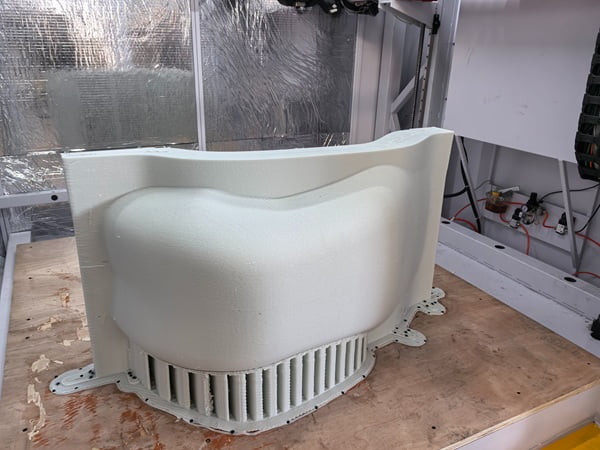
leading paragraph: Traditional manufacturing is often too slow and expensive for today's market. You need a way to produce large parts quickly without sacrificing quality. Are you ready to upgrade your production line?
snippet paragraph: Pellet 3D printing1 is best used when you need to manufacture large-scale parts quickly using standard industrial thermoplastics2. It drastically lowers material costs compared to filament, increases print speeds by up to 100 times, and allows for using the same certified materials found in injection molding.

Transition Paragraph: Many engineers are skeptical about switching from traditional methods or standard filament printing to pellet systems. They worry about complexity and reliability. However, the benefits for heavy industry are becoming impossible to ignore. Let me explain why this shift is happening now and how it can help your business.
LOOP START
The Manufacturing Problems Pellet Printing Is Designed to Solve?
leading paragraph: High mold costs and long lead times can kill a project before it starts. You wait weeks for tools that might need changes. This delay hurts your bottom line significantly.
snippet paragraph: Pellet printing solves the high cost of tooling by printing molds and parts directly. It eliminates the need for expensive metal molds for prototyping and low-volume runs, allowing you to test designs immediately and make changes without financial penalty.
Dive deeper Paragraph: I remember a client of ours who manufactures automotive accessories. They were struggling with the high cost of metal molds for small batch orders. Every time a customer wanted a slight change, they had to pay for new tooling. We introduced them to our CHENcan industrial 3D printer. The results were shocking to them. Not only did they save money on molds, but the plastic printed parts actually lasted twice as long as their traditional materials in certain test rigs.
Why does this happen? Traditional manufacturing relies on subtractive methods or expensive molds. If you make a mistake, you lose a lot of money. Pellet printing is additive. You only use the material you need.
Here is a breakdown of the specific problems solved:
| Problem | Traditional Solution | Pellet Printing Solution |
|---|---|---|
| High Tooling Cost | CNC Machining metal molds ($$$) | Direct printing of composite molds ($) |
| Long Lead Time | Weeks or months for mold delivery | Print starts immediately after design |
| Material Waste | High waste from cutting away material | Near-net shape manufacturing |
| Design Rigidity | Hard to change once tooling is made | Change the CAD file and reprint |
This flexibility changes how we approach production. You do not need highly skilled artisans to run these machines. Our automotive client found that regular operators could run the printers just by following the drawings. This ease of use lowers the barrier to entry for advanced manufacturing.
LOOP END
LOOP START
Print Size Limitations in Traditional 3D Printing Systems?
leading paragraph: Filament printers are too small for real industrial jobs. You often have to glue small parts together, which makes them weak. This limitation restricts what you can build effectively.
snippet paragraph: Traditional filament systems are limited by spool size and nozzle diameter. Pellet printers remove these size limits by using a continuous feed of granules and large-diameter nozzles, enabling you to print furniture, car panels, and large molds in one single piece.
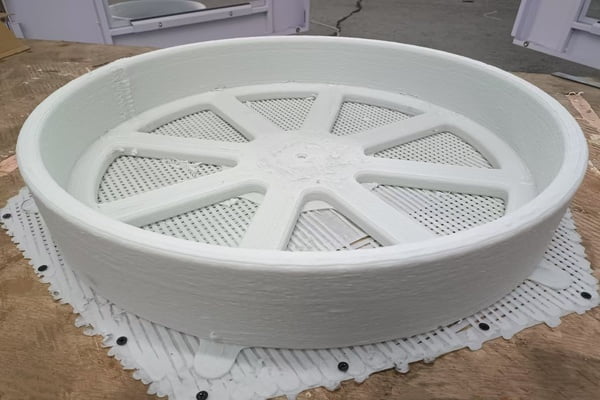
Dive deeper Paragraph: When I talk to engineers, they often think of 3D printing as a way to make small toys or desktop models. This is true for filament printers. But in heavy industry, we need big parts. Filament printers have small nozzles and limited build volumes. To print a car bumper on a standard machine, you would need to slice the model into ten pieces and glue them together. This takes days and results in a weak part.
Pellet printing is different. We use a screw extruder system. This is like a mini injection molding machine mounted on a gantry. It pushes out a lot of plastic very fast.
- Volume: You can print parts that are meters long, not just centimeters.
- Integrity: Because you print in one piece, the structure is stronger. You do not have weak spots where glue holds parts together.
- Time: A part that takes 40 hours on a filament printer might take 4 hours on a pellet machine.
At CHENcan, we build machines specifically for these large tasks. We see clients printing full-size statues, boat hulls, and architectural molds. The size limitation is no longer the machine; it is usually just the size of your factory floor. This capability opens up new product lines that were previously impossible to manufacture without massive capital investment.
LOOP END
LOOP START
Material Supply at Scale: Pellets vs Process Constraints?
leading paragraph: Filament is expensive and limits your material choices significantly. You pay a premium for the spooling process. This cost makes large prints unfeasible for most businesses.
snippet paragraph: Pellets are the raw form of plastic used in injection molding, costing up to 10 times less than filament. Using pellets removes the processing step of turning plastic into wire, giving you access to the world's most abundant and affordable raw material supply.
Dive deeper Paragraph: Let's talk about money, because that is what business is about. If you buy filament, you are paying for a long processing chain. Someone has to melt pellets, pull them into a wire, cool them, measure them, and wind them onto a spool. Why pay for that labor?
In my experience at CHENcan, material cost is the biggest barrier to large-scale adoption of 3D printing.
- Cost Analysis: ABS filament might cost $20 per kg. ABS pellets might cost $2 per kg. If you print a 100kg mold, the savings are massive. You save $1800 on a single print.
- Availability: There are thousands of grades of plastic pellets. There are fewer types of filament. If you need a specific glass-fiber reinforced nylon that is used in injection molding, you can buy the pellets easily. Finding that specific mix in filament is hard or impossible.
- Supply Chain: You can buy pellets by the ton. This is standard for factories. Handling hundreds of small spools is a logistical nightmare.
Using pellets connects your 3D printer directly to the global supply chain of raw plastics. This makes the 3D printer a real production machine, not just a prototyping tool. You are buying raw materials at the same price as the giant injection molding factories.
LOOP END
LOOP START
Thermal Stability and Flow Control in High-Output Printing?
leading paragraph: Big prints often warp or crack during cooling. Controlling the heat in large plastic masses is difficult. This leads to failed prints and wasted time for your team.
snippet paragraph: Pellet extruders use multi-zone heating systems to melt plastic more thoroughly than filament hot-ends. This ensures better layer adhesion and thermal stability, which is critical when depositing large amounts of material to prevent delamination and warping in massive parts.
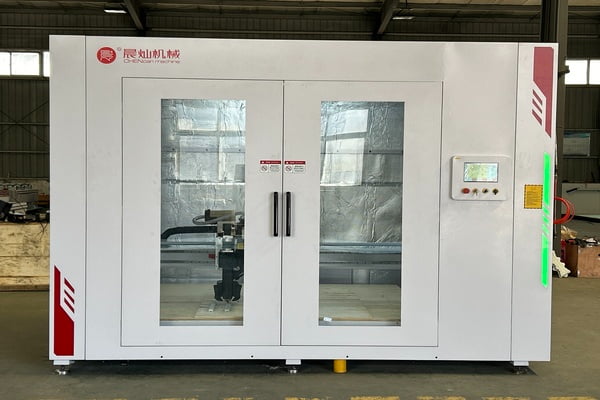
Dive deeper Paragraph: Melting plastic sounds simple, but it is science. When you push a lot of plastic out fast, you need to make sure it is all the same temperature. Filament printers heat a thin wire very quickly. This is inconsistent. Pellet printers use a screw. The screw creates friction and heat, mixing the plastic as it moves. We add external heaters around the barrel to manage this.
Here is how we control the flow:
- Feeding Zone: We pull the cold pellets in.
- Compression Zone: The screw squeezes the air out and starts melting the plastic.
- Metering Zone: We ensure the melt is consistent before it leaves the nozzle.
This process is vital for "layer bonding." If the plastic is not hot enough, the layers will not stick. If it is too hot, it will droop. Our machines allow you to adjust these zones. This means you can fine-tune the flow for different materials. You get a solid, dense part that does not crack easily. This thermal control is why pellet printing is superior for heavy-duty applications where structural integrity is required.
LOOP END
LOOP START
Structural Consistency in Large and Thick-Wall Parts?
leading paragraph: Thin walls are weak and cannot handle industrial stress. Filament printers struggle to fill large solid volumes efficiently. This results in fragile, hollow parts that break easily.
snippet paragraph: Pellet printing allows for large nozzle sizes, ranging from 2mm to over 8mm. This creates thick, single-pass walls that are incredibly strong and dense, providing the structural integrity needed for functional molds, furniture, and load-bearing industrial components.
Dive deeper Paragraph: Strength comes from mass and bonding. In traditional 3D printing, you print a thin shell and fill the inside with a honeycomb pattern. This is okay for a visual model, but not for a mold that will be pressed with tons of force.
With a pellet printer, you can print a wall that is 10mm thick in one pass.
- Isotropy: While 3D printing is usually weaker in the vertical direction (Z-axis), the large heat mass of pellet printing improves this. The layers melt together better because they stay hot longer.
- Density: We can achieve near-solid parts much faster.
- Durability: I have seen our printed molds used for concrete casting. They take a beating. The thick walls absorb the vibration and stress without cracking.
If you need a part that acts like a real manufactured product, you need density. Pellet printing gives you that density without taking weeks to print. It closes the gap between a hollow prototype and a solid final product. This allows you to print functional furniture or structural components that can actually support weight.
LOOP END
LOOP START
From Prototype to Functional End-Use Components?
leading paragraph: Prototypes are often just for looks and cannot be tested. You need parts that work in the real world. Flimsy models are useless for testing actual performance.
snippet paragraph: Because pellet printers use the same reinforced thermoplastics as injection molding, the printed parts have similar chemical and physical properties. This means you can skip the prototyping phase and directly manufacture functional end-use components3 like ducts, panels, and tools.
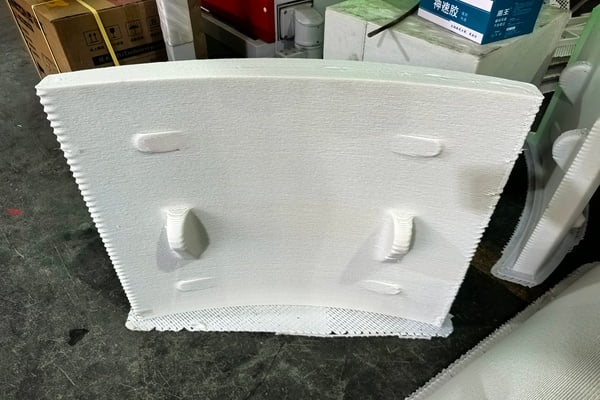
Dive deeper Paragraph: This is where the industry is changing. We are moving from "Rapid Prototyping" to "Rapid Manufacturing." Remember the automotive client I mentioned? They did not just print a model to look at. They printed the actual accessory to put on the car. They tested it. It worked better than the old one.
Why is this important?
- Material Reality: You are testing the real material. If you print with Carbon Fiber Reinforced ABS, you get the stiffness of that material.
- Environment Testing: You can put these parts in heat, cold, or chemical baths. They react just like a molded part would.
- Low Volume Production: If you only need 500 custom dashboards for a special edition truck, you do not need a mold. You just print them.
This ability allows businesses to say "yes" to custom orders. It allows you to replace broken parts in a factory overnight. It turns the 3D printer into a factory in a box. You are no longer just making shapes; you are making products.
LOOP END
LOOP START
Production Speed and Throughput Expectations?
leading paragraph: Manufacturing deadlines are tight and waiting is not an option. Standard printers are far too slow for production runs. You need speed to match your customer's demand.
snippet paragraph: Pellet printers are high-flow devices, capable of extruding several kilograms of material per hour. This high throughput reduces print times from days to hours, making it feasible to produce large batches of parts or massive single objects within a standard work shift.
Dive deeper Paragraph: Time is the most expensive resource we have. Let's look at the numbers to understand the difference. A standard desktop printer might extrude 0.05 kg per hour. A high-end industrial filament printer might do 0.2 kg per hour. Our CHENcan pellet extruders can do 2kg to 10kg per hour depending on the setup.
| Printer Type | Extrusion Rate | Time to Print 10kg Part |
|---|---|---|
| Desktop FDM | 0.05 kg/hr | 200 hours (8+ days) |
| Industrial Filament | 0.2 kg/hr | 50 hours (2 days) |
| CHENcan Pellet | 5.0 kg/hr | 2 hours |
This difference is not just convenience; it is a business model change.
- Same Day Delivery: You can design in the morning and ship in the afternoon.
- Machine Utilization: One pellet printer can do the work of a farm of 50 small printers for large parts.
- Cost of Labor: Less time printing means less time monitoring the machine.
Speed allows you to iterate faster. If version 1 is wrong, version 2 is ready a few hours later. You solve problems faster than your competitors.
LOOP END
LOOP START
Operational Challenges You Should Plan For?
leading paragraph: New technology brings new problems to solve. Implementing pellet printing requires different handling than filament. Ignoring this leads to frustration and bad prints.
snippet paragraph: While powerful, pellet printing requires managing material dryness and retraction settings. You must ensure your pellets are dried properly before use to prevent bubbles, and you need to adjust design files to account for the larger nozzle width and lower resolution compared to small printers.
Dive deeper Paragraph: I want to be honest with you. Switching to pellets is not magic. It requires learning. Here are the main challenges my clients face when they first start:
- Moisture: Plastic pellets love water. They absorb moisture from the air. If you print with wet pellets, the water boils inside the hot extruder. This makes steam bubbles. Your part will look bad and be weak. You must have a dryer.
- Retraction: In filament printing, you can pull the wire back to stop the flow. With a screw extruder, there is a lot of pressure. It is hard to stop the plastic instantly. This can leave "strings" or "oozing" when the nozzle moves. You need to tune your settings or design parts to minimize jumping between spots.
- Surface Finish: Because the layers are thick (maybe 1mm or 2mm), you will see the lines. If you need a smooth surface, you will need to machine it afterward.
LOOP END
LOOP START
Typical Industries Adopting Pellet-Based 3D Printing?
leading paragraph: You might wonder if this tech is right for your specific field. Seeing where others succeed helps you decide. Innovation is happening in specific sectors right now.
snippet paragraph: The automotive, marine, and furniture industries are the biggest adopters. They use pellet printing to create full-size car mockups, boat hull molds, and custom furniture pieces, leveraging the technology's ability to produce large, durable structures rapidly and cost-effectively.
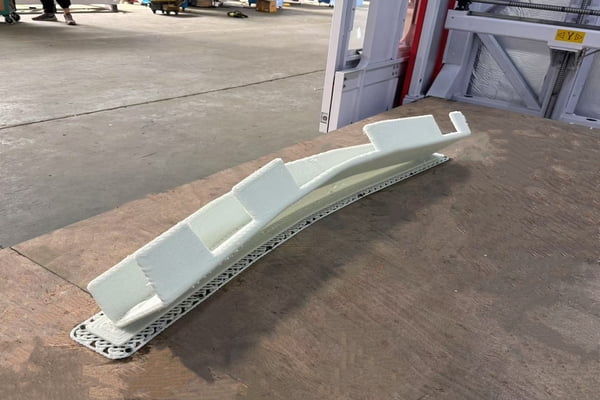
Dive deeper Paragraph: Who is actually buying these machines? Based on our sales at CHENcan, here is the breakdown of who benefits the most:
- Automotive: As mentioned, they use it for prototyping bumpers, dashboards, and even making jigs and fixtures for the assembly line. The ability to use ABS and Carbon Fiber pellets is huge here.
- Marine (Boats): Making a plug for a boat hull is expensive. Traditionally, you carve it from foam and paste it. Now, they print the mold directly. It is faster and more accurate.
- Foundries: They print patterns for sand casting. Instead of making a wooden pattern, they print it. It burns out clean or is removed easily.
- Art and Sculpture: Artists love the speed. They can make massive installations that are light and strong.
- Construction: We see research into printing concrete forms and architectural panels.
If your industry involves big physical objects and you are tired of high tooling costs, you are likely in the target group for this technology. It is not just for tech companies; it is for anyone who makes things.
LOOP END
LOOP START
Evaluating Whether Pellet Printing Fits Your Workflow?
leading paragraph: Investing in machinery is a big financial decision. You need a checklist to know if it is worth it. Don't buy technology you don't need.
snippet paragraph: If you produce large parts, spend too much on filament, or wait too long for molds, pellet printing is the right choice. Evaluate your monthly material consumption and part size requirements; high volume and large scale are the key indicators for a high return on investment.
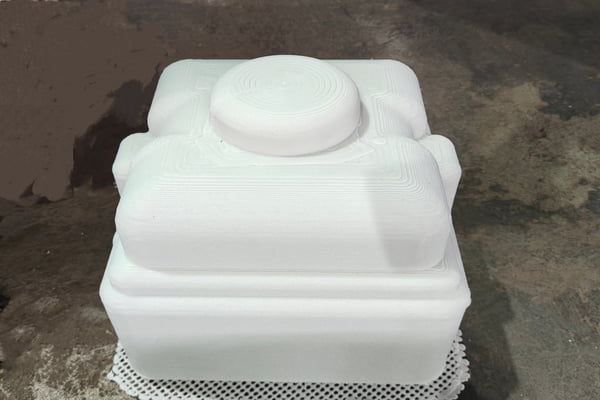
Dive deeper Paragraph: How do you decide? I tell my potential clients to look at four main factors.
1. Size: Do you need to print parts bigger than a basketball? If yes, pellet printing starts to make sense. If you are printing tiny gears, stick to filament or resin. 2. Material Cost: How much do you spend on plastic a year? If you are spending thousands on filament, a pellet printer will pay for itself just in material savings. 3. Post-Processing: Can you handle rougher surfaces? If you have a CNC router (like the ones we make) to finish the part, then the layer lines of pellet printing do not matter. 4. Skill Level: Do you have operators willing to learn? As our client discovered, you do not need a PhD. You need someone who can follow a process.
If you check these boxes, then pellet printing is not just a cool toy. It is a tool that will make your factory more profitable. It allows you to compete with bigger companies by being faster and more flexible.
LOOP END
Conclusion
Pellet 3D printing solves the cost and speed issues of large-scale manufacturing. By using raw granules, you gain speed, strength, and massive savings, transforming how you build big things.