
What Is the Evolution of 3 Dimensional Sculpture From Traditional Art to Digital and 3D Printed Forms?
Creating art has always been about expressing ideas, but the methods are changing fast. Traditional sculpting takes a long time and requires expensive materials, which creates a high barrier for many artists. We are now seeing a massive shift toward digital tools that make creation faster and more accessible.
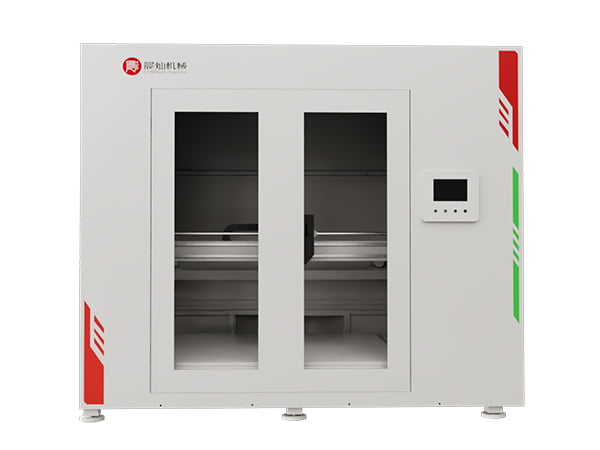
A 3 dimensional sculpture is an artwork that possesses height, width, and depth, occupying physical space. Today, these forms are evolving from hand-carved stone to digital files produced by large-scale industrial 3D printers. This technology allows for complex shapes, lower costs, and faster production times compared to traditional casting.
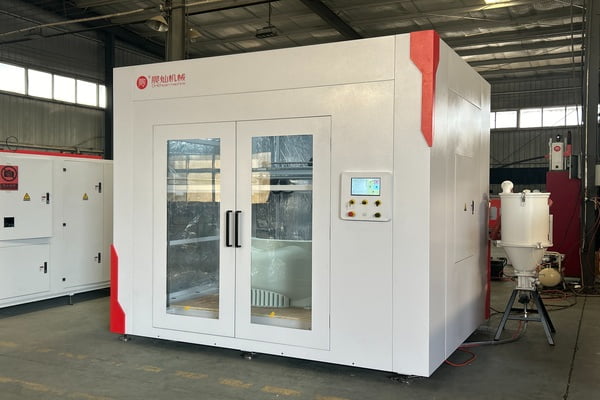
I have watched this transition happen right here on our factory floor. Let's look at what this really means for artists and manufacturers.
LOOP START
What Is a 3 Dimensional Sculpture? Definition, History, and Key Characteristics?
You see sculptures in parks and museums, but people often confuse them with other art forms. If you do not understand the core definition, it is hard to appreciate the engineering behind them.
A 3 dimensional sculpture1 is a free-standing object that you can view from all sides. Unlike a painting or a relief on a wall, it interacts with the space around it. The key characteristics are volume, mass, and how light hits the surface to create shadows.
To understand where we are going, we must look at where we came from. For thousands of years, humans used what was available. We chipped away at stone or poured molten bronze into molds. These methods defined the history of art. But they had limits. Stone breaks. Bronze is heavy and expensive.
At CHENcan CNC, we see sculpture differently now. It is not just about the material; it is about the data. A modern sculpture starts as points in a virtual space. But the physical characteristics remain the same. It must stand up. It must look good from every angle.
Here is a breakdown of the key elements:
| Characteristic | Traditional View | Modern/Digital View |
|---|---|---|
| Space | Occupies physical volume | Starts as digital volume, becomes physical |
| Viewpoint | 360-degree visibility | 360-degree visibility, often simulated first |
| Texture | Defined by the chisel or hand | Defined by the nozzle size or CNC bit |
We still respect the history of art. But we use tools like our 5-Axis Machining Centers to achieve these historical shapes with modern precision.
LOOP END
LOOP START
Traditional vs Digital 3 Dimensional Sculpture: What’s the Difference?
Hand-carving a statue is romantic, but it is also incredibly exhausting and risky. One slip of the hammer can ruin months of hard work, and there is no "undo" button.
Traditional sculpture relies on removing material (subtractive) or building it up by hand (additive). Digital sculpture uses software to shape a virtual model before a machine touches any material. The main difference is the workflow: physical labor versus digital design followed by automated manufacturing.
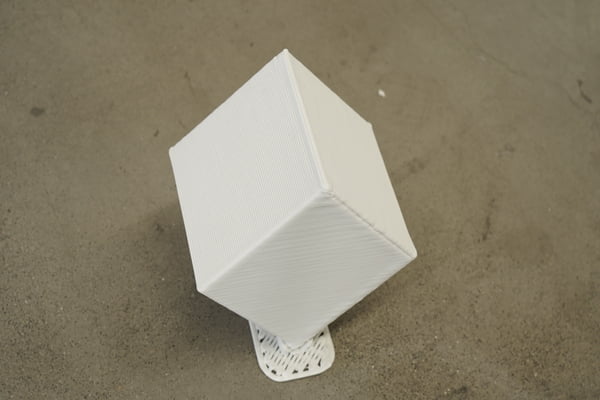
I often talk to sculptors who are hesitant to switch. They feel digital art lacks "soul." But I explain that the creativity is still in their head; the computer is just a tool. In traditional methods, you make a small model (maquette) and then manually scale it up. This is slow.
In the digital workflow, you scan a small model or sculpt it in software like ZBrush. Then, you send that file to a machine.
- Speed: A CNC router2 or 3D printer works 24/7. It does not get tired.
- Precision: Machines can create perfect symmetry that is very hard to do by hand.
- Replicability: If you need ten copies of a statue, traditional casting is okay, but digital manufacturing is often faster for the master mold making.
We use our Gantry Machining Centers to mill huge foam models for bronze casting. This combines both worlds. The digital machine does the heavy lifting, and the artist does the final casting. This hybrid approach is becoming the standard.
LOOP END
LOOP START
Can 3 Dimensional Sculptures Be Created with 3D Printing?
Many people think 3D printing is only for small toys or desktop trinkets. They doubt that a machine can build a large, durable piece of art that stands outdoors.
Yes, 3 dimensional sculptures can be created with 3D printing, and they can be massive. We use large-scale industrial printers that extrude melted plastic pellets. This method captures complex geometries impossible to mold, offering a new medium for creative expression that is both strong and lightweight.
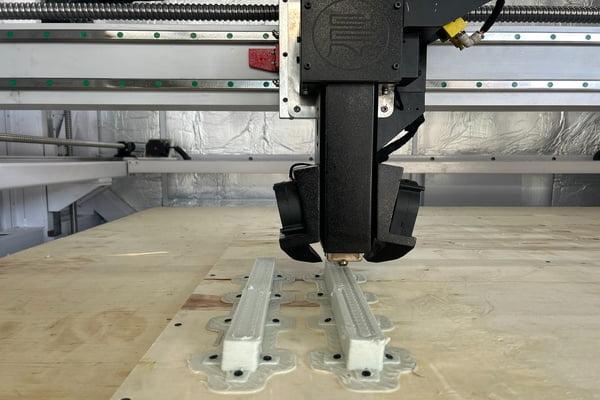
The technology we use is called FGF (Fused Granular Fabrication3). Instead of thin plastic wire (filament), we use pellets. This is the same raw material used in injection molding. It brings the cost down significantly.
Here is an insight from my experience: precision depends on the nozzle.
- Small Nozzle (e.g., 1.0mm): You get high detail. The surface is smoother. But it takes a long time to print a large object.
- Large Nozzle (e.g., 4.0mm - 8.0mm): The print speed is incredibly fast. You can finish a chair or a statue in a few hours. However, the "layer lines" (the texture of the print) are very visible.
For many art projects, we use a larger nozzle to print the basic shape quickly. Then, the artist applies putty and sands it down. Or, they leave the layer lines visible as part of the "digital aesthetic." It creates a unique look that proves the object was made by a machine. This flexibility allows us to tailor the machine to the specific needs of the sculpture.
LOOP END
LOOP START
Why Artists Are Adopting 3D Printing for Modern Sculpture?
Why would a master artist trained in clay or stone switch to a robot? The pressure to produce work faster and cheaper is higher than ever in the commercial art world.
Artists adopt 3D printing because it removes physical limitations and labor constraints. It allows for rapid prototyping, scaling up small models to huge sizes easily, and reducing the heavy labor of carving. It gives artists more time to design and less time grinding materials.
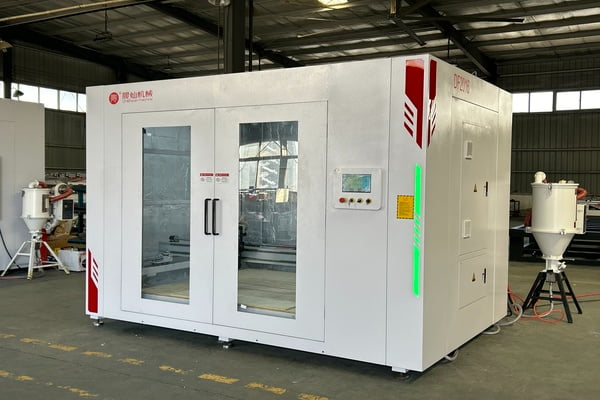
I remember a project with a client who designed stage props. In the past, he carved styrofoam by hand. It was messy and toxic. He switched to our Industry 3D Printer. Now, he designs on his iPad and hits print.
Here is why this shift is happening:
- Complex Geometry: You can print shapes that are hollow or have internal lattices. You cannot carve a hollow ball out of stone easily, but you can print it.
- Weight: Printed sculptures are mostly hollow with a honeycomb structure inside. A 2-meter statue might only weigh 50kg. Two people can move it. A stone statue of that size would require a crane.
- Scaling: An artist can make a 10cm model. If the client likes it, we just change the scale factor in the software and print it 5 meters tall. The proportions remain perfect.
This technology does not replace the artist. It acts as a force multiplier. It allows one person to do the work of a factory.
LOOP END
LOOP START
Materials Used in 3D Printed Sculptures: Plastics, Composites, and Beyond?
You might worry that plastic looks cheap or will break easily. This is a common misconception, as modern industrial plastics are incredibly tough and versatile.
The most common materials for 3D printed sculptures are thermoplastics4 like ABS, PLA, and PETG. We can also use composites mixed with wood flour or carbon fiber. These materials are lightweight, durable, and much cheaper than bronze or stone, making them ideal for large installations.
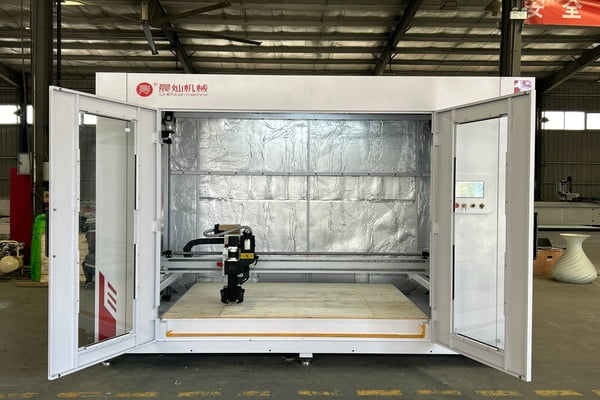
Let's talk about cost. Plastic sculptures are much lower in cost compared to metal or stone. This is a huge advantage for commercial projects like mall displays or movie sets.
But what about the outdoors? If you do proper UV protection, plastic lasts a long time.
Here is the breakdown of materials we use in our machines:
| Material | Best For | Pros | Cons |
|---|---|---|---|
| PLA (Polylactic Acid) | Indoor art, prototypes | Biodegradable, easy to print, low smell | Can warp in high heat (direct summer sun) |
| ABS/ASA | Outdoor sculptures | Strong, high heat resistance, durable | Needs a heated chamber to print (prevents cracking) |
| PETG | Functional parts | Flexible, chemical resistant | Harder to sand smooth |
| Composite (Wood/CF) | Artistic finish | Looks like wood or is extra strong | More expensive pellets |
We can also paint these materials directly. After printing, you can spray primer and automotive paint. It bonds very well. You can make a plastic sculpture look like shiny metal, old stone, or colorful cartoon characters.
LOOP END
LOOP START
How Large-Scale 3 Dimensional Sculptures Are Made Today?
Building a ten-meter statue used to require a massive team of laborers and years of time. Today, the biggest challenge is logistics and assembly, not the actual sculpting process.
Large-scale 3 dimensional sculptures are made by sectioning the digital model into smaller blocks. We print these parts separately on large industrial printers. Then, we assemble, glue, and finish the surface to create a seamless, massive structure that looks like one piece.
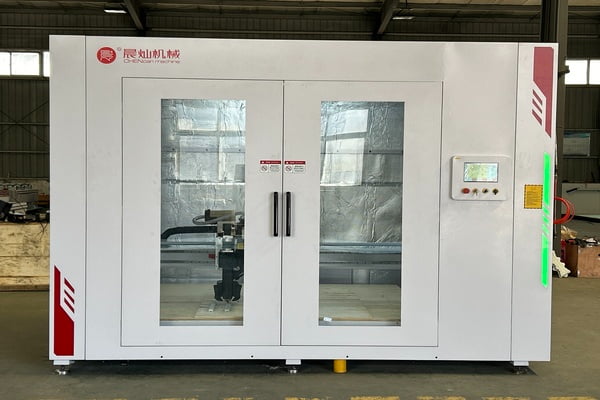
At CHENcan, our machines have large build volumes, but sometimes a client wants a 10-meter dinosaur. No machine is that big. So, we use "slicing" software to cut the dinosaur into pieces—head, neck, body, tail, legs.
Here is the process we follow:
- Digital Cutting: We add alignment keys (pegs and holes) in the software so the pieces fit together like a puzzle.
- Printing: We run multiple printers at once. This parallel production saves weeks.
- Internal Structure: For very large items, plastic alone is not enough. We insert a steel skeleton inside the hollow prints. We might use our metal-cutting Gantry Machining Centers to build this frame.
- Assembly: We use industrial glues or welding techniques (plastic welding) to join the parts.
- Post-Processing: We sand the seams. If the nozzle was large, we apply a filler putty. Finally, we paint it.
This method allows us to build structures bigger than the doors of our factory. We just assemble them on-site.
LOOP END
LOOP START
Benefits and Limitations of 3D Printing in Sculpture?
Is this technology perfect for every single art project? No, every tool has its pros and cons, and honest manufacturers must admit them.
The main benefit is speed and the ability to create complex shapes without expensive molds. The limitation is the presence of layer lines which require post-processing. Also, plastic lacks the natural weight and cold feel of real stone or metal, which some collectors prefer.
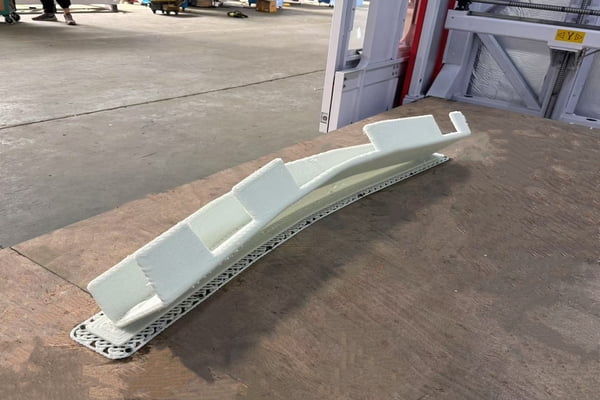
Let's dive deeper into this trade-off.
The Benefits:
- Cost Efficiency: As I mentioned, using pellets is cheap. You avoid the high cost of bronze casting or the high labor cost of stone carving.
- Design Freedom: You can make interlocking parts or shapes that defy gravity.
- Lightweight: You can hang a large sculpture from a ceiling without reinforcing the building.
The Limitations:
- Surface Finish: The "staircase effect" of 3D printing is real. If you want a mirror finish, you have to work for it. It requires sanding, filling, and painting. It is not ready right out of the machine.
- Perceived Value: In the fine art world, some buyers still see plastic as "lesser" than bronze. However, this is changing as famous artists adopt the medium.
- Structural Strength: While strong, it is not steel. A car crashing into a stone pillar does nothing to the stone. A car crashing into a plastic sculpture will destroy it.
We help our clients balance these. If they need the touch of cold metal, we print the pattern and cast it. If they need a visual display, we print it directly.
LOOP END
LOOP START
Common Applications of 3 Dimensional Sculpture in Art, Design, and Public Spaces?
Where do these plastic sculptures actually go after they leave the factory? You probably walk past them in malls, parks, and events every day without noticing they are printed.
Common applications include movie props, theme park decorations5, shopping mall displays, and public art installations6. Because they are lightweight, they are safer and easier to install in busy public spaces than heavy stone, reducing liability and installation costs.
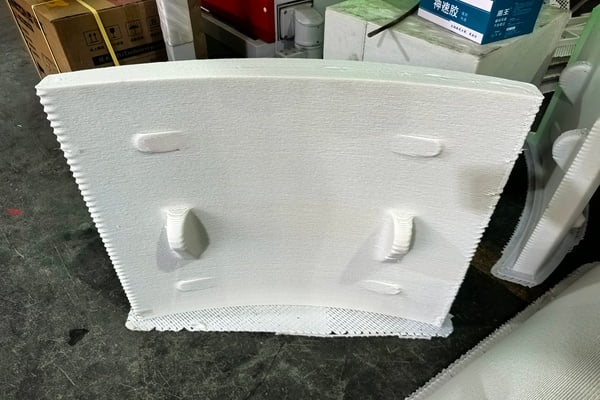
The versatility of our machines allows us to serve many industries.
- Theme Parks & Entertainment: This is huge. A theme park needs a fantasy castle or a giant cartoon character. They need it fast, and they need it to withstand wind and rain. We print these, coat them in hard protective coatings, and paint them.
- Visual Merchandising: Luxury brands use large sculptures for window displays. They change these every season. 3D printing is perfect because it is fast and disposable or recyclable.
- Architecture: We print molds for concrete. Architects want crazy curved walls. We print the negative shape in foam or plastic, pour the concrete, and peel the mold away.
- Museums: They use scanned data to print replicas of ancient artifacts. Visitors can touch the replica, while the original stays safe behind glass.
Since we can paint directly on the plastic, the final look fits any of these environments perfectly.
LOOP END
LOOP START
How to Choose the Right Technology for Your 3 Dimensional Sculpture Project?
Should you use a CNC router to carve foam or a 3D printer to build it up? Making the wrong choice can double your budget or ruin the timeline.
Choose the right technology based on your material and geometry. If you need wood or foam, a CNC router is best. If you need complex, hollow shapes or durable plastic, large-scale 3D printing is the superior choice for your project.
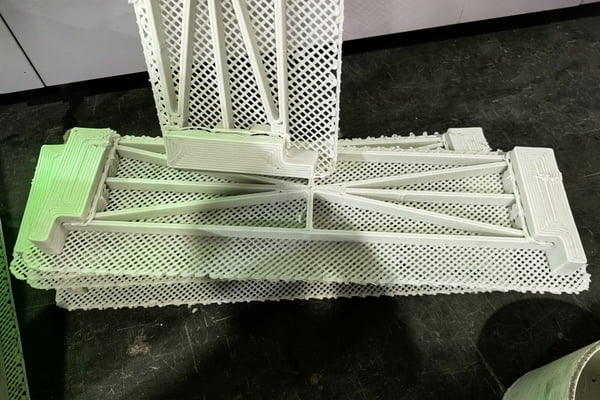
At CHENcan, we manufacture both 5-Axis Machining Centers and Industry 3D Printers. I often have to guide customers to the right machine.
Use a CNC Router (Subtractive) when:
- You are working with wood, foam, or soft stone.
- You need a very smooth surface finish immediately (foam is easy to sand).
- The shape is relatively simple or flat (like a relief).
- You are making a mold for casting.
Use a 3D Printer (Additive) when:
- You want a hollow, lightweight object.
- The shape has "undercuts" (areas the CNC tool cannot reach).
- You want to minimize material waste (CNC turns 50% of the block into dust).
- You need a hard plastic surface without coating it later.
Sometimes, the answer is both. We machine a foam core and print a plastic skin over it, or we print the complex head of a statue and machine the simple body. Understanding your design constraints is key.
LOOP END
LOOP START
The Future of 3 Dimensional Sculpture in the Digital Age?
Will robots replace artists entirely in the future? This fear stops many from embracing new tools, but the history of art is a history of new tools.
The future of 3 dimensional sculpture is a collaboration between human creativity and machine precision. We will see more sustainable materials and even faster speeds. The machine does not replace the artist; it simply becomes a more powerful brush for their imagination.
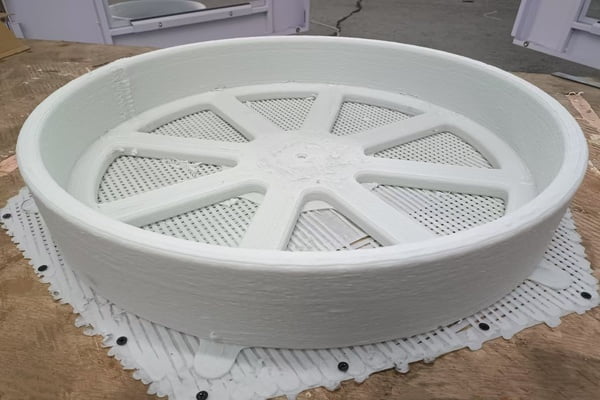
We are already seeing the trends at CHENcan. First, sustainability. We are testing pellets made from recycled ocean plastic. Artists love the story of turning trash into art. Second, integration. Software is getting smarter. Soon, you will sketch in the air with VR goggles, and the printer will start building it in real-time.
The barriers are falling. You do not need to be strong to carve stone. You do not need to be rich to buy bronze. You just need an idea. We provide the hardware to make that idea real. Whether it is a 5-Axis CNC for complex trimming or a massive 3D printer for building volume, the future is about hybrid manufacturing.
LOOP END
Conclusion
3 Dimensional sculpture has evolved from manual carving to digital manufacturing. Technologies like large-scale 3D printing offer lower costs, weather durability, and design freedom. Embracing these tools empowers artists to create limitless forms.
Explore the definition and significance of 3D sculptures to appreciate their artistic value. ↩
Find out how CNC routers enhance the precision and efficiency of sculpture making. ↩
Explore this innovative technology that allows for large-scale 3D printing of sculptures. ↩
Discover the materials that make 3D printed sculptures durable and cost-effective. ↩
Learn about the role of 3D printed sculptures in creating immersive experiences in theme parks. ↩
Discover how 3D printed sculptures are transforming public spaces and art installations. ↩