
Are you struggling with slow 3D printing and high material costs for large parts? Standard filament methods limit your scale. Pellet 3D printing offers a faster, cheaper industrial solution.
A pellet 3D printer uses plastic granules1 instead of filament to build large parts quickly. It solves the scale problem in manufacturing by lowering material costs and boosting extrusion rates, making it the perfect choice for industrial prototyping2, batch production, and large-scale manufacturing.
You might wonder if this technology fits your production line. Let me walk you through how pellet 3D printing3 fits into modern manufacturing systems and why it matters to your business.
What Is a Pellet 3D Printer and How Does It Differ from Filament-Based FDM?
Buying expensive filament eats into your profit margins. When making big parts, you lose time and money. Pellet printing replaces costly spools with raw, cheap plastic granules.
A pellet 3D printer melts raw plastic pellets directly instead of using pre-made filament wires. This difference cuts material costs by up to 90% and allows for much higher flow rates, placing pellet printers directly in the heavy-duty industrial manufacturing space.
To understand its place in your manufacturing system, we must look at scale. Filament printers are great for small, detailed parts. But they fail when you need a two-meter mold. I have seen many engineers try to print large automotive parts with filament. It takes weeks. Pellet 3D printers change this math. They use a screw extrusion system4, similar to injection molding. This brings new engineering complexity. You have to control melting zones, screw speed, and material flow differently. However, this complexity gives you raw speed.
Key Differences in Production
| Feature | Filament FDM | Pellet 3D Printing |
|---|---|---|
| Material Form | Wound plastic wire | Raw plastic granules |
| Cost | High (paying for wire processing) | Low (raw commodity price) |
| Extrusion Rate | Grams per hour | Kilograms per hour |
| Scale Fit | Desktop to medium size | Large industrial scale |
At CHENcan CNC, our 27 years of industry experience show that moving to pellets is not just a machine upgrade. It is a shift in your whole production model. You move from slow prototyping to real, fast industrial output.
How Pellet 3D Printing Works: From Hopper to High-Throughput Extrusion?
Slow print speeds delay your product launch. Waiting days for a single part kills your schedule. High-throughput pellet extrusion solves this time problem.
Pellet 3D printing works by feeding plastic granules from a hopper into a heated barrel. A rotating screw pushes the melting plastic forward and out through a nozzle. This system allows continuous feeding and massive material output for large-scale industrial printing.
The core of this technology is the screw extruder. This brings us to the engineering complexity I mentioned earlier. You cannot just push plastic. You must manage thermal dynamics perfectly. The screw has different zones: feeding, melting, and metering. If you get this wrong, your part will warp or fail.
The Extrusion Process Breakdown
| Stage | Function | Engineering Challenge |
|---|---|---|
| Hopper Feeding | Stores and drops pellets | Keeping material dry and flowing |
| Screw Rotation | Pushes material forward | Controlling motor torque and speed |
| Heating Zones | Melts the plastic | Maintaining stable temperature gradients |
| Nozzle Output | Shapes the melted plastic | Balancing flow rate with movement speed |
This process solves the scale problem. You can extrude several kilograms of plastic per hour. In our CHENcan CNC production base, we see how this high throughput changes the game for foundry mold makers and shipbuilders. You get big parts fast. But you need strong machine frames to handle the heavy extruder. This is why we build solid gantry structures for our Industry 3D Printers.
Key Advantages of Pellet 3D Printers for Industrial-Scale Manufacturing?
High production costs make large projects too risky. Traditional molds take months to build. Pellet 3D printers cut both time and cost drastically.
The main advantages of pellet 3D printers are massive cost savings on raw materials, ultra-fast print speeds, and the ability to print huge parts. They also let you use custom composite blends5, making them ideal for heavy industry, automotive, and aerospace manufacturing.
When does pellet printing make economic sense? It makes sense when you need large parts fast. Let me share a real example. A wind turbine blade manufacturer needed a large mold. Traditional methods would take 10 weeks. With a pellet printer, we did it in days. The economic value is clear.
Economic and Production Benefits
| Advantage | Impact on Manufacturing System |
|---|---|
| Cost Reduction | Pellets are up to 10 times cheaper than filament. |
| Speed | Prints in kilograms per hour, not grams. |
| Material Freedom | Mix your own additives like carbon fiber. |
| Scale | Build parts several meters long easily. |
However, these benefits require a robust system. Fast printing means thick layers. Thick layers mean you might need post-machining to get a smooth surface. This is why our CHENcan CNC hybrid solutions exist. We combine pellet printing with 5-axis machining. You print the rough shape quickly, then mill it to perfect accuracy. This integrated production mode is where the real industrial value lies.
Current Limitations and Technical Challenges of Pellet-Based Additive Manufacturing?
Pellet printing sounds perfect, but bad surface finish can ruin your part. Warping on huge prints wastes time and material. You must understand the risks.
The main challenges of pellet 3D printing are poor surface resolution due to thick layers, high risk of material warping, and complex machine operation. Retraction is also difficult, meaning melted plastic can ooze and ruin fine details during print head travel.
We must look at the new engineering complexity this technology brings. Pellet printing is not plug-and-play. The extruder is heavy. This limits how fast the machine can change direction without vibrating. Also, stopping the flow of melted plastic is hard. Gravity and pressure make the nozzle ooze.
Major Engineering Challenges
| Challenge | Cause | System Impact |
|---|---|---|
| Oozing | Hard to retract melted plastic in a screw | Poor surface quality, extra cleanup |
| Low Resolution | Large nozzles (2mm to 10mm) | Cannot print small, fine details |
| Warping | Large volumes of plastic cooling unevenly | Requires heated beds or chambers |
| Heavy Extruder | Motor, screw, and barrel weight | Needs a massive, rigid machine frame |
These limitations tell us where pellet printing fits. It is not for making phone cases. It is for making boat hulls, car bumpers, and large foundry patterns. To solve the surface finish problem, you must add CNC machining to your workflow. I always tell my clients to plan for post-processing when calculating their ROI.
Pellet 3D Printing Technologies Explained: FGF, PAM, CEM, and Beyond?
Choosing the wrong printing method wastes your investment. Confusing acronyms make it hard to decide. Understanding these core technologies saves you from costly mistakes.
Pellet 3D printing includes Fused Granular Fabrication (FGF)6, Pellet Additive Manufacturing (PAM)7, and Composite Extrusion Modeling (CEM)8. All these terms describe the same basic process of melting raw plastic pellets through a screw extruder to build large industrial parts layer by layer.
The industry uses many names, but the core physics remain the same. The real question is how these systems fit into your factory. FGF (Fused Granular Fabrication) is the most common term. It simply means melting granules.
Technology Terminology
| Term | Full Name | Focus Area |
|---|---|---|
| FGF | Fused Granular Fabrication | General term for pellet printing |
| PAM | Pellet Additive Manufacturing | Often used for multi-material systems |
| CEM | Composite Extrusion Modeling | Focuses on mixing fibers with plastic |
The engineering complexity changes slightly based on the system. Some extruders use a single screw. Others use twin screws to mix materials better. For example, if you want to print a custom carbon-fiber reinforced part, a twin-screw CEM system mixes the fibers and plastic perfectly. At CHENcan CNC, we focus on robust extrusion systems that can handle standard pellets and advanced composites. You must choose the technology that matches your material needs and part strength requirements.
Pellet 3D Printers on the Market: A Comprehensive Overview of Leading Manufacturers?
Buying an unreliable machine stops your production line. Trusting the wrong brand costs you support and money. You need to know the solid players.
The market offers many pellet 3D printers, ranging from robotic arm systems to massive gantry machines. Leading manufacturers focus on high throughput, reliable screw extruders, and rigid frames. You must look for brands that offer strong after-sales support and deep industrial manufacturing experience.
When looking at manufacturers, you must ask: do they understand the whole manufacturing system? Many companies just make 3D printers. But a pellet printer must fit into a real factory. It needs to work with your CNC routers and machining centers.
Types of Systems on the Market
| Machine Type | Best For | Complexity Level |
|---|---|---|
| Gantry Systems | High accuracy, massive parts | Medium (standard CNC controls) |
| Robotic Arms | Complex angles, large reach | High (complex path programming) |
| Hybrid Machines | Printing and milling together | Very High (requires dual CAM software) |
We build our Industry 3D Printers on heavy-duty gantry frames. With 27 years in CNC manufacturing, we know that rigidity is everything. If the frame shakes, your print fails. We provide full-process customization for our global clients. You should always choose a manufacturer that offers one-stop technical support. A machine is only as good as the engineers who help you install and run it.
Large-Format and High-Throughput Applications Enabled by Pellet Extrusion?
Making big parts with traditional tools takes too long. Your competitors are moving faster. High-throughput pellet extrusion gives you the speed to win.
Pellet extrusion enables massive applications like printing boat hulls, automotive body panels, aerospace tooling, and large foundry patterns. By extruding kilos of plastic per hour, this technology allows industries to build giant, functional parts in days instead of months.
This is where we answer the scale problem directly. Pellet printing is made for large-format applications. It replaces slow, manual layup processes in composite manufacturing. It replaces carving wood for foundry patterns.
Key Industrial Applications
| Industry | Application | Time Saved |
|---|---|---|
| Marine / Shipbuilding | Boat hull prototypes, custom decks | Weeks to days |
| Automotive | Concept car bodies, custom bumpers | Months to weeks |
| Foundry & Casting | Large sand casting patterns | Weeks to days |
| Aerospace | Composite layup molds | Months to weeks |
I recall a project with a yacht manufacturer. They needed a custom deck mold. Doing it the old way meant carving, sanding, and coating over many weeks. We used a pellet 3D printer to output the rough shape in 48 hours. Then, we used a 5-Axis Machining Center to smooth the surface. This is the new production mode. It makes economic sense because you save massive amounts of labor and time.
Materials for Pellet 3D Printing: Commodity Plastics, Engineering Polymers, and Recycled Pellets?
Expensive custom filaments hurt your budget. Limited material choices stop your innovation. Pellet printing opens the door to cheap, endless material options.
Pellet 3D printing uses standard injection molding granules, which are incredibly cheap. You can use commodity plastics like PLA and ABS, high-performance engineering polymers like PEEK, or even recycled plastic pellets. You can also mix in glass or carbon fibers for extra strength.
Material flexibility is the greatest economic advantage of this technology. You are no longer tied to the 3D printing material market. You buy directly from the global plastics market. This lowers your cost per kilogram dramatically.
Material Categories
| Material Type | Examples | Best Use Case |
|---|---|---|
| Commodity Plastics | PLA, ABS, PETG | Visual prototypes, basic patterns |
| Engineering Polymers | PC, Nylon (PA), PEEK | Functional parts, high heat areas |
| Composites | Carbon Fiber PA, Glass Fiber ABS | Strong molds, aerospace tooling |
| Recycled Plastics | Shredded waste plastic | Eco-friendly projects, cost reduction |
This brings a new engineering complexity: material drying. Pellets absorb moisture. If you do not dry them before printing, the water boils in the extruder. This creates bubbles and ruins the part. You must add a commercial pellet dryer to your system. At CHENcan CNC, we help clients set up the entire material handling line. Proper material control ensures your large prints succeed every time.
Who Should Use a Pellet 3D Printer? Ideal Use Cases Across Industries?
You might buy a machine you do not need. Wasting money on the wrong tech is a disaster. You must know if your industry fits this tool.
Pellet 3D printers are ideal for heavy manufacturing sectors like aerospace, automotive, shipbuilding, and wind energy. If you need to produce large molds, tooling, foundry patterns, or big prototypes quickly and cheaply, this technology is the perfect fit for your factory.
Let us define where this makes economic sense. If you make small, detailed medical devices, stick to resin or filament printers. But if you make wind turbine blades, pellet printing is for you. Our target customers are people who deal with massive scale.
Ideal Customer Profiles
| Customer Type | What They Make | Why Pellet Printing Fits |
|---|---|---|
| Wind Energy Co. | Turbine blade molds | Needs huge scale and fast turnaround |
| Shipbuilders | Yacht hulls, interior panels | Eliminates slow manual fiberglass work |
| Automotive Design | 1:1 scale car models | Cheap material for big volume prototypes |
| Foundry Makers | Sand casting molds | Faster than carving wood or foam |
I always advise factory bosses and chief engineers to look at their scrap rates and lead times. If your current large-scale tooling takes too long, you are losing money. A pellet printer, combined with a Gantry Mold Machining Center to finish the surface, gives you a complete, fast production mode. This is how modern heavy industry stays competitive.
How to Choose the Right Pellet 3D Printer: Key Factors, Costs, and ROI Considerations?
Buying a cheap machine leads to broken parts. Overspending ruins your ROI. You need a clear way to choose the exact machine for your factory.
To choose the right pellet 3D printer, evaluate the extruder flow rate, machine build volume, and frame rigidity. Calculate your ROI by comparing the low cost of raw pellets and fast print times against the machine's initial price and the cost of necessary post-processing.
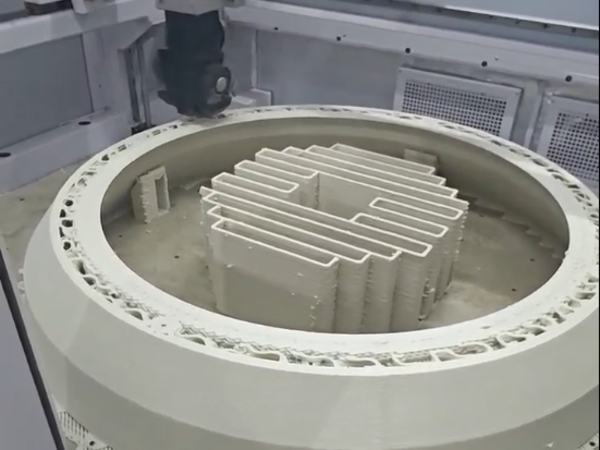
This is the final judgment for industrial decision-makers. You must view the machine as part of your whole system. Do not just look at the price tag. Look at the total cost of ownership and the new production mode it enables.
Key Factors for ROI Calculation
| Factor | What to Evaluate | Impact on ROI |
|---|---|---|
| Throughput (kg/hr) | How fast it melts plastic | Faster speed means more parts per week |
| Build Volume | Maximum part size | Defines what jobs you can accept |
| Machine Rigidity | Heavy frame vs light frame | Reduces vibration, lowers failure rate |
| Software & Control | Ease of path generation | Saves engineering time and labor |
With 27+ years of experience, we at CHENcan CNC know that true ROI comes from reliability. Our machines undergo full-process quality control, from welding to laser testing. When you buy an industrial 3D printer, you are buying uptime. Make sure the manufacturer offers on-site installation and training. Your team must master the new engineering complexity of pellet extrusion to make the investment pay off.
Conclusion
Pellet 3D printing transforms large-scale manufacturing by cutting costs and boosting speed. By integrating it with CNC machining, you create a powerful, highly profitable industrial production system.
Learn about the cost-effective material used in pellet 3D printing that can significantly reduce your production expenses. ↩
Discover how pellet 3D printing accelerates the prototyping phase, allowing for rapid iteration and development. ↩
Explore how pellet 3D printing can revolutionize your manufacturing process with faster production and lower material costs. ↩
Understand the mechanics behind the screw extrusion system that enables high-speed, large-scale 3D printing. ↩
Learn how you can enhance your 3D printed parts with custom composite blends for added strength and functionality. ↩
Explore the FGF process and its role in large-scale pellet 3D printing. ↩
Learn about PAM and its applications in multi-material 3D printing systems. ↩
Discover how CEM allows for the integration of fibers with plastics in 3D printing. ↩