
The Complete Guide to 3D Printing Plastics: Types, Properties, and Best Uses?
You buy a great 3D printer but your parts still fail. You waste money and time. I will show you how to pick the exact right plastic.
3D printing plastics1 are synthetic materials shaped by heat. Choosing the right plastic decides your project success. You must match material strength, heat resistance, and cost to your specific engineering needs, especially when printing large parts with pellet systems.
I have worked in CNC and industrial manufacturing for 27 years. I see many engineers focus too much on the machine. You must understand the material first. Keep reading to learn how to make your large-scale prints succeed.
What Are 3D Printing Plastics and How Do They Work?
Weak parts ruin your hard work. Bad material choice causes this pain. Let us look at how these plastics actually work to solve this.
3D printing plastics melt when heated and become solid when cooled. This process builds parts layer by layer. For large industrial machines, material flow and heat control are the most important factors for success.
The Engineering Fit Logic
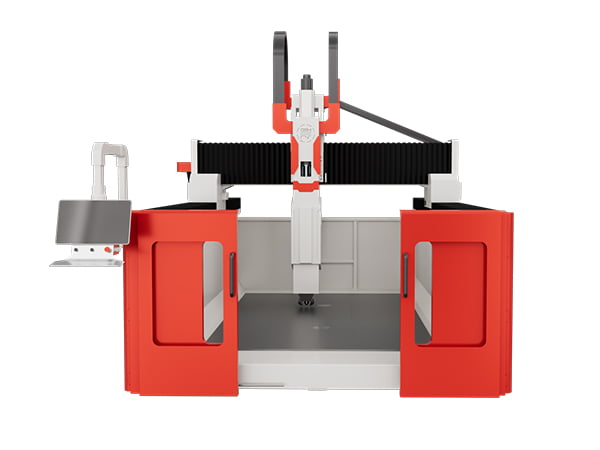
I always tell my customers that material choice dictates your application limits. You cannot just look at printer models. You must look at how the plastic behaves when it melts. We use pellet 3D printing for large industrial parts. In these big systems, the plastic must flow fast through large nozzles. You must shift from reading simple material specs to using pure engineering fit logic.
Thermal Deformation in Big Parts
When you print big parts, small problems become huge. We call this the thermal deformation amplification effect2. If a plastic shrinks a little bit on a small part, it will warp and crack a large part. You need plastics with great processing stability.
| Feature | Small Desktop Print | Large Industrial Pellet Print |
|---|---|---|
| Material Form | Filament wire | Raw plastic pellets |
| Extrusion Speed | Slow and precise | Fast and heavy volume |
| Heat Control | Easy to manage | Very hard to control |
| Cost per kg | High cost | Low cost |
At CHENcan CNC, we test many materials. We find that focusing on shrinkage control saves our clients thousands of dollars on large batch production.
Common Thermoplastics: ABS3, PLA4, ASA5, and PETG6 Explained?
Standard plastics often warp or break easily. This stops your production line. We need to look closely at these basic materials to fix this.
ABS is strong but shrinks. PLA is easy to print but weak to heat. ASA resists sun damage. PETG mixes strength and easy printing. You must pick the right one for your exact engineering job.
Moving Beyond Basic Specs
Many people read the basic specs of PLA or ABS. But I want you to think about structural strength and heat resistance. PLA is cheap. But it will melt in a hot car. ABS is tough. But it shrinks too much for very large prints unless you have a heated chamber. You must plan for the final environment of the part.
Batch Cost Differences
When we use industrial 3D printers with pellet systems, we buy material in bulk. PLA pellets are very cheap. ABS pellets are also cheap but cost more to print because of the heat energy needed.
| Material | Heat Resistance | Shrinkage Level | Best For Large Prints? |
|---|---|---|---|
| PLA | Low | Low | Yes, for basic models |
| ABS | High | High | Hard, needs heat control |
| ASA | High | Medium | Good for outdoor parts |
| PETG | Medium | Low | Very good balance |
I remember a client making automotive models. They used ABS filament first. It cost too much and warped. We switched them to PETG pellets on our industrial machine. The material fluidity was perfect for the large nozzle. They saved time and money.
Engineering Plastics: Polycarbonate (PC)7 and Polypropylene (PP)8?
Your parts snap under heavy weight. You lose trust from your boss. PC and PP can give you the extreme toughness you need.
Polycarbonate (PC) offers very high strength and heat resistance. Polypropylene (PP) is highly flexible and resists chemicals well. Both materials need careful heat control during printing to stop them from changing shape.
Managing Structural Strength
Engineering plastics like PC and PP are serious materials. PC gives you amazing structural strength. It can take heavy hits without breaking. PP can bend many times without snapping. But they are very hard to print. You must control the machine perfectly to use them.
The Shrinkage Challenge
I see many engineers fail with PP. PP shrinks a lot when it cools. If you print a large PP part, the thermal deformation amplification effect is huge. The corners will lift up. You need a very stable machine. At CHENcan, our machines control the temperature perfectly.
| Plastic Type | Key Strength | Main Weakness | Batch Cost Viability |
|---|---|---|---|
| Polycarbonate (PC) | High impact resistance | Needs very high heat | Medium to High |
| Polypropylene (PP) | Chemical resistance | High shrinkage rate | Low (as pellets) |
For large-scale production, using PC or PP pellets drops the cost a lot. But your machine's big nozzle must push the melted plastic smoothly. If the material fluidity is bad, the layers will not stick together.
High-Performance Plastics: PEEK, PEKK, and ULTEM for Industrial Parts?
Metal parts are too heavy and expensive. This hurts your profit. High-performance plastics can replace metal and save your business money.
PEEK, PEKK, and ULTEM are the strongest 3D printing plastics. They survive extreme heat and harsh chemicals. They are perfect for aerospace and medical parts. You must have a specialized high-temperature printer to use them.
Replacing Metal Parts
These materials are the top level of plastics. I have helped aerospace clients replace heavy metal parts with PEEK. PEEK has incredible structural strength and heat resistance. It does not burn easily. But these materials are very difficult to handle.
Cost and Scale Viability
You must think about cost and scale viability here. PEEK filament costs a fortune. If you make big parts, filament is too slow and too costly. This is why pellet 3D printing is a game changer for ULTEM and PEEK.
| Material | Heat Limit | Strength Level | Cost Level |
|---|---|---|---|
| PEEK | Over 250°C | Extreme | Very High |
| PEKK | Over 250°C | Extreme | Very High |
| ULTEM | Over 210°C | Very High | High |
When you use a large nozzle with these materials, material fluidity is a big test. The plastic must stay hot enough to flow. If it cools too fast, the print fails. You need a machine built for this exact high-heat job.
Nylon and Polyamides (PA): Strength, Flexibility, and Precision?
Gears and hinges wear out too fast. Machine downtime costs you money. Nylon gives you the tough, sliding parts you need to keep running.
Nylon (PA) is tough, flexible, and resists wearing down. It is great for moving parts like gears. But Nylon drinks water from the air. You must keep it very dry to get good prints.
Processing Stability
Nylon is a fantastic engineering material. I love using it for custom jigs and fixtures. It has great structural strength. But Nylon has a big problem. It absorbs moisture fast. If the plastic is wet, the water boils in the hot nozzle. This ruins the processing stability completely.
Flow and Nozzle Size
If you print large Nylon parts, you must control the shrinkage. Nylon likes to warp. On our industrial pellet printers, we dry the raw pellets right before they enter the big nozzle.
| Material Property | Good Result | Bad Result (if wet) |
|---|---|---|
| Strength | Very tough | Weak and brittle |
| Surface Finish | Smooth | Bubbly and rough |
| Layer Bonding | Strong | Peels apart |
The material fluidity of dry Nylon is very good. It flows fast through large nozzles. This makes batch production of large strong parts very fast. The batch cost difference between Nylon filament and Nylon pellets is huge. Pellets win every single time.
Composite Materials: Carbon Fiber9, Glass Fiber10, and Reinforced Plastics?
Pure plastics bend too much under stress. Your designs fail testing. Adding carbon or glass fiber makes your parts stiff and strong.
Composite materials mix standard plastics with chopped carbon or glass fibers. These fibers add massive strength and stiffness. They also reduce shrinking during printing. These materials will wear out standard nozzles very fast.
Upgrading Structural Strength
When a customer needs a part that will not bend, I suggest composites. By adding carbon fiber to Nylon or ABS, we change the material totally. The structural strength goes up. The heat resistance goes up. The parts feel solid like metal.
Controlling the Shrinkage
The best part about composites is shrinkage control. The fibers stop the plastic from moving when it cools. This means the thermal deformation amplification effect is very low. You can print huge parts that stay perfectly flat.
| Base Material | Added Fiber | Main Benefit | Wear on Machine |
|---|---|---|---|
| Nylon (PA) | Carbon Fiber | Extreme stiffness | High |
| ABS | Glass Fiber | High strength, cheap | High |
| PETG | Carbon Fiber | Easy to print, stiff | Medium |
However, composites are thick. The material fluidity is lower. For large nozzles on pellet machines, we must tune the heat to keep the thick plastic flowing. The batch cost is higher than pure plastic, but the parts are ready for real heavy-duty work.
Hybrid and Filled Filaments: Wood, Metal, and Specialty Blends?
Plain plastic looks cheap and ugly. Your customers want a premium look. Hybrid materials let you print parts that look like real wood or metal.
Hybrid materials mix a base plastic like PLA with wood dust or metal powder. They look and feel like real wood or metal. They are mostly used for art and design models, not for strong engineering parts.
Focusing on Appearance Over Strength
I deal mostly with heavy industry. But sometimes, architectural clients need models. Hybrid materials are great for this. They do not have high structural strength. They do not have good heat resistance. But they look amazing on a desk.
The Cost and Scale Viability
We must look at the cost and scale viability. Metal-filled plastics are very heavy and cost a lot. If you print a large statue, the cost will be huge. Wood-filled materials are cheaper but can burn in the nozzle.
| Filler Type | Visual Effect | Engineering Strength | Best Use Case |
|---|---|---|---|
| Wood Dust | Looks like carved wood | Very Low | Art, Furniture models |
| Copper/Bronze | Heavy, metal shine | Low | Trophies, Displays |
| Glow Powder | Glows in the dark | Medium | Safety signs, toys |
When using large nozzles, wood and metal powders can cause clogs. The material fluidity changes quickly. You must print a little slower. For large batch production, we usually suggest standard plastics and painting them later to save money.
Soluble and Support Materials: PVA, HIPS, and BVOH?
Complex shapes collapse during printing. You spend hours cutting away supports. Soluble supports melt away in liquid, saving you massive effort.
PVA, HIPS, and BVOH are support materials. You print them under your main part. After printing, you put the part in water or a chemical bath. The support dissolves completely. This leaves clean, perfect complex parts.
Solving Complex Geometry
You cannot print on thin air. Overhangs need support. If you use the same tough plastic for support, it is very hard to break off. I have seen engineers ruin expensive parts trying to cut supports off. Soluble materials fix this problem easily.
Processing Stability Issues
But there is a catch. PVA dissolves in water. This means it absorbs water from the air super fast. The processing stability is very hard to maintain. If it gets slightly damp, it jams the printer.
| Support Material | Dissolves In | Best Paired With |
|---|---|---|
| PVA | Warm Water | PLA, PETG |
| HIPS | Limonene chemical | ABS, ASA |
| BVOH | Water | Nylon, PETG |
For large-scale pellet 3D printing, we rarely use soluble supports. The batch cost is too high. Soluble pellets are expensive. Also, dual large nozzles can be messy. We usually design the part better to need fewer supports, focusing on engineering fit logic to keep costs down.
Flexible Plastics: TPU11, TPE, and Elastomer-Based Materials?
Hard plastics cannot bounce or seal gaps. Your custom gaskets fail. Flexible plastics give you rubber-like parts that bend and stretch perfectly.
TPU and TPE are flexible plastics. They act like rubber. You can make tires, shoe soles, and soft seals with them. They are very hard to push through a printer because they bend like a wet noodle.
Engineering Soft Parts
Sometimes you need a part to bend. TPU is incredible for this. It has great structural strength but can stretch a lot. It also has good wear resistance. I have clients who print large custom seals for wind turbine molds using TPU.
Fluidity and Machine Design
Flexible materials test your machine's design. The material fluidity is very different. Because it is soft, it does not want to push through the nozzle. It wants to squish out the sides of the extruder.
| Material | Flexibility Level | Durability | Print Difficulty |
|---|---|---|---|
| TPU | Medium to High | Very High | Medium |
| TPE | Very High | Medium | High |
| Soft PLA | Low | Low | Easy |
When we use pellet machines for TPU, it is actually easier than filament. The screw in the pellet extruder pushes the soft plastic steadily. This gives great processing stability. The batch cost difference is huge. TPU11 pellets are much cheaper than TPU rolls.
How to Choose the Right Plastic for Your 3D Printing Application?
Choosing randomly wastes thousands of dollars. You end up with broken parts. Use a clear engineering strategy to pick the exact winning material.
You must choose material based on structural needs, heat resistance, and cost. Do not just look at the printer model. Think about how the material flows and shrinks, especially for large parts. Focus on the engineering fit.
The Engineering Fit Logic
I will say it again. Material choice dictates your application limits. You must move away from just reading material specs. You must use engineering fit logic. Ask yourself three things. First, what is the required structural strength and heat resistance? Second, can I control the processing stability and shrinkage? Third, what is the cost and scale viability?
The Big Picture for Large Prints
If you print large parts, you must remember the thermal deformation amplification effect. A tiny warp on a small part is a huge crack on a big part.
| Decision Step | What to Ask Yourself | Why It Matters |
|---|---|---|
| 1. Environment | How hot will it get? | Stops parts from melting |
| 2. Stress | Will it carry heavy weight? | Dictates strength needed |
| 3. Size | Is the part huge? | High shrinkage will ruin it |
| 4. Volume | Am I making 1 or 1000? | Decides between filament and pellets |
The material fluidity through a large nozzle changes everything. Pick materials that flow well and shrink little. This is how you win in large-scale manufacturing.
Conclusion
Choosing the right 3D printing plastic means matching strength, heat resistance, and shrinkage to your project. Master this engineering logic to guarantee strong, cost-effective large-scale parts every single time.
Understanding the types and properties of 3D printing plastics is crucial for selecting the right material for your project. ↩
Understanding this effect helps in choosing materials that minimize warping and cracking in large prints. ↩
ABS is a popular material with specific strengths and weaknesses that affect its suitability for different projects. ↩
PLA is easy to print and cost-effective, making it a popular choice for beginners and basic models. ↩
ASA offers excellent UV resistance, making it suitable for outdoor applications. ↩
PETG combines strength and ease of printing, providing a balanced option for various applications. ↩
Polycarbonate offers high impact resistance and heat tolerance, ideal for demanding applications. ↩
Polypropylene is flexible and chemically resistant, suitable for applications requiring durability. ↩
Carbon Fiber increases strength and stiffness, reducing shrinkage and improving part quality. ↩
Glass Fiber enhances strength and reduces shrinkage, making it suitable for robust applications. ↩
TPU provides flexibility and durability, perfect for applications requiring rubber-like properties. ↩