
PLA 3D Printing in Depth: What Are Its Properties, Performance, Applications, and Limits?
You want to print large industrial parts, but material costs and slow speeds hold you back. Industrial PLA printing fixes this. We will show you how.
PLA is the most popular 3D printing material because it is easy to use, affordable, and eco-friendly. For industrial scale, using PLA pellets instead of filament1 changes the game. It allows fast, large-volume printing for molds and big structures.
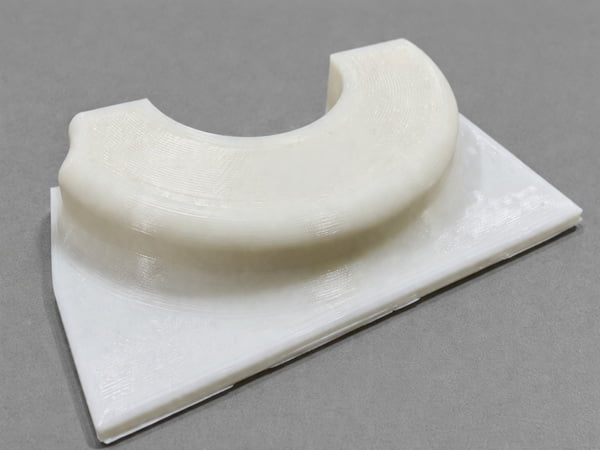
If you only think of PLA as a desktop hobby material, you are missing out. Let me share my 27 years of manufacturing experience to explain how PLA works in real industrial production.
What Is PLA and Why Did It Become the Most Popular 3D Printing Material?
Many plastics warp or smell bad during printing. This ruins large prints and harms workers. PLA solves this. It prints easily and has no bad smell.
PLA (Polylactic Acid2) is a popular thermoplastic. It melts at low temperatures and hardly warps. This makes it very reliable. In my factory, we use it because it guarantees stable results for both small tests and large parts.
The True Value of PLA
Many people think PLA is just for cheap toys. This is wrong. In our CHENcan CNC factory, we see PLA as a core industrial tool3. The secret is not just the material itself. The secret is the material form. Pellet 3D printing is not just a bigger FDM printer. It is a completely different technical route. It uses the logic of large-scale manufacturing.
Why Form Matters
When you use PLA pellets, you connect directly to the raw material supply chain. You use industrial plastic processing logic. You get much higher flow rates. This is like injection molding, not desktop printing.
| Feature | PLA Filament | PLA Pellets |
|---|---|---|
| Cost | High | Very Low |
| Supply Chain | Processed spools | Raw industrial material |
| Flow Rate | Low (grams/hour) | High (kilos/hour) |
| Best Use | Small parts | Large scale manufacturing |
We use PLA pellets for our Industrial 3D Printers. This approach saves money and time. It helps our clients in the automotive and wind energy sectors build huge parts quickly. You must understand this system logic. It is not just about stacking information. It is about how material form changes the whole production process.
How Is PLA Produced: From Renewable Resources to Printable Thermoplastic?
Relying on oil-based plastics causes supply chain risks and environmental pressure. This hurts your brand. PLA is made from plants. It gives you a safe, green alternative.
PLA comes from renewable resources4 like corn starch or sugar cane. Factories ferment these sugars into lactic acid, then polymerize them into plastic. This process creates raw PLA pellets. We use these pellets directly in our large industrial 3D printers.
The Production Chain
Making PLA is a biological and chemical process. First, farmers grow corn. Then, mills extract the starch. Next, microbes ferment the starch into lactic acid. Finally, chemical plants turn this acid into long plastic chains. The final product is raw PLA pellets.
From Pellets to Printing
Most companies melt these pellets to make filament wire. But this extra step adds cost. It also limits how fast you can print. In our factory, we skip the wire. We feed raw PLA pellets directly into our large industrial 3D printers.
| Production Step | Traditional FDM | Pellet Printing |
|---|---|---|
| Raw Material | PLA Pellets | PLA Pellets |
| Extra Processing | Make filament wire | None |
| Material Cost | High | Low |
| Printing Speed | Slow | Very Fast |
Using raw pellets is closer to traditional injection molding. It uses industrial plastic processing logic. This gives you a high flow rate. If you want to print a huge mold for a yacht, you cannot wait weeks. You need kilos of material per hour. Raw PLA pellets make this possible.
What Are the Key Mechanical and Thermal Properties of PLA in 3D Printing?
Weak parts break under stress. This causes machine failure and stops your production. PLA has high stiffness. It keeps your large structures rigid and safe.
PLA is strong and stiff, but it is brittle. It has a low glass transition temperature5 of around 60°C. This means it gets soft in hot places. However, its low shrinkage makes it perfect for printing huge, accurate parts without warping.
Understanding PLA Strength
PLA has very good tensile strength. It is often stronger than ABS. But it does not bend well. It will snap if you hit it hard. You must know these limits when you design parts. For large architectural parts or foundry molds, stiffness is exactly what you need.
Thermal Limits
The biggest weakness of PLA is heat. It softens at 60°C. You cannot use it for engine parts. But for near-net shape manufacturing, this low melting point is actually a big advantage. It means the plasticizer in our pellet printer uses less energy.
| Property | Value | Impact on Industrial Printing |
|---|---|---|
| Tensile Strength | High | Good for rigid fixtures |
| Flexibility | Low | Bad for snap-fit joints |
| Heat Resistance | ~60°C | Bad for hot environments |
| Shrinkage | Very Low | Excellent for large scale accuracy |
In pellet printing, the challenge is not whether it can print. The challenge is continuous stability. Because PLA melts easily, we must control the screw temperature perfectly. If we do not, the plasticization becomes unstable. We spend a lot of time tuning these thermal parameters for our global clients.
How Does PLA Behave During Extrusion and Layer Deposition?
Poor layer bonding makes weak parts. These parts split during use and cause accidents. PLA flows smoothly. It bonds very well to give you solid, safe parts.
When PLA melts, it becomes very sticky. It flows easily through the nozzle and bonds tightly to the layer below it. This creates excellent layer adhesion. In pellet printing, this high flow allows us to push massive amounts of plastic quickly.
The Physics of Melting PLA
PLA goes from solid to liquid very fast. This is great for fast printing. But in a large pellet extruder, this can cause problems. The screw in the extruder pushes the pellets. The friction creates heat. If the PLA melts too early, it clogs the screw.
Managing High Throughput
Pellet printing is about high throughput. We are pushing kilos of plastic, not grams. This brings a unique challenge. The start and stop response is slow. You cannot just turn off the flow instantly like a small FDM printer.
| Extrusion Factor | Small FDM Printer | Large Pellet Printer |
|---|---|---|
| Flow Control | Fast start/stop | Slow start/stop |
| Melting Method | Heating block | Screw shear and heat |
| Layer Size | Tiny | Massive |
| Cooling Need | Small fans | Heavy duty air/water cooling |
Because the start/stop response is slow, pellet printing is not good for small, precise parts with many gaps. It is perfect for continuous, large-volume paths. When we print large boat molds, the extruder runs non-stop. The sticky PLA layers fuse together to make a solid, heavy block.
What Are the Best PLA Printing Parameters for Temperature, Cooling, and Surface Quality?
Bad print settings cause ugly surfaces and failed prints. You lose time and waste expensive materials. Correct PLA settings ensure smooth surfaces and perfect industrial parts every time.
For normal PLA, print at 190°C to 220°C. Keep the bed at 50°C to 60°C. Use 100% cooling fans. For large industrial pellet printers, we adjust the screw temperature zones. We use massive cooling systems to freeze the thick layers quickly.
Controlling the Heat
In desktop printing, you set one nozzle temperature. In our CHENcan industrial pellet printers, we have multiple heating zones along the screw. We must melt the PLA gradually. If we heat it too fast, the plastic burns. If we heat it too slow, the screw wears out quickly. Screw wear is a big challenge in continuous pellet printing.
The Importance of Cooling
PLA stays soft for a long time if you do not cool it. When you print a massive layer, it holds a lot of heat. If the next layer goes on top of soft plastic, the whole part collapses.
| Parameter | Setting Focus | Why It Matters |
|---|---|---|
| Zone Temperatures | Gradual increase | Prevents burning and screw wear |
| Bed Temperature | 50°C - 60°C | Keeps the base flat and stuck |
| Cooling Fan Speed | Maximum | Freezes thick layers instantly |
| Extrusion Speed | Constant | Manages slow start/stop response |
To get a good surface on a huge part, you must balance speed and cooling. We often use CNC routers to machine the final surface. This is called near-net shape manufacturing. We print it fast and slightly big, then we cut it smooth. This gives perfect surface quality.
How Does PLA Compare to ABS and PETG in Strength, Stability, and Use Cases?
Choosing the wrong plastic means your part will fail in the real world. This ruins your project. Compare PLA, ABS, and PETG to pick the right material.
PLA is the stiffest and easiest to print, but melts in the sun. ABS is tough and handles heat, but warps badly. PETG is strong, flexible, and handles water well. For massive industrial molds, PLA is best because it does not warp.
Why PLA Wins for Large Scale
Engineers often ask me why we use PLA for huge industrial prints instead of ABS. The answer is simple: shrinkage. ABS shrinks when it cools. If you print a two-meter car bumper mold in ABS, it will curl up and break the machine. PLA stays flat.
Evaluating the Trade-offs
Every advantage has a challenge. They are two sides of the same coin. PLA has low cost and high throughput. This makes it great for large cross-section structures. But its heat resistance is low.
| Material | Strength | Heat Resistance | Warping Risk | Best Industrial Use |
|---|---|---|---|---|
| PLA | Very Stiff | Low (60°C) | Very Low | Large molds, fixtures, architecture |
| ABS | Tough | High (100°C) | Very High | Small functional parts |
| PETG | Flexible | Medium (80°C) | Low | Chemical-resistant parts |
The application determines the equipment value, not the technology itself. If a client needs a small engine bracket, I tell them to use ABS or metal. If a wind turbine maker needs a giant blade mold pattern, I tell them to use a PLA pellet printer. You must match the material to the logic of the product.
What Are Common PLA Printing Issues and How Can You Avoid Them?
Wet material and clogged nozzles stop your production line. You miss delivery dates and lose clients. Proper material handling and machine maintenance keep your printers running smoothly.
The biggest PLA issues are moisture absorption and nozzle clogs. Wet PLA bubbles and pops, making weak parts. Always dry your PLA before printing. In large pellet systems, you must control moisture strictly and clean the extrusion screw to maintain stable plasticization.
The Moisture Problem
Many people think PLA does not absorb water. This is false. PLA loves water. When wet PLA enters a hot extruder, the water turns to steam. This breaks the plastic chains. The part becomes weak and ugly. Moisture control is a huge challenge in industrial pellet printing.
Keeping the System Stable
As I mentioned before, the difficulty of pellet printing is not "can it print". The difficulty is "continuous stability". You must keep the material dry. You must also watch the extrusion screw.
| Problem | Cause | Solution |
|---|---|---|
| Popping Sounds | Wet PLA pellets | Use an industrial hopper dryer |
| Inconsistent Flow | Plasticization instability | Tune heating zones carefully |
| Dark Spots | Burnt plastic in screw | Purge system, check screw wear |
| Stringing | Slow stop response | Design continuous print paths |
In our factory, we install large hopper dryers on top of our printers. This bakes the PLA pellets before they enter the screw. If you control the water and control the heat, PLA prints perfectly for days.
Where Is PLA Applied in Prototyping, Manufacturing, and Consumer Products?
Using slow methods for large parts wastes money and delays your market launch. Pellet 3D printing speeds this up. It lets you build huge parts in days.
PLA is widely used for visual prototypes, architectural models, and large industrial molds6. With pellet 3D printing, factories use PLA to quickly print giant boat hulls, wind turbine blade patterns, and automotive jigs. It replaces expensive wood and foam CNC cutting.
The Right Applications
Application determines equipment value. Our CHENcan industrial 3D printers are not for everything. They are highly rational tools. They are suitable for large-volume structural parts, molds and fixtures, exhibition devices, and architectural components. They are perfect for near-net shape manufacturing.
The Wrong Applications
You must be realistic. Pellet printing with PLA is not suitable for small precision parts. It is not for high-detail models. It is not for medical-grade micro-structures. The nozzle is too big, and the plastic flow is too heavy.
| Application Type | Is Pellet PLA Good? | Why? |
|---|---|---|
| Large Boat Molds | Yes | Low cost, fast large printing |
| Exhibition Statues | Yes | High throughput, easy to sand |
| Watch Gears | No | Lacks fine detail, too much flow |
| Automotive Jigs | Yes | Stiff material, fast production |
I always tell my clients to look at their factory floor. If you are cutting huge blocks of foam for casting patterns, PLA pellet printing will save you time. You print the rough shape fast, then use our 5-Axis CNC to finish the surface. This is smart manufacturing.
What Is the Reality of PLA Sustainability, Biodegradability, and Environmental Impact?
Clients want green products, but fake eco-claims hurt your reputation. You need facts to sell responsibly. PLA is green, but it needs specific conditions to break down.
PLA is made from plants, which reduces oil use. However, it does not easily degrade in a backyard garden. It needs industrial composting facilities7 with high heat and microbes to break down quickly. It is greener than ABS, but it is not magic.
The Green Truth
PLA is called a biodegradable plastic. This is true, but it has limits. If you throw a PLA part in the ocean, it will stay there for years. It requires a temperature of 60°C and special microbes to melt away. You must send waste to an industrial compost center.
Recycling in the Factory
For industrial users, the real environmental benefit is recycling. In our production base, if a large PLA print fails, we do not throw it away. We grind it up. We put the crushed plastic back into the pellet hopper.
| Disposal Method | Result for PLA | Environmental Impact |
|---|---|---|
| Backyard Compost | Very slow breakdown | Neutral |
| Industrial Compost | Fast breakdown | Positive |
| Landfill | Acts like normal plastic | Negative |
| Grind and Reuse | Makes new pellets | Highly Positive |
Because pellet printers use raw plastic logic, they can eat recycled regrind easily. FDM printers cannot do this. You cannot easily make old prints back into filament wire. This raw material supply chain makes pellet printing much more sustainable for large factories.
How Do You Choose Between PLA Filament, Pellets, and Modified PLA?
Buying the wrong material form wastes your budget. You end up with slow machines or weak parts. Choose the right form to match your machine and your goals.
Use PLA filament for small, detailed desktop prints. Use raw PLA pellets for large-scale, high-speed industrial printing to save massive costs. Use modified PLA, like carbon-fiber PLA, when you need extra strength or heat resistance for tough engineering jobs.
Understanding Material Forms
The essence of a pellet system is not just "cheaper material". It is a completely different manufacturing concept. When you buy filament, you pay for the factory to melt pellets and pull them into wire. When you buy pellets, you buy the raw source.
Making the Choice
If you run a small design studio, buy filament. If you run a shipyard or a wind turbine factory, buy pellets. Sometimes, pure PLA is not strong enough. In these cases, we use composite pellets. We mix glass fiber or carbon fiber into the PLA pellets.
| Material Form | Cost per KG | Best Machine | Best Application |
|---|---|---|---|
| Standard Filament | $20 - $30 | Desktop FDM | Small prototypes |
| Standard Pellets | $2 - $5 | Industrial Pellet Extruder | Large molds, fast prints |
| Carbon Fiber Pellets | $10 - $20 | Industrial Pellet Extruder | Strong, rigid tooling |
Our CHENcan machines are built for pellets. We use heavy-duty screws that can handle pure PLA or tough fiber blends. I advise all my industrial clients to shift to pellet systems. It is the only way to achieve true scale and profit in large 3D printing.
Conclusion
Pellet PLA printing transforms manufacturing. It offers high throughput and low costs for large structures. By mastering material logic and machine stability, you can build massive industrial parts efficiently.
Discover the advantages of using PLA pellets over filament for faster and more efficient large-volume 3D printing. ↩
Understand the properties and applications of Polylactic Acid in the 3D printing industry. ↩
Find out how PLA is utilized in industrial settings beyond hobbyist applications, emphasizing its versatility. ↩
Discover the process of producing PLA from renewable resources like corn starch and its environmental benefits. ↩
Learn about the glass transition temperature of PLA and how it affects its performance in different environments. ↩
Explore the process and benefits of using PLA for creating large industrial molds in various industries. ↩
Discover the conditions required for PLA to biodegrade effectively in industrial composting facilities. ↩