
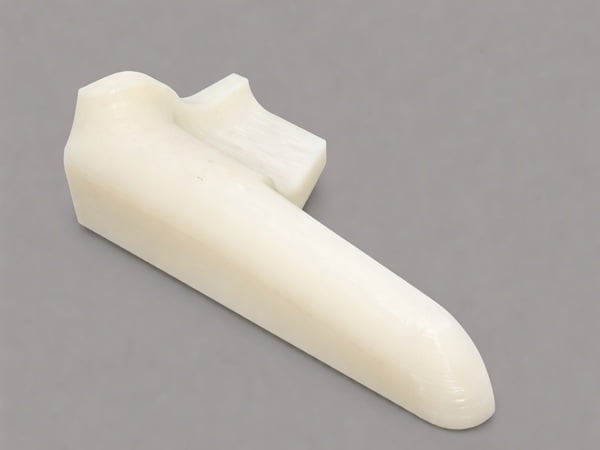
PLA 3D Printing in Depth: Properties, Print Performance, Applications, and Real-World Limitations?
Are you struggling to choose the right material for your large-scale 3D printing projects? Bad choices waste time and money. Here, I will show you everything about PLA printing.
PLA (Polylactic Acid) is a versatile thermoplastic used in 3D printing. It offers great printability, low shrinkage, and good surface quality. While standard PLA filaments are popular, using PLA pellets unlocks high-throughput, industrial-scale manufacturing for large molds, fixtures, and structural parts at a much lower cost.
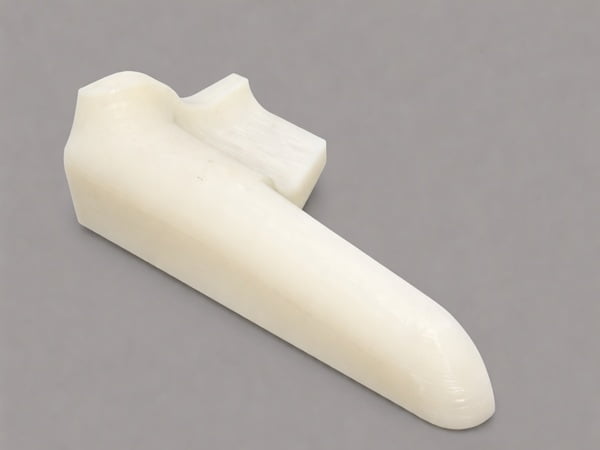
Before you start printing massive parts, you need to understand how PLA really works. Let us dive into the details so you do not make costly mistakes and lose your money.
What Is PLA and Why It Became the Most Popular 3D Printing Material?
Do you find other plastics hard to print? Warping and fumes ruin parts. PLA solves this. It is easy to use and safe for almost any workspace.
PLA is a biodegradable thermoplastic1 made from plant starches like corn or sugarcane. It became the most popular 3D printing material because it melts easily, does not warp much, and needs no heated bed. This makes it perfect for both beginners and industrial users.
To understand why PLA is everywhere, we must look at its basic nature. In our 27 years of manufacturing CNC machines and industrial 3D printers at CHENcan CNC2, we see many clients ask about material choices. PLA stands out because it behaves well. When you heat it, it flows smoothly. When it cools, it holds its shape perfectly.
Other plastics shrink a lot when they cool. This causes warping. Warping lifts the part off the print bed and ruins the print. PLA has very low shrinkage. You can print large parts without a hot chamber. This saves energy and equipment costs.
Also, PLA does not release bad smells or toxic fumes. This makes it safe for open factory floors. We often use PLA when testing our large-scale Industry 3D Printers. It helps us check machine accuracy without worrying about material failures.
| Feature | PLA | Other Plastics |
|---|---|---|
| Printing Difficulty | Very Low | Medium to High |
| Warping Risk | Low | High |
| Fumes | Safe, sweet smell | Often toxic |
| Cost | Low | Medium to High |
Because of these traits, PLA is the standard baseline for all 3D printing projects.
How PLA Is Produced: From Renewable Resources to Printable Thermoplastic?
Are you worried about plastic waste from failed prints? Traditional plastics use oil. PLA offers a better way. It comes from plants, reducing your carbon footprint.
PLA production starts with milling crops like corn to extract starch. Enzymes turn this starch into sugar. Bacteria ferment the sugar into lactic acid. Finally, chemical processes link the lactic acid molecules together to form long polymer chains, creating the solid PLA plastic we use.
The way we make PLA is very different from standard plastics. Most plastics come from fossil fuels. PLA comes from nature. This is important for our clients who want to build green supply chains.
First, farmers harvest crops like corn. Factories crush these crops to get the starch. They use special enzymes to break the starch down into simple sugars. Next, they put these sugars into big tanks with bacteria. The bacteria eat the sugar and make lactic acid. This is the same acid your muscles make when you exercise.
Then, the real chemistry happens. Factories use heat and catalysts to link the lactic acid molecules together. This process is called polymerization. It turns the liquid acid into a hard plastic resin.
| Production Step | Action | Result |
|---|---|---|
| Milling | Crush plant crops | Extract starch |
| Hydrolysis | Add enzymes | Create simple sugars |
| Fermentation | Add bacteria | Produce lactic acid |
| Polymerization | Apply heat and catalysts | Form PLA plastic resin |
This resin is then formed into small pellets. At CHENcan CNC, we use these raw pellets directly in our large-scale 3D printers3. This skips the step of making filament and saves a lot of money.
Key Mechanical and Thermal Properties of PLA in 3D Printing?
Do your printed parts break under load? Using the wrong plastic causes weak parts. Knowing PLA limits helps you design stronger, more reliable structures for your business.
PLA is stiff and strong, making it great for rigid parts. However, it is brittle and breaks instead of bending. Thermally, PLA softens at a low temperature of around 60°C. Therefore, you should not use it for parts exposed to high heat or heavy impacts.
When you design a part, you must know how the material acts. PLA has very high tensile strength. This means it can hold a lot of weight if you pull it. It is actually stronger than ABS plastic in some tests. But strength is not everything. PLA lacks toughness. If you hit it hard with a hammer, it will shatter. It does not bend well.
The biggest limit of PLA is heat. Its glass transition temperature is only about 60 degrees Celsius. If you leave a PLA part in a hot car on a summer day, it will melt and lose its shape.
| Property | Value/Trait | Impact on Printing |
|---|---|---|
| Tensile Strength | High | Good for static loads |
| Impact Resistance | Low | Brittle, breaks easily |
| Glass Transition Temp | ~60°C | Softens in hot areas |
| Melting Temp | 150-160°C | Easy to melt and print |
Because of this low heat resistance, we tell our clients to use PLA for indoor applications. For example, when making foundry patterns or large exhibition models with our Industry 3D Printers, PLA is perfect. These parts stay inside and do not get hot. If you need heat resistance, you must look at modified PLA or other materials.
How PLA Behaves During Extrusion and Layer Deposition?
Are your print layers splitting apart? Poor layer bonding ruins large parts. PLA flows very well when melted, which helps you get strong, solid walls.
During extrusion, PLA turns into a smooth, low-viscosity liquid. This allows it to flow easily through the nozzle. When it lands on the previous layer, it bonds very well. Because it cools and hardens quickly, PLA holds fine details and sharp corners better than many plastics.
The way a plastic melts changes everything about how a 3D printer works. When PLA gets hot, it becomes quite runny. We call this having low viscosity. This is a huge advantage for high-throughput printing.
In our CHENcan CNC large-scale pellet printers, we push a lot of plastic very fast. PLA low viscosity means our extruder screws do not have to work as hard. The plastic mixes well and flows smoothly. When the hot PLA leaves the nozzle, it touches the cold layer below it. Because PLA has a specific thermal profile, the heat transfers quickly. The two layers melt together just enough to form a very strong bond.
| Extrusion Phase | PLA Behavior | Benefit |
|---|---|---|
| Melting | Low viscosity | Fast extrusion speeds |
| Deposition | Good thermal transfer | Strong layer adhesion |
| Cooling | Hardens quickly | Crisp details, less sagging |
This fast cooling also means the plastic stops moving right after it leaves the nozzle. It does not sag or droop. This is why PLA is so good at bridging gaps and printing steep overhangs without support materials. It keeps the exact shape the machine tells it to hold.
PLA Printing Parameters: Temperature, Cooling, and Surface Quality?
Do your prints look rough and ugly? Wrong settings cause stringing and blobs. Setting the right temperature and cooling fixes these surface issues instantly.
For the best PLA prints, set your nozzle temperature between 190°C and 220°C. You do not need a heated bed, but 50°C to 60°C helps adhesion. PLA needs 100% cooling fan speed. Maximum cooling freezes the plastic fast, giving you a smooth, glossy surface and sharp details.
Finding the right printing parameters is the secret to good surface quality. Every machine is different, but the rules for PLA remain the same. Heat it just enough to flow, and cool it as fast as you can.
If your temperature is too high, the PLA boils inside the nozzle. This leaves ugly bubbles on your part. If the temperature is too low, the extruder motor will click and fail to push the plastic. We always test the temperature when we install a new machine for a client.
Cooling is the most important part. PLA holds heat. If you print a small layer and do not cool it, the next hot layer will melt the whole part into a messy blob.
| Parameter | Recommended Setting | Reason |
|---|---|---|
| Nozzle Temp | 190°C - 220°C | Ensures smooth flow |
| Bed Temp | 0°C - 60°C | Prevents bottom warping |
| Part Cooling Fan | 100% (Maximum) | Freezes layers instantly |
| Print Speed | 40 - 100+ mm/s | Fast prints due to quick cooling |
When you use big pellet printers, cooling becomes even harder. We are pushing kilograms of hot plastic per hour. We must use massive air blowers to cool the giant PLA beads before the machine adds the next layer.
PLA vs ABS and PETG: Strength, Stability, and Use-Case Comparison?
Confused by too many material choices? Picking the wrong plastic wastes your project. Comparing PLA, ABS, and PETG helps you choose the exact right tool.
PLA is the easiest to print and best for visual models. ABS is tough and handles heat well, but it warps easily and smells bad. PETG is a middle ground. It offers the strength and heat resistance of ABS, but prints almost as easily as PLA without the bad smell.
In the industrial world, you must match the material to the job. We often talk to engineers who want to use ABS for everything because it is an old, trusted plastic. But ABS is very hard to print in large sizes. It shrinks up to 2% when it cools. On a 2-meter long part, that is a 4-centimeter shrink! The part will rip itself apart.
PLA has almost zero shrink. It is perfect for huge parts. However, as we discussed, PLA fails in heat. If you need a large part that gets warm, PETG is often the best choice.
| Feature | PLA | ABS | PETG |
|---|---|---|---|
| Print Difficulty | Very Easy | Hard | Easy |
| Heat Resistance | Low (~60°C) | High (~100°C) | Medium (~80°C) |
| Impact Strength | Low (Brittle) | High (Tough) | High (Durable) |
| Best Use Case | Big molds, models | Car parts, hot areas | Mechanical parts |
We guide our clients based on the final use. For foundry patterns that sit in a cool sand box, PLA is the clear winner. For functional car bumpers, ABS or PETG is better. Do not force a material to do a job it cannot do.
Common PLA Printing Issues and How to Avoid Them?
Are your prints failing halfway through? Clogged nozzles and stringing waste your time. Knowing how to fix these common PLA errors will save your schedule.
The most common PLA issues are stringing, heat creep, and poor bed adhesion. Stop stringing by increasing retraction distance and speed. Fix heat creep by keeping the hotend fan clean. Improve bed adhesion by cleaning the print surface with alcohol and leveling the bed perfectly.
Even though PLA is easy to use, things still go wrong. The biggest problem we see is heat creep. This happens when the heat from the nozzle moves up into the cold part of the extruder. Because PLA softens at a very low temperature, it gets sticky inside the tube. This jams the machine. You must make sure your cooling fans are working well.
Another big issue is moisture. People think PLA does not absorb water. This is wrong. It absorbs water slowly from the air. Wet PLA boils in the nozzle. You will hear a popping sound, and the print will look rough.
| Problem | Cause | Solution |
|---|---|---|
| Stringing | Oozing from nozzle | Increase retraction settings4 |
| Heat Creep | Poor hotend cooling | Clean fans, lower ambient temp |
| Popping sounds | Wet filament/pellets | Dry the material before printing |
| Elephant Foot | Bed too hot | Lower bed temp to 50°C |
For our large pellet systems, moisture control is critical. Wet pellets ruin large industrial prints. We always use large industrial dryers to keep the PLA pellets perfectly dry before they enter the extruder screw. This keeps the plasticization process stable.
Applications of PLA in Prototyping, Manufacturing, and Consumer Products?
Do you think PLA is just for toys? Many companies miss out on huge savings. PLA is actually a powerful tool for serious industrial manufacturing.
PLA is perfect for rapid prototyping, letting engineers test shapes quickly. In manufacturing, factories use PLA to print custom jigs, fixtures, and large foundry patterns. For consumer goods, it is used to make display stands, architectural models, and decorative items due to its excellent surface finish.
The real value of a machine depends on the application, not just the technology itself. We have helped over 12,000 clients across 70 countries find the right use for 3D printing. PLA is a star in many of these cases.
We must look at what PLA does best. It holds its shape perfectly and prints fast. This makes it ideal for near-net-shape manufacturing. For example, shipbuilders and wind turbine makers use our large Gantry 3D printers to make huge molds out of PLA. They print the rough shape fast, then use a CNC router to mill the surface perfectly smooth.
| Industry | PLA Application | Benefit |
|---|---|---|
| Foundry | Sand casting patterns | Fast, cheap, no shrinkage |
| Automotive | Assembly jigs and fixtures | Custom tools on demand |
| Architecture | Large building models | High detail, low cost |
| Exhibitions | Giant display statues | Easy to paint and sand |
However, PLA is not for everything. It is not suitable for small precision gears or medical micro-structures. It is best used for large volume structural parts, molds, and tools where low cost and high throughput are the main goals.
Sustainability, Biodegradability, and Environmental Reality of PLA?
Do you think throwing PLA in the garden is safe? Greenwashing tricks many people. You must understand the real environmental impact of PLA to dispose of it right.
PLA is marketed as biodegradable, but it will not break down in your backyard compost bin. It requires industrial composting facilities with high heat and specific microbes to decompose. While it is made from renewable plants, improper disposal still contributes to global plastic pollution.
The word biodegradable causes a lot of confusion. Many clients think they can print massive PLA molds and just bury them when they finish. This is not true. PLA is only degradable under very strict industrial conditions.
To break down PLA, you need a temperature of about 60 degrees Celsius and very high humidity for many days. The ocean or a normal landfill does not have these conditions. If you throw a PLA part in the ocean, it will stay there for hundreds of years, just like normal plastic.
| Environment | PLA Breakdown Time | Reality |
|---|---|---|
| Industrial Compost | 1 to 3 months | Requires 60°C and microbes |
| Home Compost Bin | Many years | Rarely gets hot enough |
| Ocean / Water | Hundreds of years | Acts like standard plastic |
| Landfill | Hundreds of years | No oxygen or light |
The real environmental benefit of PLA is its source, not its end of life. Because it comes from corn, it does not use up oil. Also, factory waste PLA can be melted down and recycled into new pellets. This recycling loop is very important for large-scale manufacturing to keep material costs and waste low.
PLA Filament, Pellets, and Modified PLA: Choosing the Right Form?
Are you paying too much for plastic filament? Buying small spools ruins your profit on big parts. Switching to pellets changes the entire manufacturing logic.
Filament is great for small desktop printers. But for large-scale manufacturing, PLA pellets are the best choice. Pellet 3D printing uses raw industrial plastic, offering massive cost savings, high-flow plasticization, and faster print times. It acts more like industrial injection molding than standard 3D printing.
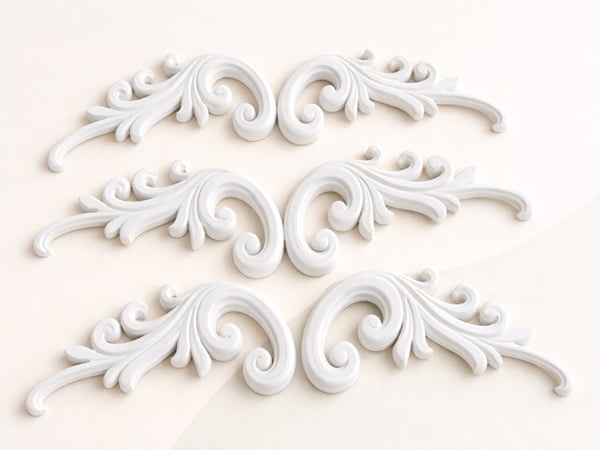
This is the most important concept we teach at CHENcan CNC. Pellet 3D printing is not just a bigger version of FDM filament printing. It is a completely different technical route aimed at scale.
The core of pellet systems is not just cheaper material. It is about using a raw-material supply chain. We use industrial plastic processing logic and high-throughput plasticization methods. This process is much closer to injection molding and extrusion than it is to desktop printing.
However, the advantages and challenges are two sides of the same coin.
| Factor | Advantage | Challenge |
|---|---|---|
| Material Form | Low cost, high throughput | Needs strict moisture control |
| Extrusion System | Great for large cross-sections | Slower start/stop response |
| Hardware | Cheaper raw materials | Screw wear and plasticization stability |
The real difficulty in pellet printing is not if it can print, but achieving continuous stability. When you print a 3-meter long yacht mold, the machine must run perfectly for days. By understanding the true nature of PLA pellets, you can unlock massive, low-cost manufacturing capabilities.
Conclusion
PLA is a powerful, low-cost material. By understanding its properties and moving from filament to industrial pellets, you can unlock massive, fast, and highly profitable large-scale manufacturing solutions.
PLA is made from plant starches, offering an eco-friendly alternative to traditional plastics, reducing carbon footprint. ↩
CHENcan CNC uses PLA in their large-scale printers, showcasing its effectiveness in industrial manufacturing. ↩
Using PLA pellets in large-scale printers reduces costs and increases throughput for industrial applications. ↩
Proper retraction settings prevent stringing, improving the surface finish and overall print quality. ↩