
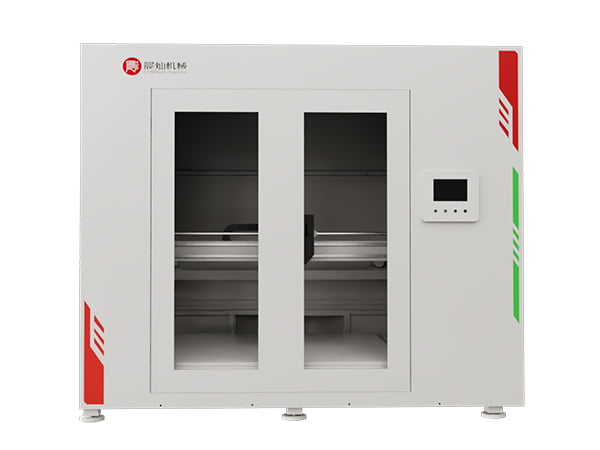
Pellet 3D Printers in Real-World Production: Why High-Volume, Custom Manufacturing Is Moving Beyond Filament?
Do you feel frustrated by the slow speed of standard 3D printing for large parts? High material costs and long wait times can kill your project's profit margins. There is a better way to handle large-scale manufacturing without breaking the bank.
A Pellet 3D Printer1, also known as Fused Granulate Fabrication2 (FGF), uses raw plastic granules3 instead of filament spools. This technology allows you to print large parts much faster and at a significantly lower material cost, making it the superior choice for industrial molds4 and furniture.
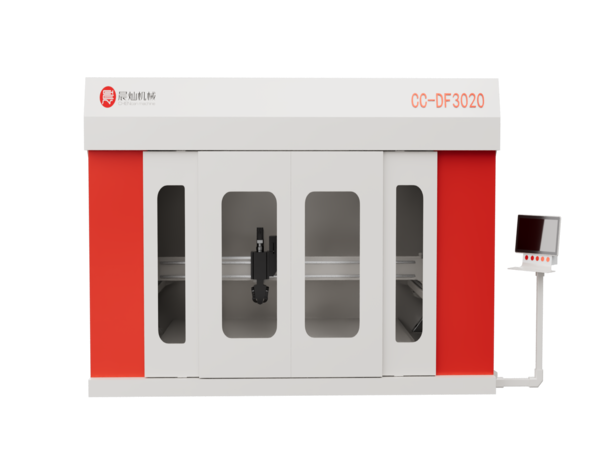
Many manufacturers are stuck in the mindset of using filament for everything. I see this often in the industry. However, once you understand the mechanics and economics of pellet extrusion, you will realize why it is taking over the industrial sector. Let's look at the details.
What Is a Pellet 3D Printer and How It Differs from Filament-Based Systems?
Standard 3D printers are easy to use, but are they truly efficient for big jobs? If you are printing objects larger than a shoebox, the answer is usually no.
The main difference is the feedstock; pellet printers melt raw plastic granules directly through a screw extruder, while filament systems pull a thin plastic wire through a heated nozzle.
At CHENcan CNC, we have spent years optimizing machinery, and the mechanics here are crucial. In a filament system (FFF/FDM), a motor drives a gear that pushes a solid wire into a hot end. This works fine for small details. However, the flow rate is limited by how fast that thin wire can melt.
In contrast, a Pellet 3D Printer works like a plastic injection molding machine. It uses a screw inside a heated barrel. As the screw turns, it transports, compresses, and melts the plastic granules. This creates a high pressure and a high volume of molten plastic.
Because of this screw design, we can push out much more material per second. We call this the "flow rate." A standard filament printer might output 20 grams per hour. A pellet printer can easily output several kilograms per hour. This fundamental difference changes how we approach production schedules. You are no longer waiting days for a part; you are often waiting just hours.
| Feature | Filament | Pellet |
|---|---|---|
| Material Form | Spool of wire | Raw Granules |
| Flow Rate | Low | Very High |
| Print Speed | Slow | Fast |
| Material Cost | High ($20-$50/kg) | Low ($2-$10/kg) |
| Best Application | Small, detailed parts | Large molds, furniture |
Why Filament 3D Printing Reaches Its Limits in Large and Custom Parts?
Have you ever tried to print a full-sized chair or a car bumper prototype with filament? It takes forever, and often the print fails halfway through.
Filament printing hits a wall with large parts because of slow deposition rates and the high risk of warping or layer separation over long print times.
When I talk to engineers, their biggest complaint about large filament prints is reliability. Imagine a print that takes 100 hours. If the power flickers, or the nozzle clogs at hour 90, you lose everything. That is a lot of wasted time and material.
Another issue is the "spool limit." A standard spool is 1kg. A large part might weigh 10kg. You have to change spools constantly. This requires manual labor and introduces potential errors.
Structurally, large filament prints are often weak. Because the lines are so thin (usually 0.4mm), there are thousands of layers. Each layer is a potential weak point. If the chamber temperature isn't perfect, the layers won't bond well. The part might look good, but it could snap under load.
Finally, the cost is prohibitive. Filament involves extra processing steps by the material manufacturer. They make pellets, melt them, pull them into wire, and wind them. You pay for all that processing. For a massive mold, paying $30 per kilogram for PLA filament makes the project too expensive compared to traditional methods.
How Pellet 3D Printing Enables Cost-Efficient, Large-Scale Manufacturing?
Are your production costs too high to compete with overseas mass production? You need to lower your raw material expenses significantly.
Pellet 3D printing reduces costs by using raw granules, which are roughly 10 times cheaper than filament, and cuts production time by depositing thicker layers.
I have seen this cost difference change businesses. Let's look at the math. If you buy standard PLA pellets, the price is very low because it is a raw commodity. You are buying the same material that injection molding factories use. There is no "3D printing premium" added to the price.
But the savings go beyond just the material price. Time is money. With a pellet extruder, we use large nozzles, anywhere from 2mm to 8mm wide. This means we can print a layer that is 2mm high, compared to 0.2mm on a filament printer. We cover the same vertical height 10 times faster.
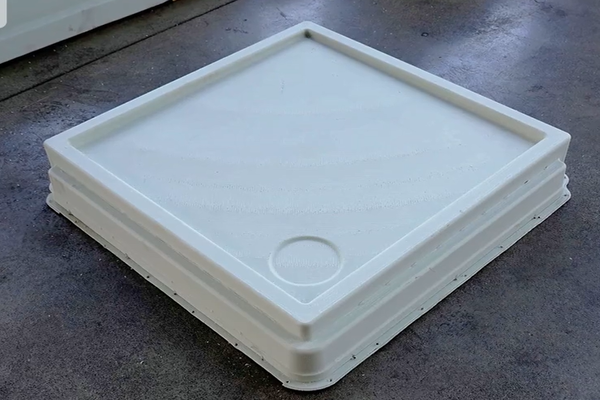
I want to share a real story from our customer base. We have a client in the casting industry. They traditionally used wood to make patterns for sand casting. Wood is heavy, expensive, and sensitive to humidity. They switched to our pellet 3D printer.
They found that plastic molds are cheaper to produce than hiring a carpenter to carve wood. But here is the surprising part: the plastic molds last longer. The customer tested this and told us the plastic life span is double that of wood. Plus, plastic is easier to store. It doesn't rot or warp in a damp warehouse. They are now slowly replacing all their wooden inventory with printed plastic. This is a massive win for their bottom line.
From Digital Design to Finished Part: The Pellet 3D Printing Workflow?
Is the process difficult to learn for your team? No, it follows the same logic as standard printing but with different parameters.
The workflow involves designing in CAD, slicing with software that handles variable bead widths, printing the raw pellets, and often CNC machining5 the surface for a smooth finish.
The design phase is similar to any other 3D printing. You create a 3D model. However, you must design for the process. Since the nozzle is big, you cannot have tiny, sharp corners. You need to think in terms of "continuous loops" to keep the print head moving smoothly.
Slicing is where things get interesting. In standard printing, the software assumes a constant line width. In pellet printing, we can sometimes vary the flow to change the width of the wall on the fly. This adds strength.
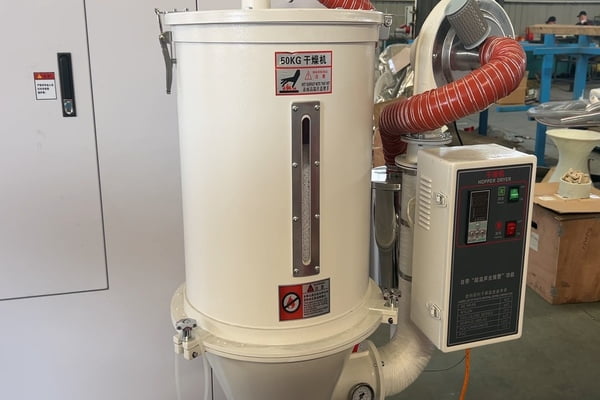
The actual printing process is mesmerizing. You pour a bag of pellets into the hopper. The screw heats up. The machine moves the gantry. At CHENcan, we often combine this with our CNC knowledge. Since pellet prints have visible layer lines (because the layers are thick), the surface is rough.
We usually print the part slightly oversized. Then, we use a CNC milling head to trim the surface. This gives you the speed of printing with the precision of machining. It is a hybrid workflow. You get a near-net shape in hours, and a perfect finish in minutes. This "Print then Mill" workflow is the standard for professional mold making.
Materials for Pellet 3D Printing: Engineering Thermoplastics and Composites?
Are you limited to basic plastics like PLA? Absolutely not. In fact, you have more material freedom than with filament.
Pellet systems can easily handle a wide range of materials, including ABS, PETG, PC, and fiber-filled composites, without the clogging issues common in filament nozzles.
One of the biggest advantages I see is with composite materials. These are plastics mixed with carbon fiber or glass fiber. In filament printing, these fibers make the wire brittle. The filament often snaps in the drive gears, or the abrasive fibers wear out the drive wheels.
With pellets, the fibers are suspended in the granules. The screw moves them gently. There is no brittle wire to snap. This means you can print with much higher percentages of carbon fiber.
We have customers printing with Carbon Fiber Reinforced Polymer6 (CFRP). The resulting parts are incredibly stiff and light. They are perfect for jigs, fixtures, and even functional vehicle parts.
You can also use soft materials like TPU (thermoplastic polyurethane) much easier. Flexible filament is like trying to push a wet noodle through a straw—it jams constantly. Pellets don't have this problem. Gravity feeds the soft pellets into the screw, and the screw pushes the melt out.
We also see a lot of interest in high-temperature materials. Materials like PEI or PEEK are very expensive in filament form. In pellet form, they are still pricey, but much more manageable for industrial budgets.
![Close up of plastic pellets and printed part]https://chencanmachine.com/wp-content/uploads/2026/01/3D-printer-blog1.jpg)
Strength, Weight, and Structure: Designing Functional Parts with Pellet Extrusion?
Are these printed parts strong enough for real work? Yes, the thermal mass of the extrusion creates superior bonding.
Pellet printed parts often have better isotropic strength because the large volume of molten plastic retains heat longer, allowing layers to fuse more completely.
When you print with a tiny filament nozzle, the plastic cools down almost instantly. The next layer sits on top of cold plastic. The bond is weak. This is why filament prints often split apart.
With pellet extrusion, we are laying down a thick, hot bead of plastic. It holds its heat for a long time. When the next layer comes around, the previous layer is still warm. They melt together chemically. The part becomes almost like a solid block of plastic.
However, you have to manage this heat. If the part stays too hot, it will sag. This is why we use powerful cooling fans.
Design plays a big role here. We often use "vase mode7" or spiral vase printing for things like furniture. This is one continuous line that spirals up. It looks beautiful and is very strong.
For internal structures, we don't use the typical honeycomb infill you see in small printers. It shakes the heavy machine too much. Instead, we design internal ribs or "gyroid" structures that allow the heavy print head to move smoothly. This creates a part that is light but incredibly rigid. This is crucial for things like concrete casting molds, which need to hold tons of weight without bulging.
Real-World Applications of Pellet 3D Printers Across Industries?
Who is actually using these machines today? It is not just hobbyists; it is serious heavy industry.
Industries ranging from automotive and aerospace to construction and art are using pellet printers for molds, prototypes, and final end-use products.
I mentioned our foundry client earlier, but let me share another example. We have a client who manufactures automotive interiors8. They make the dashboards and door panels. Traditionally, they used metal molds for the vacuum forming (blister) process.
Metal molds are durable, but they take weeks to machine and are very heavy. This client switched to our pellet 3D printer to make these molds out of high-temperature composite plastic.
The result? They can print a mold overnight. If the design of the car dashboard changes (which happens often), they just print a new one. They don't have to scrap a block of aluminum. The plastic mold withstands the heat of the vacuum forming process perfectly. They are replacing metal with plastic, saving money and gaining speed.
We also see applications in sculpture. Artists use our machines to print massive statues. They print them in sections, glue them together, and paint them. It is much faster than sculpting clay or casting bronze.
Construction companies are printing concrete formwork. Instead of building complex wood frames that are thrown away, they print a reusable plastic form in a complex shape that wood could never achieve.
When a Pellet 3D Printer Is the Right Choice—and When It Isn’t?
Is this technology right for every job? No, you need to understand the trade-offs regarding detail and size.
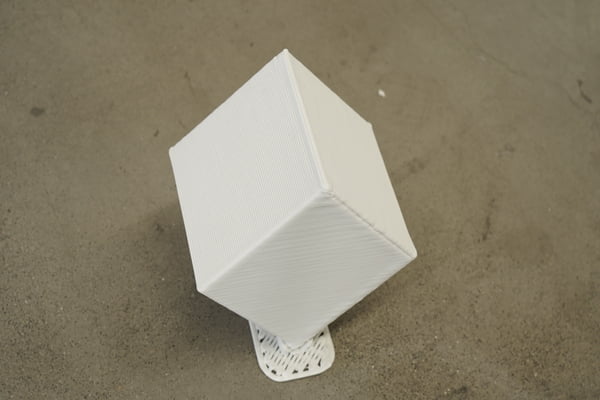
Choose pellet printing for large parts over 50cm that need speed and strength; stick to filament or resin printing for small, highly detailed items.
I always tell my customers to look at the "Minimum Feature Size." On a pellet printer, the nozzle is huge. The smallest detail I can print is roughly the size of a marker pen tip. If you need to print a tiny gear for a watch, or a miniature figurine with facial features, a pellet printer is the wrong tool. It is like trying to paint a portrait with a broom.
However, if you need a boat hull, a chair, a car bumper, or a large mold, the pellet printer is the king.
You also need to consider surface finish. As I mentioned, pellet prints have ridges. If you need a smooth surface straight out of the machine, you might be disappointed. You must be willing to do some post-processing, like sanding or machining.
Space is another factor. These machines are big. They are industrial equipment, not desktop toys. You need a factory floor, compressed air, and proper power supply. If you are working in a small office, this is not for you.
Key Technical Capabilities to Look for in a Professional Pellet 3D Printer?
Are you ready to invest in a machine? Make sure you check the specifications carefully to avoid buying a headache.
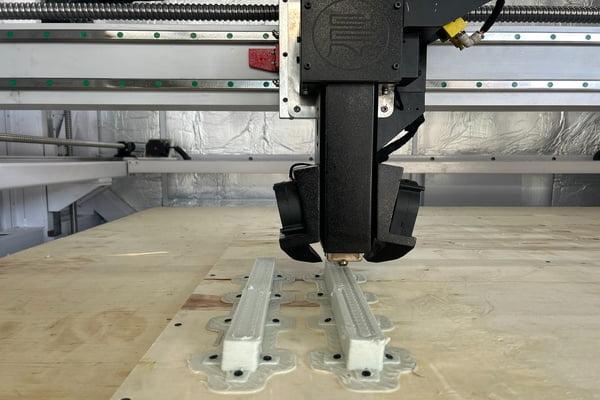
You should look for a rigid gantry frame, a high-temperature screw extruder design, a large heated build plate, and a reliable control system.
At CHENcan, we build our printers using the same philosophy as our CNC metal cutting machines. The frame must be heavy. When you are flinging a heavy extruder head around at high speeds, a lightweight aluminum frame will shake. Vibration ruins the print quality. You need heavy steel.
The screw design is critical. Not all screws are the same. Some are designed for general plastics, while others are designed for mixing colors or handling fibers. We customize the screw based on what the customer wants to print.
Temperature control is vital. You need distinct heating zones along the barrel. This ensures the plastic melts gradually and consistently. If it melts too early, it clogs. If it melts too late, it comes out chunky.
Also, look for "retraction" capabilities. In filament printing, pulling the wire back stops the flow. In pellet printing, you cannot pull the pellets back. You have to reverse the screw to relieve pressure. A good machine handles this well to prevent oozing when the print head moves between sections.
The Future of Pellet 3D Printing in Scalable and Sustainable Production?
Is this technology going to stick around? Yes, because it aligns with the global push for sustainability and circular economy.
Pellet printing allows for direct recycling of plastic waste into new products, making it a key technology for green manufacturing.
This is my favorite part of the technology. We are seeing a shift toward "circular manufacturing." You can take a failed print, shred it into granules, and put it right back into the hopper. You cannot do that easily with filament.
Imagine a future where you print a mold, use it, shred it, and print a different mold the next day. Zero waste.
We are also seeing the use of "regrind" or ocean plastics. Companies are cleaning up plastic trash, chopping it up, and using it to print furniture or building materials. Pellet printing is the only 3D printing technology that can handle this inconsistent material effectively.
As the technology matures, the software will get better at managing the variable flow, and the resolution will improve. But right now, for large-scale production, it is already changing the world. It is moving manufacturing away from mass production in a distant factory to local, on-demand production using recycled materials.
Conclusion
Pellet 3D printing is revolutionizing manufacturing by offering speed, strength, and massive cost savings for large parts. Whether you are replacing wood molds in a foundry or metal molds for auto parts, this technology offers a competitive edge that filament simply cannot match.
Explore the benefits of Pellet 3D Printers for faster and cost-effective large-scale manufacturing. ↩
Learn about FGF technology and how it revolutionizes 3D printing with raw plastic granules. ↩
Discover how using raw granules can significantly reduce costs and increase print speed. ↩
Find out how Pellet 3D Printers are transforming the production of industrial molds. ↩
Discover the synergy between CNC machining and Pellet 3D printing for high-quality finishes. ↩
Learn about CFRP and its benefits in creating strong, lightweight 3D printed parts. ↩
Learn how vase mode can enhance the design and strength of 3D printed objects. ↩
Discover the innovative applications of Pellet 3D printing in the automotive industry. ↩