
Pellet 3D Printers Explained: Why Is Large-Scale 3D Printing Moving Beyond Filament?
Do you feel frustrated by how long it takes to 3D print large parts? Are high material costs eating up your project budget? You are not alone in this struggle.
A [pellet 3D printer] uses raw plastic granules1 instead of plastic wire to build objects. This method allows you to print ten times faster and lowers material costs significantly. It is the best solution for manufacturing large furniture, molds, and industrial parts that require high strength and speed.
Many people start with filament printers2. They work well for small toys or prototypes. But when you need to make something big, filament fails. It is too slow and too expensive. That is why industries are switching to pellet systems. Let me explain why this shift is happening.
LOOP START
What Is a Pellet 3D Printer and How It Works?
Have you ever wondered how we can print a chair or a car bumper in just one day? The secret lies in the way we feed the plastic.
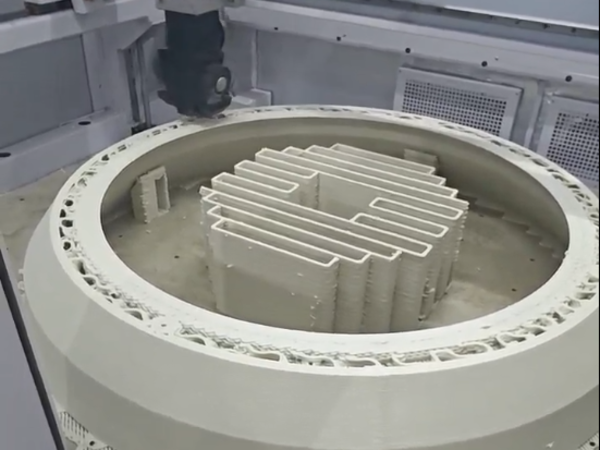
A pellet 3D printer works by feeding raw plastic granules into a hopper. A large screw inside a heated barrel pushes and melts these granules. The machine then extrudes the melted plastic through a wide nozzle to build the part layer by layer.
Let's break this down further so you can understand the mechanics. Think of an injection molding machine. It uses a big screw to melt plastic pellets. A pellet 3D printer uses this same proven technology, but it puts it on a moving gantry.
In a standard printer, a motor pulls a thin wire. In our pellet printers at CHENcan CNC, we use a hopper that sits on top of the extruder. You pour the pellets in. Gravity pulls them down into the screw. The screw rotates and creates pressure. This friction and the heaters melt the plastic very quickly.
This system is powerful. It can push out a lot of plastic at once. We measure this in kilograms per hour. A filament printer might do 0.1 kg per hour. A pellet printer can easily do 5 kg or even 10 kg per hour. This is how we achieve such high speeds. It is a mini factory on a moving head.
LOOP END
LOOP START
Why Does Filament 3D Printing Fail at Large Scale?
Have you tried printing an object taller than one meter with filament? You probably faced layer separation or prints that took weeks to finish.
Filament printing fails at large scales because the material flow is too low. The thin wire cannot deliver enough plastic to build thick, strong walls quickly. Also, filament spools run out often, which pauses the print and leaves weak spots in the final product.
I have seen many clients try to scale up with filament farms. It rarely works for big single parts. The main issue is the "flow rate." A standard filament is only 1.75mm thick. You can only push it so fast before the motor slips or the nozzle clogs. This limits your nozzle size to about 0.8mm or 1mm.
When you print a big mold or a desk, a 1mm line is too thin. It takes thousands of passes to build a wall. This takes days. During those days, the temperature in the room might change. The print might warp. The power might flicker.
Also, spools are small. A 1kg spool runs out fast on a big job. You have to change it. Every time you pause and change a spool, the print cools down. This creates a weak layer. With pellets, you just keep pouring them into the hopper. The machine never stops. The part stays hot and strong.
LOOP END
LOOP START
Pellet vs Filament 3D Printing: How Do Cost, Speed, and Material Freedom Compare?
Are you tired of paying high prices for branded filament spools? You could be saving a massive amount of money on every single print.
Pellet 3D printing is much cheaper and faster than filament printing. Pellets cost about 10% of the price of filament because you are buying raw material. The print speed is also up to 100 times faster, allowing for rapid production of large objects.
Let's look at the numbers. They are quite shocking. If you buy PLA filament, you pay for the plastic, the processing into wire, the spooling, and the packaging. You might pay $20 to $50 per kilogram.
Now, look at pellets. This is the raw material that filament factories buy. If you buy pellets directly, you pay maybe $2 to $5 per kilogram. If you print a 100kg mold, the difference is huge. You save thousands of dollars on just one job.
Speed is the other factor. As I mentioned, we can print kilograms per hour. What takes a filament printer 48 hours, we can do in 2 hours. This means you can iterate faster. You can design a part in the morning, print it by lunch, and test it in the afternoon.
Material freedom is also better. With filament, you must buy what is on the shelf. With pellets, you can mix your own. You can blend colors. You can add glass fiber. You have total control over your material recipe.
LOOP END
LOOP START
What Applications Actually Require Pellet 3D Printers?
Do you need to make something that is structurally sound and huge? Small desktop printers simply cannot handle these industrial demands.
Pellet 3D printers are required for applications like full-scale furniture, large automotive prototypes, boat hulls, and construction molds. Any project that needs parts larger than 500mm or heavy-duty composite materials3 benefits from the throughput of a pellet system.
At CHENcan CNC, we see specific industries that love this tech. The automotive industry is a big one. They need to print full-size bumpers and dashboards for testing. They cannot glue twenty small pieces together. They need one solid piece.
The marine industry is another. We have clients printing sections of boats or yacht molds. These parts must be waterproof and strong.
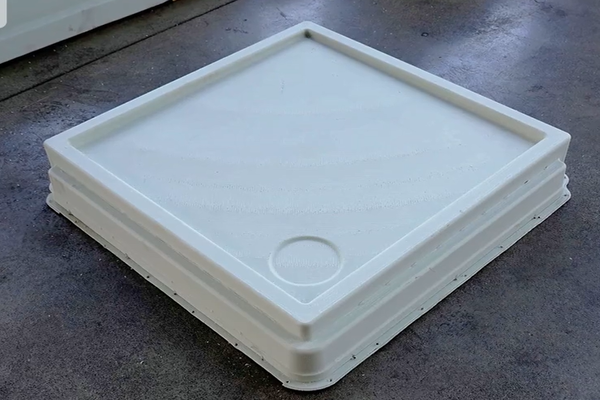
Construction and architecture are growing fields too. We can print concrete casting molds. These molds have complex shapes that are hard to make with wood. With 3D printing, you print the negative shape, pour the concrete, and break the plastic away later.
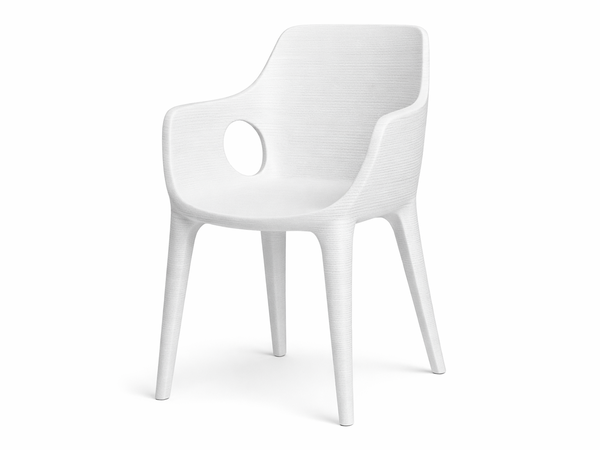
Furniture designers are also key users. They want to create wild, organic shapes. A pellet printer can make a chair in a few hours. The layer lines are thick, which gives the furniture a unique texture that many designers actually like.
LOOP END
LOOP START
How Does Pellet Extrusion Enable Large, One-Piece 3D Printed Parts?
Do you hate gluing and sanding multiple parts to make one big object? It is messy, weak, and takes too much time.
Pellet extrusion enables large one-piece parts because it deposits wide and thick tracks of plastic. These thick layers hold heat longer, which allows them to bond perfectly with the previous layer. This results in a massive, unified structure without weak seams.
When you print big, heat is your friend. In filament printing, the thin line cools down instantly. If the layer below is cold, the new layer does not stick well. This causes cracks.
With pellet extrusion, the nozzle is big. We often use nozzles from 3mm up to 8mm wide. The plastic comes out very hot and stays hot. This "thermal mass" means the layers fuse together chemically. It is almost like welding.
This allows us to build very tall and wide items. Our machines have large build volumes. We can print things that are several meters long. Because the bond is so good, the part acts like one solid piece of plastic. You do not need to assemble anything. You take it off the machine, and it is ready to use. This structural integrity is vital for functional parts like molds or load-bearing furniture.
LOOP END
LOOP START
What Materials Can Be Used in Pellet 3D Printing: From Standard Plastics to Composites?
Do you need parts that can withstand high heat or heavy loads? Standard PLA is good, but sometimes you need something much tougher.
Pellet 3D printers can process a huge range of thermoplastics, including ABS, PETG, TPU, and PC. More importantly, they handle composite materials filled with carbon fiber or glass fiber, which create parts that are stiff, strong, and heat resistant.
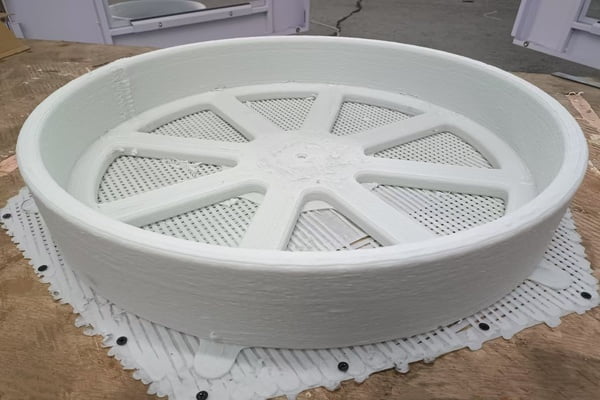
The beauty of pellets is the variety. You are not locked into one brand. You can use recycled plastics4 too. We have clients who grind up old plastic waste and reprint it. This is great for the environment and costs almost nothing.
But the real power is in composites. For industrial use, plain plastic is often too soft. We mix in chopped carbon fibers or glass fibers. When these go through the screw, they align with the print path.
This makes the final part incredibly stiff. It does not warp easily. It can hold heavy weights. This is perfect for tooling and fixtures in factories. For example, a jig to hold a car part while it is being assembled.
We also use flexible materials5 like TPU. You can print giant soft tires or flexible seals. The screw extruder handles soft materials much better than a filament gear, which often gets jammed with flexible rubber.
LOOP END
LOOP START
Why Are Pellet 3D Printers Ideal for Sculptures, Furniture, and Industrial Parts?
Are you an artist or a designer looking to create massive shapes without breaking the bank? This technology gives you freedom.
Pellet 3D printers are ideal for sculptures and furniture because they offer the lowest cost per volume and high print speeds. You can produce large outdoor art statues or custom furniture pieces rapidly. However, the surface will be rough, so post-processing is often needed.

I have some personal insights here. I have seen many artists switch to our machines. Foundry models and large outdoor sculptures are perfect for pellet printers. Why? Because these objects are huge. If you use traditional methods like clay or foam carving, it takes weeks of manual labor.
With our printer, you get the basic shape in a day or two. The cost is low because pellets are cheap.
However, you must know this: the surface finish is not smooth like a small resin print. The layer lines are visible. For art, this is often okay. You can sand it, coat it with epoxy, or paint it.
For furniture, the rough texture is often a design feature. But for industrial parts, you might need smooth surfaces. This leads to a hybrid approach. You print the "near net shape" quickly. Then, you finish the critical areas. This balance of speed and cost makes it the best choice for large creative works.
LOOP END
LOOP START
What Key Technical Features Define an Industrial Pellet 3D Printer?
How do you know if a machine is truly built for industrial work? It is not just about having a big frame.
An industrial pellet 3D printer is defined by a high-temperature screw extruder, a heated build chamber, and a heavy-duty CNC motion system. These features ensure the machine can run continuously for days and handle engineering-grade materials without failure.
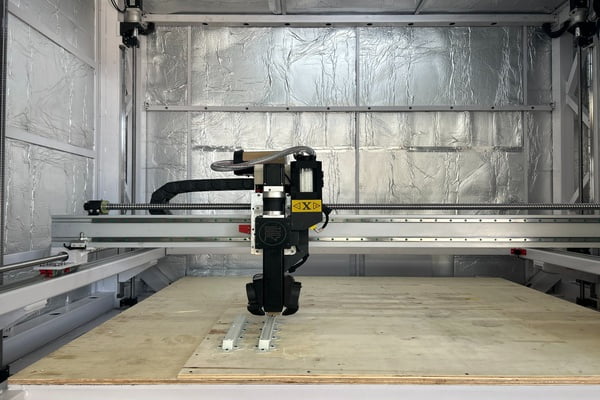
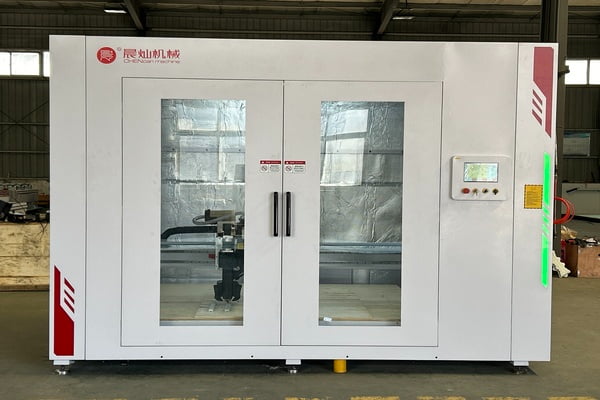
At CHENcan, we build our 3D printers with the same DNA as our CNC machines. A hobby printer uses rubber belts and small wheels. That is not enough for a heavy extruder.
Our machines use ball screws and linear guides. This is heavy iron. It ensures the print head moves smoothly and accurately, even when it is moving fast.
The heating system is also crucial. We have multiple heating zones along the barrel. This ensures the plastic melts gradually and evenly. If the heat is wrong, you get bubbles or jams.
We also use a heated bed and sometimes a heated chamber. This prevents the plastic from shrinking and warping as it cools. For materials like ABS/PC, you simply cannot print big without a heated environment. These are the features that separate a toy from a tool.
LOOP END
LOOP START
Who Should Invest in a Pellet 3D Printer—and Who Shouldn’t?
Is this machine right for your business, or is it overkill? You need to assess your production needs carefully.
You should invest in a pellet 3D printer if you manufacture large parts, molds, or furniture and need to reduce lead times. If you only print small, high-detail figurines or parts smaller than a shoebox, you should stick to filament or resin printers.
Let's be practical. If you are a hobbyist making action figures, do not buy a pellet printer. The nozzle is too big. You will not get the fine details you want.
However, if you are a boss in a factory, a sculpture artist, or a product designer, this machine is for you. If you spend thousands of dollars outsourcing molds or prototypes, this machine pays for itself very fast.
Think about your volume. Do you go through 50kg of plastic a month? If yes, the savings on material alone will pay for the machine in a year.
Also, consider your space. These machines are big. You need a workshop, not a desktop. If you fit this profile, the switch to pellets will transform your business. It gives you capabilities that your competitors using filament just don't have.
LOOP END
LOOP START
What Is the Future of Pellet 3D Printing in Industrial Manufacturing and Design?
Where is this technology heading, and how will it change your factory floor? The future is about combining technologies.
The future of pellet 3D printing lies in hybrid manufacturing. We will see more workflows where a pellet printer creates a rough shape quickly, and a CNC machine finishes the surface. This combination offers the best of both worlds: the speed of printing and the precision of machining.
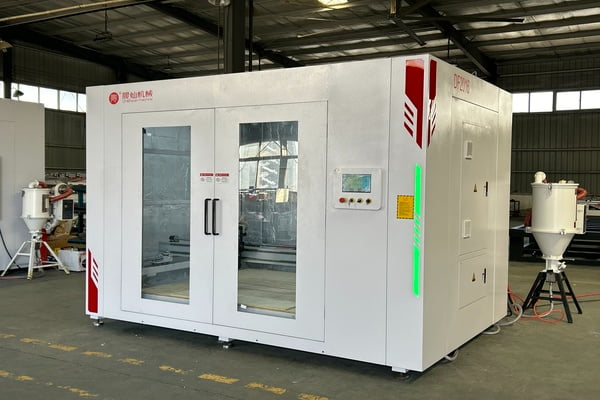
This is a key insight I want to share. Printing is great for adding material. CNC is great for removing material.
For things like foundry molds or high-precision aerospace parts, the rough surface of a pellet print is not enough. You cannot cast a perfect engine block from a rough mold.
So, the workflow is changing. We print the object slightly larger than needed. This is very fast and cheap. Then, we put it on a 5-axis CNC machine (or use a hybrid machine that does both). The CNC trims the surface down to the exact tolerance.
This is where the industry is going. It solves the surface finish problem. It makes pellet printing applicable to high-precision industries. At CHENcan, we are experts in both CNC and 3D printing, so we help our clients build these efficient production lines. This is the future of making things.
LOOP END
Conclusion
Pellet 3D printing is the superior choice for large-scale production due to its speed, low material cost, and structural strength. While surface finishing may require CNC machining, the efficiency gains for heavy industries and artists are unmatched.
Learn how raw plastic granules revolutionize 3D printing, making it faster and more economical. ↩
Understand the drawbacks of filament printers and why industries are shifting to pellet systems. ↩
Understand the benefits of composite materials for creating strong and durable 3D printed parts. ↩
Discover the environmental benefits and cost savings of using recycled plastics in 3D printing. ↩
Learn about the versatility of flexible materials in creating innovative 3D printed products. ↩