Is a 5-Axis Machining Center the Best Choice for Non-Metal Applications?
You struggle with complex shapes and curved surfaces in your mold making. You waste too much time on manual finishing because your current machine lacks precision.
This 5-axis machining center, often called a 5-axis router, is the solution for processing non-metal materials. It handles complex models like aerospace parts, automotive molds, and bathtubs in a single setup. It delivers high precision and excellent surface finishes.
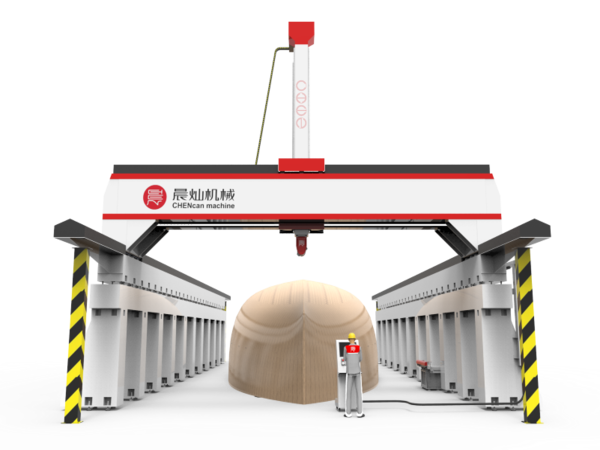
I have been in the machinery business with Chencan Machinery for a long time. I have seen many mold engineers struggle with 3-axis machines. They try to cut complex angles, but they fail. They have to move the workpiece many times. This causes errors. Today, I want to show you a machine that solves these problems. It is built for efficiency. It is built for quality.
What Industries Can Benefit from This High-Precision Machine?
Do you refuse orders because the models are too complex? You might lose customers if you cannot handle intricate designs in foam, resin, or wood.
This machine is perfect for aerospace models, automotive parts, and sanitary ware like bathtubs. It is also ideal for trimming and drilling composite materials. It suits any industry that needs high precision and complex shaping.
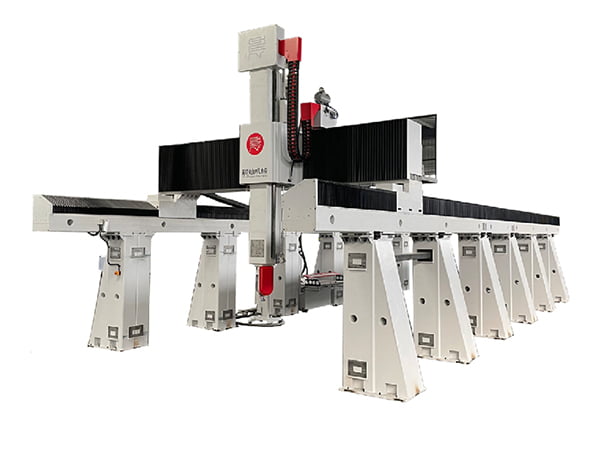
Let me explain where this machine shines. I often call this machine a "router" when I talk to my international clients. It is lighter than a metal mill but stronger than a hobby machine. It is designed specifically for non-metal materials.
First, think about the aerospace and automotive industries. You need to make full-scale models. These models have curves, slopes, and undercuts. A standard machine cannot reach these areas. Our 5-axis machine can move the tool around the part. It finishes the job in one go. This is what we call "one-time molding."
Second, consider the sanitary industry. I have a customer who manufactures bathtubs. After the bathtub is thermoformed (sucked into shape), it has rough edges. It needs holes for the drain and faucet. Doing this by hand is slow and dangerous. Our machine trims the edges and drills the holes cleanly.
This machine is also vital for precision casting molds. The surface must be perfect. If the mold is rough, the final cast metal part will be rough. Our machine ensures a smooth surface.
Here is a simple breakdown of applications:
| Industry | Typical Material | Key Process |
|---|---|---|
| Aerospace | Foam, Resin, Composites | Creating aerodynamic models and wind tunnel parts. |
| Automotive | Clay, Wood, Carbon Fiber | Prototyping interior parts and body panels. |
| Sanitary Ware | Acrylic, Fiberglass | Trimming edges and drilling holes on curved surfaces. |
| Foundry | Wood, Epoxy Tooling Board | Making master patterns for sand casting. |
This versatility helps you take on more jobs. You are not limited to flat cutting. You can handle true 3D manufacturing.
How Does the Machine Structure Ensure Stability and Accuracy?
Vibration is the enemy of a smooth finish. If your machine shakes during high-speed cutting, your mold surface will look terrible and require hours of sanding.
This machine features a fixed gantry and a moving table design. This structure keeps the footprint small while ensuring stable precision. It uses high-precision ball screws on all three axes for fast, accurate movement.

The structure of a CNC machine is like the foundation of a house. If the foundation is weak, the house is weak. At Chencan, we use a "Fixed Gantry, Moving Table" design for this model.
Why do we choose this? In many large routers, the gantry (the bridge) moves over the table. That is fine for huge sheets of wood. But for high-precision molds, we want more rigidity. In our design, the heavy gantry stays still. It is bolted to the ground. Only the table moves. This reduces vibration significantly. When the machine cuts, it stays rock solid.
Another benefit is the size. This design usually takes up less floor space than a moving gantry machine of the same capacity. I know factory space is expensive. This helps you save space.
We also focus on the transmission system. We use high-precision ball screws for the X, Y, and Z axes. Many cheaper routers use "rack and pinion" gears. Rack and pinion is fast, but it is not as smooth. Ball screws are very precise. They allow the machine to move quickly but stop exactly where it needs to.
This setup is also easier to maintain. I always tell my customers that a machine is only good if it keeps running. Ball screws are enclosed and easy to lubricate. This means you spend less time fixing the machine and more time cutting molds. The combination of a heavy, fixed frame and precise screws gives you the surface finish you need.
What Features Make the Cutting Process Smooth and Simple?
Programming a 5-axis machine can feel scary and difficult. You might worry that your operators cannot handle the complex technology or that the cuts will be rough.
We use a genuine 5-axis system with RTCP (Tool Center Point Control) to simplify programming. The HSK63F high-speed spindle provides high torque for a smooth surface, and the carousel tool changer automates the workflow.
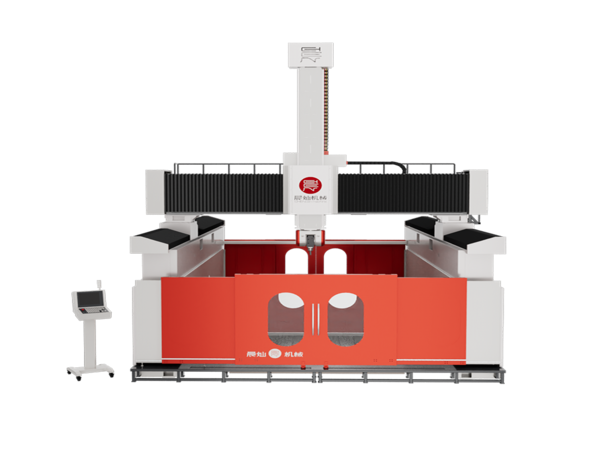
The heart of this machine is the spindle. We use the HSK63F mechanical spindle. In the machining world, "HSK" stands for precision. This spindle is designed for high speed. When you cut soft materials like foam or resin, you need high speed to get a clean cut. If the speed is too low, the material might melt or tear.
But speed is not enough. You also need torque. This spindle is strong. It cuts through composite materials without slowing down. The result is a very smooth surface. My customers often tell me they save hours on polishing because the cut is so clean right off the machine.
Now, let's talk about the "brain" of the machine. We use a true 5-axis system with RTCP. Some people call this "RTP" or "tool tip following."
What does this mean for you? In a normal machine, you have to tell the computer exactly where the pivot point of the head is. If you change the tool length, you have to recalculate everything. With RTCP, the controller knows where the tip of the tool is. You just program the part shape. The machine figures out how to move the angles.
This makes operation much simpler. Your programmer does not need to be a mathematician. It also makes the machine safer. The machine adjusts the movements to keep the tool tip on the correct path.
We also include a carousel-style tool changer. This is a round magazine that holds many tools. The machine can switch from a large roughing tool to a small finishing tool automatically. You do not need to stop the machine to change bits by hand. This automation lets you run the machine for hours without interruption.
How Do You Secure Different Types of Workpieces?
Holding a weirdly shaped object is the hardest part of machining. If the workpiece moves even a millimeter, the entire part is ruined.
You can choose between a vacuum adsorption table or a T-slot table. The vacuum table is great for sheets, while the T-slot table allows you to clamp complex fixtures and molds securely.
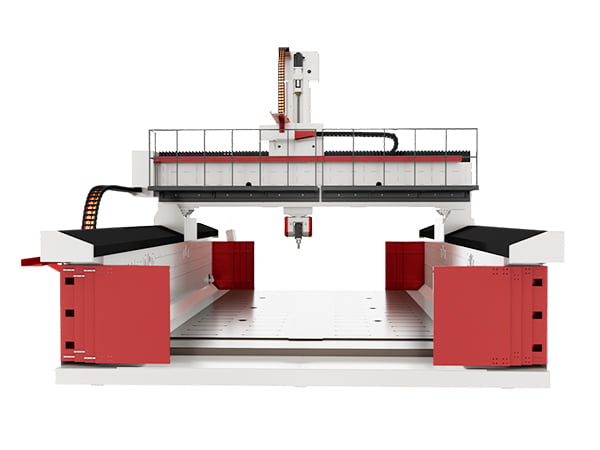
The table is where your material lives. We offer two main options because every customer has different needs.
First, we have the Vacuum Adsorption Table. This is magic for flat sheets. Imagine you are cutting a large sheet of plastic or wood. You do not want to use clamps because the clamps might get in the way of the cutter. With a vacuum table, you turn on a pump, and the suction holds the sheet down. It is very fast. You put the material down, flip a switch, and start cutting.
Second, we have the T-slot Table. This is the traditional method. It has metal grooves. You use bolts and clamps to hold the workpiece. This is essential for the 5-axis work we are discussing.
Why? Because 5-axis parts are rarely flat. Think about that bathtub or the car bumper model. You cannot just lay it flat. You need to build a "jig" or a fixture to hold it up in the air. The T-slot table lets you bolt these fixtures down tightly.
I often recommend a hybrid approach or a specific choice based on your main product. If you mostly do trimming of thermoformed parts (like the bathtubs), you will build a mold to hold the tub upside down. You bolt that mold to the T-slots.
This flexibility is key. We design the machine so you can use different clamping methods depending on the job. Whether you are holding a block of foam for a prototype or a carbon fiber shell for trimming, we have a way to keep it secure. This ensures safety for the operator and accuracy for the part.
Conclusion
This 5-axis machining center offers high precision for non-metal industries. It features a stable structure, smart RTCP control, and versatile clamping, helping you produce complex models efficiently.