How Is 3D Sculpture Art Redefining Creativity in the Digital Age?
Traditional sculpting is slow, messy, and unforgiving. You want to create massive, complex shapes, but the cost of materials and the time required hold you back.
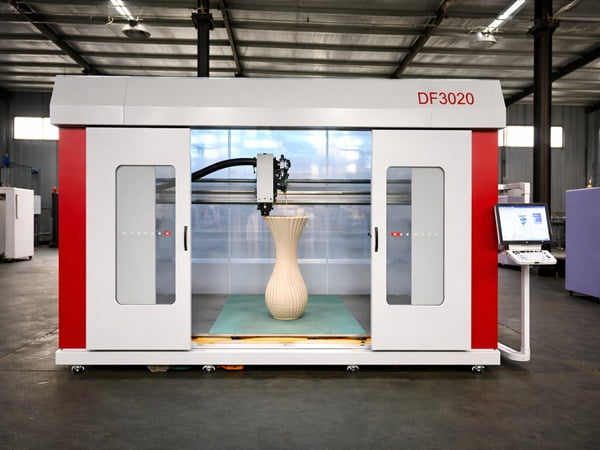
3D sculpture art solves this by combining digital design with industrial manufacturing. It allows artists to use large-scale 3D printers1 to create complex forms from recyclable pellet materials2, saving costs and enabling easy painting after production.
I remember when a client came to our factory in Shandong with a small clay model. He wanted it to be six meters tall for a park. In the past, this would have taken months of hand carving. But with our machines, we saw a different path. This technology changes how we think about art. It moves us from slow manual labor to fast, precise digital creation.
LOOP START
What Is 3D Sculpture Art and How Does It Move From Physical Craft to Digital Creation?
Many people are confused by the term "digital sculpture." You might wonder if it is still art if a computer and a machine help make it.
It is the process of creating a three-dimensional object using computer software, which is then physically produced by machines like CNC routers or 3D printers. This method bridges the gap between the artist's imagination and the physical world.
At CHENcan CNC3, we see this shift every day. In the past, an artist had to be good with a hammer and chisel. Now, they must also understand geometry and software. This transition does not remove the human element. Instead, it gives the artist new tools.
When we talk about physical craft moving to digital creation, we are talking about precision. Handcrafting has a unique soul, but it lacks the mathematical accuracy of a machine. A digital file can be saved, edited, and scaled. You cannot "undo" a chip in a marble block, but you can easily fix a digital model.
Key Differences Between Traditional and Digital Sculpture
| Feature | Traditional Sculpture | Digital Sculpture (3D Printing/CNC) |
|---|---|---|
| Tools | Chisels, clay, casting molds | 3D Software, 5-Axis Machines, Printers |
| Speed | Slow, labor-intensive | Fast, automated production |
| Modification | Difficult or impossible | Easy digital edits |
| Replication | Hard to make exact copies | Infinite identical copies possible |
I have seen artists use our 5-Axis Machining Centers4 to carve foam molds. They then use these molds for casting. This mixes the old and new ways. The computer does the heavy lifting, and the artist does the final finishing. This is the new standard in the industry.
LOOP END
LOOP START
How Is 3D Printing Changing the Language of Contemporary Sculpture?
You might feel limited by gravity and material strength when designing. Traditional methods struggle with hollow shapes or interlocking parts.
3D printing changes the language of sculpture by allowing for internal structures and complex geometries that are impossible to cast. It introduces a visual style based on layers and generative design.
The "language" of sculpture is how the piece speaks to the viewer. For centuries, this language was defined by the block. You started with a block of stone or wood and took pieces away. 3D printing is different. It is additive. We build the object layer by layer.
This allows for shapes that could never exist before. I have watched our Industry 3D Printers create lattice structures. These shapes are strong but very light. If you tried to carve them, the material would break. If you tried to cast them, the mold would get stuck.
New Possibilities in Form
- Hollow Shells: You can print a huge statue that is hollow inside. This saves a lot of weight and money.
- Interlocking Parts: You can print chains or moving parts that are already assembled.
- Generative Design: Software can grow organic shapes that look like nature, which our machines can then print perfectly.
This technology allows artists to speak a new visual language. They can focus on the flow of the form rather than the limitations of the tool. The layer lines themselves can even become part of the art, showing the process of how it was made.
LOOP END
LOOP START
Is Digital Modeling Becoming a Necessary New Sculptural Skill for Artists?
You may fear that learning complex software will take away from your creative time. Is the mouse really replacing the sculpting tool?
Yes, mastering 3D modeling software5 is becoming essential because it gives the artist total control over the manufacturing output. It serves as a digital sketchbook where volume and light are tested before production.
I often tell our clients that the machine is only as good as the file you give it. If the 3D model is bad, the print will be bad. This means artists need to learn new skills. They need to understand software like ZBrush, Rhino, or Blender.
This does not mean you stop being an artist. It means your canvas has changed. In the digital world, you can work with "digital clay." You can push and pull the surface just like real clay. But you can also turn on symmetry to work twice as fast. You can zoom in to see microscopic details.
Why Artists Should Learn CAD
- Direct Control: You do not have to rely on a technician to interpret your drawing. You give the machine the exact data.
- Visualization: You can render the sculpture with different lights and materials on the screen. You can see how it looks in gold, plastic, or concrete before you spend a penny.
- File Preparation: Understanding how to make a model "watertight" is key for 3D printing.
At CHENcan, we offer full-process customization. We often help artists who are not yet experts in modeling. Our team can fix their files. But the artists who learn these skills themselves have the most freedom. They understand what our 5-Axis machines and 3D printers can do, and they design specifically for them.
LOOP END
LOOP START
How Do 3D Technologies Enable Artistic Freedom and Rapid Iteration?
Making a mistake in stone or bronze is a disaster. You waste weeks of work and expensive materials if a design fails.
Digital technologies allow you to undo mistakes instantly and print small prototypes to test ideas. This freedom lets artists take risks and refine their work quickly before committing to the full-scale piece.
Artistic freedom comes from not being afraid to fail. When you work with physical materials, fear is always there. One wrong hit, and the nose of the statue falls off. In the digital world, you just press "Ctrl+Z" to undo.
This leads to rapid iteration6. Iteration means doing something over and over until it is perfect. In our factory, we often print a small version of a sculpture first. We call this a prototype. It might be only 20 centimeters tall. The artist can hold it, look at it from all angles, and feel the balance.
The Iteration Process
- Drafting: Create a rough digital model.
- Prototyping: Print a small version on a desktop printer or our industrial machine.
- Review: The artist checks the shape. Maybe the arm looks too long.
- Refining: Edit the digital file.
- Final Production: Send the file to our large Gantry Machining Center or Industry 3D Printer for the full-size work.
This process saves so much stress. I have seen projects where the client changed the design five times in one week. If we were carving wood, this would be impossible. With digital files, it is easy. This speed lets the artist explore more crazy ideas. They can try things they would never risk with expensive stone.
LOOP END
LOOP START
How Are Materials, Scale, and Texture Expanding the Boundaries of Sculpture Art?
Traditional bronze and marble are very heavy and very expensive. You want to create huge landmarks, but the budget and logistics stop you.
Industrial 3D printers use pellet materials that are lightweight, cost-effective, and can be printed in massive sections. This allows for huge scales and unique surface textures that can be easily painted.
One of the best insights I can share is about the materials we use. We use pellet extrusion technology in our Industry 3D Printers. These pellets are the same plastic bits used in injection molding. They are much cheaper than the filament spools used in home printers.
This brings a huge change to the industry. The cost of raw material drops significantly. Because the material is plastic (like PLA, ABS, or PETG), it is light. You can make a statue that is 10 meters high, and you do not need a massive crane to move it.
The Surface and Painting Advantage
After the printing is done, the surface has a texture. Some artists like this "layered" look. But most want a smooth finish.
- Smoothing: The plastic is easy to sand or coat with putty.
- Painting: This is a big benefit. The printed material takes paint very well. You can make it look like bronze, gold, or cartoon colors.
- Cost: Because we save money on the inside material (using sparse infill), we have more budget for a high-quality surface finish.
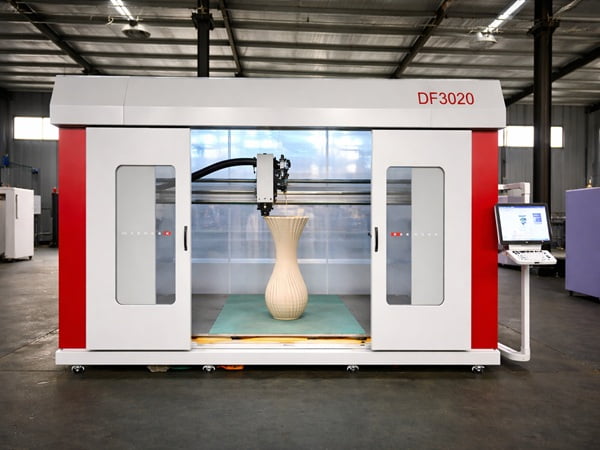
I have seen clients use our machines to print huge cartoon figures for theme parks. They print them, sand them, and spray paint them. The result looks perfect, but it costs a fraction of fiberglass or metal casting. We can also print textures directly. If you want the surface to look like dragon scales, we print the scales. You do not have to carve them by hand.
LOOP END
LOOP START
Why Is Collaboration Between Artists, Engineers, and Technologists Essential?
An artist knows form and beauty, but they often do not know machine G-code or structural physics. You need technical help to make the art stand up.
Successful projects require a blend of artistic vision and engineering logic. Engineers optimize the 3D model so the printer remains stable and the final sculpture is structurally sound.
At CHENcan, we sit right in the middle of this collaboration. We are the bridge. I often act as a translator between the artist's dream and the machine's reality.
The artist says, "I want this statue to stand on one toe." The engineer says, "That will fall over."
We have to work together to solve this. Maybe we add a steel structure inside the print. Maybe we change the angle slightly. This collaboration is vital. Modern sculpture is not a solo act. It is a team sport.
Roles in the Process
- The Artist: Provides the vision and the aesthetic judgment.
- The 3D Modeler: Cleans the file and prepares it for the software.
- The Machine Operator: Sets the printing parameters, speed, and temperature.
- The Structural Engineer: Calculates wind loads and weight distribution for outdoor pieces.
Our manufacturing capabilities support this. We have an in-house R&D team. We do not just sell machines; we help figure out how to make the product. When we built a large boat hull mold for a client, our engineers worked with their designers to slice the model into printable pieces. This teamwork ensured the final assembly was perfect. Without this mix of art and technology, big projects fail.
LOOP END
LOOP START
What Is the Role of 3D Sculpture Art in Education, Exhibitions, and Public Spaces?
Public art usually takes years to approve and build. Schools often lack the resources to teach stone carving or bronze casting.
3D printing speeds up the production of public installations and makes art education more accessible. It allows students to see their digital creations become physical reality quickly, fostering innovation.
In public spaces, time is money. Cities change fast. 3D sculpture art fits this speed. We can produce a large landmark for a city square in a few weeks. If it gets damaged, we still have the file. We can print a replacement part and fix it. This is impossible with stone.
In education, this technology is a game-changer. I have visited universities that use our smaller 5-axis routers. Students learn to design. But seeing the design on a screen is not enough. When they hold the object, they learn about volume and weight.
Benefits for Different Sectors
| Sector | Benefit | Application |
|---|---|---|
| Education | Safe and clean learning | Students print prototypes of product designs or art. |
| Exhibitions | Fast setup | Museums can print replicas of rare artifacts for people to touch. |
| Public Spaces | Customization | Cities can commission art that relates to local history quickly. |
| Commercial | Branding | Malls use huge printed mascots to attract customers. |
We see a trend where art is becoming more temporary and interactive. Exhibitions want new things every season. 3D printing allows for this "fast fashion" approach to sculpture, but with high quality. It democratizes the creation of large objects. You do not need a foundry; you just need a printer.
LOOP END
LOOP START
How Do Sustainability and Recycled Materials Feature in Digital Sculpture Practices?
Art often creates a lot of waste. You might worry about the environmental impact of using foams and resins that hurt the planet.
Large-scale 3D printers can use recycled plastic pellets7, making the process much greener. If a sculpture is no longer needed, it can be shredded and reprinted into new art, creating a circular economy.
This is one of my favorite topics. Traditional subtractive manufacturing (carving) creates waste. You buy a big block of foam and cut away 40% of it. That dust goes into the trash.
3D printing is additive. You only use the material you need. But we go further. Our pellet printers can use recycled plastics. We can take plastic waste, grind it up, and turn it into a beautiful chair or statue.
The Cycle of Re-Use
- Print: Create a sculpture for an event.
- Display: Use it for three months.
- Recycle: Grind the sculpture down into pellets.
- Reprint: Use those same pellets to make a new design for the next event.
This saves a huge amount of money and is good for the earth. For our clients in the exhibition industry, this is a major selling point. They can tell their customers that the display is eco-friendly. Also, because the material is cheaper, they save on the bottom line. It is a win-win. We are seeing more demand for "green art," and our machines are ready for it.
LOOP END
LOOP START
What Are the Current Challenges, Limitations, and Misconceptions Around 3D Sculpture Art?
People often think 3D printing is "cheating" or just pressing a button. You face skepticism about the value of the work.
It requires immense skill to model and finish the work. Challenges include long print times for huge objects and the need for rigorous surface smoothing to hide layer lines.
I want to be honest. It is not magic. You do not just press a green button and walk away. There are real challenges.
The biggest misconception is that it is easy. It is not. Modeling the file takes talent. Setting up the machine takes engineering skill. Finishing the surface takes hard manual labor. The layer lines are always there when the print finishes. To make it look like a car body or smooth skin, you have to sand it, fill it, and paint it. This takes time.
Real-World Limitations
- Size Limits: Even our big machines have limits. For a 20-meter statue, we have to cut the model into pieces, print them separately, and glue them together. This assembly must be precise.
- Overhangs: You cannot print in thin air. If a statue has an arm sticking out, you need "support structures" to hold it up during printing. Removing these supports leaves marks that must be cleaned.
- Temperature: Plastic shrinks when it cools. If the room is too cold, the print can warp or crack. We have to control the environment carefully.
Despite these challenges, the benefits outweigh the problems. But clients need to understand that "digital" does not mean "instant." It still requires craftsmanship to get a perfect result.
LOOP END
LOOP START
Where Will the Digital and Physical Worlds Converge in the Future of Sculpture Art?
You wonder if robots will take over art completely. What comes next for the sculptor?
The future holds smarter machines and better materials. We will see a seamless blend where hand-finishing meets robotic precision, allowing for art that reacts to its environment and is produced faster than ever.
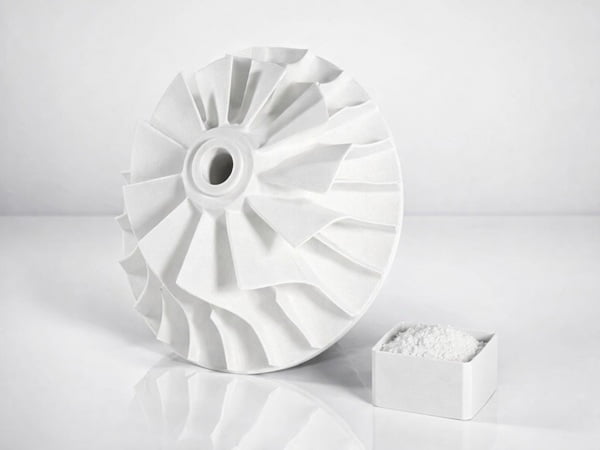
I believe we are just at the beginning. In the future, machines will be smarter. We are already looking at AI that can help design support structures automatically.
At CHENcan, we are constantly updating our 5-Axis centers and printers. We see a future where the machine can switch tools automatically—printing the rough shape, then picking up a milling bit to smooth the surface, all in one setup. This is the convergence.
We will also see "smart materials." Imagine a sculpture that changes color based on the temperature, or a printed material that heals itself if it gets scratched. The line between the digital file and the physical object will disappear. For the artist, this is the most exciting time in history. The tools are powerful, the materials are cheap and green, and the possibilities are endless.
LOOP END
Conclusion
3D sculpture art is revolutionizing creativity by blending digital precision with physical scale. It offers cost savings, design freedom, and sustainability, proving that technology is the new chisel for the modern artist.
Discover how large-scale 3D printers enable the creation of massive, complex sculptures efficiently and cost-effectively. ↩
Learn about the eco-friendly materials used in 3D printing that reduce costs and environmental impact. ↩
Find out how CHENcan CNC supports artists with advanced technology and expertise in digital sculpture. ↩
Learn how these advanced machines blend traditional and digital methods for precise sculpting. ↩
Understand the necessity of learning 3D modeling software to gain control over the artistic process. ↩
Learn how digital technologies enable quick testing and refinement of artistic ideas before final production. ↩
Understand how recycled materials contribute to eco-friendly and cost-effective sculpture production. ↩