
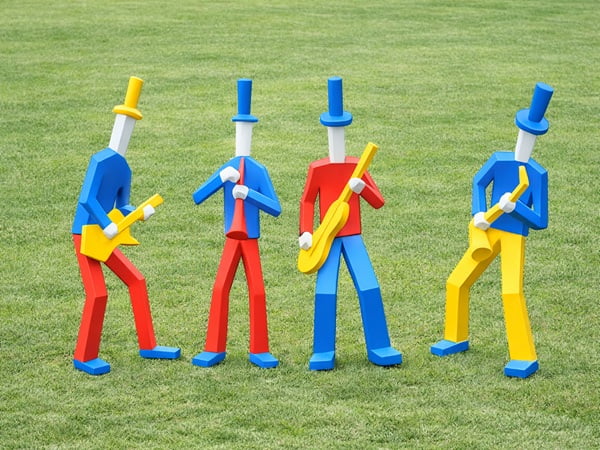
How is 3 Dimensional Sculpture Evolving from Artistic Concept to Large-Scale 3D Production?
Artists struggle with time and costs when making big sculptures. Traditional methods feel slow and risky. You need a better way to bring huge ideas to life.
Modern 3 dimensional sculpture production utilizes large-scale pellet 3D printing1 and 5-axis CNC machining2. This technology allows for complex geometries, reduces labor costs, and uses durable thermoplastics3 for long-lasting outdoor installations, bridging the gap between digital design and physical reality.
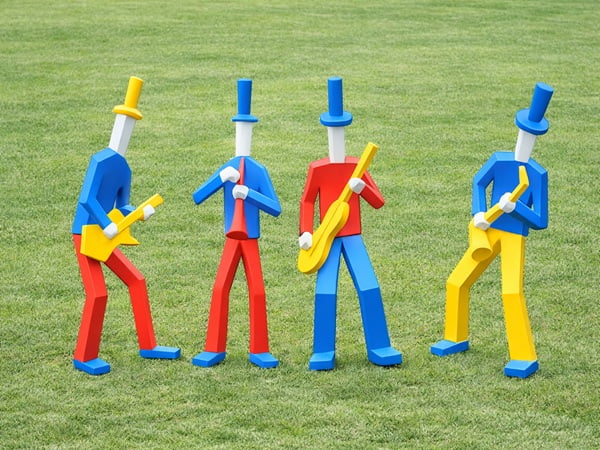
I have seen the industry change over my 27 years at CHENcan CNC. Let us look at how technology changes art.
What Defines a Modern 3 Dimensional Sculpture Today?
Many people think sculptures are just stone or metal. But materials and definitions change quickly. Are you stuck in the past with your definitions of art?
A modern 3 dimensional sculpture is often a mix of digital design and physical presence. It uses advanced materials like composites or thermoplastics and relies on computer-aided manufacturing to achieve shapes that were impossible to make by hand.
The Shift to Digital DNA
We see a big change in how clients define sculpture. In the past, a sculpture was defined by the chisel marks or the casting mold. Today, the definition starts with a digital file. A modern sculpture exists as data before it exists as matter. This shift allows for complexity that human hands cannot easily replicate. I see artists creating mathematical patterns, organic lattices, and impossible geometries. These forms define the modern era of sculpture.
Beyond Traditional Materials
The definition also includes the material. Stone and bronze are classic. But modern sculpture embraces industrial plastics, foams, and composites. These materials are lighter and more versatile. At CHENcan, we see clients asking for materials that can withstand weather but weigh very little. This allows for installations in places where heavy stone would be dangerous.
| Feature | Traditional Sculpture | Modern 3D Sculpture |
|---|---|---|
| Origin | Sketch / Maquette | CAD Model / 3D Scan |
| Material | Stone, Wood, Bronze | ASA, PETG, ABS, Foam |
| Production | Hand Carving / Casting | 3D Printing / CNC Milling4 |
| Complexity | Limited by tools | Unlimited geometry |
The modern definition is inclusive. It combines the artistic vision with industrial precision. It is about scale, speed, and new visual languages.
How Do We Move From Handcrafted Forms to Digitally Designed Sculptures?
Hand carving takes years to master. One mistake ruins expensive materials. Do you worry about the risks of manual labor in your art projects?
Digital design software removes the physical risk. Artists create 3 dimensional sculptures on screens first. This allows for perfect precision before any material is cut or printed, ensuring the final piece matches the vision exactly.
The Power of Undo
I often talk to artists who are relieved by the "undo" button. When you carve wood, you cannot put a chip back. In digital design, you can experiment freely. You can stretch, twist, and scale your 3 dimensional sculpture without cost. This freedom changes the creative process. It encourages risk-taking in the design phase. We see designs that are much more daring because the artist knows the machine will execute it perfectly.
Precision in Every Curve
Once the design is final, the file goes to our machines. This is where the magic happens. We convert the artistic vision into G-code. This code tells our 3D printers or 5-axis machining centers exactly what to do. The transition from hand to digital means the final product is 100% accurate to the design.
- Scanning: We can scan a small clay model to get digital data.
- Scaling: We enlarge the digital model to any size, even 10 meters high.
- Slicing: We prepare the file for the machine to build it layer by layer.
This workflow bridges the gap. You get the soul of the artist with the precision of the robot. It is the best of both worlds.
How Is 3D Printing Reshaping Three-Dimensional Art?
Traditional casting is expensive and heavy. Molds cost a fortune to make. Are you looking for a way to create complex shapes without breaking the bank?
3D printing builds 3 dimensional sculptures layer by layer. It removes the need for expensive molds. This technology allows for hollow structures, internal lattices, and complex geometries that traditional casting cannot achieve easily.
No More Molds
The biggest change I see is the death of the mold for one-off pieces. In traditional manufacturing, you spend weeks making a mold. If you only need one sculpture, this is a waste of money. 3D printing is "mold-less" manufacturing. We print the object directly. This saves huge amounts of time and money. It lowers the barrier to entry for artists who want to make big work but have small budgets.
Complex Geometries Made Simple
3D printing allows for shapes that are impossible to cast. You can have a shape inside another shape. You can have interlocking parts printed in one go. We use our CHENcan Industry 3D Printers to make structures that look like woven fabric or organic bone structures.
The Trial and Error Advantage
One of my key insights is the low cost of trial and error. If a client is not sure about a shape, we print a small version or a section. If they do not like it, we change the file and print again. There is no wasted bronze or stone. There is no angry master carver. The machine does not care. This flexibility allows for better final art because you can refine the design cheaply.
Why Are Large-Scale 3 Dimensional Sculptures Moving to Additive Manufacturing?
Big art pieces are a logistical nightmare. They are heavy and hard to transport. Do you struggle with the logistics of installing monumental art?
Additive manufacturing solves weight and assembly issues. We can print large sections that fit together perfectly. This method reduces the total weight and makes transportation to the site much easier and cheaper for clients.
Solving the Weight Problem
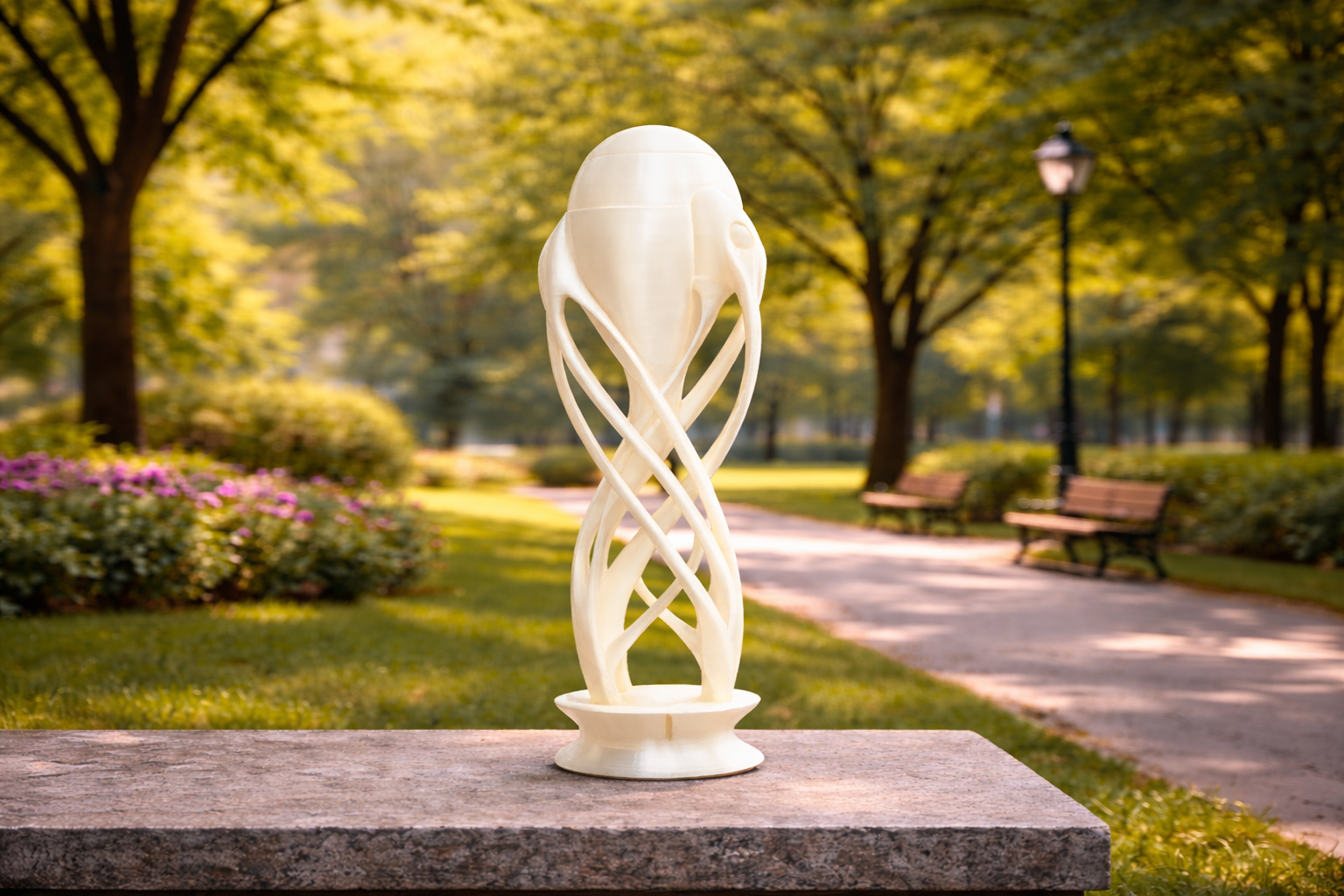
I remember a client who wanted a 5-meter statue on a roof. Bronze was too heavy for the building structure. We printed it in ASA plastic. It looked like metal but weighed 90% less. This is why large-scale projects move to additive manufacturing5. You can create massive volume with very little mass. We use internal lattice structures. These honeycombs give strength but are mostly air.
Modular Assembly
Our printers are big, but some sculptures are bigger. We slice the digital model into blocks. We print these blocks separately. Because the machine is accurate, these blocks fit together like Lego bricks.
- Design Split: We cut the model in the software.
- Printing: We print each block on our large-format printers.
- Assembly: We glue or weld the plastic pieces together.
- Finishing: We sand and paint the seams so they become invisible.
This modular approach means we can ship a giant sculpture in a standard container. It saves thousands of dollars in shipping costs. It makes global art projects feasible.
Is Pellet-Based 3D Printing Best for Monumental and Outdoor Sculptures?
Filament printing is too slow for big jobs. Material costs add up fast. Do you need a faster, cheaper way to print huge objects?
Pellet-based 3D printing is the industry standard for large scale. It uses raw plastic granules which are much cheaper than filament. The extrusion rate is very high, allowing us to print massive 3 dimensional sculptures in days, not months.
Speed is Money
In this business, time is the biggest cost. Standard filament printers are too slow for furniture or statues. Pellet extruders are different. They melt large amounts of plastic pellets—the same raw material used in injection molding. They push out material fast. We can print a chair in a few hours. We can print a statue in two days. This speed is crucial for commercial projects with tight deadlines.
The Workforce Advantage
I want to highlight a major benefit: you do not need professional sculptors. Hand carving requires highly skilled artisans. These people are rare and expensive. A 3D printer runs automatically. One technician can manage five machines.
| Aspect | Filament Printing | Pellet Printing (FGF) |
|---|---|---|
| Material Cost | High ($20-50/kg) | Low ($5-15/kg) |
| Print Speed | Slow | Very Fast |
| Nozzle Size | 0.4mm - 0.8mm | 2.0mm - 8.0mm |
| Best Application | Small detailed parts | Large furniture/Sculpture |
This technology democratizes production. You rely on the machine's reliability, not a worker's mood or health. It makes production schedules predictable.
Which Material Choices Ensure Durable and Long-Lasting 3D Sculptures?
Outdoor art fades and cracks. Weather destroys weak materials quickly. Are you afraid your expensive sculpture will look bad after one winter?
We use industrial thermoplastics like ASA, PETG, and ABS with carbon fiber. These materials resist UV light, rain, and temperature changes. They ensure that 3 dimensional sculptures remain pristine in outdoor environments for many years.
Battling the Elements
Plastic gets a bad reputation for being cheap. But engineering plastics are incredibly tough. For outdoor sculptures, we recommend ASA (Acrylonitrile Styrene Acrylate). It is like ABS but UV stable. It does not turn yellow or brittle in the sun. This is a huge advantage over fiberglass, which can delaminate, or wood, which rots.
Maintenance and Longevity
One of my insights is that plastic reduces maintenance. Metal rusts or oxidizes. Stone gathers moss and erodes. Printed plastic is chemically stable. If it gets dirty, you wash it. If it gets scratched, you can sand and repaint it easily.
- UV Resistance: Prevents color fading and cracking.
- Chemical Resistance: Safe from acid rain or pollution.
- Impact Resistance: Carbon fiber reinforced pellets are very strong.
We help clients choose the right pellet. For a beach sculpture, we choose salt-resistant material. For a desert sculpture, we choose high-temperature resistance. The material science ensures the art lasts for decades.
Cost, Time, and Scale: How Does Traditional Compare vs 3D Printed Sculpture?
Budgets are tight for public art. Deadlines are always short. Do you lose projects because traditional methods are too slow or too expensive?
3D printing is significantly faster and cheaper for complex shapes. It eliminates mold costs and reduces labor hours. While raw material might cost more than clay, the total project cost is lower because of the speed and reduced manual labor.
Analyzing the Budget
Let us look at the real costs. In traditional sculpting, 70% of the cost is labor. You pay for the artist's time. In 3D printing, the main cost is the machine time and material. Since our pellet printers are fast, machine time is low. Since pellets are cheap, material cost is reasonable.
The Time Factor
Time is often more valuable than money. A traditional bronze casting takes 3 to 6 months. A 3D printed sculpture6 of the same size takes 2 to 3 weeks. This includes printing, assembly, and painting.
| Method | Production Time | Labor Required | Mold Cost |
|---|---|---|---|
| Bronze Casting | 4-6 Months | High (Specialists) | Very High |
| Fiberglass (Hand) | 2-3 Months | High (Sanding/Layup) | High |
| 3D Printing (Pellet) | 2-3 Weeks | Low (Technicians) | None |
This speed allows our clients to bid on projects with tight turnarounds. It allows for "pop-up" installations that were previously impossible. The efficiency of the machine beats the speed of the hand every time.
What Are the Design Considerations for Printing Complex Three-Dimensional Forms?
Not every design is printable. Gravity can ruin a print. Do you know how to design your art so it can actually be manufactured?
Designers must consider overhangs and support structures. We need to design flat bases for adhesion. Slice software helps us optimize the infill density to balance strength and print time for these 3 dimensional sculptures.
Fighting Gravity
The 3D printer lays down melted plastic. If there is nothing underneath, the plastic falls. This is the 45-degree rule. We cannot print angles steeper than 45 degrees without support. When we design a 3 dimensional sculpture, we try to avoid supports. Supports waste material and time. We rotate the model in the software to find the best angle.
Optimizing for the Nozzle
We use large nozzles (3mm to 8mm) for large sculptures. This means we cannot print tiny details like eyelashes. The design must be bold.
- Wall Thickness: We usually print with 2 or 3 perimeters for strength.
- Infill: We vary the inside density. The bottom is heavy for stability. The top is light.
- Sectioning: We cut the model to hide the seams in natural creases of the sculpture.
We work with artists to modify their files. We thicken thin ankles on a statue. We smooth out sharp details that the big nozzle cannot resolve. This collaboration ensures the print succeeds on the first try.
What Are the Real-World Applications for Public Art, Installations, and Commercial Sculptures?
Art is not just for museums anymore. Brands want unique displays. Are you missing out on commercial opportunities because you cannot produce unique shapes?
We see applications in movie props, theme parks, and brand activations. Companies want giant logos or mascots. 3D printing allows for rapid production of these temporary or permanent 3 dimensional sculptures for various industries.
Beyond the Gallery
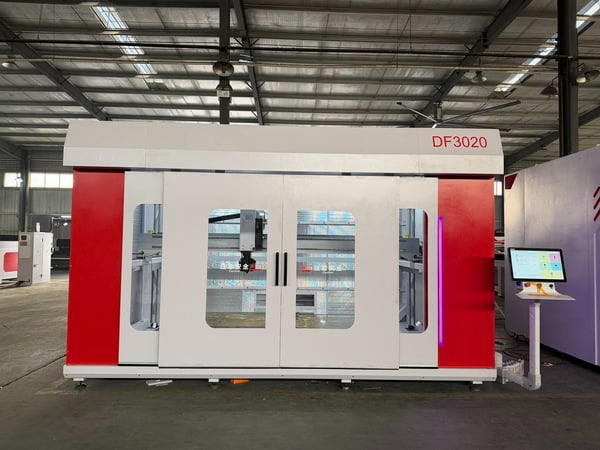
The demand for 3D sculpture is huge in the commercial sector. Theme parks need durable characters. Movie sets need alien landscapes. These industries value speed above all else. CHENcan has supplied machines to companies that build entire worlds for movies.
Commercial Branding
We see a trend in "Instagrammable" moments. Shopping malls and cities want giant, colorful sculptures to attract visitors.
- Retail: Giant shoes or perfume bottles for window displays.
- Events: Large logos for music festivals.
- Architecture: Custom facades and non-structural decorative elements.
These clients do not care about "traditional art" values. They care about impact. 3D printing delivers high visual impact at a low cost. The plastic materials we use take paint very well. We can finish a print to look like glossy car paint, matte stone, or even rusted iron.
What Is the Future of 3 Dimensional Sculpture in Art, Architecture, and Industry?
Technology moves fast. Competitors adapt quickly. Will you be left behind if you do not embrace new manufacturing methods now?
The future is fully integrated digital manufacturing. We will see larger printers and smarter materials. 3 dimensional sculpture will become a standard part of architecture and construction, not just decoration, as machines get bigger and faster.
The Hybrid Workflow
I believe the future is hybrid. It is not just printing. It is printing plus milling. At CHENcan, we have 5-axis machining centers. We often print a shape slightly distinct, then use the 5-axis router to trim it to perfect tolerance. This combination gives the speed of printing with the precision of machining.
Sustainability in Art
The art world is becoming more eco-conscious. We are seeing a rise in recycled materials. Our pellet printers can accept recycled plastic granules. Imagine a massive public sculpture made entirely from recycled water bottles. This is already possible. It turns waste into art.
- Smart Materials: Plastics that change color with heat.
- Construction: Printing concrete for structural sculptures.
- Integration: Embedding lights and sensors inside the print during the process.
The line between a machine part, a building, and a sculpture is blurring. We are ready to help you navigate this exciting future.
Conclusion
3D printing revolutionizes sculpture by lowering costs, increasing speed, and enabling complex designs. It is the smart choice for durable, large-scale outdoor art that requires efficiency and longevity.
Explore how large-scale pellet 3D printing revolutionizes sculpture production by enabling complex designs and reducing costs. ↩
Learn how 5-axis CNC machining enhances precision and complexity in modern sculpture creation. ↩
Discover why durable thermoplastics are ideal for long-lasting outdoor sculptures, offering weather resistance and versatility. ↩
Explore the benefits of combining 3D printing and CNC milling for efficient and precise sculpture creation. ↩
Discover how additive manufacturing offers innovative solutions for creating large-scale sculptures. ↩
Compare the efficiency and cost-effectiveness of 3D printed sculptures versus traditional sculpting methods. ↩