
Traditional wooden pattern making eats up your budget and time. Are you tired of slow production cycles that hurt your foundry's bottom line? Pellet 3D printing1 offers a faster, cheaper solution for modern manufacturing.
Pellet 3D printing creates near-net shape patterns rapidly using low-cost plastic granules. It reduces material waste and machining time significantly. When combined with CNC finishing, it provides a precise, durable, and cost-effective alternative to traditional wood or foam patterns for casting industries.
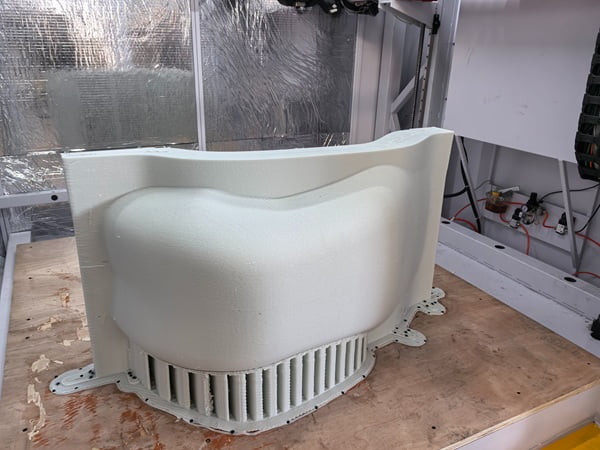
Many foundry engineers still rely on old methods like hand-carving wood or machining large blocks of foam. They fear that new technology is too complex or unproven. However, the shift to additive manufacturing2 is easier than you think. Let me show you how this technology works and why it fits your business perfectly.
What Is a Pellet 3D Printer and Why Pattern Makers Are Adopting It?
You need speed to stay competitive, but traditional tools are often too slow. Why are your competitors moving faster than you? They are likely using pellet extrusion technology3.
A pellet 3D printer uses raw plastic granules instead of expensive filament. Pattern makers adopt it because it prints large objects quickly and lowers material costs by up to ten times compared to filament systems.
At CHENcan CNC, we see clients switching to pellet systems every day. The concept is simple but powerful. The machine melts standard plastic pellets—the same kind used in injection molding—directly through a screw extruder. It is like a large, industrial hot glue gun, but with high precision. You print a shape that is almost the final size. We call this a "near-net shape."
This is where my insight comes in. The printer creates the general geometry, and then you use a CNC machine to cut the final surface. This combination is brilliant. You can precisely control the machining allowance. Instead of milling away a huge block of material, you only need to trim a small layer of plastic. This drastically reduces the overall processing time. It also saves tool life because the cutter does less work.
Comparison of Pattern Making Methods
| Feature | Traditional Machining | Pellet 3D Printing + CNC |
|---|---|---|
| Material Waste | High (Subtractive) | Low (Additive) |
| Speed | Slow | Fast |
| Cost | High | Low |
| Complexity | Limited | Unlimited |
This method changes how we think about production. You get the speed of printing with the accuracy of CNC machining. It is the best of both worlds.
Pellet vs Filament 3D Printing in Cast Pattern Applications?
Filament printing is too expensive for big industrial parts. The spools run out too fast and cost too much. Is there a better way to handle large casting projects?
Pellet printing beats filament in casting applications by offering higher flow rates and lower material costs. It allows for continuous printing of massive patterns without the frequent spool changes required by filament printers.
I often talk to engineers who started with filament printers. They like the technology, but they hate the cost. Filament is processed plastic. You pay extra for the manufacturer to turn pellets into a wire. In cast pattern making, we deal with large objects. Using filament for a car bumper mold or a pump casing is not practical. It takes days to print, and the material cost destroys your profit margin.
Pellet printing solves this. You buy raw granules in bulk bags. The cost is a fraction of filament. Also, the print head on a pellet printer is much bigger. It can push out kilograms of plastic per hour, not just grams. This means a job that takes a week on a filament printer might take only one day on a CHENcan pellet printer.
Key Differences for Pattern Makers
- Cost Efficiency: Pellets are 60% to 90% cheaper than filament.
- Print Speed: Pellet extruders have high throughput for big parts.
- Material Variety: You have access to thousands of industrial-grade plastics4.
When you need to make a large pattern for a sand mold, you cannot afford to wait. Speed is money. Pellet printing gives you that speed without sacrificing quality.
Large-Scale Cast Models Enabled by Pellet Extrusion?
Big castings require big patterns, but gluing small pieces together is weak and slow. How do you print big parts without structural failure?
Pellet extrusion systems feature large nozzles and high throughput, enabling the production of massive single-piece patterns. This eliminates the need for assembly and ensures structural integrity for large-scale casting models.
I remember a project where a client needed a pattern for a 3-meter ship part. In the past, they would make it in ten pieces and glue them together. This introduces errors. The seams are weak points. If the glue fails during the sand ramming process, the mold is ruined. With our large-format pellet printers, this is no longer a problem.
We can build machines with massive print volumes. You can print the entire 3-meter part in one go. The layer adhesion in pellet printing is very strong because the bead of plastic is wide and hot. The heat stays in the part longer, allowing the layers to bond better than thin filament lines.
Benefits of Single-Piece Printing
- No Assembly Required: Saves labor hours.
- Better Accuracy: No alignment errors between glued sections.
- Higher Strength: The part acts as a solid unit.
This capability opens new doors. Architects and heavy machinery manufacturers can now design complex, large shapes. They do not have to worry about how to split the model. We just print it. This freedom allows for better designs and more efficient casting processes.
Printing Sand Patterns with Industrial Pellet 3D Printers?
Making sand molds directly is hard, and complex geometries often fail with traditional tools. Can we print the pattern directly to improve the process?
Industrial pellet printers create robust patterns used to press into sand molds. The plastic patterns are strong enough to withstand the ramming pressure of sand casting processes5, ensuring accurate metal parts.
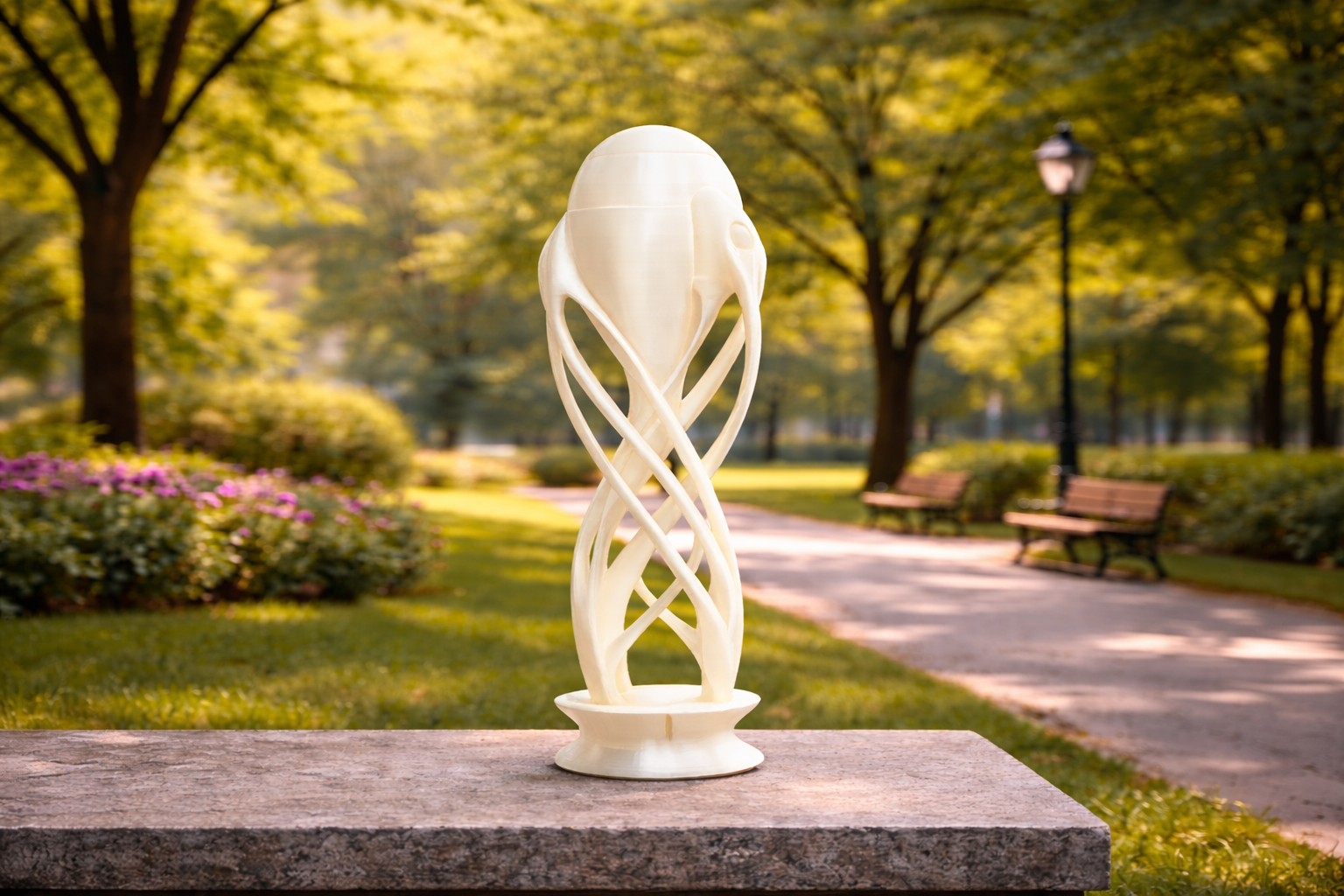
The durability of the pattern is critical. In a foundry, workers pack sand hard against the pattern. If the pattern is weak, it breaks. If it is soft, it deforms. Traditional wood patterns are good, but they have problems. Wood absorbs moisture. It swells and warps over time. Foam patterns are cheap, but they are often single-use or very fragile.
Plastic patterns made from pellet printing are superior. They are tough. They resist impact. My insight on this is clear: plastic models are much easier to preserve and transport. They do not rot like wood. They do not chip easily like plaster. You can store them in a warehouse for years. When you need to cast that part again, you just pull the pattern off the shelf. It is still dimensionally accurate.
Pattern Performance Analysis
| Material | Durability | Moisture Resistance | Storage Life |
|---|---|---|---|
| Wood | Medium | Low (Warps) | Medium |
| Foam | Low | High | Low |
| 3D Printed Plastic | High | High (Waterproof) | High |
This longevity reduces the total cost of ownership. You do not have to remake the pattern every year. For foundries serving the automotive or pump industries, this reliability is essential.
Materials for Pattern Pellet 3D Printing: Plastics, Composites, and Recycled Feedstock?
Material choice defines your success, but are you limited to just one type of plastic?
Pellet printers support a wide range of materials including ABS, PLA, PETG, and carbon fiber composites. You can even use recycled plastics6, making the pattern-making process sustainable and cost-efficient.
One of the biggest advantages of our CHENcan pellet printers is the open material system. You are not locked into proprietary materials. You can use standard industrial plastics. For basic patterns, PLA is great because it is easy to print and low warping. For parts that need to withstand higher temperatures or more abuse, ABS or PETG works well.
We can also print with composites. By adding chopped carbon fiber or glass fiber to the pellets, the printed part becomes incredibly stiff. This is useful for thin-walled patterns that might flex under sand pressure. Furthermore, we support green manufacturing. You can use recycled plastic granules.
Common Materials for Casting Patterns
- PLA (Polylactic Acid): Easy to print, cheap, good surface finish.
- ABS (Acrylonitrile Butadiene Styrene): Tough, impact-resistant, can be smoothed chemically.
- PETG (Polyethylene Terephthalate Glycol): Good balance of strength and ease of use.
- CF-Composites: High stiffness, low thermal expansion.
Using recycled feedstock cuts costs even further. It also helps your company meet sustainability goals. You can grind up old failed prints and reuse them. This circular economy approach is becoming very popular in the industry.
Cost and Speed Advantages of Pellet 3D Printing in Pattern Make Projects?
Margins are tight in the foundry business, and every hour counts. How can you cut costs effectively without losing quality?
Pellet printing reduces material costs by using bulk granules and cuts production time by printing at high speeds. This combination significantly lowers the total cost per part compared to traditional machining or filament printing.
Let's talk about the money. Traditional CNC machining of a pattern starts with a big block of material. You cut away 70% of it to get your shape. That 70% is waste. You paid for it, and now it is dust. With pellet 3D printing, you only use the material you need.
I mentioned earlier how we control the machining allowance. This is a huge cost saver. Because we print near-net shapes, the CNC machine only runs for a short time to finish the surface. This saves electricity. It saves labor. It reduces the wear on your expensive milling tools.
Cost Breakdown Example (Hypothetical Large Pattern)
| Cost Factor | CNC from Block | Filament Print | Pellet Print + CNC |
|---|---|---|---|
| Material Cost | $500 (High Waste) | $300 | $50 |
| Machine Time | 20 Hours | 100 Hours | 15 Hours |
| Labor | High | Low | Medium |
| Total Cost | High | High | Lowest |
The speed is also a factor. In the casting industry, lead time is often the deciding factor for winning a contract. If you can deliver a pattern in 2 days instead of 2 weeks, you win the job. Pellet printing gives you that agility.
On-Site and Near-Shape Cast Pattern Using Pellet 3D Printing Systems?
Shipping large patterns is expensive and risky, and delays happen. Why not make them right where you are?
Pellet systems allow foundries to produce near-shape patterns on-site. This eliminates shipping costs and delays, giving you full control over the production timeline and quality adjustments immediately.
Logistics is a nightmare for large patterns. I have seen clients spend thousands of dollars just to ship a large wooden pattern across the country. Sometimes, the pattern arrives damaged. The wood might crack due to humidity changes during transport. This causes production delays.
By installing a CHENcan pellet printer and a CNC machine at your facility, you take control. You become a self-sufficient manufacturer. You receive the digital 3D file from your customer in the morning. You start printing immediately.
The On-Site Workflow
- Design: Receive CAD file.
- Print: Produce near-net shape in hours.
- Machine: Finish surface on CNC.
- Cast: Use pattern immediately.
This allows for rapid iteration. If the casting engineer sees a design flaw, you can modify the file and reprint it instantly. You do not have to wait for a supplier to ship a new pattern. This flexibility is invaluable for R&D and urgent repair jobs.
Choosing the Right Pellet 3D Printer for Cast Pattern Make Needs?
Not all machines are the same, and buying the wrong one is a costly mistake. How do you choose the right equipment for your foundry?
Select a printer based on build volume, material compatibility, and extrusion speed. Look for a manufacturer like CHENcan that offers integrated CNC solutions to handle the post-processing of your patterns.
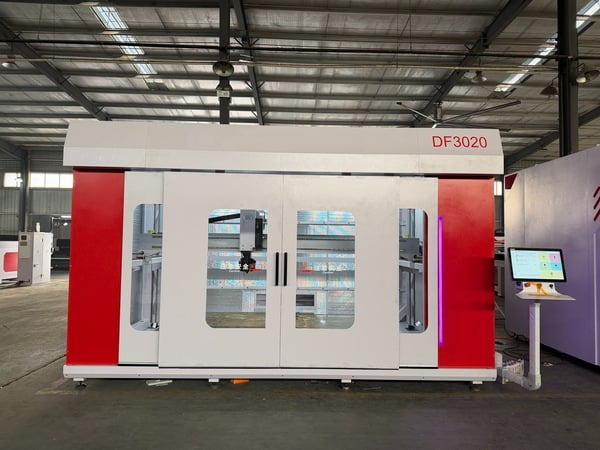
When you look for a machine, you need to consider your specific needs. First, look at the size. Do you make small valves or large ship propellers? CHENcan offers various sizes to fit your production. Second, look at the extruder. Does it have enough heating power for the materials you want to use?
We specialize in integrated solutions. We know that printing is just step one. You also need to finish the part. That is why we offer 5-axis machining centers alongside our printers. We understand the whole process.
Selection Checklist
- Build Volume: Must fit your largest typical part.
- Throughput: Look for kg/hour output.
- Temperature: Ensure it hits the melting point of your desired plastics.
- Support: Do they offer training and software help?
Buying from a manufacturer with 27+ years of experience matters. We do not just sell a box. We sell a production method. We help you set the parameters. We teach you how to optimize the "near-net shape" for the best CNC results. We ensure your investment pays off.
Conclusion
Pellet 3D printing revolutionizes pattern making with speed, durability, and low costs. At CHENcan CNC, we combine this technology with precision machining to boost your foundry's efficiency and profitability.
Explore how Pellet 3D printing can enhance your manufacturing process with speed and cost efficiency. ↩
Gain insights into additive manufacturing and its transformative impact on production processes. ↩
Find out how pellet extrusion technology enhances the efficiency of 3D printing. ↩
Discover the types of industrial-grade plastics that can be used in 3D printing applications. ↩
Learn about the sand casting process and how 3D printing can improve it. ↩
Explore the benefits of using recycled plastics in 3D printing for sustainability. ↩