
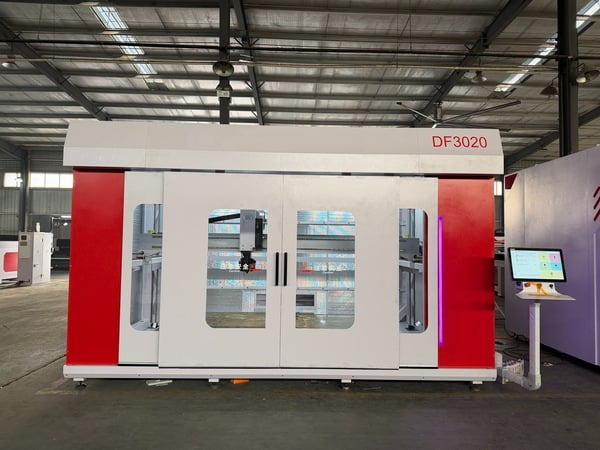
How Do You Choose a Pellet 3D Printer Considering Capabilities, Trade-Offs, and Industrial Applications?
Traditional 3D printing with filament is too slow and expensive for large industrial parts. You might feel frustrated waiting days for a small part or spending a fortune on materials. Pellet 3D printing1 solves these problems by using raw granules and high speeds.
Pellet 3D printing, also known as [Fused Granulate Fabrication (FGF)], uses raw plastic pellets instead of filament spools. It allows for much higher material flow rates, significantly lower material costs, and the ability to print massive structures, making it the ideal choice for industrial-scale manufacturing and rapid prototyping.
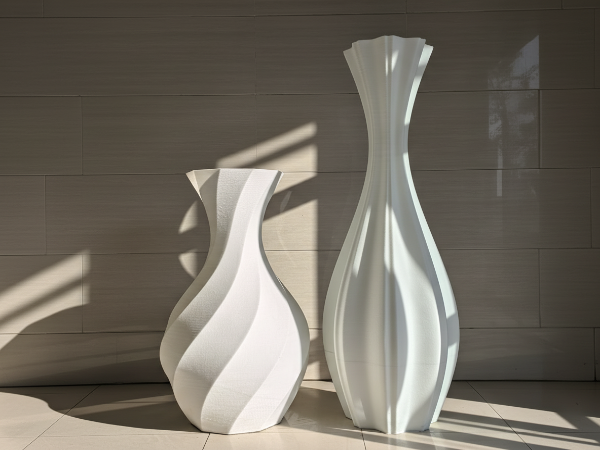
I have seen many manufacturers struggle to choose the right equipment. They know they need to go bigger and faster, but the technology feels different from standard printing. In this article, I will walk you through exactly what you need to know about pellet systems, from the software we use to the cost savings you will see.
What Is the Role of Pellet Extrusion in Modern Additive Manufacturing?
Many people ask me why they should switch from filament to pellets. The process seems more complex at first glance.
The role of pellet extrusion is to bring injection molding economics to 3D printing. It uses the exact same raw material as mass manufacturing, which lowers costs and increases production speed for large parts.
I want to explain the mechanics here so you understand the value. In a standard printer, a motor pushes a thin plastic wire into a heater. This is slow. In a pellet printer, we use a screw, similar to an injection molding machine. This screw rotates and melts raw plastic granules. Because we use a screw, we can push a lot more plastic very quickly.
At CHENcan CNC, we see this as a bridge. It connects the design freedom of 3D printing with the heavy-duty nature of industrial manufacturing. You are no longer limited by how much wire is on a spool. You can feed pellets continuously from a large hopper. This changes the role of the printer. It is no longer just for looking at a shape. It becomes a tool to make real, full-scale functional parts. For industries like aerospace and automotive, this speed and material compatibility are essential. You can use the same grade of ABS or PC that you use in your final production parts.
What Are the Output Volume, Material Consumption, and Production Reality?
Speed is the main reason people buy these machines, but how fast is it really?
Pellet systems produce kilograms of output per hour rather than grams. This reality means you must be prepared to handle large amounts of material and manage a much faster production workflow.
Let's look at the numbers. A standard desktop printer might print 50 grams an hour. Our industrial pellet printers can print several kilograms an hour. This is a massive difference. When I talk to clients, I tell them to think big. You are not printing a phone case. You are printing a chair or a car bumper.
The production reality is that you need to manage this volume. You need a dry place to store 500kg of pellets. You need a vacuum loader to suck the pellets up to the print head. The machine does not stop often. You can print for days without changing a spool because there are no spools. This changes your daily work. You spend less time swapping materials and more time focusing on the design. Also, the waste is different. You might have purge material when you start, but because the material is so cheap, it does not hurt your budget like wasting expensive filament does. We design our machines to handle this high load with strong motors and durable screws.
How Do Pellet Systems Support One-Piece, Large-Format Printing?
Joining many small printed parts together is a headache and creates weak points.
Pellet systems support one-piece printing by combining a high-flow extruder with a large gantry system. This allows you to print huge objects like molds or furniture in a single run without assembly.
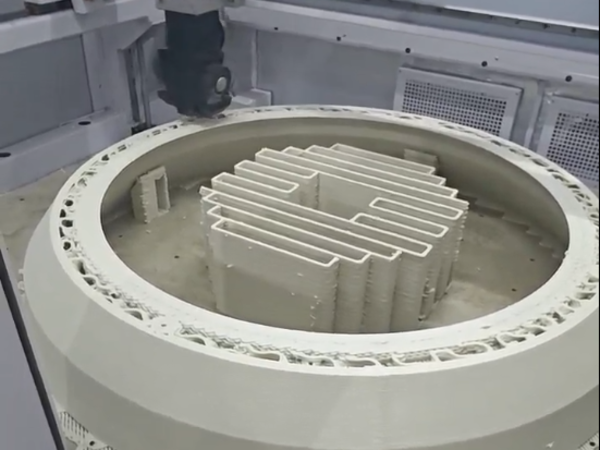
I believe the biggest advantage of our technology is size. Because we have a background in building large CNC routers, we know how to build big frames. We apply this to our 3D printers. We can build machines that are several meters long. This means you can print a whole dashboard or a mold for a wind turbine blade in one piece.
When you print in one piece, the part is stronger. There are no glue lines. There are no bolts holding it together. The structure is continuous. This is vital for things like concrete casting molds or boat hulls. I also want to mention that even though the model is huge, the software handles it well. We can take complex 3D models and print them at one time. You do not need to spend hours cutting the digital model into tiny squares. You just load the whole thing, slice it, and let the machine do the work. This saves a lot of labor time in the post-processing stage.
How Does Material Behavior Change in Pellet-Fed 3D Printing Processes?
Do the plastic pellets behave differently than the filament you are used to?
Yes, the material retains heat longer because the printed bead is much thicker. This results in excellent layer adhesion but requires careful cooling management to prevent the part from warping.
When you print with pellets, you are laying down a thick rope of hot plastic. It is not a thin thread. This thick rope holds a lot of heat energy. This is both good and bad. The good news is that the new layer melts into the old layer very well. The bond is very strong. I have seen parts that are almost as strong as injection molded parts because the layers fuse so completely.
However, you must respect the heat. If you print too fast on a small part, the plastic does not have time to cool down. It will turn into a blob. We use powerful fans and sometimes controlled heated chambers to manage this. You also need to know your material. Crystalline plastics like PLA behave differently than amorphous ones like ABS. Because we use raw pellets, you can also mix materials. You can add glass fiber or carbon fiber pellets to the mix to change how the material behaves. This gives you a lot of freedom to engineer the material properties yourself.
What Are the Design Rules That Differ from Conventional 3D Printing?
Can you simply take your old STL files and send them to a pellet printer?
Mostly yes, but you must account for the larger nozzle size and lower resolution. Fine details are hard to print, so you should design for near-net shape and plan for machining later.
I always tell engineers that they need to think about the "resolution" of the tool. A pellet printer usually has a nozzle that is 1mm to 3mm wide. A standard printer is 0.4mm. You cannot print tiny text or sharp corners with a 3mm nozzle. The corners will be rounded.
However, this does not mean you cannot make complex parts. The compatibility of the software is very high. You can use all kinds of 3D CAD/CAM drawings. The trick is to design for the process. If you need a precision surface, you add extra material in your design. Then, after printing, you use a CNC machine to trim it down. This is called "near-net shape" manufacturing. You print the rough shape fast, and you mill the perfect shape later. Also, because the bead is wide, you can print overhangs and bridges quite well, but you need to be careful with support structures. They are harder to break away because they are so strong.
In Which Production Scenarios Does Pellet Printing Make Sense?
Is this technology the right choice for every manufacturing business?
No, pellet printing makes the most sense for large-scale objects, molds, and furniture where speed and material cost are the main factors. It is not suitable for small, intricate items like jewelry or toys.
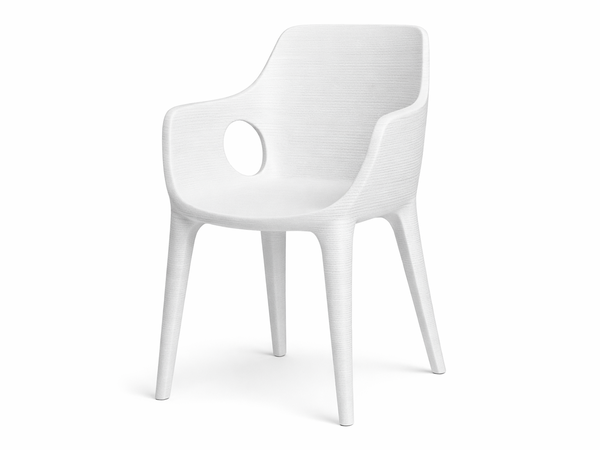
I see the best success stories in specific industries. Automotive companies use it to make full-scale mockups of cars. They can print a bumper in a day to check the fit. Marine companies use it to print plugs for fiberglass boat hulls. This used to take weeks of carving foam. Now they print it in a few days.
Another great scenario is furniture design. You can print a whole chair that is strong enough to sit on. The layer lines give it a unique texture that many designers like. It also makes sense for low-volume production. If you need 50 large housings, injection molding is too expensive because of the mold cost. But printing them one by one with filament is too slow. Pellet printing fits right in the middle. It is fast enough to make 50 parts, and the material is cheap enough to make a profit. If you are a foundry, you can print the pattern for sand casting. The applications are endless as long as the part is big.
How Do We Ensure Accuracy, Layer Control, and Structural Performance?
Is the output rough, and can we trust the strength of the parts?
The layers are visible, but the structural performance is incredibly high due to heat mass. We ensure accuracy by using mature control software that optimizes the path for these specific machines.
I want to highlight the software here. Although 3D printing machines are hardware, the brain is the software. The control systems and slicing software we use are mature. We use open-source options like Orca, Cura, and proprietary ones like Simplify3D. These programs are very smart. They allow us to control exactly how the machine moves.
We can adjust the flow rate, the speed at corners, and the cooling time. This high compatibility means we can fine-tune the accuracy. For example, we can slow down on the outer wall to make it look smooth. We can speed up on the inside infill to save time. For complex 3D models, the software can calculate the best way to support the structure. While you will see the "stair-step" effect on curved surfaces, the part is solid. We often see that the mechanical strength in the Z-axis (vertical) is much better than filament printing. This is because the large heat mass melts the layers together effectively.
What System Configuration Actually Matters in Daily Operation?
When you buy a machine, what features should you actually look for?
You need a rigid heavy-duty frame to handle the vibrations and a reliable screw extrusion system. The fancy features matter less than the basic mechanical stability and the quality of the control system.
At CHENcan, we build our machines like we build our metal cutting CNCs. The frame is the most important part. When you are throwing a heavy print head back and forth at high speed, a light frame will shake. If the frame shakes, your print will look bad. You need a welded steel frame.
Next, look at the extruder. The screw needs to be designed for the plastic you want to use. Some screws are better for ABS, others for PLA. We also look at the bed leveling. With big prints, the bed must be perfectly flat. We use automatic leveling systems to measure the bed and adjust the print. The control system is also key. It needs to be easy to use. Since we use standard software like Cura or Orca, the workflow is familiar if you have used a small printer before. You do not need to learn a crazy new system. Stability and reliability are what matter for daily operation in a factory.
What Are the Cost Structure and Long-Term Operating Considerations?
Is the machine expensive to run over a long period?
The machine has a higher upfront cost, but the operating cost is very low because pellets are cheap. The Return on Investment (ROI) comes quickly if you print large objects frequently.
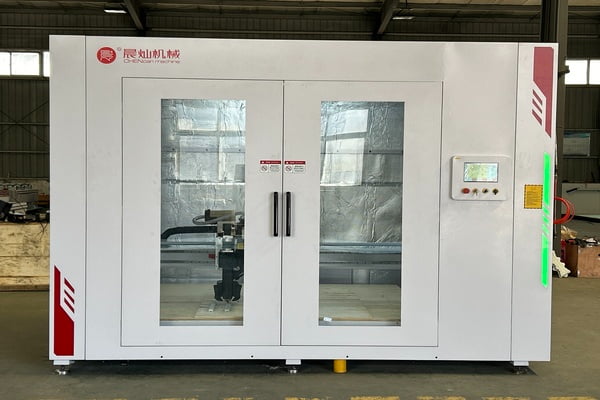
Let's talk about money. Filament can cost $20 to $50 per kilogram. Pellets cost $2 to $5 per kilogram. That is a 10x savings. If you print a 50kg mold, the material savings on just that one job can be hundreds of dollars.
The machine itself costs more than a hobby printer, but it is an industrial tool. In the long term, you need to think about wear items. The screw and barrel will eventually wear out, especially if you use carbon fiber filled plastic. But these are standard industrial parts. Electricity is another factor. Heating a large amount of plastic takes power, but because the print finishes so much faster, the total energy per part is often lower than running a slow printer for a week. We help our clients calculate this. Usually, if you are printing big parts regularly, the machine pays for itself in less than a year just on material savings.
Where Does Pellet 3D Printing Fit in the Manufacturing Landscape?
Will this replace your other machines?
No, it fits in the gap between prototyping and mass production. It is a complementary technology that allows for rapid tooling, composite manufacturing, and low-volume production runs that were previously impossible.
I view pellet printing as a new tool in the toolbox. It does not replace injection molding for making 10,000 parts. It does not replace high-precision CNC machining for metal engine parts. It sits in the middle.
It is perfect for "rapid tooling." You can print a mold, then use that mold to make parts. It is perfect for "hybrid manufacturing." You print a near-net shape, then put it on a CHENcan 5-axis router to finish it. This saves material waste compared to machining from a solid block. It is also great for customization. If you need to make 10 custom dashboards for a limited edition car, this is the way to do it. It gives manufacturers flexibility. You can say "yes" to projects that were too expensive or too slow before. It empowers your business to handle complex 3D models and deliver them fast.
Conclusion
Pellet 3D printing offers a powerful way to produce large, affordable, and strong parts by leveraging mature software and industrial materials. If you are ready to scale up your production, CHENcan CNC has the expertise to help you succeed.
Explore the advantages of Pellet 3D printing for large-scale manufacturing and cost efficiency. ↩