
Are you tired of paying high prices for filament spools and waiting days for large parts to finish? These limitations kill your productivity and drain your budget. Pellet 3D printing offers the speed, scale, and cost savings you need to stay competitive.
A Pellet 3D Printer uses raw thermoplastic granules1 instead of filament to build objects. This allows for significantly faster extrusion rates2 and material costs up to 10 times lower than filament. They are the ideal solution for manufacturing large-scale molds, furniture, and industrial prototypes efficiently.

I have seen many clients struggle with the limits of traditional printing. They need bigger parts, but filament is too slow and expensive. This guide explores why pellet systems are the future. Read on to understand how this technology changes the game for heavy industry.
LOOP START
Why Is Pellet 3D Printing Becoming the Standard for Large-Format Manufacturing?
Large parts usually take weeks to print on standard machines. Waiting this long hurts your production schedule and delays delivery. Pellet printing fixes this time issue immediately by boosting output.
Pellet 3D printing becomes the standard because it removes the "spool" bottleneck. It allows continuous feeding of raw materials, enabling massive prints without pauses. This method matches the speed demands of industries like automotive and marine manufacturing.
I know from my 27 years at CHENcan CNC that size matters in manufacturing. Traditional machines have strict limits on how big you can go. But pellet printers are different. There is practically no limit to the print size when you use this technology. We use our extensive experience building large CNC machines to build these printer frames. This means we can make the print bed as big as you need. You can print a whole chair, a car bumper, or even a boat hull in one go.
The structure of our machines is heavy and stable. This is crucial because a fast-moving extruder creates a lot of force. If the frame is weak, the machine shakes. This shaking ruins the accuracy of the part. We treat these printers like heavy-duty machine tools, not plastic toys. This approach ensures you get industrial results every time. We can customize the size to fit your specific factory needs, ensuring you are never limited by the machine's box.
LOOP END
LOOP START
Pellet vs Filament 3D Printing: Where Does the Real Breakpoint Appear?
Filament costs add up quickly on big jobs, sometimes costing thousands for a single print. This drains your project budget fast. You need to know exactly where pellets become cheaper.
The breakpoint appears when printing parts heavier than 2 kilograms. Filament costs roughly $20-$30 per kg, while pellets cost $2-$5 per kg. For large objects, the material savings alone pay for the machine upgrade very quickly.
Let me break down the math for you effectively. If you print small toys or brackets, filament is fine. But my customers build molds and large panels. When you need 50kg of material for one job, filament is far too expensive. Pellets are the raw material used to make filament in the first place. By skipping the filament manufacturing process, you save a huge amount of money. You are buying the material at its source price.
Also, consider the mechanics of the material. Filament creates friction in the guide tube. This limits how fast you can push it through the nozzle. Pellets go straight into a screw extruder. This is very similar to an injection molding machine. It melts plastic much faster and more evenly. I have seen clients cut their material costs by 80% just by switching systems. This is not just a small saving; it is a massive competitive advantage. It allows you to bid lower on contracts and win more business.
LOOP END
LOOP START
What Makes a Pellet 3D Printer Truly Industrial-Grade?
Many printers claim to be industrial but fail under heavy workloads. A broken machine stops your factory and loses you money. You need equipment that runs 24/7 without issues.
An industrial-grade pellet printer features a heavy steel chassis, high-torque servo motors3, and a closed-loop control system4. It must handle high temperatures and run continuously for days. Reliability and structural rigidity are the main differences from hobbyist machines.
At CHENcan, we build machines to last for years. An industrial machine uses a specialized screw and barrel design. This is very different from a simple heating nozzle found on small printers. The screw generates high pressure. This pressure helps bond the layers of plastic together very strongly. We also use high-end servo motors for movement. Stepper motors are fine for small machines, but they lose steps if they move too fast. Servos provide the power needed to move a heavy extruder head quickly and precisely.
The frame is welded steel, not lightweight aluminum extrusion. This prevents vibration during high-speed printing. Vibration causes ugly lines on your part and affects dimensions. We also include temperature control for the build chamber. This stops the plastic from warping as it cools. These features allow the machine to work hard every day in a dirty factory environment. You cannot achieve this reliability with a scaled-up hobby machine; you need real industrial engineering.
LOOP END
LOOP START
How Are Build Volume, Throughput, and Material Cost Directly Connected?
Bigger prints usually mean slower completion times if you do not upgrade your speed. This delay effects your delivery promises. You must balance size with speed and price to succeed.
As build volume increases, you need higher throughput to finish in a reasonable time. High throughput requires cheaper pellets to keep costs down. These three factors—volume, speed, and cost—must scale together for large-format printing to be viable.
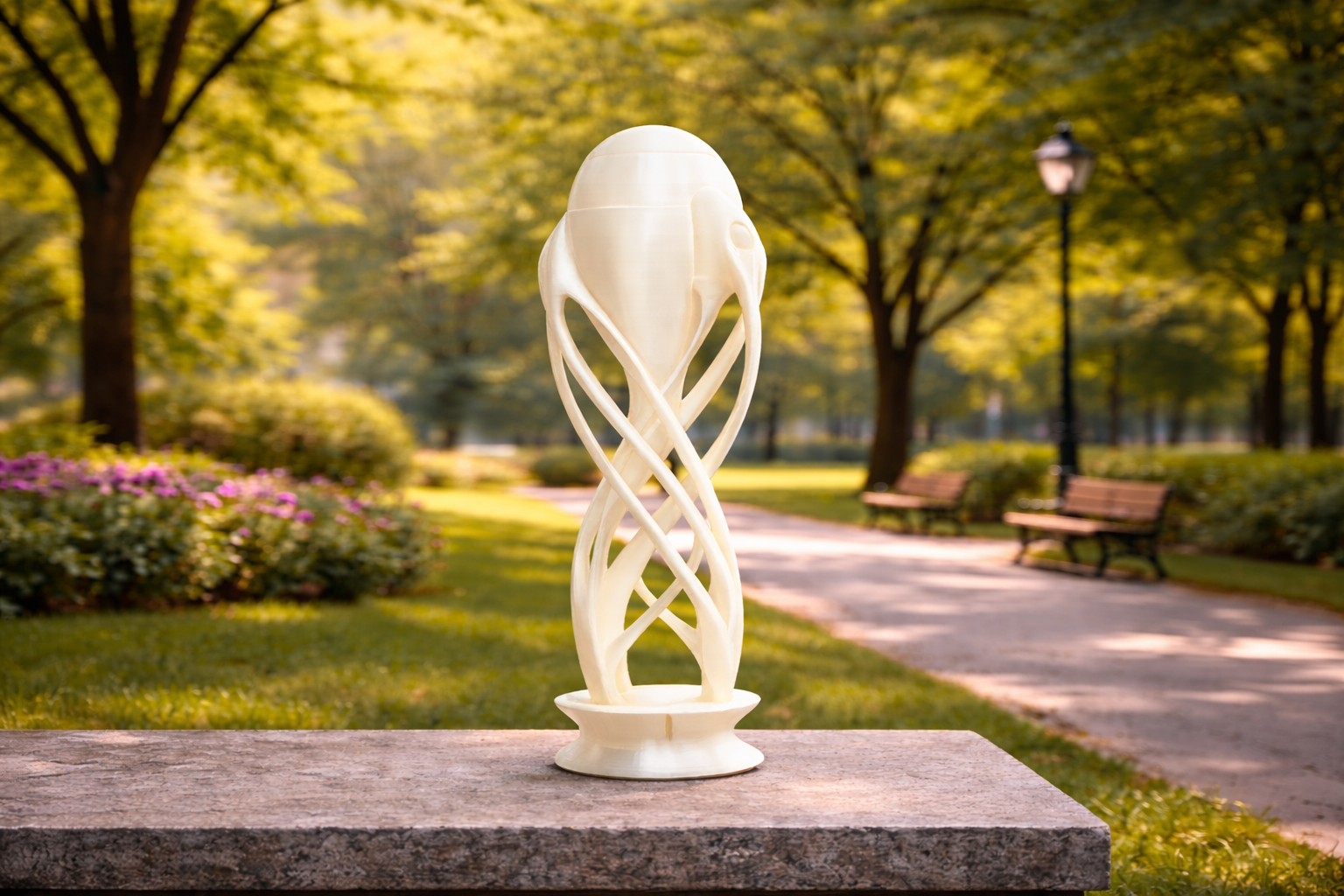
I often explain this "manufacturing triangle" to my clients. You cannot just make a machine bigger without changing the extruder system. If you try to print a boat hull with a small standard nozzle, it will take a year to finish. You need a big extruder to match the big size. We offer high-output extruders that can push 10kg or even 20kg of plastic per hour.
| Factor | Small Filament Printer | Large Pellet Printer |
|---|---|---|
| Volume | Limited (500mm cube) | Massive (Meters long) |
| Throughput | Slow (0.1 kg/hr) | Fast (5-20+ kg/hr) |
| Material Cost | High ($30/kg) | Low ($3/kg) |
When you increase the volume, you must increase the flow rate. When the flow rate is high, you consume a lot of material very quickly. Therefore, the material must be cheap to make the part affordable. It is a connected system. If one part of this triangle is wrong, the whole process fails. Pellet printing is the only technology that satisfies all three requirements simultaneously.
LOOP END
LOOP START
What Key Applications Are Driving the Adoption of Pellet-Based 3D Printing?
Finding the right use for this tech can be hard if you are new to it. You might wonder if it fits your specific industry. Here are the sectors seeing the biggest gains right now.
The main drivers are composite molds for wind blades, furniture manufacturing, and automotive prototyping. These industries require large, durable parts quickly. Pellet printing allows them to produce full-scale models and tools in days instead of weeks.
I see a lot of demand specifically from the wind energy sector. They need huge molds for turbine blades. Traditionally, they use wood or foam to make the master plug. This is slow, dusty, and messy. Now, they print the mold shape with pellets. Then they machine it smooth. It saves weeks of manual labor. Automotive companies use it heavily too. They print full-size car bumpers or dashboards to check the fit before making expensive steel tools.
Furniture designers are also very happy with this tech. They can print a whole chair or table in one piece. It looks unique and is very strong because the layers are thick. Even sculpture artists use our machines. They can make massive statues without using clay or casting. The speed opens up new possibilities for creativity and production. It allows for "rapid tooling," which bridges the gap between a digital design and a final factory mold.
LOOP END
LOOP START
Which Materials Perform Best in Pellet Extrusion Systems?
Not all plastics work well when printed in large formats. Using the wrong material causes warping and failed prints. You need to know which granules print successfully on big beds.
Composite materials like Carbon Fiber reinforced ABS (ABS-CF) or Glass Fiber PETG[^6] (PETG-GF) perform best. The fibers reduce shrinkage and warping during cooling. Standard PLA is also excellent for prototyping due to its ease of use and low cost.
Pure plastic shrinks when it cools down from a liquid to a solid. On a small part, this is not a big deal. But on a large part, this shrinkage pulls the corners up. We call this warping. It ruins the print and wastes material. To fix this, we highly recommend filled materials. We mix glass fiber or carbon fiber into the pellets. These fibers act like a skeleton inside the plastic. They hold the shape and prevent it from shrinking too much.
They also make the part very stiff and strong. This is great for industrial tooling that needs to hold a shape under pressure. We also use TPU for flexible parts. Printing flexible filament is a nightmare because it bends in the feeder. But printing flexible pellets is easy. The screw pushes it through without jamming. This versatility lets you choose the exact material for your specific job, whether you need a hard mold or a soft rubber seal.
LOOP END
LOOP START
When Do Pellet 3D Printers Outperform Traditional Large Format FDM Machines?
You might have a large FDM printer already that uses thick filament. It feels slow and expensive to run. You need to know when to switch technologies.
Pellet printers win when speed and strength are critical. If a part takes more than 24 hours on an FDM machine, a pellet printer can often do it in 4 hours. They also win when mechanical properties need to be isotropic and strong.
I compare this to painting a room. FDM is like using a tiny artist's brush. Pellet printing is like using a big paint roller. If you have a huge wall, you use the roller. The layers in pellet printing are thick and wide. They contain more heat energy. This means they stay hot longer and melt into the previous layer better. The chemical bond is much stronger. Traditional FDM layers often split apart under stress.
Also, we can use much larger nozzles. A 4mm nozzle lays down a massive amount of plastic in one pass. An FDM printer usually has a 0.4mm or 0.8mm nozzle. The difference in speed is massive. If you need a functional part fast, pellets are the only choice. You do lose some fine detail, but for large parts, you usually do not need microscopic details. You need a strong part that is finished today, not next week.
LOOP END
LOOP START
What Are the Design Considerations for Printing Large Parts with Pellets?
Designing for big extrusion is different than standard printing. Small details can get lost in the thick layers. You must adjust your CAD files for success.
You must design with a minimum wall thickness in mind, usually 2mm to 4mm. Avoid sharp corners and use large fillets to reduce stress. Overhangs should be kept to a minimum because large extrusion beads cool slower than thin filament lines.
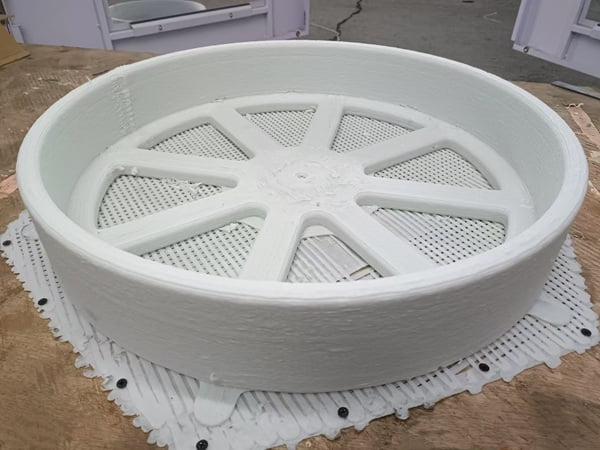
You cannot just scale up a small model and expect it to work. The bead width is wide. If your design has tiny text or small holes, they will look like a blob. You need to think big. I always tell my clients to design for the nozzle size. If you use a 3mm nozzle, your walls should be multiples of 3mm. This ensures a solid fill.
Also, think about cooling. A big blob of hot plastic takes time to get hard. If you print a steep overhang, it might droop before it sets. You need to use 45-degree angles or less to be safe. Finally, plan for machining. Our machines are accurate, but for a perfect glossy surface, you might mill it later. Add extra material to the design for this milling step. We call this "near-net-shape" manufacturing. You print close to the final shape, then trim it to perfection.
LOOP END
LOOP START
Evaluating ROI: Is a Pellet 3D Printer the Right Investment for Your Business?
Buying a large machine is a big financial decision. You worry about getting your money back. You need a clear way to calculate the return on investment.
Calculate ROI by comparing the cost of outsourcing versus in-house production. Factor in material savings (pellets vs. filament) and time saved. Most businesses see a return within 6 to 12 months if they print large parts regularly.
I help companies run these numbers all the time. First, look at your current bills. How much do you pay for outsourcing molds or prototypes? Or how much do you spend on expensive filament? Now, look at the pellet cost. It is usually 10% of the filament cost. Next, look at time. If you can print a mold in 2 days instead of waiting 4 weeks, what is that worth to your sales team? It means you get products to market faster.
At CHENcan, we want to help you with this specific calculation. Before you buy, contact us. We can assist you by checking your print times and calculating the print costs based on your actual files. We can simulate the process. This gives you hard data to make a safe decision. We do not just sell a machine; we sell a business solution that pays for itself.
LOOP END
LOOP START
How Do You Choose the Right Pellet 3D Printer for Large-Scale Production?
There are many machine options on the market now. Choosing the wrong one is risky and expensive. You need a checklist to pick the best machine for your needs.
Look for a manufacturer with CNC experience, as the frame mechanics are similar. Ensure the machine supports high-temperature materials and has a large enough build volume. Check for local support and training to ensure your team can operate it effectively.
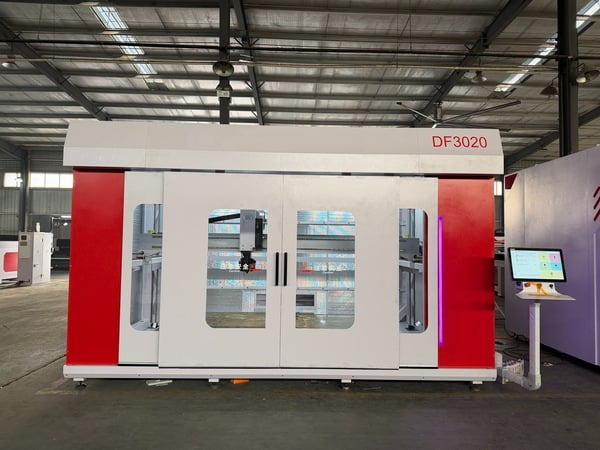
You should look for a partner, not just a seller. A good machine needs a strong frame to handle the speed. This is where our CNC background helps. We know how to build rigid structures that do not wobble. We also offer customization. We do not just have one size. We can build the machine to fit your factory space perfectly.
Check the extruder power. Can it handle the material you want? Some extruders cannot handle carbon fiber. Ask about the software. Is it easy to use? Finally, think about support. We provide training and installation. We want you to succeed. We can even customize the machine with a heavy-duty extruder for maximum efficiency. Choosing a supplier with full-process control, from design to welding to assembly, ensures you get a machine that works from day one.
LOOP END
Conclusion
Pellet 3D printing offers speed, low cost, and massive scale. It transforms manufacturing for heavy industry. Contact CHENcan CNC to analyze your costs and find the perfect custom solution today.
Learn how thermoplastic granules enhance 3D printing efficiency and reduce costs. ↩
Understand the impact of extrusion rates on the speed and quality of 3D prints. ↩
Understand the importance of high-torque servo motors in industrial 3D printers. ↩
Learn how closed-loop control systems improve the reliability of 3D printers. ↩