
Traditional manufacturing methods are often slow and very expensive. Making molds for just a few parts eats up your budget. Pellet 3D printing1 offers a faster, cheaper way to bridge the gap to full production.
Pellet 3D printing, or Fused Granular Fabrication2 , uses raw thermoplastic pellets3 instead of expensive filaments. This technology significantly lowers material costs, increases print speeds for large-scale parts, and enables the use of industrial-grade composite materials4, making it ideal for both rapid prototyping and final batch manufacturing.
I want to share exactly how this technology works in real factories. I will explain why smart factory owners are switching to this method. You will see how it saves money and time.
LOOP START
Why Is Pellet 3D Printing Moving Beyond Experimental Use?
Many people still think 3D printing is just for small toys or hobbies. Ignoring its industrial power means you miss out on efficiency. It is now a serious tool for real factories.
Pellet printing has moved beyond experiments because it handles standard injection molding plastics. It offers high deposition rates and structural integrity required for functional parts in industries like automotive and aerospace, replacing traditional methods for many tasks.
I have seen a big change in the industry over the last few years. In the past, 3D printing was only for looking at a shape. You could not use the part. Now, things are different. Pellet printers use the same strong plastics that injection molding machines use. This means the parts are tough. They can handle heat and stress.
I remember a specific client of ours. He bought a machine from us at CHENcan. He did not know much about 3D printing technology at first. He just wanted to try something new. He was amazed. He found he could print his ideas immediately. He did not need to wait for a mold maker. He tested his designs quickly. If he made a mistake, the cost was low. He just printed it again.
This ability to fail cheap and fast is why this is no longer an experiment. It is a production strategy. Also, the skill level required is lower than you think. Traditional mold making requires highly skilled masters. 3D printing requires a design file and a machine operator. It is easier to train staff.
| Feature | Experimental Printing | Industrial Pellet Printing |
|---|---|---|
| Material | Expensive proprietary filament | Standard industrial pellets |
| Strength | Low, visual only | High, functional use |
| Speed | Slow, small parts | Fast, large parts |
| Skill Needed | Hobbyist level | Technician level |
LOOP END
LOOP START
How Does Production Throughput Compare with Filament and Resin Systems?
Waiting days for a large print to finish is very frustrating. Slow speeds kill your production schedules. You need a faster solution when you need to make big parts.
Pellet extruders have much larger nozzles and higher flow rates than filament or resin printers. While filament printers deposit grams per hour, pellet systems can deposit several kilograms per hour, reducing print times from days to hours.
Let’s talk about speed. In manufacturing, time is money. I often talk to engineers who are used to standard filament printers. They tell me it takes 50 hours to print a small chair model. That is too slow for a factory.
Pellet printers work differently. They use a screw to push the plastic. This is like an extruder in a plastics factory. Because of this, we can push a lot more plastic very fast. We measure speed in kilograms per hour, not grams.
For example, a standard filament printer might do 0.1 kg per hour. Our industrial pellet printers can do 5 kg to 10 kg per hour or even more. Imagine you need to print a car bumper prototype. On a filament printer, you might wait a week. On a pellet printer, you wait one day.
This throughput changes how you plan production. You do not need a farm of 100 small printers. You just need one or two big pellet printers. This saves floor space. It also simplifies your workflow. You spend less time changing spools of wire and more time making parts.
| System Type | Typical Speed | Best For |
|---|---|---|
| Resin (SLA) | Very Slow | Tiny, high-detail jewelry/dental |
| Filament (FDM) | Slow | Small brackets, hobby items |
| Pellet (FGF) | Very Fast | Furniture, car parts, molds |
LOOP END
LOOP START
Is Consistency and Repeatability Achievable in Long-Run Printing?
A bad print ruins your day and wastes materials. Inconsistent parts cause assembly failures down the line. You need machines that work the same way every single time you press start.
Modern pellet printers use advanced thermal control and high-quality screws to ensure consistent material flow. This stability allows for reliable long-run printing, producing parts with uniform density and strength across different batches.
Consistency is the main worry for my customers. They ask, "Will the tenth part be the same as the first part?" The answer lies in the machine hardware.
At CHENcan, we use high-quality screws and barrels. This is the heart of the machine. The screw melts the plastic pellets evenly. It creates a constant pressure. This means the line of plastic coming out is always the same width.
Temperature control is also vital. Our machines have heating zones along the barrel. We control the heat very strictly. If the plastic is too hot, it runs like water. If it is too cold, it clogs. We keep it perfect.
We also use closed chambers. This keeps the air temperature around the print warm. It stops the part from warping or cracking. When you control the heat and the flow, you get repeatable results.
I have seen factories run these machines for 24 hours a day. They load a big hopper with pellets. The machine feeds itself. It prints one part, then moves to the next. The variation between parts is very small. It is reliable enough for real production jobs.
LOOP END
LOOP START
What Are the Material Sourcing, Cost Structure, and Supply Chain Advantages?
Filament creates a lot of waste and costs too much money. High material prices eat your profit margins. You need a cheaper raw material source to stay competitive.
Pellets are the raw form of plastic used in injection molding, costing up to 10 times less than filament. This supply chain advantage allows manufacturers to use the exact same certified materials for prototyping as they do for mass production.
The biggest reason my clients switch to pellet printing is the cost of materials. Let me give you a real example.
If you buy a spool of ABS filament, you might pay $20 or $30 per kilogram. This is expensive because someone else already processed that plastic into a wire. You are paying for their processing.
If you buy ABS pellets, you pay the raw market price. This might be $2 to $5 per kilogram. That is a huge difference. If you print a 100kg mold, the savings are massive. You save thousands of dollars on just one job.
Also, sourcing is easier. You can buy pellets from any plastic supplier. You are not locked into one printer brand's material. You can use recycled plastics too. Many of our customers grind up old prints and use them again. This is good for the cost and the environment.
Another benefit is material validation. If you are making a car part, you need to use a specific grade of plastic. It is hard to find that exact grade in filament. But in pellets, it is easy. You buy the exact same bag of pellets that the injection molding factory uses. Your prototype is made of the real material.
LOOP END
LOOP START
How Does It Handle Scalability for Medium- and Large-Batch Manufacturing?
Molds are too expensive if you only need 500 parts. Hand-making them is too slow. You need a middle ground for medium volumes that is both fast and affordable.
Pellet printing eliminates the need for expensive molds for medium batches. It allows you to print multiple large parts simultaneously or in rapid succession, bridging the gap between single prototypes and mass injection molding.
We often talk about the "Valley of Death" in manufacturing. This is when you need 100 to 1,000 parts. It is too many to make by hand. But it is too few to pay $50,000 for a steel mold.
Pellet 3D printing fills this gap. We call it "Bridge Manufacturing." You can start production immediately. You do not wait months for a mold tool.
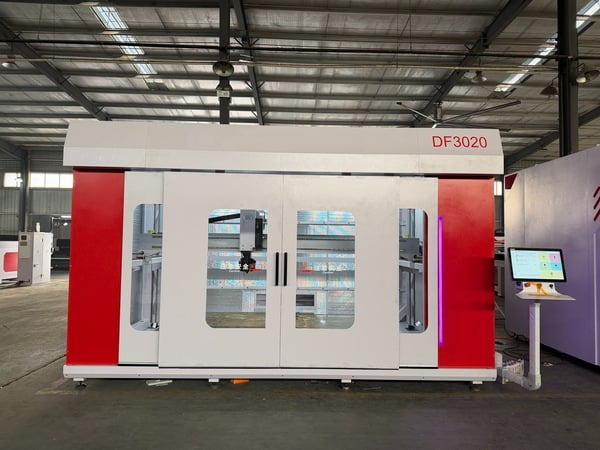
Our large gantry machines have big beds. You can place ten parts on the bed at once. The machine prints them all in one run. Or, you can print a huge mold for vacuum forming.
For example, a customer needs 200 dashboard covers for a special edition bus. Making a steel mold is too costly for just 200 buses. Printing them one by one with filament takes too long. But with a pellet printer, you can print the mold for the dashboard in two days. Then you use that mold to make the 200 parts using composite materials.
Or, you can print the 200 parts directly if the shape is complex. This flexibility lets you say "yes" to jobs you used to refuse. It scales with your needs.
LOOP END
LOOP START
Can It Integrate with CNC, Robotics, and Hybrid Manufacturing Lines?
Rough surfaces on printed parts look unprofessional. 3D prints often lack the precision needed for tight fits. You need a way to make printed parts look perfect and fit correctly.
Pellet printing works best when combined with CNC machining. The printer creates the near-net shape quickly, and the CNC machine mills the surface to achieve tight tolerances and a smooth finish, creating a perfect hybrid workflow.
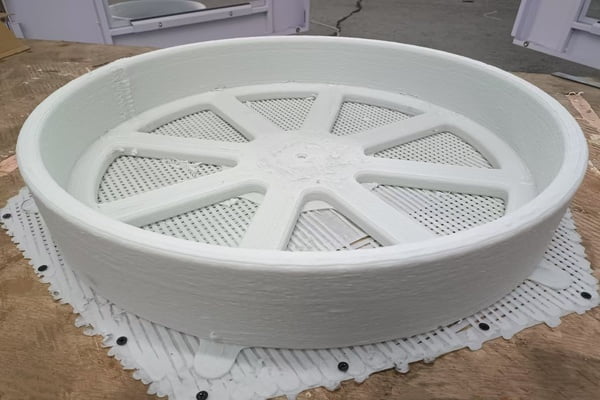
This is where my experience at CHENcan is very important. We make both CNC machines and 3D printers. I tell my customers this truth: 3D printing is not magic. It has limits.
If you are making a large sculpture for a park, or a chair for a home, the surface from the printer is fine. It looks artistic. But if you are making a mold for an aerospace part, the surface must be perfect. The printer cannot do this alone.
The solution is Hybrid Manufacturing.
- Print it fast: Use the pellet printer to make the shape. We call this "Near-Net Shape." It is slightly bigger than the final size.
- Mill it smooth: Put the part on a 5-Axis CNC machine. The CNC cuts away the rough outer layer.
This process is much faster than milling a block of solid metal or foam. You do not waste material. You only print what you need. Then the CNC gives you the accuracy.
We have customers who make boat hulls. They print the huge mold in sections. Then they use our Gantry Machining Center to mill the surface smooth. The result is a perfect mold, made in half the time of traditional methods. You need both technologies working together for high-precision results.
LOOP END
LOOP START
What Are the Quality Control Challenges in Pellet-Based Production?
Air bubbles inside the plastic weaken the parts. Moisture in the air ruins the plastic before you even print. You must control these factors to avoid making weak or ugly products.
The main challenges are moisture in the pellets and thermal warping. Using dryers for the raw material and heated chambers for the print area are essential steps to ensure the structural integrity of the final industrial part.
Quality control in pellet printing is mostly about managing heat and water.
First, let's talk about water. Plastic pellets love to absorb water from the air. We call this hygroscopy. If you print with wet pellets, the water boils inside the nozzle. This creates steam bubbles. Your part will look like a sponge inside. It will be weak.
To fix this, we use industrial hopper dryers. These machines blow hot, dry air through the pellets before they enter the printer. This is a mandatory step for industrial quality.
Second, is warping. When plastic cools, it shrinks. If a big part shrinks unevenly, it pulls off the table. It curls up. This ruins the geometry.
To fix this, we need a heated environment. We use heated build plates. For some materials, we enclose the whole machine to keep the air warm.
We also have to watch for layer adhesion. This means how well one layer sticks to the next. If the print is too fast or too cold, the layers separate. We adjust the parameters carefully. We do test prints. We cut them open to check the inside. Good process control ensures the part is solid.
LOOP END
LOOP START
What Are the Application Examples Across Automotive, Architecture, and Tooling?
It is hard to visualize how you can use this technology. Theoretical talk is boring and hard to understand. You want to see real-world examples of what businesses are actually making.
Automotive companies use it for bumpers and dashboards. Architects print full-scale furniture and wall panels. Factories use it to make jigs, fixtures, and large composite molds that are later finished with CNC machining.
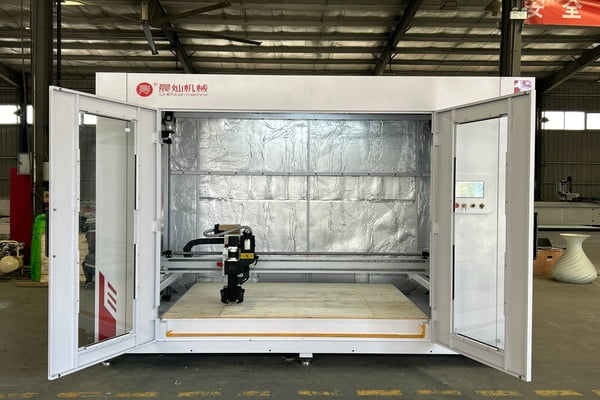
Our customers use these machines for amazing things.
Automotive: Car designers use our machines to print full-size mockups. They print a whole car seat or a dashboard. They can sit in it. They can check the ergonomics. It saves them weeks of clay modeling. Some even print jigs to hold car parts while they are being assembled on the line.
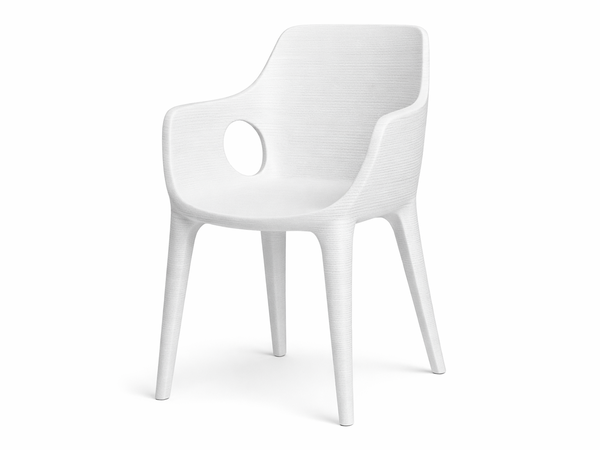
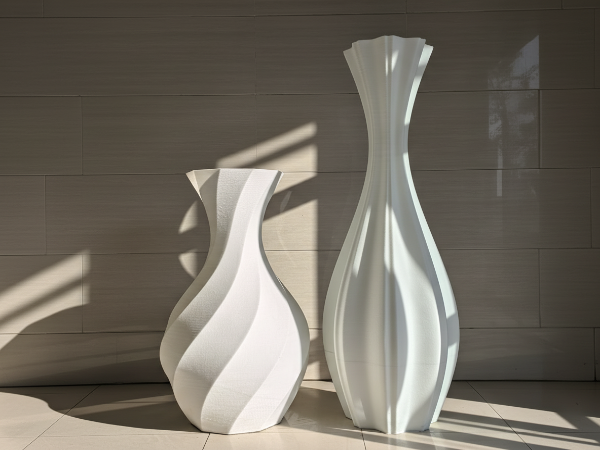
Architecture & Art: Designers love the texture of 3D printing. We have clients printing outdoor benches, reception desks, and complex wall panels. They use recycled plastic. It looks modern and is eco-friendly. Because our printers are large, they can print a whole chair in one piece.
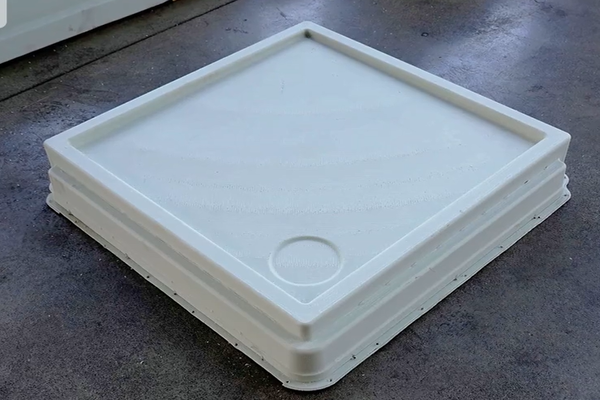
Tooling & Molds: This is the biggest industrial use. Foundries use printed parts to make sand molds for metal casting. Composite companies print molds for carbon fiber parts. For example, making a wind turbine blade requires a huge mold. Printing the plug for that mold is much faster than carving it by hand.
| Industry | Application | Benefit |
|---|---|---|
| Automotive | Prototyping, Assembly Jigs | Speed to market |
| Architecture | Furniture, Facades | Unique designs, Recycle |
| Foundry | Sand Casting Patterns | Low cost, fast replacement |
| Marine | Boat Hull Molds | Large scale capability |
LOOP END
LOOP START
What Are the Regulatory, Safety, and Workplace Considerations?
Fumes from melting plastic can be dangerous to health. Hot machines can burn workers if they are not careful. You need to keep your factory safe and compliant with rules.
Pellet printing involves high temperatures and potential off-gassing from plastics. Proper ventilation, enclosed machine designs, and standard safety training are required to meet workplace safety regulations and protect operators.
Safety is a priority in any factory. When you melt kilograms of plastic, you produce fumes. Some plastics, like ABS, smell bad and can be harmful if you breathe them all day.
We advise all our clients to install proper ventilation. Our enclosed machines help contain the fumes. We can connect the machine to an air filtration system. This keeps the factory air clean.
There is also a heat hazard. The nozzle gets very hot—up to 300 or 400 degrees Celsius. The bed is hot too. Operators need to wear protective gloves. We put warning signs on the machines.
From a regulatory standpoint, the machines need to be certified. Our machines at CHENcan have ISO and CE certification. This means they meet international safety standards. If you are in Europe or the US, this is necessary for your insurance and labor laws.
You also need to think about fire safety. Melting plastic is a fire risk if the machine malfunctions. Our machines have thermal runaway protection. This turns the heater off if it gets too hot. Safe equipment protects your workers and your business.
LOOP END
LOOP START
When Does Pellet 3D Printing Make Economic Sense?
Buying a machine is a big investment for any company. Losing money is scary and you want to avoid it. You need to know the Return on Investment (ROI) before you buy.
It makes sense when parts are large, material costs need to be low, or lead times must be short. If you produce huge molds, furniture, or batches of 50 to 1000 parts, pellet printing is cheaper than tooling and faster than outsourcing.
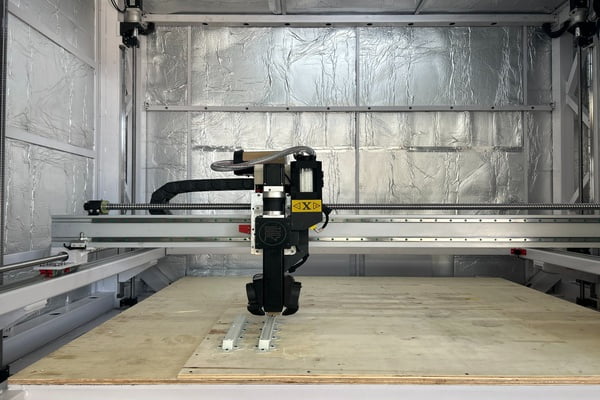
So, should you buy one? Here is my honest advice.
If you make tiny parts, like lego bricks, do not buy a pellet printer. Injection molding is better. If you make very high-detail miniatures, do not buy one. Use a resin printer.
Buy a pellet printer if:
- Your parts are big. If it is bigger than a basketball, pellet printing wins on speed.
- You spend too much on filament. If you spend $1000 a month on filament, a pellet printer will pay for itself just in material savings.
- You need speed. If you lose contracts because you cannot prototype fast enough, this machine solves that.
- You do low-volume production. If you need 50 custom vents for a building, printing them is cheaper than making a mold.
We help our clients calculate this. We look at their current costs for outsourcing or tooling. Usually, if the machine is used regularly, the ROI is less than one year. It is a tool that prints money by saving money.
LOOP END
Conclusion
Pellet 3D printing combined with CNC machining is the future of flexible manufacturing. It saves huge amounts of money on raw materials and cuts weeks off production schedules. It is easy to learn, safe to use, and scales from prototypes to final products.
Explore how Pellet 3D printing revolutionizes manufacturing with cost-effective and efficient production methods. ↩
Learn about Fused Granular Fabrication and its advantages over traditional 3D printing methods. ↩
Discover the benefits of using raw thermoplastic pellets in 3D printing for cost and efficiency. ↩
Find out how industrial-grade composite materials enhance the capabilities of 3D printing. ↩