
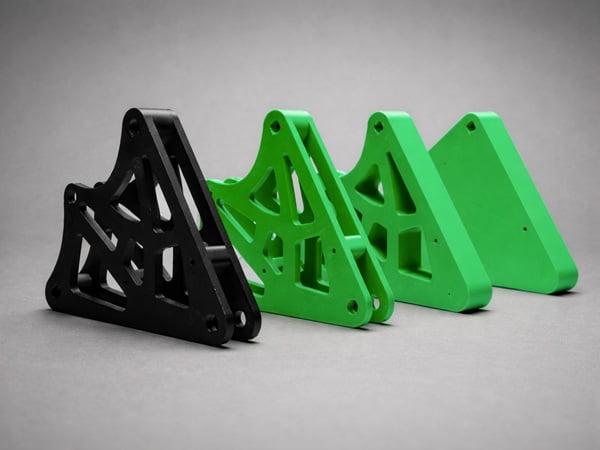
Trying to print massive parts but failing? Small desktop printers waste your time and money. Here is the exact way we turn huge 3D models into real industrial production.
Printing large-scale parts requires moving from standard filament printers to industrial pellet 3D printers1. You must balance speed, material cost, and structural strength. By adjusting layer heights and wall thickness, you can successfully manufacture massive, end-use parts without breaking your budget or timeline.
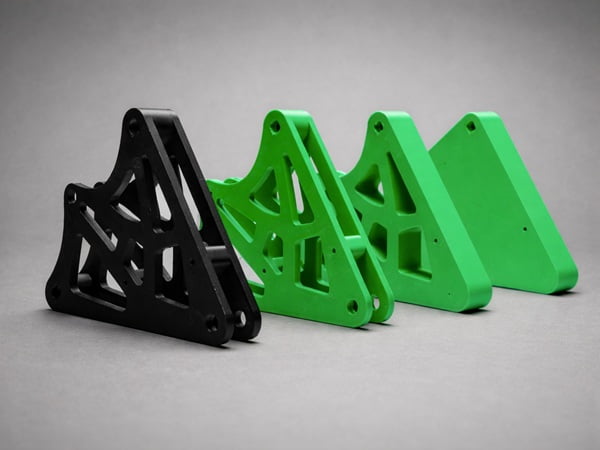
Let me tell you a story about a client who tried to print a boat hull on a desktop machine. It did not go well, but the lessons we learned will save you from making the exact same expensive mistakes.
Why Do Most 3D Printing Models Fail Outside Desktop Printers?
Your perfect digital model looks great on screen. But when you try to print it large, it warps and cracks. We need to fix your design rules.
Desktop models fail at a large scale because they ignore real-world physics like thermal shrinkage and weight distribution2. Small prints hide these flaws, but massive industrial parts require specific support structures3 and careful material choices to prevent total collapse during printing.
The Truth About Scaling Up
I remember a time when an engineer sent us a file for a car bumper. He just scaled up a small toy model. It was a disaster. At CHENcan CNC, we see this often. When you scale up, the physics change completely. Heat builds up differently. The weight of the plastic crushes the lower layers.
Key Differences in Physics
You cannot just press a button on a big file. You have to think about gravity. You have to plan for cooling. Desktop printers use thin layers that cool fast. Big industrial machines lay down thick, hot tracks of plastic.
| Feature | Desktop Printing | Industrial Large-Scale |
|---|---|---|
| Heat Management | Easy, cools quickly | Hard, retains heat long |
| Weight | Grams, no big stress | Kilograms, causes sagging |
| Wall Thickness | Uniform is fine | Needs careful calculation |
If you ignore these changes, your print will warp. It will pull off the print bed. We spend hours fixing client files just to make them printable. You must redesign your parts for the specific size you want to make.
What Is the Hidden Gap Between Downloadable Models and Manufacturable Parts?
Downloading a free model is easy. Trying to make money with it is hard. Most files are useless for real factory production. Let us bridge that gap.
The gap exists because downloadable models are designed for looks, not for manufacturing. Real manufacturable parts need correct tolerances, proper wall thicknesses for machining, and specific material grades. Without these, a digital file is just a picture, not a usable industrial component.
The Illusion of Ready-to-Print Files
A client from a shipyard once brought me a downloaded file of a yacht hull. He thought we could just print it and put it in the water. I had to explain that the file had zero internal structure. It was just a hollow shell. This is the hidden gap.
Engineering for the Real World
At CHENcan CNC, we know that a real part needs engineering. You need to know where the stress points are. Will the part be milled later? If yes, we need extra material on the surface. Our 5-Axis Machining Centers need material to cut away to make a smooth finish.
| Model Type | Focus | Real-World Use |
|---|---|---|
| Downloaded File | Visual shape | None, usually fails |
| Engineered Part | Strength and tolerance | Ready for assembly |
You must add ribs for strength. You must plan for shrinkage. If you just take a file from the internet, you will waste plastic and time. We always rework the CAD files before our industrial 3D printers start working.
What Happens When Model Size Becomes the Real Bottleneck?
You want to print bigger. But your machine stops you. The print takes weeks, and the cost ruins your budget. Size is your biggest enemy now.
When model size increases, printing time and material costs multiply exponentially, not linearly. A part twice as big takes eight times the volume. This bottleneck forces manufacturers to abandon traditional filament printing and switch to high-flow pellet extrusion systems to keep projects profitable.
The Volume Trap
I see many purchasing managers make a huge mistake. They think a part that is twice as tall will cost twice as much. This is wrong. Volume grows in three directions. A part twice as big uses eight times the material. This is the volume trap.
Crossing the Threshold
There is a specific threshold in 3D printing. When your model volume passes a certain point, filament becomes too expensive. The printing time becomes too long. A two-day print turns into a three-week print. You cannot run a business like that.
| Metric | Small Parts | Large Parts |
|---|---|---|
| Material Cost | Low | Extremely High (if filament) |
| Print Time | Hours | Weeks |
| Solution | Standard Printer | Pellet Extrusion Printer |
When you hit this bottleneck, efficiency is the only thing that matters. You must change your technology. This is why we build our Industry 3D Printers to use pellets. Pellets fix the bottleneck by dropping the material cost and pushing out plastic much faster.
How Does Large-Format 3D Printing Turn Digital Models into Physical Reality?
Turning a huge digital file into a real object feels like magic. But magic does not build cars or boats. Heavy-duty engineering does.
Large-format 3D printing uses massive gantry systems4 and high-flow extruders5 to build parts layer by layer. It takes digital CAD data and translates it into precise machine movements, turning raw plastic pellets6 into full-size boat molds, car bumpers, or aerospace tools in just days.
The Mechanics of Big Prints
Let me walk you through how this actually works on our factory floor. We take a client's digital model. We slice it into thousands of flat layers. Then, our massive gantry machine takes over. It looks like our big metal-cutting machines, but it prints plastic instead.
From Screen to Factory Floor
The machine melts raw plastic pellets6. A huge screw pushes the hot plastic out. It traces the digital shape exactly. We use our 27 years of CNC experience to keep the machine perfectly steady. If the machine shakes, the print fails.
| Step | Action | Result |
|---|---|---|
| 1. Slicing | Convert CAD to G-code | Machine instructions |
| 2. Melting | Heat plastic pellets | Liquid material |
| 3. Extrusion | Lay down thick tracks | Physical layers |
This is how we make physical reality. We print giant molds for wind turbine blades7. We print mock-ups for cars. The digital model is just the map. The large-format printer is the vehicle that gets you to the final product.
Should You Choose Filament or Pellet Printing for Large Models?
Choosing the wrong material ruins your project. Filament is safe but pricey. Pellets are cheap but messy. You must pick the right tool for the job.
Filament offers high stability and fine details, making it perfect for small, complex structures. However, its high cost makes it bad for large parts. Pellet printing uses cheap raw materials and provides high flow rates, making it the only choice for massive, large-volume industrial structures.
The Battle of Materials
I talk to engineers every week who are confused about this. Let me make it very simple. Filament is like a fine pen. Pellets are like a big paint roller. You would not paint a whole house with a pen.
Knowing When to Switch
Filament is great for small things. It is very stable. It makes very fine structures. But the cost is too high. When you print a big mold for a boat, you need hundreds of kilograms of plastic. If you use filament, you will go bankrupt.
| Material Type | Pros | Cons | Best For |
|---|---|---|---|
| Filament | Fine detail, stable | High cost, slow | Small, complex parts |
| Pellet | Low cost, fast flow | Needs big machine | Large volume structures |
Pellets are the raw form of plastic. They cost a fraction of the price of filament. Our Industry 3D Printers use pellets because they offer high flow. When the volume and print time pass a certain threshold, materials cost and efficiency become the deciding factors. Pellets are the only way to make a profit.
Speed, Strength, and Surface Finish: What Do Industrial Models Demand?
You want your part fast, strong, and smooth. I have bad news. You cannot have all three at the same time. You have to make a choice.
Industrial models demand a performance balance, not a single perfect metric. High speed requires large layer heights, causing rough surfaces. High strength requires thick walls, increasing the weight. High surface precision requires very slow printing times. You must choose what matters most for your specific application.
The Golden Triangle of 3D Printing
I always tell my customers the hard truth. You have three choices: speed, strength, and surface finish. If you want high speed, we must use large layer heights. This makes the surface rough. If you want high strength, we must increase the wall thickness. This adds a lot of weight.
Finding the Performance Balance
If you want perfect surface precision, we have to slow the machine down. The print time will take forever. Industrial applications do not need one perfect metric. They need a balance.
| Metric Focus | The Trade-off | Result |
|---|---|---|
| High Speed | Large layer height | Rough surface |
| High Strength | Thick walls | Heavy weight |
| High Precision | Small layer height | Long print time |
At CHENcan CNC, we focus on performance balance. A foundry mold does not need to look pretty; it needs to be fast and strong. A car dashboard prototype needs to look smooth, so we print it slower. We adjust our machines to give you exactly what your project needs, nothing more and nothing less.
What Are the Common Design Assumptions That Break at Large Scale?
Engineers assume what works small will work big. This is a dangerous trap. Big parts break all the rules. We need to rethink your CAD files.
The most common false assumption is that standard infill patterns work at any scale. At a large scale, massive parts trap heat inside, causing the plastic to melt itself. Also, assuming sharp corners will print perfectly leads to massive warping and cracking in giant industrial prints.
The Danger of Sharp Corners
I once reviewed a design from an automotive team. They had perfectly sharp 90-degree corners on a two-meter-long part. On a desktop printer, this is fine. On our giant pellet printer, a sharp corner creates a huge stress point. As the huge mass of plastic cools, it pulls. The corner will crack every single time.
Re-learning How to Design
You have to forget what you know about small prints. Another bad assumption is about support structures. Small parts use thin, easy-to-break supports. Big parts need massive, heavy supports, or they will collapse.
| Design Feature | Small Scale Reality | Large Scale Reality |
|---|---|---|
| Sharp Corners | Prints perfectly | Causes severe cracking |
| Infill Density | Standard 20% works | Traps heat, ruins part |
| Overhangs | Easy to support | Extremely hard to support |
You must use large curves instead of sharp corners. You must open up the design to let heat escape. If you do not change these assumptions, your large-scale project will fail before it even starts.
Which Industries Rely on Large-Scale 3D Printed Models?
Who actually buys these massive machines? You might be surprised. The biggest players in the world use large 3D printing to beat their competition.
Industries like aerospace, shipbuilding, automotive manufacturing, and wind energy heavily rely on large-scale 3D printing. They use it to create massive foundry molds, yacht hulls, wind turbine blade patterns, and automotive prototypes8, saving months of manual labor and drastically cutting production costs.
Building the Big Stuff
Our clients are not making toys. They are building the infrastructure of the future. I recently visited a customer making wind turbine blades. Before they met us, they spent months carving huge molds out of wood. Now, they print the molds in a few days.
Transforming Heavy Industry
Shipbuilders use our machines to print entire sections of boats. Automotive companies print full-size car mock-ups for wind tunnel testing. The foundry industry prints massive sand-casting patterns.
| Industry | Typical 3D Printed Part | Benefit |
|---|---|---|
| Wind Energy | Blade molds | Saves months of labor |
| Shipbuilding | Yacht hulls and plugs | Fast design changes |
| Automotive | Full-size prototypes | Cheaper testing |
These industries cannot wait for traditional manufacturing. Traditional ways are too slow. By using our large 3D printers, they cut their lead times by 80%. When you are building a ship or a wind turbine, saving time means saving millions of dollars. This technology is changing heavy industry completely.
How Do You Choose the Right 3D Printer for Production-Ready Models?
Buying a big printer is a huge investment. If you buy the wrong one, you waste money and floor space. Let me help you choose wisely.
To choose the right 3D printer, you must evaluate your material needs, print volume, and required precision. If you need massive parts quickly and cheaply, choose a pellet extrusion printer. Look for machines with rigid heavy-duty frames and reliable CNC controls to ensure long-term stability in factory environments.
Look Past the Spec Sheet
A marketing manager once asked me why our machines look so heavy. I told him that weight means stability. Many companies sell big 3D printers made of thin aluminum. When the print head moves fast, the whole machine shakes. Your prints will look terrible.
The Core Requirements
You need to look at the bones of the machine. We use heavy steel for our gantry structures. We use the same frames we use for our 5-Axis metal cutting machines.
| Feature to Check | Bad Printer | Good Industrial Printer |
|---|---|---|
| Frame Material | Light aluminum | Heavy welded steel |
| Extruder Type | Only filament | High-flow pellet option |
| Control System | Basic hobby board | Professional CNC controller |
You also need to think about service. Does the seller offer one-stop technical support? Can they customize the parameters for your exact plastic? We offer full-process customization because every factory is different. Do not just buy a machine; buy a complete production solution.
From Prototype to End-Use: How Do You Scale Models Without Compromise?
Moving from a prototype to a real, working part is the hardest step. You cannot afford mistakes here. You need a clear path to scale up.
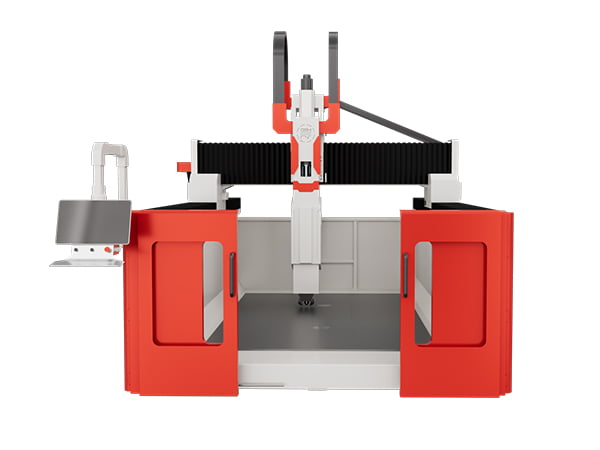
To scale without compromise, you must use hybrid manufacturing. First, print the large part quickly using a high-flow pellet 3D printer to get the near-net shape. Then, use a 5-Axis Machining Center to mill the surface perfectly smooth. This gives you both speed and perfect precision.
The Hybrid Solution
This is my favorite topic. People always ask me how to get the speed of 3D printing but the precision of metal machining. The answer is simple. You use both. We call this hybrid manufacturing. It is the ultimate way to scale up without making any compromises.
Print Big, Mill Fine
Here is our exact process. We use our Industry 3D Printer to print the part using cheap pellets. We print it fast with thick layers. We make the part slightly larger than needed. Then, we move the part to our 5-Axis Machining Center.
| Step | Machine Used | Goal |
|---|---|---|
| 1. Fast Build | Pellet 3D Printer | Create basic shape fast |
| 2. Curing | Cooling rack | Let material settle |
| 3. Finishing | 5-Axis CNC Router | Mill surface perfectly smooth |
The CNC machine cuts away the rough plastic lines. It leaves a surface that is as smooth as glass. You get the low cost of 3D printing. You get the perfect accuracy of CNC machining. This is how real factories produce large-scale, end-use parts today.
Conclusion
Printing large-scale parts requires balancing speed, strength, and cost. By moving to high-flow pellet systems and hybrid machining, you can turn massive digital models into profitable industrial reality.
Explore how industrial pellet 3D printers can efficiently produce large-scale parts, balancing speed, cost, and strength. ↩
Learn why understanding thermal shrinkage and weight distribution is crucial for successful large-scale 3D printing. ↩
Discover the role of support structures in preventing collapse during large-scale 3D printing. ↩
Explore how massive gantry systems enable precise large-scale 3D printing. ↩
Understand the advantages of high-flow extruders in speeding up large-scale 3D printing. ↩
Discover the cost benefits and efficiency of using raw plastic pellets in industrial 3D printing. ↩
Explore how 3D printing is revolutionizing the production of wind turbine blades. ↩
Discover the benefits of using 3D printing for creating full-size automotive prototypes. ↩