

You want to print large parts, but standard printers are too slow and expensive. This frustrates many manufacturers who need big results fast.
A pellet extruder 3D printer1 uses raw plastic granules2 instead of filament to create objects. This technology drastically lowers material costs and increases print speeds, making it the ideal solution for large-scale industrial manufacturing and rapid prototyping.

I have seen many clients struggle with the high cost of filament for large projects. In this article, I will explain why pellet extrusion is the game-changer you need for your production line.
What Is a Pellet Extruder 3D Printer and How Does It Work?
Do you feel confused by how this machine differs from a standard printer? The concept is actually very similar to industrial injection molding.
The machine takes raw plastic pellets, melts them in a heated barrel with a screw, and pushes the molten plastic out through a nozzle to build layers.
At CHENcan CNC, we often explain this to our clients using a simple analogy. Imagine a hot glue gun, but instead of a stick, you pour in small beads. The machine uses a large screw, which rotates inside a heated barrel. As the screw turns, it transports the pellets down the barrel. The heat and friction melt the plastic completely before it reaches the nozzle.
This system is different from standard Fused Deposition Modeling (FDM)3 printers that pull a thin wire of plastic. Because we use a screw, we can apply more pressure and push more material. This allows us to use much larger nozzles. I remember explaining this to a client from the automotive sector. He was shocked that we could melt material so fast. This method is the heart of our Industry 3D Printer line. It combines the logic of plastic extrusion with the precision of CNC motion control.
| Feature | Standard Filament Printer | Pellet Extruder Printer |
|---|---|---|
| Input Material | Plastic Wire (Filament) | Raw Plastic Granules (Pellets) |
| Feeding Mechanism | Gears pulling wire | Rotating Screw |
| Melting Source | Heater block only | Heater bands + Friction |
| Pressure | Low | High |
Why Does Filament-Based 3D Printing Fail at Industrial Scale?
Have you ever tried to print a full-sized chair with a standard 3D printer? It takes weeks and the material cost destroys your profit margins.
Filament printers are limited by the thin diameter of the material, which restricts flow rate and forces you to swap spools constantly during large jobs.
I have watched engineers try to scale up using filament farms, and it usually ends in frustration. The biggest issue is the form factor of the material. Filament is just plastic pellets that have been melted, shaped into a wire, and cooled down. When you buy filament, you are paying for that extra processing step. For a small toy, this cost is fine. For a 50kg mold, it is a disaster.
Also, filament printers usually have a 0.4mm nozzle. To fill a large volume with such a small line takes millions of movements. The machine has to run for days. In my experience at CHENcan, long print times increase the chance of failure. If the power cuts or the nozzle clogs after 80 hours, you lose everything. Furthermore, you cannot easily find 10kg spools of filament. You have to change 1kg spools often. This requires manual labor. Industrial scale requires continuous operation, and filament simply cannot keep up with the demands of heavy manufacturing.
What Are the Key Advantages of Pellet Extrusion for Large and Complex Parts?
Does your large model warp or crack between the layers during printing? This is a common headache when printing big objects with small nozzles.
Pellet extrusion provides superior layer adhesion and massive build volumes, allowing you to print huge structures in one piece without structural failure.
The most significant insight I can share is about heat. When you print with a large bead of plastic—say, 5mm wide—it holds heat much longer than a tiny 0.4mm thread. This heat allows the new layer to fuse perfectly with the layer below it. This creates a part that is incredibly strong. I once printed a test block for a furniture client. We tried to break it with a hammer, and it was solid as a rock.
Another advantage is the sheer size. At CHENcan, our Industry 3D Printers are built on large gantry systems, similar to our Gantry Machining Centers. This means we are not limited to a small box. We can build printers that are meters long. You can print a whole car bumper, a statue, or a boat hull in one go. You do not need to glue small pieces together. This saves time in post-processing. For industries like sculpture making or foundry molds, this ability to print "net shape" large objects changes their entire workflow.
How Does High-Throughput Printing Affect Speed, Flow Rate, and Production Efficiency?
Are you tired of waiting days for a single prototype to finish? Time is the most valuable resource in a production environment.
Pellet extruders feature large nozzles and powerful screws that can output several kilograms of material per hour, reducing print time from days to hours.
Let us talk about numbers. A standard desktop printer might extrude 0.05 kilograms of plastic per hour. A decent industrial pellet extruder can easily do 2 to 10 kilograms per hour. That is a massive difference. I remember a project where a client needed a large sand casting pattern. On a normal printer, the software estimated 14 days. With our pellet system, we finished it in 12 hours.
This speed changes how you run your business. You can iterate designs in the same day. If the first design is wrong, you just print another one. You do not have to wait a week. This high throughput is possible because the screw generates high pressure. We can push thick, hot plastic fast. However, you need a machine structure that can handle this speed. That is why we use heavy-duty gantries. The machine must move the heavy extruder head quickly and accurately. Below is a comparison of typical flow rates to help you understand the scale.
| Printer Type | Nozzle Size | Flow Rate (approx.) | Time to Print 10kg Part |
|---|---|---|---|
| Desktop FDM | 0.4 mm | 0.02 kg/hr | 500 hours (20 days) |
| Industrial FDM | 1.0 mm | 0.15 kg/hr | 66 hours (3 days) |
| Pellet Extruder | 4.0 mm | 3.00 kg/hr | 3.5 hours |
How Can You Achieve Cost Reduction in Industrial 3D Printing Using Plastic Pellets?
Is the price of materials eating up all your project profits? You might be paying ten times more than necessary for your plastic.
Using raw pellets costs significantly less than filament because you are buying the raw material directly, skipping the expensive filament manufacturing process.
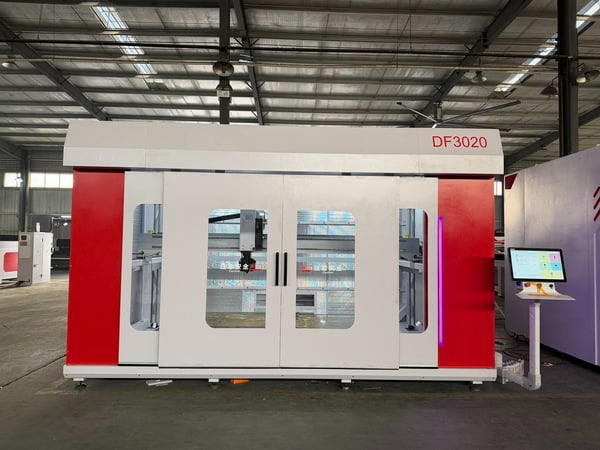
The economics of pellet printing are simple. Plastic pellets are the raw form of plastic. Every injection molding factory uses them. Because they are a commodity, they are cheap. You can buy PLA, ABS, or PETG pellets for $2 to $5 per kilogram. If you buy the same material as filament, you pay $20 to $30 per kilogram.
I recall a client who made large advertising letters. He spent $2,000 a month on filament. After switching to a pellet printer, his material bill dropped to $300. The machine paid for itself in less than a year. Also, there is less waste. If a print fails, you cannot reuse filament easily. But with some pellet systems and a shredder, you can chop up the bad print and put it back in the hopper. This is a huge advantage for cost control. For our customers in the automotive and yacht industries, where parts are huge, these savings are essential. You cannot afford to print a 100kg mold if the material costs $3,000. With pellets, it costs $300.
What Material Flexibility Do You Get With ABS, PETG, PP, Recycled Plastics, and Composites?
Do you feel restricted by the limited material options sold by filament vendors? Industrial applications often require specific custom blends.
Pellet extruders allow you to mix your own materials, add fiber reinforcements, or even use recycled chopped plastic, giving you total control.
When you use a pellet printer, you become the material scientist. You are not stuck with what is on the shelf. I have worked with clients who needed a very specific color for a branding project. We just mixed a clear polymer with a specific color masterbatch in the hopper. The screw mixed it for us as it printed.
You can also add performance enhancers. We see a lot of demand for Carbon Fiber or Glass Fiber4 reinforced plastics. These make the parts very stiff and strong. In filament form, these abrasive fibers break the filament or clog nozzles. In pellet form, they flow easily. We also support the use of recycled materials. You can take waste plastic, shred it, and print it. This is great for sustainability. Our machines can handle high temperatures, so we can process engineering materials like PC, PA (Nylon), and PEI. This flexibility fits perfectly with our experience in composite machining. We understand that different jobs need different physical properties.
What Are the Real-World Applications in Furniture, Molds, Architecture, and Tooling?
Is this technology only for prototypes, or can it make end-use products? The applications are vast and growing every day in heavy industry.
We see pellet printing used extensively for manufacturing custom furniture, large concrete casting molds, architectural elements, and functional industrial tooling.
At CHENcan, we serve many different sectors. One of the most popular uses is making molds. For example, a company making composite yacht parts needs a plug (a master model). Traditionally, they carve this out of foam and paste. Now, they print it near-net shape and then machine it smooth with our 5-Axis Machining Centers. It is faster and harder than foam.
In the furniture industry, designers are printing chairs and tables that look like woven baskets. The layer lines become part of the design. I also see a rise in architecture. Companies print complex forms to pour concrete into. Once the concrete sets, they peel the plastic away. This allows for shapes that wood formwork cannot make. Another area is "jigs and fixtures" for automotive factories. Instead of machining a metal fixture to hold a car door, they print it out of tough plastic. It is lighter and cheaper. These are not toys; they are tools that work on the factory floor.
What Are the Design Considerations for Printing with Pellet Extruders?
Can you just take any 3D model and print it with a pellet machine? No, you must adjust your design strategy for the larger nozzle size.
You need to design parts with thicker walls, fewer tiny details, and continuous paths to accommodate the wide extrusion width of the nozzle.
Designing for pellet printing is different from standard printing. The smallest feature you can print is defined by your nozzle size. If you use a 3mm nozzle, you cannot print a 1mm wall. I always tell my clients: "Think big." You should avoid sharp corners if possible, as the large bead of plastic likes to round them off.
Also, consider the "vase mode" or spiral printing strategy. This is where the printer moves in one continuous line without stopping. This is the best way to print with pellets because it stops the nozzle from oozing. Retraction (pulling the plastic back) is hard with a big screw. So, designs that require the nozzle to jump around a lot are difficult. You should design parts that are continuous. If you need a solid block, we often print a thick shell and fill it with foam later. This saves weight and time. We also use specific slicing software that handles these wide paths better than standard slicers.
What Are the Challenges and Limitations of Pellet Extruder 3D Printers?
Is this machine the perfect solution for every single printing job? No, there are trade-offs regarding surface finish and detail that you must accept.
Pellet prints have visible layer lines and cannot produce fine details, often requiring post-processing like machining to achieve a smooth surface.
I want to be honest with you. If you need to print a small figurine with perfect details, do not buy a pellet printer. The surface will look like a stack of ropes. We call this the "stair-step" effect. For many functional parts, this does not matter. But for aesthetic parts, you will need to sand it, putty it, or machine it.
This is why CHENcan often pairs our 3D printers with our CNC machining centers. You print slightly oversize, and then you trim it down to the perfect dimension. Another challenge is the machine size. These are not desktop machines. They need compressed air, high voltage power, and a lot of floor space. They also generate heat. You need a proper workshop environment. Also, changing materials takes longer than swapping a filament spool. You have to purge the old plastic out of the barrel. This can waste a bit of material. You need to plan your production to minimize material swaps.
How Do You Choose the Right Pellet Extruder 3D Printer for Your Business?
Are you ready to invest but feel overwhelmed by the technical specifications? Making the wrong choice can be a costly mistake for your factory.
You should look for a machine with a rigid steel frame, a high-temperature screw design, and a reliable control system like the ones we build at CHENcan.
When you choose a machine, look at the "bones." A pellet extruder is heavy. If the frame is weak, the machine will shake, and your print will look bad. We use our 27 years of experience in building heavy CNC routers to build our printer frames. They are solid steel.
Next, check the heating zones. A good extruder has multiple heating zones to control the melt properly. You also need to consider the build volume. Do not buy a machine that is too small for your future needs. Finally, think about support. These are industrial machines. You need a partner who can help you with parameters and training. At CHENcan, we provide full-process customization and on-site support. We help you choose the right screw for your specific plastic. Here is a quick checklist for buyers:
- Frame Rigidity: Is it heavy duty?
- Max Temperature: Can it print engineering plastics?
- Build Volume: Does your largest part fit?
- Control System: Is it industrial grade (like Siemens or Syntec) or hobby grade?
- Vendor Experience: Do they know CNC motion control?
Conclusion
Pellet extruder 3D printers offer a fast, low-cost way to produce large-scale parts, transforming how we approach manufacturing. If you want to stay competitive, you must adopt this technology.
Understanding the technology behind pellet extruder 3D printers can revolutionize your manufacturing process with faster and cost-effective solutions. ↩
Discover how using raw plastic granules instead of filament can significantly reduce material costs and increase print speeds for large-scale projects. ↩
Compare FDM and pellet extrusion to see why pellet extrusion is more suitable for large-scale industrial applications. ↩
Discover how reinforcing plastics with fibers enhances the strength and stiffness of printed parts using pellet extrusion. ↩